
The SteelSeries Arctis Nova Pro Wireless suits PC gamers who want the most complete feature set, the Razer BlackShark V3 suits those who prioritise sound and a strong microphone, the HyperX Cloud III Wireless suits value-minded buyers, and the Logitech G Pro X 2 Lightspeed suits competitive players who want a lean, low-latency set.
As an Amazon Associate we earn from qualifying purchases at no extra cost to you.
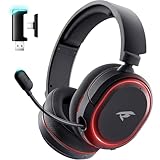
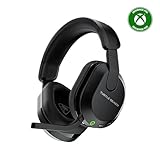
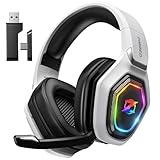

Our Top Picks
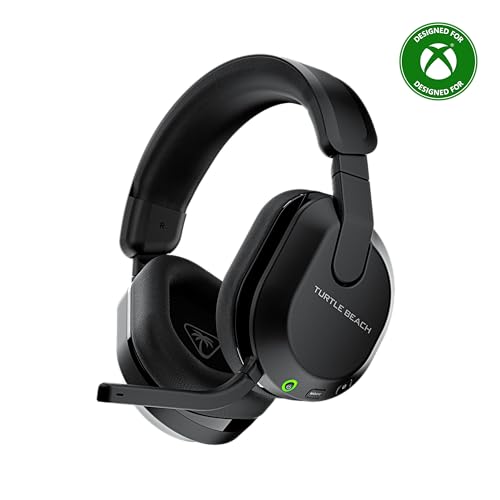 Turtle Beach Stealth 600 Wireless Gaming Headset forStandard8.58 x 7.81 x 3.74 Inches0.7 poundsCheck on Amazon
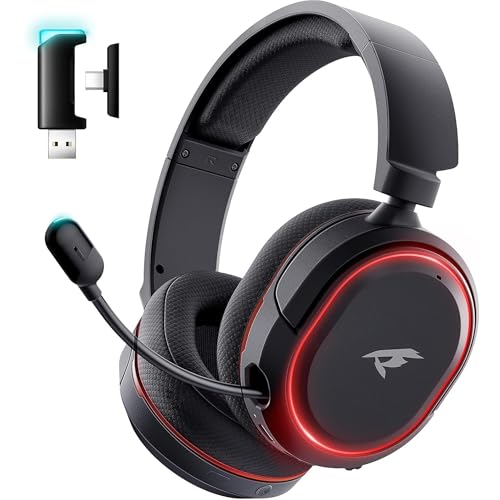
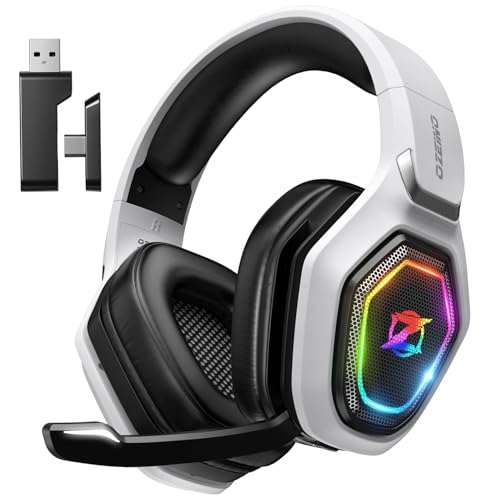

Top 3 picks at a glance
What matters in a wireless gaming headset
Wireless headsets look similar on a spec sheet, so it helps to know which numbers and features change daily use.
- Connection type: a 2.4 GHz USB dongle gives the lowest latency and is the standard for PC gaming. Bluetooth is convenient for phones but adds delay, and some headsets, including the HyperX Cloud III Wireless according to GamesRadar, omit it.
- Battery life: makers list anywhere from about 30 to over 100 hours depending on model. Hot-swappable batteries, as on the Arctis Nova Pro Wireless, remove charging downtime entirely.
- Drivers and tuning: 40 to 50 mm dynamic drivers are common; some premium models use planar magnetic drivers, such as the Audeze Maxwell.
- Microphone: a detachable or retractable boom usually beats a hidden mic. Reviewers highlight the BlackShark V3 for mic quality.
- Comfort: weight, clamp force and ear cup depth matter more than spec sheets for long sessions. Glasses wearers should look for soft, wide pads.
- Platform support: check whether the dongle works with PlayStation, Xbox or Switch if you play on more than one system.
At a glance
| Headset | Best for | Key stated features | Limits |
|---|---|---|---|
| SteelSeries Arctis Nova Pro Wireless | Feature-rich all-rounder | 2.4 GHz plus Bluetooth, active noise cancelling, hot-swap batteries, base station | Premium tier; base station takes desk space |
| SteelSeries Arctis Nova Pro Omni | Multi-platform households | Named best wireless by GamesRadar and Forbes Vetted | Premium tier |
| Razer BlackShark V3 | Sound and mic quality | PC Gamer’s top pick; all-day comfort reported | Check platform support for your consoles |
| Audeze Maxwell / Maxwell 2 | Audio quality at the high end | Planar magnetic design; RTINGS ranks Maxwell 2 first among wireless headsets it has reviewed | Premium tier; heavier than light esports headsets |
| HyperX Cloud III Wireless | Value and comfort | 2.4 GHz wireless; long battery life stated by the maker | No Bluetooth |
| Logitech G Pro X 2 Lightspeed | Competitive FPS | Lightspeed wireless; Pro-series tuning | Fewer extras than Arctis |
| Logitech G321 Lightspeed | Budget wireless | PC Gamer’s budget pick | Simpler features |
| Alienware Pro Wireless | Plug-and-play setups | Forbes names it best plug-and-play | Fewer tuning options |
Sound, mic and software
Gaming headsets are usually tuned with a bass lift. For competitive games, a more neutral signature helps with footsteps. Many makers include an equaliser in their desktop app (SteelSeries GG, Razer Synapse, Logitech G Hub, HyperX NGENUITY), and these apps are where you can tame bass or boost voice clarity. Treat “7.1 surround” claims cautiously. Reviewers generally prefer stereo imaging with good stage width over virtual surround, though some players like the spatial effect in single-player titles.
For microphones, the useful features are noise suppression, sidetone (hearing your own voice) and a physical mute indicator. If you stream or record often, a headset mic is a convenience; a standalone microphone is still better.
Fit and compatibility notes
- A USB-A dongle is the standard on most models; if your case or desk puts the port far away, an extension cable improves signal.
- Bluetooth plus dongle on the same headset lets you take calls from a phone while gaming (dual connection), a feature found on the Arctis Nova Pro line.
- Check that your PC has a free USB port near the headset, and that the dongle is not plugged into a crowded hub.
- For consoles, confirm whether the dongle supports PlayStation, Xbox or both; some variants of the same headset are platform-specific.
- Planar magnetic and ANC models are heavier than basic gaming headsets, so test comfort with your head size and glasses where possible.
Budget tiers
Budget
Budget wireless headsets such as the Logitech G321 Lightspeed and entry-level HyperX models offer reliable 2.4 GHz connection and decent sound. Expect plastic builds, simpler mics and fewer features.
Mid-range
Mid-range brings better microphones, longer battery life and nicer pads. The HyperX Cloud III Wireless and Razer BlackShark V3 sit near this tier, depending on regional pricing and features.
Premium
Premium models add features such as hot-swap batteries, ANC, dual connection and superior drivers. The SteelSeries Arctis Nova Pro series, Audeze Maxwell and Alienware Pro Wireless fall here.
Pick X if… decision table
| If you… | Pick | Why |
|---|---|---|
| Want one headset for everything | Arctis Nova Pro Wireless / Omni | Most feature-complete according to multiple reviewers |
| Care most about audio fidelity | Audeze Maxwell 2 | RTINGS ranks it highly among wireless gaming headsets |
| Want a great mic and comfort | Razer BlackShark V3 | PC Gamer’s top pick |
| Are on a tight budget | Logitech G321 Lightspeed | PC Gamer’s budget pick |
| Want a light competitive set | Logitech G Pro X 2 Lightspeed | Named for competitive FPS use |
| Hate setup | Alienware Pro Wireless | Plug-and-play focus per Forbes |
Alternatives
- Wired gaming headsets: zero latency, no battery, typically better sound per cost.
- Open-back headphones with a clip-on mic: better imaging and comfort for those willing to give up wireless.
- Console-specific headsets: Sony PULSE Elite for PlayStation and the Xbox Wireless Headset for Xbox are suggested by one reviewer list for those ecosystems.
Comfort, build and long-session use
Comfort decides whether a headset stays on your head. Weight is the first factor: lightweight models around the 250 to 300 gram range are easier on the neck for long sessions, while planar magnetic and noise-cancelling headsets tend to be heavier. Clamp force matters for people with larger heads, and ear cup depth matters for those with larger ears. Memory foam pads feel soft but can trap heat, while fabric or mesh pads breathe better and wear differently over time. Replacement pads are sold for many popular models, which is useful because pads are the part that wears out first.
Build quality is harder to judge from a listing. Metal sliders and reinforced headbands usually survive more abuse than all-plastic frames, and detachable or flexible microphone booms are less likely to break. Reviewers who live with a headset for months often mention creaking, sliding adjustment bands and pad peeling as the usual age-related complaints.
Latency, range and interference
Most 2.4 GHz gaming headsets list a range of 10 to 20 metres in open space. Walls and other wireless devices reduce it. If your PC sits under the desk, plug the dongle into a front-panel port or use an extension cable so it has a clear path to your head. Crowded wireless environments with many routers, Bluetooth devices and USB 3 ports nearby can cause stutter or dropouts, and moving the dongle away from USB 3 devices often helps.
Battery behaviour is worth understanding. Lithium batteries lose capacity over years, so a headset rated for 50 hours at launch may offer less after a couple of years. Models with swappable or hot-swap batteries sidestep that wear. Check whether the headset can be used while charging, which is useful when the battery runs out mid-game.
Which features are worth paying for
- Detachable mic: useful if you also use the headset for music or travel.
- Dual connection: dongle plus Bluetooth lets you hear phone calls while gaming.
- Onboard EQ presets: changing sound profiles without installing software is handy.
- Replaceable ear pads: extend the life of the headset.
- Software support on your OS: check whether the companion app works on your version of Windows.
Frequently Asked Questions
Is wireless good enough for competitive gaming?
Yes, with a 2.4 GHz dongle. Latency is low enough that most players do not notice a difference from wired. Bluetooth is the connection to avoid for fast games.
How long should the battery last?
Makers list from roughly 30 hours to more than 100 hours. Hot-swap batteries or fast charging can make shorter battery life manageable.
Do I need a headset with ANC?
Not for most home use. It helps in noisy rooms and for commuting use. Some gamers dislike the slight pressure sensation.
Is 7.1 surround sound worth it?
Reviewers are mixed. Good stereo tuning often serves competitive play better. Virtual surround can add immersion in single-player games.
Will a PC headset work on consoles?
Some do, via a dongle with console support. Always check the maker’s compatibility list for your exact model and console.
How do I choose between a dongle-only and a base station headset?
A dongle is simpler and portable. A base station adds battery swapping, source switching and audio controls, but takes more desk space.


