
How To Diagnose A Failing Power Supply
Diagnose a failing power supply using the same POST-card and multimeter checks used on a real repair bench, before wrongly replacing a CPU or GPU instead.
Troubleshooting covers diagnosing and fixing gaming PC problems after they occur, from a failing power supply and PC overheating to a GPU that isn’t detected by the system and in-game FPS drops that don’t match the hardware’s expected performance. Diagnosis here works by process of elimination more than any single test, and the deciding factor in most guides is isolating which subsystem, power, cooling, GPU seating, or software, is actually responsible before attempting a fix, since treating the wrong symptom wastes time and can mask the real cause. A failing power supply produces symptoms that mimic other failures, like random shutdowns or a system that won’t post, which is why a proper diagnostic approach tests the PSU directly rather than assuming a more obvious component is at fault. Overheating troubleshooting focuses on airflow direction, dust accumulation, and thermal paste age as the usual suspects before assuming a cooler is simply inadequate for the CPU. A GPU not being detected is almost always a seating, power connector, or BIOS setting issue rather than a dead card, and ruling those out first saves an unnecessary RMA. FPS drops that don’t match a system’s specs usually trace back to background processes, thermal throttling, or a driver issue rather than the hardware itself. Start by identifying which symptom matches the actual problem before jumping to a fix. How To Fix PC Overheating and How To Fix GPU Not Detected cover the two most common failure categories, while How To Diagnose A Failing Power Supply addresses the trickiest one to isolate.
Diagnose a failing power supply using the same POST-card and multimeter checks used on a real repair bench, before wrongly replacing a CPU or GPU instead.
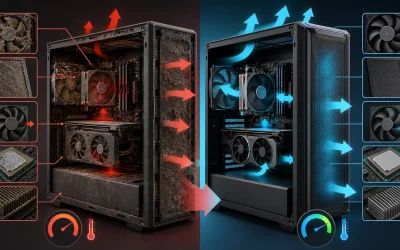
Fix PC overheating by finding which component is actually too hot, then working through airflow, dust and thermal paste fixes in the right order.
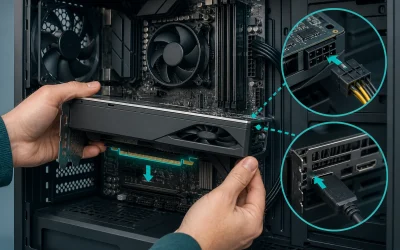
Fix a GPU not detected with a step-by-step flow from reseating the card to reading POST codes and testing slots.
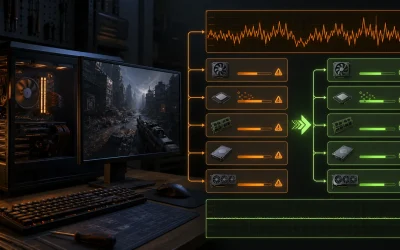
Fix FPS drops in games by isolating CPU, GPU, thermal and network causes with a 9-step diagnostic checklist.

5 real PC diagnostic tools compared, plus why 3 car OBD2 scanners that show up in this search have zero PC use.