Thinking about playing League of Legends on PC and wondering what hardware you actually need? League of Legends is the massive MOBA built to run at high frame rates on almost any PC, so getting the right graphics card, CPU, and memory makes the difference between a smooth experience and a stuttery one. This guide breaks down the realistic PC requirements for League of Legends, the best GPU for each resolution, and complete build recommendations to hit your target frame rate.
How Demanding Is League of Legends?
League of Legends is light on PC hardware. The massive moba built to run at high frame rates on almost any pc. In practical terms that means budget cards can run it at 1080p with sensible settings, while 1440p and 4K push you toward a stronger mid-range or high-end GPU. For competitive play, aim for high, stable frame rates rather than maxed-out visuals. The figures below are realistic guidelines; always check the game’s official store page for the exact published requirements.
League of Legends System Requirements (Approximate)
| Component | Minimum (1080p Low) | Recommended (1080p–1440p High) |
|---|---|---|
| GPU | GTX 1050 / RX 560 | GTX 1660 / RX 5600 |
| CPU | Ryzen 3 1200 | Ryzen 5 7600 |
| RAM | 8 GB | 8 GB |
| Storage | SSD recommended | NVMe SSD |
These are general guidelines; confirm the exact requirements on the official store page before buying.
Best GPU for League of Legends by Resolution
1080p
For a smooth 1080p experience, the AMD Radeon RX 7600 (or a comparable card) is the sweet spot, handling high settings.
1440p
Step up to the AMD Radeon RX 7600 for high-refresh 1440p at high or ultra settings. This is the resolution most PC gamers target, and this class of card gives League of Legends plenty of headroom.
4K
For 4K, the NVIDIA GeForce RTX 4060 is the realistic entry point, ideally paired with upscaling to keep frame rates high. League of Legends at native 4K ultra is demanding, so a top-tier card and DLSS/FSR make the biggest difference.
CPU, RAM and Storage for League of Legends
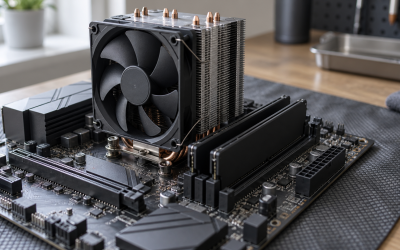
Pair your GPU with a capable processor: the AMD Ryzen 5 7600 is excellent value for gaming, while the AMD Ryzen 7 7800X3D is the fastest mainstream gaming CPU if you want maximum frame rates. Intel fans can opt for the Intel Core i5-14600K. For memory, 8 GB of DDR5 such as the Corsair Vengeance DDR5 32GB is the target. Install the game on a fast NVMe SSD like the Samsung 990 Pro 2TB NVMe SSD to cut load times and reduce texture streaming stutter.
Recommended PC Builds for League of Legends
1080p budget build: AMD Radeon RX 7600 + AMD Ryzen 5 7600 + 16 GB DDR5 — great for high-settings 1080p.
1440p sweet-spot build: AMD Radeon RX 7600 + AMD Ryzen 7 7800X3D + 32 GB DDR5 + 2TB NVMe SSD — the setup most players should aim for.
4K high-end build: NVIDIA GeForce RTX 4060 + AMD Ryzen 7 7800X3D + 32 GB DDR5 + fast NVMe SSD — for 4K with upscaling.
Is It Worth Upgrading Your PC for League of Legends?
If your current graphics card is a generation or two old, League of Legends is a reasonable excuse to upgrade, but be strategic about it. The graphics card delivers by far the biggest jump in gaming performance, so upgrade the GPU first if you have to choose. A mid-range CPU from the last few years will not bottleneck a modern GPU in this game, so you can usually keep it. Adding 8 GB of RAM and moving the game to an NVMe SSD are cheap upgrades that noticeably smooth out the experience. Rather than replacing everything at once, target the weakest link in your build for the best value.
Can You Play League of Legends on a Laptop or Handheld?
Gaming laptops with an RTX 4060 or better mobile GPU can run League of Legends well at 1080p, though expect shorter battery life and more heat than a desktop. On handhelds like the Steam Deck and ROG Ally, this lighter game runs comfortably at reasonable settings, making it a great portable pick. If portability matters, prioritise a device with a capable GPU and pair it with a fast microSD or SSD for storage.
How to Boost FPS in League of Legends
If frame rates are low, enable upscaling (DLSS on NVIDIA, FSR on AMD, or XeSS on Intel) which offers the single biggest performance gain, and turn on frame generation if your GPU supports it. Drop the most expensive settings first — shadows, volumetric effects, and post-processing — before lowering overall resolution. Keep your GPU drivers up to date, close background apps, and make sure the game is installed on an SSD. Lowering settings to hit a stable frame rate almost always feels better than chasing maxed-out visuals with stutter.
Frequently Asked Questions
Can my PC run League of Legends?
If your PC has at least a GTX 1050 / RX 560-class GPU, a modern quad-core CPU, and 8 GB of RAM, it can run League of Legends at 1080p with adjusted settings. For a smooth high-settings experience at 1080p or 1440p, aim for a GTX 1660 / RX 5600-class card and the recommended CPU and memory above.
Is League of Legends demanding on PC?
League of Legends is light. Mid-range hardware handles it well at 1080p–1440p with sensible settings.
What GPU do I need for League of Legends at 1440p 60fps?
A AMD Radeon RX 7600-class graphics card is the sweet spot for high-settings 1440p at 60fps or higher in League of Legends, especially with upscaling enabled. Cards in this tier give you comfortable headroom for future titles too.
How much RAM does League of Legends need?
8 GB of RAM is recommended for League of Legends. 16 GB is the practical target for modern gaming; 8 GB is no longer enough for a smooth experience. Faster DDR5 memory also helps in CPU-limited scenes.
Do I need an SSD for League of Legends?
Yes, an SSD is strongly recommended for League of Legends to reduce load times. An NVMe drive like the Samsung 990 Pro is ideal for modern games.