Our Short List of 3
All 5 Picks at a Glance
| Product | Specs | Action |
|---|---|---|
 OMRON 10 Series BP7450 | Check price on Amazon | |
 Welch Allyn Home 1700 | Check price on Amazon | |
 Withings BPM Connect | Check price on Amazon | |
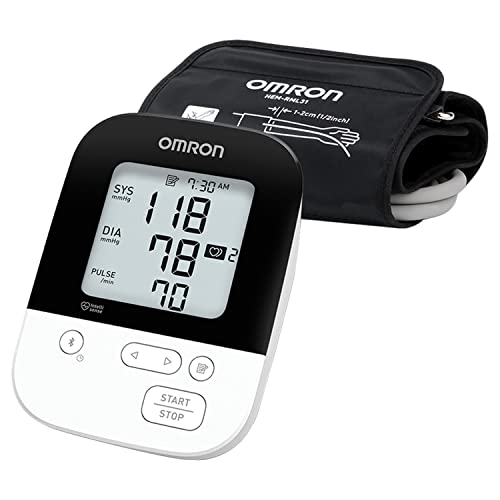 OMRON 5 Series BP7250 | Check price on Amazon | |
 A&D Medical UA-767F | Check price on Amazon |
A blood pressure monitor is only useful when its numbers can be trusted. A reading that drifts by a few points changes nothing on its own, but a monitor that consistently reads high or low can mislead a household for months, so accuracy is the first thing to check and the last thing to compromise on. This guide reads “best accuracy blood pressure monitors” as automatic upper-arm monitors whose accuracy has been checked against an independent validation protocol, and every pick below is an upper-arm model sold on Amazon US.
One distinction shapes the whole selection. This guide is about accuracy, not about extra features. A separate guide on this site covers monitors that screen for atrial fibrillation during a reading, and another covers manual aneroid kits that a trained listener reads by ear. The five monitors below were chosen because their accuracy has been validated under a recognized protocol, because their cuffs fit a stated arm range, and because they help the user take a reading the same way every time. None of them diagnoses a condition, and any unusual reading should be discussed with a doctor before any medical decision is made.
Our Top Picks
Top 3 picks at a glance
Our Top Picks
| Monitor | Validation | Cuff Range | Best For |
|---|---|---|---|
| OMRON 10 Series BP7450 | Clinically validated | 9 to 17 inches | The most consistent home readings |
| Welch Allyn Home 1700 | Clinical-grade SureBP | 8.75 to 16.5 inches | Clinic-style technology at home |
| Withings BPM Connect | US validated device listing | 22 to 42 cm | Wireless syncing and trend tracking |
| OMRON 5 Series BP7250 | Clinically validated | 9 to 17 inches | One-user simplicity with proven accuracy |
| A&D Medical UA-767F | Clinically validated | 8.6 to 16.5 inches | A shared household monitor |
How to Choose a Blood Pressure Monitor for Accuracy
Check the validation, not the box
The word validated means something specific for a blood pressure monitor. Independent validation lists, such as the US validated device listing maintained with the American Medical Association and the international STRIDE BP list, record which models have passed a formal accuracy protocol against a reference measurement. A monitor on one of those lists has been measured against a mercury or reference standard under controlled conditions, with results published for anyone to check. A monitor that only carries its maker’s own claim has not been through that independent check. Before buying, look the model number up on a validation list and confirm the exact model, because a similar name with a different suffix can be a different device.
Cuff fit decides the reading
A cuff that does not fit the arm produces numbers that drift from the true value, and no amount of electronics can correct that. Measure the upper arm at its midpoint with a tape, then compare the result with the cuff range printed on the listing. Every pick in this guide states its cuff range, and the right monitor is the one whose range contains the arm measurement with room to spare. A wide-range cuff that covers nine to seventeen inches suits most adults and avoids a separate cuff purchase, while a household with larger arms should check the upper limit before ordering. Wrap the cuff so it sits about an inch above the elbow, snug enough that one finger fits underneath, with the tube or marker aligned as the manual shows.
Averaging beats a single reading
Blood pressure moves from minute to minute, so one reading on a rushed morning says less than three readings taken a few minutes apart. Several monitors in this guide take three readings in a row and average them automatically, which smooths out the spike from walking upstairs or sitting down too quickly. If a monitor lacks that feature, take three readings yourself with a minute of rest between them and average the numbers by hand. Either way, measure at the same time of day, seated with feet flat on the floor, back supported, and the arm resting at heart level, after five minutes of quiet sitting.
Look for movement and cuff-fit alerts
Two common errors ruin home readings: moving or talking during the measurement, and a cuff wrapped too loosely. Monitors that flag body movement and cuff fit help the user catch those errors at the moment they happen instead of recording a false number. An irregular heartbeat symbol is a separate feature, and it does not mean the same thing as an accuracy alert. A monitor can show an irregular heartbeat symbol while still giving a usable pressure reading, and the symbol itself is a prompt to mention it to a doctor, not a diagnosis.
App syncing is a convenience, not a proof
Bluetooth and Wi-Fi syncing make it easy to keep a log and share it with a clinician, and a clear trend over weeks is more informative than any single morning number. Syncing does not make a reading more accurate, and a monitor without an app can be just as precise. Choose app support for the record-keeping, and choose validation and cuff fit for the numbers themselves.
OMRON 10 Series BP7450
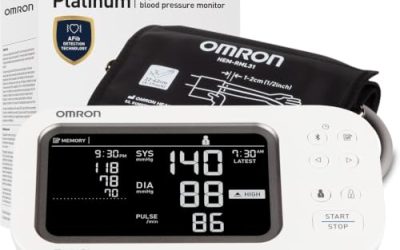
The OMRON 10 Series BP7450 is the pick for a household that wants the most consistent home readings with the least fuss. Its Advanced Accuracy technology takes three consecutive readings and averages them automatically, which removes the single biggest source of variation in home measurement. The listing describes the device as clinically validated, and the model appears on the US validated device listing, so its accuracy has been checked against an independent protocol rather than resting on the maker’s word alone.
The Easy-Wrap ComFit cuff fits arms from nine to seventeen inches, which covers most adults without a separate cuff purchase, and the cuff is pre-formed so it wraps with one hand. Memory holds two hundred readings, one hundred for each of two users, and Bluetooth syncing sends readings to the OMRON Connect app for an unlimited record. An irregular heartbeat symbol appears when the pulse pattern looks uneven during a reading. An AC adapter is included in the box, so the monitor can run from wall power instead of batteries. The screen shows a comparison display that places the latest reading beside the previous one, which makes a rising or falling trend visible at a glance.
Welch Allyn Home 1700
The Welch Allyn Home 1700, model H-BP100SBP, brings the brand’s clinical SureBP technology into a home monitor. SureBP takes a reading during inflation, in about twenty seconds, which shortens the time the cuff stays tight on the arm and reduces the discomfort that makes people shift during a measurement. The monitor is described as clinical-grade technology, and Welch Allyn is the brand found in a large share of physician offices, which is why this pick suits a household that wants a device built on professional measurement practice.
The standard wide cuff fits arms from 8.75 to 16.5 inches, and a larger cuff is sold separately for arms above that range. Bluetooth connects the monitor to a smartphone app for logging, and the unit runs on four AA batteries. Operation is a single button, with no menus to learn, so the routine stays the same every morning. The display is large and high-contrast, and the monitor’s simple layout keeps the focus on the reading rather than on settings.
Withings BPM Connect
The Withings BPM Connect, model WPM05, is the pick for a household that wants readings to flow into a health record without any manual logging. It syncs over Wi-Fi and Bluetooth to the Health Mate app, and it also connects with Apple Health and Google Fit, so a reading taken at the kitchen table appears in the same record as the rest of the household’s health data. The model is listed on the US validated device listing and on the STRIDE BP list, which is the independent accuracy check this guide treats as the deciding factor.
The cuff is integrated into the device, with a range of twenty-two to forty-two centimetres, and the unit is fully wireless, with a rechargeable battery that the maker states lasts up to six months between charges. A color-coded light on the display gives immediate feedback on where a reading sits, and a guest mode lets a visitor take a reading without mixing it into the household record. The one-button operation keeps the routine simple: wrap the cuff, press the button, and wait for the reading.
OMRON 5 Series BP7250
The OMRON 5 Series BP7250 is the pick for a single user who wants proven accuracy without paying for two-user memory or a larger screen. It uses the same Advanced Accuracy technology as the 10 Series, measuring more data points for a steadier reading, and the model is listed on the US validated device listing. The wide-range D-ring cuff fits arms from nine to seventeen inches, and Bluetooth syncing sends readings to the OMRON Connect app.
Memory holds sixty readings for one user, which is enough for a month of twice-daily checks before the oldest readings are replaced. A hypertension indicator flags readings that sit above the usual range, and an irregular heartbeat symbol appears when the pulse pattern looks uneven. The monitor also works with Alexa-enabled devices through the OMRON Health skill. Four AA batteries power the unit, and the extra-large display is easy to read from a seated position.
A&D Medical UA-767F
The A&D Medical UA-767F is the pick for a shared household where several people use the same monitor. Memory holds sixty readings for each of four users, so a family of four can keep separate records without overwriting each other, and the monitor is described as clinically validated. Body movement detection and cuff fit detection flag the two most common errors at the moment they happen, which keeps bad readings out of the record.
The included cuff fits arms from 8.6 to 16.5 inches, with medium and large cuffs sold separately, and the box includes a carrying case and batteries. The free A&D Heart Track app logs readings for later sharing with a clinician. The display is large and the operation is a simple four-step routine: install the batteries, wrap the cuff, align it with the heart, and press start. The monitor’s five-year protection plan, included in the box, covers the device well beyond the usual warranty period.
Taking a Reading the Same Way Every Time
A validated monitor still needs a steady routine to give steady numbers. Measure at the same time each day, usually in the morning before eating or taking medication, and again in the evening if a doctor has asked for two readings a day. Sit for five minutes first, with feet flat on the floor and back supported, and keep the arm supported at heart level on a table. Avoid caffeine, exercise, and smoking for thirty minutes before measuring, and do not talk during the reading. Take two or three readings a minute apart and record the average. Bring the log, on paper or in the app, to the next appointment, because a doctor learns more from a month of home readings than from a single reading in the clinic.
What Accuracy Cannot Do
No home monitor replaces a clinical assessment. A monitor measures pressure at the arm; it does not explain why a reading is high or low, and it cannot tell a household whether a number needs treatment. Home readings are a record to share with a doctor, not a basis for changing medication or starting a new routine on their own. If readings are consistently high, or if a monitor shows an irregular heartbeat symbol repeatedly, book an appointment and bring the log. Children, people with an irregular pulse, and people with arm conditions that affect cuff fit should ask a doctor which monitor and cuff size suit them before buying.
Our Verdict
For most households, the OMRON 10 Series BP7450 is the accuracy-first pick, because its three-reading average and its place on the US validated device listing address the two things that matter most: a steady technique and an independently checked device. The Welch Allyn Home 1700 suits a household that prefers clinic-style measurement in a short reading, the Withings BPM Connect suits one that wants wireless records, the OMRON 5 Series BP7250 suits a single user who wants proven accuracy in a simpler package, and the A&D Medical UA-767F suits a household where four people share one monitor. Whichever model fits the household, check the cuff range against the arm, look the model up on a validation list, and measure the same way every time.
Disclosure: As an Amazon Associate, we earn from qualifying purchases made through links on this page, at no extra cost to you.
Related guides
More from Amazon
Programs that pair well with the guide above. Offers and eligibility are set by Amazon and may change.
Free shipping on eligible items, Prime Video and more. Eligible new members can start with a free trial.
Start a Prime free trialAd-free music streaming. Eligible new subscribers can start with a free trial.
Try Music Unlimited freeA Prime membership for ages 18-24 with a trial period. Eligibility is set by Amazon.
See Prime for Young AdultsAudiobooks and podcasts to listen to on the go. Eligible new members can start with a free trial.
Try Audible freeAs an Amazon Associate we earn from qualifying purchases.