Disclosure: As an Amazon Associate, I earn from qualifying purchases. If you buy through links in this article, I may earn a commission at no extra cost to you.
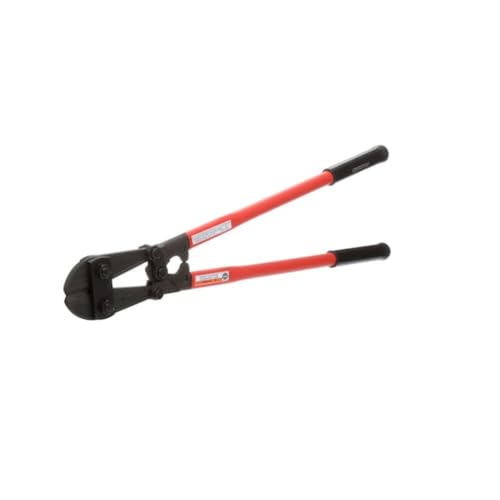
Our top pick: RIDGID 14223 Model S24 Bolt Cutter (24-Inch). Runner-up: H.K. Porter 0190MCD PowerLink Bolt Cutter (24-Inch).
A bolt cutter earns its place in a shop or gaming-room build-out the first time a seized chain, a rusted padlock or a length of threaded rod refuses every other tool. The five picks below are all center-cut models, the jaw style that grips round stock from both sides and is the standard choice for bolts, chain links, rod and lock shackles. They span the useful size range: a compact 14-inch cutter for the toolbox drawer, three 24-inch cutters that cover most household and workshop work in three different designs, and a 36-inch heavy cutter for thick or hardened stock. Every cutting capacity below is the figure the manufacturer lists for that model, stated against the material hardness it refers to, because a capacity number means nothing without the hardness behind it. One brand note up front: RIDGID appears twice, with its 24-inch and 36-inch models, because those two sizes are genuinely different tools for different work.
Top 3 picks at a glance


How to Choose a Bolt Cutter
Match the length to the stock, not the other way round. Handle length is leverage. A 14-inch cutter is easy to store and fine for small bolts, screws and light chain, but its listed capacities are small. A 24-inch cutter is the general-purpose size most people should own first. A 36-inch cutter exists for stock at or beyond what a 24-inch model lists, and it is a two-handed, full-body-effort tool that takes real storage space.
Read capacity figures by material hardness. Manufacturers list separate maximum diameters for soft, medium and hard materials. Soft figures cover mild steel, bolts, screws, rivets and nonferrous metal. Hard figures cover stainless steel, spring wire and heat-treated rod, and they are always much smaller. A cutter listed at 7/16 inch for soft metal may only manage 5/16 inch in hardened stock, so compare the figure that matches what you actually cut.
Center cut is the default jaw. All five picks here are center-cut models, where the cutting edges meet in the middle of the jaw and the stock sits deep in the throat. That geometry suits round and hex stock. Shear-cut and clipper-cut jaws exist for flush cuts on soft material, but they give up capacity and are not what you want for chain or rod.
Compound action buys effort, not capacity. A double compound hinge, like the PowerLink design on the H.K. Porter below, multiplies hand force so the same cut takes less squeeze. It does not raise the listed capacity of the jaws, and the jaw steel still decides how the edges hold up on hard stock.
Check for replaceable jaws. Bolt cutter jaws are wear parts. A chipped edge on a cutter with replaceable jaws is a parts order; on a cutter without them, it is a new tool. Pro-grade models from RIDGID and Klein list replacement jaw sets, which is worth weighing if the cutter will see weekly use.
1. RIDGID 14223 Model S24 Bolt Cutter (24-Inch)
The S24 is the straightforward professional default in the 24-inch class. Its jaws are hardened alloy steel, and RIDGID lists three capacities for it: 7/16 inch for soft metals, 3/8 inch for medium metals and 5/16 inch for hard metals, which is a honest spread for this size and covers bolts, chain, rod and most padlock shackles. The center-cut jaws sit on the same one-step internal cam arrangement RIDGID uses across this line to keep the blades aligned as they wear. The red and black finish makes it easy to spot in a cluttered shop. If you want one 24-inch cutter from a trade brand with a long parts tail behind it, this is the pick to beat.
Specs
- Model: 14223 (S24)
- Overall length: 24 in
- Jaw type: Center cut
- Jaw material: Hardened alloy steel
- Cutting capacity, soft metals: 7/16 in (manufacturer-listed)
- Cutting capacity, medium metals: 3/8 in (manufacturer-listed)
- Cutting capacity, hard metals: 5/16 in (manufacturer-listed)
- ASIN: B00140X8W2
2. H.K. Porter 0190MCD PowerLink Bolt Cutter (24-Inch)
H.K. Porter is the name most associated with this tool category, and the 0190MCD is its 24-inch PowerLink model. The PowerLink linkage is a double compound action system, and the maker positions it as the low-effort way to work through a pile of cuts: the listed capacities are up to 7/16 inch for soft materials and up to 5/16 inch for hard materials, with the hard figure specified against steel rod at up to HRC 48 hardness. Those numbers match the RIDGID above on paper, so the choice between them comes down to action: pick the Porter if your hands tire on long cutting sessions or if you cut the same mid-size stock over and over, and pick on price and parts support otherwise. The center-cut blades are precision engineered for edge life, per the manufacturer.
Specs
- Model: 0190MCD
- Overall length: 24 in
- Action: PowerLink double compound action
- Jaw type: Center cut
- Cutting capacity, soft materials: Up to 7/16 in (manufacturer-listed)
- Cutting capacity, hard materials: Up to 5/16 in, steel rod up to HRC 48 (manufacturer-listed)
- ASIN: B014UUCXX2
3. RIDGID 14233 Model S36 Bolt Cutter (36-Inch)
The S36 is the step up when a 24-inch cutter’s listed capacities run out. RIDGID lists 9/16 inch for soft metals, 1/2 inch for iron and steel, and 7/16 inch for hard metals such as stainless steel, spring wire and heat-treated rod, and those are the largest figures in this guide by a wide margin. The trade-offs are size and weight: the listing puts the tool at 38 inches overall and 13.45 pounds, so it needs both hands, room to swing the handles apart, and a wall hook or corner to live in. The hardened alloy steel center-cut jaws use the same one-step internal cam mechanism as the S24 for blade alignment, and the listing carries RIDGID’s full lifetime warranty against defects in workmanship or materials. Buy it for demolition, farm and fence work, or repeated cuts in thick rod, not as a first cutter.
Specs
- Model: 14233 (S36)
- Overall length: 38 in (as listed)
- Jaw type: Center cut
- Jaw material: Hardened alloy steel
- Cutting capacity, soft metals: 9/16 in (manufacturer-listed)
- Cutting capacity, medium metals: 1/2 in, iron and steel (manufacturer-listed)
- Cutting capacity, hard metals: 7/16 in, stainless steel, spring wire and heat-treated rod (manufacturer-listed)
- Item weight: 13.45 lb (as listed)
- Warranty: Full lifetime warranty (as listed)
- ASIN: B00140XFPC
4. Klein Tools 63314 Bolt Cutter (14-Inch)

The 63314 is the compact option, built for a toolbox drawer, an electrical kit or a vehicle rather than a shop wall. Klein lists a maximum capacity of 5/16 inch for soft and medium materials, specified up to Brinell 300 / Rockwell C31, and 3/16 inch for hard materials up to Brinell 400 / Rockwell C42. That makes it a cutter for small bolts, screws, pins, light chain and wire, not for padlock shackles or structural rod, and the short handles mean cuts near those limits take real effort. The jaws are forged alloy tool steel, precision ground, and the steel handles carry heavy vinyl grips with flat ends shaped to help with 90-degree cuts against a surface. Klein lists a replacement blade, number 63814, and the tool weighs 3.2 pounds, so it travels well.
Specs
- Model: 63314
- Overall length: 14 in
- Jaw type: Center cut
- Jaw material: Forged alloy tool steel, precision ground
- Cutting capacity, soft and medium materials: 5/16 in, up to Brinell 300 / Rockwell C31 (manufacturer-listed)
- Cutting capacity, hard materials: 3/16 in, up to Brinell 400 / Rockwell C42 (manufacturer-listed)
- Handles: Steel with heavy vinyl grips
- Item weight: 3.2 lb (manufacturer-listed)
- Replacement blade: 63814
- ASIN: B0042T5X20
5. WORKPRO W017006A Bolt Cutter (24-Inch)

The W017006A is the budget route into the 24-inch class. Its jaws are drop-forged chrome molybdenum steel, and the listing states a cutting capacity of 5/16 inch (8 mm) for material at up to HRC 42 hardness, opening to 25/64 inch (10 mm) for softer material under HRC 25. Read against the RIDGID and Porter above, that is a step down in hard-material capacity, which is the honest trade at this end of the range: it suits bolts, rods, rivets and chain in mild steel, and occasional mid-size cuts, rather than daily work in hardened stock. The tubular steel handles wear bi-material grips with a soft rubber surface. For a first bolt cutter that will live in a home shop and come out a few times a month, the spec sheet is adequate and the design is conventional.
Specs
- Model: W017006A
- Overall length: 24 in
- Jaw material: Drop-forged chrome molybdenum steel
- Cutting capacity: 5/16 in (8 mm) for material up to HRC 42 (as listed)
- Cutting capacity, softer material: 25/64 in (10 mm) for material under HRC 25 (as listed)
- Handles: Tubular steel with bi-material soft rubber grips
- ASIN: B015W3AL94
Quick Comparison
| Model | Length | Jaw type | Soft capacity (listed) | Hard capacity (listed) | Best for |
|---|---|---|---|---|---|
| RIDGID 14223 S24 | 24 in | Center cut | 7/16 in | 5/16 in | General shop use |
| H.K. Porter 0190MCD | 24 in | Center cut | 7/16 in | 5/16 in (to HRC 48) | Repetitive cutting, less effort |
| RIDGID 14233 S36 | 38 in as listed | Center cut | 9/16 in | 7/16 in | Thick and hardened stock |
| Klein Tools 63314 | 14 in | Center cut | 5/16 in | 3/16 in | Toolbox and travel kits |
| WORKPRO W017006A | 24 in | Center cut | 25/64 in (under HRC 25) | 5/16 in (to HRC 42) | Budget home shop |
FAQ
What size bolt cutter do I need for a padlock?
Shackle diameter and hardness decide it, not the lock body. Most padlock shackles fall between 1/4 and 3/8 inch, and hardened shackles must be compared against a cutter’s hard-material figure, not its soft figure. A 24-inch cutter whose hard capacity is 5/16 inch covers common shackles on paper; thick or boron-alloy shackles can exceed any figure here, and no cutter in this guide lists a capacity for them.
Can a bolt cutter cut hardened chain?
Only within its listed hard-material capacity. Compare the chain link’s wire diameter with the hard figure for the model: 5/16 inch for the 24-inch RIDGID and H.K. Porter, 7/16 inch for the S36. Security chain is often both thicker and harder than those figures, in which case an angle grinder is the right tool instead.
Why do capacity listings show three different numbers?
Because cutting force depends on material hardness. The same jaws that shear 7/16 inch of mild steel may only manage 5/16 inch of heat-treated rod. Manufacturers therefore list separate maximums for soft, medium and hard materials, and the honest comparison between two cutters uses the same row of that table.
Are longer bolt cutters always better?
No. Length adds leverage and capacity, but also weight, cost and storage bulk, and a long cutter is clumsy in tight spaces such as engine bays or inside cabinets. The 14-inch Klein exists because many real cuts are small fasteners in awkward spots. Buy the length that matches your typical stock.
When should jaws be replaced?
When the cutting edges chip, roll over or no longer meet cleanly, cuts start needing far more force and the jaws begin to crush rather than shear. Models with listed replacement jaws, like the Klein 63314 with its 63814 blade set, turn that into a parts swap instead of a full tool replacement.
Conclusion
For most readers, the decision is between the two trade-brand 24-inch cutters: the RIDGID S24 for its three-step listed capacities and parts support, or the H.K. Porter 0190MCD if the double compound PowerLink action and its lower cutting effort matter more across a long session. Step up to the RIDGID S36 only when your stock regularly exceeds what a 24-inch model lists, and accept its size and weight as the cost. The Klein 63314 covers the compact end for small fasteners and travel kits, and the WORKPRO W017006A is the budget 24-inch for lighter, occasional work in mild steel. Whichever you choose, size it against the hard-material capacity figure for the hardest stock you expect to cut, and the tool will do what its spec sheet promises.
Related guides
More from Amazon
Programs that pair well with the guide above. Offers and eligibility are set by Amazon and may change.
Free shipping on eligible items, Prime Video and more. Eligible new members can start with a free trial.
Start a Prime free trialAd-free music streaming. Eligible new subscribers can start with a free trial.
Try Music Unlimited freeA Prime membership for ages 18-24 with a trial period. Eligibility is set by Amazon.
See Prime for Young AdultsAudiobooks and podcasts to listen to on the go. Eligible new members can start with a free trial.
Try Audible freeAs an Amazon Associate we earn from qualifying purchases.