Disclosure: As an Amazon Associate, I earn from qualifying purchases. If you buy through links in this article, I may earn a commission at no extra cost to you.
Our top pick: Hakko CHP-170 Micro Soft Wire Cutter. Runner-up: Xuron 170-II Micro-Shear Flush Cutter.
A flush cutter is the tool you reach for right after the soldering iron. It trims component leads level with the board, snips jumper wire to length, tidies support stubs on a printed enclosure, and cuts zip ties without leaving a sharp tail. Ordinary diagonal cutters crush wire between two bevelled edges and leave a pointed spike on both sides of the cut. A flush cutter grinds one side of the jaw flat, so the cut face ends up nearly level with the surface.
That difference matters: a lead left standing proud can short against a metal enclosure or snag a cable. The five cutters below cover the main ways people work: a cheap bench standard, a shear-action alternative that needs little hand force, a hardened premium cutter for daily use, a compact Japanese nipper with an ESD-safe grip, and a pointed cutter made for plastic model and print work. All are soft-material tools; cut something harder than they were built for and you will ruin them.
Top 3 picks at a glance


How to Choose a Flush Cutter
Start with cutting capacity, and read it as a hard limit rather than a suggestion. Micro flush cutters are made for soft copper: component leads, copper wire, and soft plastics, with capacities stated as a wire gauge, such as 16 or 18 AWG, or as a diameter in millimetres. Cut steel wire, music wire, or hardened header pins and the thin ground edges notch or chip, and the tool never cuts cleanly again. If your work involves steel, buy a separate hardened diagonal cutter.
Next, look at the cutting action. Most flush cutters pinch the wire between two meeting edges. Micro-shear cutters, such as the Xuron below, offset the edges so they slice past each other, lowering the hand force needed and the shock sent into the joint. Shears are the pick for long trimming sessions and for hands that tire quickly.
Jaw shape decides what you can reach. Short, angled jaws get between through-hole components and trim close to the board. Long, pointed jaws reach into dense clusters and suit model sprues and print supports, but are more fragile and usually limited to plastic or fine wire. Some cutters deliberately leave a small stand-off, cutting a millimetre or so above the surface; that protects the board, at the cost of a tiny stub.
Finally, consider the handle, the spring, and edge hardness. A return spring is close to essential when trimming a full strip of header pins. ESD-safe handles only matter on a static-controlled bench. And induction-hardened edges around 64 HRC, like the Knipex below, hold a clean edge far longer than basic carbon steel.
1. Hakko CHP-170 Micro Soft Wire Cutter
The CHP-170 is the default flush cutter on electronics benches, and it earns that spot with a simple, well-sorted design. The 8 mm jaw sits on a 21-degree angled head, letting you lay the flat side of the jaw against the board and trim leads without the handles fouling neighbouring components. Hakko states a maximum capacity of 16 gauge (1.3 mm) soft copper wire, covering through-hole leads, jumper wire, and light stranded cable.
The body is 2.5 mm heat-treated carbon steel with precision-ground pivot surfaces, so the jaws meet cleanly instead of wobbling past each other. One honest quirk: the angled surface is designed to leave a 1.5 mm stand-off, so leads end up trimmed just above the board rather than shaved perfectly level. Many builders prefer that, because the edge never digs into the solder joint. A return spring keeps the jaws open between cuts, and steel wire will notch the edges quickly, so keep it for soft copper only.
Specs
- Brand: Hakko
- Cutting capacity: Up to 16 AWG (1.3 mm) soft copper wire, as stated
- Jaw/blade material: Heat-treated carbon steel, 2.5 mm
- ESD-safe: Not stated
- ASIN: B00FZPDG1K
2. Xuron 170-II Micro-Shear Flush Cutter
Xuron takes a different approach to the same job. Instead of pinching wire between two edges, the 170-II uses the company’s Micro-Shear action: the blades bypass each other and slice through the wire. The result needs noticeably less squeezing force, and sends less of a jolt through a fresh solder joint. Over row after row of leads, that lighter action adds up.
The stated capacity is 18 AWG soft wire, a step below the Hakko, so this is a cutter for component leads, fine jumper wire, and small zip ties rather than heavier cable. At about five inches long it matches the other micro cutters here, with a return spring and cushioned grips. Keep it away from hardened pins and steel and it will stay sharp for a long time.
Specs
- Brand: Xuron
- Cutting capacity: Up to 18 AWG soft wire, as stated
- Jaw/blade material: High-carbon steel, as stated
- ESD-safe: Not stated
- ASIN: B000IBSFAI
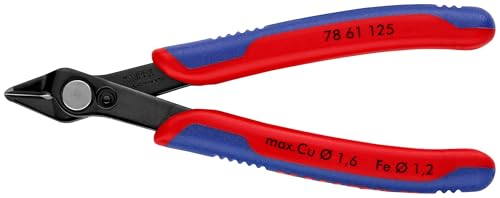
3. Knipex Electronic Super Knips 78 61 125
The Super Knips is the buy-it-once option. Knipex grinds the cutting edges with no bevel at all, so the cut face is as close to truly flush as a hand tool gets, and induction-hardens those edges to about 64 HRC. That hardness is the real story: where basic carbon steel edges dull and start crushing wire after a season of use, the Super Knips keeps slicing cleanly.
Capacity is stated in diameters rather than gauge: soft wire from 0.2 to 1.6 mm, medium-hard wire up to 1.2 mm, with a 9 mm jaw length. Knipex also rates it for glass fibre cable, which most micro cutters cannot handle. The handles are multi-component comfort grips, the opening width is restricted so the tool does not splay in your hand, and an opening spring reopens the jaws between cuts.
Specs
- Brand: Knipex
- Cutting capacity: Soft wire 0.2 to 1.6 mm diameter; medium-hard wire up to 1.2 mm, as stated
- Jaw/blade material: Alloy steel, edges induction hardened to about 64 HRC, as stated
- ESD-safe: Recorded as the 78 61 125 ESD model variant
- ASIN: B005EXOF6S
4. Engineer NS-04 Precision Mini Nippers

Engineer’s NS-04 is the compact precision pick, made in Japan and sized for board-level work. At 4.75 inches long it is the smallest cutter in this roundup, easy to steer between tall capacitors and connectors on a crowded PCB. The jaws are hardened carbon steel, ground for flush cutting component leads and copper wire, and the small handles suit fine, deliberate cuts.
The detail that sets the NS-04 apart at this size is the grip: Engineer fits an ESD-safe handle, making this the natural choice for a static-controlled bench where you handle bare boards and sensitive components all day. Because the tool is small, keep it for fine leads and wire rather than thick cable. If you want the Hakko’s job in a smaller, more precise tool with the ESD box ticked, this is the one.
Specs
- Brand: Engineer
- Cutting capacity: Component leads and fine copper wire; exact diameter not stated
- Jaw/blade material: Hardened carbon steel, as stated
- ESD-safe: Yes, ESD-safe grip, as stated
- ASIN: B000TGJSWG
5. Tamiya 74123 Sharp Pointed Side Cutter

Every electronics and PC-building bench ends up needing to cut plastic: model kit parts, case standoffs, and the supports and brims on 3D printed enclosures. Doing that with a wire cutter both dulls the wire cutter and crushes the plastic. The Tamiya 74123 exists purely for this job. Its long, sharp, pointed jaws reach into tight sprue frames and trim gates close to the part, leaving little cleanup for a knife.
This is a plastic-only tool, and that limit should be taken literally. The slim blades are ground thin for slicing resin cleanly, and cutting copper leads with them risks bending or chipping the tips. Used as intended, though, nothing else here touches it for model work: the pointed profile gets into corners that stubby micro-cutter jaws cannot reach, and the cut face is smooth enough to skip sanding on hidden surfaces.
Specs
- Brand: Tamiya
- Cutting capacity: Plastic model parts and sprues only; not for metal wire, as stated
- Jaw/blade material: Steel, as stated
- ESD-safe: Not stated
- ASIN: B010PG73J4
Quick Comparison
| Cutter | Capacity as stated | Jaw/blade material | ESD-safe | ASIN |
|---|---|---|---|---|
| Hakko CHP-170 | Up to 16 AWG soft copper | Heat-treated carbon steel | Not stated | B00FZPDG1K |
| Xuron 170-II | Up to 18 AWG soft wire | High-carbon steel | Not stated | B000IBSFAI |
| Knipex Super Knips 78 61 125 | Soft wire 0.2–1.6 mm | Alloy steel, edges about 64 HRC | ESD model variant | B005EXOF6S |
| Engineer NS-04 | Fine leads and copper wire | Hardened carbon steel | Yes | B000TGJSWG |
| Tamiya 74123 | Plastic only | Steel | Not stated | B010PG73J4 |
FAQ
Can I cut steel wire or hardened pins with a flush cutter?
No. Flush cutters are ground thin for soft copper and plastic, and hard steel will notch or chip the edges on the first cut. Once notched, an edge crushes instead of cutting. Keep a separate hardened diagonal cutter for steel.
Why does a flush cut leave a flat side and a pointed side?
Only one side of the jaw is ground flat; the other carries the bevel. The material on the flat side ends up with a level face, while the offcut side gets the point. Face the flat side toward the part you are keeping: on a circuit board, flat side down.
What is the difference between a micro-shear and a regular flush cutter?
A regular flush cutter pinches wire between two meeting edges. A micro-shear, like the Xuron 170-II, offsets the edges so they slice past each other, needing less hand force and sending less shock into the joint. The trade-off is a slightly lower cutting capacity.
Do I need an ESD-safe cutter?
Only if you work at a static-controlled station with a grounded mat and wrist strap, handling bare boards and static-sensitive parts. There, an ESD-safe grip like the one on the Engineer NS-04 completes the setup. On an ordinary desk, standard handles are fine.
Can I use the Tamiya cutter on component leads in a pinch?
It will cut them, but it is a bad trade. The 74123’s blades are ground thin for plastic, and metal leads can bend or chip the pointed tips, ruining the tool for the clean plastic cuts it is good at. Use a wire-rated cutter for leads.
Conclusion
For most people building and repairing electronics, the Hakko CHP-170 is the right first flush cutter: honest capacity, clean cuts, and a design that protects the board with its small stand-off. If your hands tire over long sessions, the Xuron 170-II’s shear action is the gentler alternative. Daily users who want edges that stay sharp for years should go straight to the Knipex Super Knips, and the Engineer NS-04 covers compact precision work and ESD benches in one small tool. Add the Tamiya 74123 for plastic work, respect every cutter’s stated capacity, and this corner of the toolbox is settled.
Related guides
More from Amazon
Programs that pair well with the guide above. Offers and eligibility are set by Amazon and may change.
Free shipping on eligible items, Prime Video and more. Eligible new members can start with a free trial.
Start a Prime free trialAd-free music streaming. Eligible new subscribers can start with a free trial.
Try Music Unlimited freeA Prime membership for ages 18-24 with a trial period. Eligibility is set by Amazon.
See Prime for Young AdultsAudiobooks and podcasts to listen to on the go. Eligible new members can start with a free trial.
Try Audible freeAs an Amazon Associate we earn from qualifying purchases.