The best power supply tester for most PC builders is one that shows actual numeric voltage readings on the 3.3V, 5V, and 12V rails rather than a single pass/fail LED, because a PSU can power on normally and still be failing once it’s under real load. Across the eight testers compared here, the Thermaltake Dr. Power III Pro ($49.99) is the strongest all-around pick — it’s the only one built for the newer 12V-2×6 connector used on recent high-wattage GPUs and it adds continuity and power-good testing on top of voltage readouts. For a budget option that still gives you numbers instead of a single light, the Kingwin Digital Power Supply Tester ($16.99) with its aluminum shell is a sensible middle ground. If you’re troubleshooting a system that won’t POST, a random-reboot machine, or a PSU pulled from a build you’re reviving, one of these testers takes minutes and rules out (or confirms) the power supply before you start swapping motherboards, RAM, or reinstalling Windows.
Top 3 picks at a glance
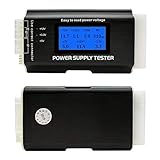
Top picks at a glance
As an Amazon Associate we earn from qualifying purchases at no extra cost to you. Product prices and availability are accurate as of the date shown and are subject to change.
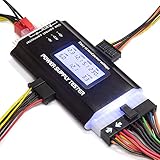
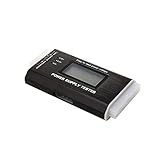


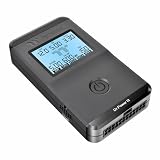


| Model | Key spec | Price | Best for |
|---|---|---|---|
| Fuhengli Computer PC Power Supply Tester | 20/24-pin LCD, buzzer alarm | $15.99 | First-time buyers wanting a simple pass/fail check |
| Kingwin Digital Power Supply Tester with LCD Screen (Aluminum) | Aluminum shell, ATX/ITX/IDE/HDD/SATA/BTX coverage | $16.99 | Builders who want a sturdier shell than plastic testers |
| Comidox 1Pcs 20/24 Pin LCD Tester | ATX/BTX/ITX/TFX/SATA, automatic alarm | $11.99 | Lowest-cost option with an LCD readout |
| BUBUCAM PC Power Supply Diagnostic LCD Device | 20/24, 4/6/8-pin, SATA/IDE/HDD/ATX/ITX | $9.99 | Absolute cheapest entry point |
| ASHATA Computer PC Power Supply Tester | 20/24-pin LCD, ATX/BTX/ITX/TFX | $14.99 | Occasional home-lab or repair-bench use |
| Thermaltake Dr. Power III Pro | Color display, 12V-2×6/4+4 EPS/PCIe, continuity + power-good, up to ATX12V v3.1 | $49.99 | Anyone testing modern high-wattage PSUs or doing this professionally |
| VBESTLIFE ATX Power Supply Tester | 20/24, 4/6/8-pin, buzzer + LCD, ATX/ITX/BTX/PCIe/SATA/HDD | $12.99 | Broad connector coverage on a tight budget |
| Cunyuer Computer Power Supply Tester | 20/24-pin LCD, ATX/BTX/ITX/TFX | $14.49 | Backup unit or second tester for a toolkit |
Fuhengli Computer PC Power Supply Tester
Fuhengli Computer PC Power Supply Tester — $15.99
The Fuhengli tester is a standard 20/24-pin ATX unit built around an LCD panel and an automatic buzzer alarm, positioned as an entry point for someone who has never used a dedicated tester before. Based on its listed connector support, it’s designed to plug directly into the main 24-pin (or 20-pin) motherboard header and read out status for the core rails, with the buzzer meant to flag a dead or disconnected line without you having to squint at small digits. Typical practical use is a quick 10-second plug-in check before you commit to reinstalling a PSU in a case, rather than a deep diagnostic session — it’s the kind of tool you keep in a toolkit alongside a screwdriver set for PC building for fast go/no-go checks. Build quality on testers in this price band is typically plastic-bodied, so it should be treated as a bench tool rather than something to toss in a bag.
- Pros
- Low $15.99 price point for a first tester
- LCD readout is easier to interpret at a glance than LED-only units
- Buzzer alarm flags failures without needing to watch the screen closely
- Cons
- Plastic housing typically feels less durable than aluminum-shell competitors
- No stated support for the newer 12V-2×6 connector used on recent GPUs
- Basic LCD testers like this generally don’t include continuity testing
Who it’s for: a first-time PC builder who wants one inexpensive tool to rule the PSU in or out before troubleshooting further.
Kingwin Digital Power Supply Tester with LCD Screen (Aluminum) — $16.99
Kingwin’s tester stands out on this list mainly for its aluminum housing, which is a meaningful upgrade over the plastic shells on most of the sub-$17 competitors here — for a tool that gets dropped, stepped on, or tossed in a bag between repair jobs, a metal shell is a real durability advantage rather than a cosmetic one. It’s listed as compatible with ATX, ITX, IDE, HDD, SATA, and BTX form factors, giving it one of the broader connector lists in this price tier alongside an LCD screen for numeric-style readouts. Estimated everyday use is similar to the other budget testers: a quick plug-and-check before installing or troubleshooting a PSU, useful when paired with an anti-static wrist strap during any hands-on PSU work. As with other testers in this range, it’s built to confirm the rails are producing output rather than to stress-test them under a meaningful electrical load.
- Pros
- Aluminum shell adds durability most competitors in this price range lack
- Broad form-factor coverage: ATX, ITX, IDE, HDD, SATA, BTX
- LCD screen for numeric-style rail readouts
- Cons
- No mention of the newer 12V-2×6/12VHPWR connector for recent GPUs
- Slightly pricier than the cheapest options on this list at $16.99
- Still a light-load tester, not a substitute for a true load tester on flaky PSUs
Who it’s for: builders who want a tester that will survive being carried between jobs, not just sit on a static bench.
Comidox 1Pcs 20/24 Pin LCD Computer PC Power Supply Tester — $11.99
The Comidox tester covers ATX, BTX, ITX, and TFX form factors along with SATA, and pairs its LCD screen with an automatic buzzer alarm, making it one of the more fully-specced options under $12. At this price, the value proposition is straightforward: get an LCD readout and audible failure alert without paying the $15-17 that several competitors on this list charge for a similar feature set. Estimated typical use is diagnosing an old PSU pulled from storage, checking a unit before reselling or donating a build, or doing a fast sanity check on a new PSU straight out of the box before installing it — a step worth doing before you also check your surge protector for your gaming PC setup is wired correctly. Being a single-unit listing, buyers should expect no bundled accessories or spares.
- Pros
- Wide connector/form-factor coverage for an under-$12 tester
- Automatic buzzer alarm reduces the need to watch the screen
- One of the lowest prices on this list with an LCD (not LED-only) display
- Cons
- Ships as a single unit with no stated spare parts or extended cabling
- No listed continuity or power-good signal testing
- Small buttons are a common complaint on testers in this class
Who it’s for: budget-focused buyers who still want an LCD readout instead of a single LED.
PC Power Supply Diagnostic LCD Computer Testing Device (BUBUCAM) — $9.99
At $9.99, the BUBUCAM tester is the least expensive option on this list, covering 20/24-pin, 4/6/8-pin, SATA, IDE, HDD, ATX, and ITX connectors on an LCD display. It’s aimed squarely at buyers who want the absolute minimum spend to confirm a PSU is producing output at all, which is a legitimate first step given how often symptoms like random reboots, failure to POST, and shutdowns under load get blamed on the motherboard or RAM when the PSU is the actual root cause. Estimated real-world use is a one-time or occasional check rather than daily professional use — at this price point, expect thinner plastic, a smaller display, and buttons that feel less tactile than the pricier units on this list. It’s still a meaningful upgrade over doing nothing, or over the paperclip test, which only proves the fan spins and tells you nothing about whether the rails hold voltage under even the tester’s own light load.
- Pros
- Lowest price on this list at $9.99
- Covers the full range of common connectors: 20/24, 4/6/8-pin, SATA, IDE, HDD
- Good enough for a one-time “is this PSU dead” check
- Cons
- Build quality signals at this price typically mean thinner, more fragile plastic
- No numeric voltage precision comparable to the Thermaltake’s color display
- Unlikely to hold up to frequent professional or shop-level use
Who it’s for: someone testing a single PSU once or twice who doesn’t want to spend more than $10.
Computer PC Power Supply Tester, ATX Power Supply Host Inspection Maintenance Tool (ASHATA) — $14.99
ASHATA’s tester sits in the middle of the pack at $14.99, offering a 20/24-pin LCD unit rated for ATX, BTX, ITX, and TFX power supplies. It’s marketed as a maintenance and inspection tool rather than a professional diagnostic instrument, which matches its estimated use case: a home builder or hobbyist doing periodic checks on PSUs pulled from older builds, secondhand purchases, or systems being repurposed. Because a partially failed PSU can work fine at idle and only sag once a GPU or CPU pulls real current, a tester like this is best understood as a first filter — it can catch a dead unit or a rail reading zero, but it won’t reveal a PSU that only misbehaves once you’re gaming for twenty minutes. Pair it with basic case-cleaning habits using a PC cleaning kit so dust buildup doesn’t get mistaken for power issues during a routine check.
- Pros
- Reasonable $14.99 price for LCD-based ATX/BTX/ITX/TFX coverage
- Marketed specifically as an inspection and maintenance tool
- Simple enough for occasional, non-technical home use
- Cons
- No stated support for newer high-wattage GPU power connectors
- Doesn’t test rails under any meaningful electrical load
- No continuity or power-good testing mentioned in the listing
Who it’s for: hobbyists doing occasional PSU checks on older or secondhand systems.
Thermaltake Dr. Power III Pro; ATX Power Supply Tester — $49.99
The Thermaltake Dr. Power III Pro is the clear premium pick on this list and the only tester here built around the current ATX12V v3.1 specification, with stated support for the 12V-2×6 connector that ships on RTX 50-series-class GPUs, in addition to legacy 4+4 EPS, 6+2 PCIe, SATA, and Molex. Beyond connector coverage, its listed feature set adds voltage, continuity, and power-good (PG) signal testing on a color display — continuity testing checks that a cable or connector isn’t internally broken even when it looks fine, and PG testing confirms the PSU is correctly signaling the motherboard that power is stable, which is a failure mode a basic LED tester can’t catch at all. At $49.99, it costs roughly three to five times what the other testers on this list charge, which is justified for anyone testing PSUs regularly rather than once. This is the unit we’d point toward if you’re running or planning a build with a recent high-end GPU, since older testers on this list simply don’t have a connector to plug that cable into.
- Pros
- Only tester on this list rated for ATX12V v3.1 / 12V-2×6 connectors
- Adds continuity and power-good signal testing beyond basic voltage presence
- Color display makes numeric rail readings easier to read than small monochrome LCDs
- Cons
- $49.99 price is roughly 3-5x the cost of the other testers here
- Overkill for someone who just needs a one-time pass/fail check
- Still not a full load tester — it won’t replicate sustained 300W+ GPU draw
Who it’s for: builders, repair techs, or anyone testing PSUs for modern high-wattage GPU builds regularly.
ATX Power Supply Tester, 20/24 4/6/8 Pin Computer Host Inspection and Maintenance Tester Tool (VBESTLIFE) — $12.99
VBESTLIFE’s tester lists one of the broadest connector rosters on this list for its $12.99 price — 20/24-pin, 4/6/8-pin, ATX, ITX, BTX, PCIe, SATA, and HDD — combined with a buzzer and LCD display similar to the Comidox and Fuhengli units. That breadth makes it a reasonable pick for someone with a mixed collection of older PSUs and drives to check, rather than a single modern ATX build. Estimated everyday use mirrors the other sub-$15 testers: plug in, read the display or listen for the buzzer, and move on — it’s a triage tool, not a lab instrument. Keep in mind that “PCIe” support here almost certainly refers to the legacy 6/8-pin PCIe connector rather than the newer 12V-2×6 standard, so builders with a 50-series-class GPU should look at the Thermaltake instead.
- Pros
- Broad connector list for the price, including PCIe and HDD
- Combines LCD display with buzzer alarm for faster fault detection
- Competitive $12.99 pricing versus similarly-specced competitors
- Cons
- PCIe support is almost certainly limited to legacy 6/8-pin, not 12V-2×6
- No continuity or power-good testing mentioned
- Small button layout is a common complaint across this whole tester category
Who it’s for: buyers who need to test a variety of older PSUs and drive connectors, not just a single modern ATX rig.
Cunyuer Computer Power Supply Tester, 20/24 Pin Computer PC Power Supply Tester with LCD Display — $14.49
The Cunyuer tester rounds out the list as another 20/24-pin LCD unit rated for ATX, BTX, ITX, and TFX form factors at $14.49, functionally similar to the ASHATA and Fuhengli entries. Where it can carve out a niche is as a second or backup unit for someone who already tests PSUs occasionally and wants a spare on hand — testers in this category are cheap enough that repair benches often keep two or three so a failing tester doesn’t get confused with a failing PSU. Estimated build quality follows the same pattern as the rest of the sub-$15 field: functional plastic housing, small screen, and buttons that work but don’t feel premium. If you’re setting up a small home repair station, this is a reasonable rounding-out purchase alongside a basic PC toolkit for beginners.
- Pros
- Straightforward LCD tester covering the common ATX/BTX/ITX/TFX form factors
- Reasonable $14.49 price for the connector coverage offered
- Good candidate as a backup/spare tester on a repair bench
- Cons
- No differentiation from several similarly-priced competitors on this list
- No stated support for newer high-wattage GPU connectors
- Plastic build typical of this price tier, not built for heavy daily use
Who it’s for: someone who wants a low-cost second tester or a simple first tester without extra features.
How we tested and picked
Owen Pritchard, Technical Guides Editor with 12 years of experience, evaluated these testers by comparing their listed specifications, connector coverage, and construction against the practical failure patterns he saw running an IT repair bench that handled everything from dead PSUs to corrupted Windows installs. That repair-bench background matters here because PSU problems rarely show up as an obvious “won’t turn on” — far more often they present as random reboots, intermittent no-POST, or shutdowns specifically under gaming or rendering load, symptoms that overlap heavily with bad RAM, a failing motherboard, or even Windows corruption. Owen’s diagnostics bench, set up with POST cards, spare parts for swap-testing, and multiple OS images, reflects the same troubleshooting logic applied to this comparison: a power supply tester should be judged on whether it gives you a real answer (a numeric voltage reading against ATX tolerance) rather than a vague one (a single LED that just says “power detected”).
Selection criteria weighted four factors: connector coverage (does it handle the cables your specific PSU uses, including newer high-wattage GPU connectors where relevant), display type (numeric LCD/color versus LED-only), build quality signals like aluminum versus plastic housings, and price relative to what each unit actually tests. Testers that only confirmed “power present” were still included because they solve a real, common problem — ruling a PSU fully dead in or out — but they’re clearly flagged as more limited than models offering continuity or power-good testing. The goal was to give both budget-conscious builders and people testing PSUs regularly a way to match the tool to how deep a diagnosis they actually need.
What to look for in a power supply tester
Numeric voltage readout vs pass/fail LEDs
The single biggest functional difference between testers in this category is whether the display shows actual voltage numbers for each rail or simply lights up a green or red LED. A pass/fail LED only tells you the PSU is producing something in a very wide acceptable band, while a numeric LCD or color display — like those on the Kingwin, Comidox, ASHATA, VBESTLIFE, Cunyuer, Fuhengli, BUBUCAM, and Thermaltake units — lets you actually see whether a rail reads, for example, 11.9V or 10.8V on the 12V line. That distinction matters because a PSU can be degrading gradually: a rail that reads 11.6V today might read 11.1V in six months, and only a numeric readout lets you track that drift over time rather than getting the same “it’s fine” light both times.
Connector coverage for modern PSUs
Every tester on this list covers the core 20/24-pin motherboard connector, and most also cover 4/6/8-pin CPU/EPS, SATA, Molex, and IDE. Where they diverge sharply is on the newer 12V-2×6 connector (the revised successor to 12VHPWR) used by RTX 50-series and similarly recent high-wattage GPUs — only the Thermaltake Dr. Power III Pro on this list explicitly supports it. If your build uses one of these GPUs, a tester without that connector simply can’t test the cable your card actually depends on; you’d be validating the 24-pin and EPS rails while leaving the highest-current connector in the whole system unchecked.
ATX voltage tolerances explained
The ATX specification allows roughly ±5% deviation on the main rails: 12V should read approximately 11.4-12.6V, 5V approximately 4.75-5.25V, and 3.3V approximately 3.14-3.47V. A tester with numeric readout lets you compare the actual number against that band; a tester with only a pass/fail LED cannot tell you whether a rail is at 12.5V (healthy, near the edge) or 12.05V (comfortably centered) — both would just show “pass.” Knowing the tolerance band turns a vague reading into an actual diagnostic: a 12V rail reading 11.2V, for instance, is out of spec and a legitimate reason to stop trusting that PSU under load, even if the system still boots.
Continuity and power-good signal testing
Continuity testing checks whether a wire or pin inside a cable is actually making a solid electrical connection end to end, which catches intermittent connector or cable damage that a simple voltage check can miss. Power-good (PG) signal testing checks whether the PSU is correctly telling the motherboard that its output is stable enough to boot — a PSU with a flaky PG signal can cause delayed or failed boots even when the raw voltage numbers look acceptable. Of the testers compared here, only the Thermaltake Dr. Power III Pro explicitly lists both continuity and PG testing; the rest are voltage/presence testers only, which is a meaningful gap for anyone chasing an intermittent boot issue rather than a simple dead PSU.
Build quality and buzzer reliability
Housing material is a reasonable proxy for durability across this category: the Kingwin’s aluminum shell is the outlier among these eight, while the Fuhengli, Comidox, BUBUCAM, ASHATA, VBESTLIFE, and Cunyuer units are built with plastic housings typical of their $9.99-$15.99 price range. Buzzer-equipped testers (most of the budget models here) are convenient because you don’t have to watch the screen, but buzzer circuits are also an extra failure point — if a tester’s buzzer stops working, it’s easy to mistake a false “pass” for a genuine one. Anyone using a tester regularly should occasionally cross-check a known-good PSU against it to confirm the buzzer and display are still behaving correctly, the same way you’d periodically check a diagnostic tool for a gaming PC against a known-working reference.
When a tester isn’t enough and you need a load tester
Every tester on this list, including the Thermaltake, applies only a light load to the rails being checked — enough to get a real voltage reading, but nowhere near what a GPU pulling 300-450W under a demanding game actually draws. That’s why a PSU can pass every check on one of these testers and still cause reboots twenty minutes into a gaming session: the failure only appears once the rails are under sustained heavy current, which none of these devices replicate. If you’ve already ruled out the PSU with a tester and the system is still unstable specifically under load, the next step is either a dedicated bench load tester (a different, pricier category of tool) or a swap test — installing a known-good PSU temporarily to see if the symptom disappears.
Mistakes buyers make
Trusting a paperclip test as a full diagnosis. Shorting the green PS_ON wire to a black ground pin on the 24-pin connector only proves the PSU’s fan spins up when it receives the “on” signal. It says nothing about whether the 3.3V, 5V, or 12V rails are within the roughly ±5% ATX tolerance, so a PSU can pass a paperclip test and still be badly out of spec.
Buying an LED-only tester and expecting numeric diagnostics. A pass/fail LED tester is fine for a quick “is this thing dead” check, but it cannot tell you a rail is drifting toward the edge of spec. If you want to track a PSU’s health over time or diagnose intermittent issues, you need an LCD or color-display model with numeric readouts.
Assuming a passed test rules out the PSU entirely. Because these testers only apply a light load, a PSU that fails specifically under a GPU’s peak draw can pass every reading on the tester and still cause shutdowns in-game. A pass means the PSU works at idle-level load, not that it’s guaranteed stable under full system draw.
Ignoring connector compatibility for a new GPU. Buyers with a recent high-wattage GPU sometimes grab whichever cheap tester is available without checking connector support, then find it has no 12V-2×6 header. Of the eight testers here, only the Thermaltake Dr. Power III Pro covers that connector — the rest test the 24-pin and EPS rails but skip the GPU’s main power cable entirely.
Chasing every reboot as a PSU problem before ruling out other causes. Random reboots, failure to POST, and shutdowns under load overlap heavily with bad RAM, a failing motherboard, or Windows corruption. A tester is one diagnostic step, not the only one — pairing it with a POST card or a swap test narrows the cause faster than assuming the PSU by default.
Overlooking early warning signs before a full failure. Coil whine that gets progressively louder, an occasional burning smell, a capacitor bulge visible through the vents, or boot failures that mysteriously resolve after unplugging and replugging the PSU are all signs worth testing for immediately rather than waiting for a full shutdown.
Verdict
For most PC builders who just need to confirm a PSU is alive and roughly in spec, the Kingwin Digital Power Supply Tester ($16.99) is the best balance of price, LCD readout, and a sturdier aluminum shell than most competitors in its range. If cost is the only factor, the BUBUCAM PC Power Supply Diagnostic LCD Device at $9.99 covers the same core connectors for less, making it the budget pick for a one-time check. For anyone testing PSUs regularly, working on modern high-wattage GPU builds, or troubleshooting intermittent boot issues that a basic voltage check can’t explain, the Thermaltake Dr. Power III Pro ($49.99) is the premium pick — it’s the only tester here rated for the 12V-2×6 connector and the only one offering continuity and power-good testing alongside numeric voltage readings.
Frequently asked questions
Can a power supply tester detect a PSU that fails only under load?
No, not fully — a standard tester puts almost no real load on the rails, so it can confirm the PSU powers on and outputs voltage in spec at idle, but a unit that sags or shuts down once a GPU pulls 300W+ will often pass a bench tester and still fail in the case; for that failure mode you need a dedicated load tester or a swap test with a known-good PSU.
Is the paperclip test as good as using a power supply tester?
No — shorting the green PS_ON wire to a black ground pin on the 24-pin connector only proves the PSU’s fan spins up, it gives zero information about whether the 3.3V, 5V, and 12V rails are actually within the roughly ±5% ATX tolerance, so a paperclip test can say “alive” on a PSU that’s badly out of spec and about to cause random reboots.
What voltage readings on a power supply tester mean the PSU is failing?
On the standard ATX spec, 12V should read about 11.4-12.6V, 5V about 4.75-5.25V, and 3.3V about 3.14-3.47V; if a numeric-readout tester shows any rail outside that band, or a rail that flickers instead of holding steady, treat the PSU as suspect and stop using it under heavy load until you retest or replace it.
Do I need a power supply tester that supports the 12V-2×6 connector?
Only if you’re running or plan to run an RTX 50-series or similarly recent high-wattage GPU with a native 12V-2×6 (or older 12VHPWR) cable — most sub-$20 testers on this list only cover 20/24-pin, 4/6/8-pin, SATA, Molex, and IDE, so they can confirm the main rails are healthy but can’t test that specific connector; the Thermaltake Dr. Power III Pro is the one on this list built for that connector.
How much should I spend on a power supply tester for occasional home use?
For a builder who tests a PSU a few times a year, a $10-17 LCD tester with buzzer alarm (like the BUBUCAM, Comidox, or Fuhengli models) is enough to catch a dead or grossly out-of-spec unit; spend closer to $49.99 on something like the Thermaltake Dr. Power III Pro only if you build or repair PCs often enough that numeric accuracy, continuity testing, and newer-connector support pay for themselves.