Our Short List of 3

- AX1800 dual-band Wi-Fi 6
- Works with Alexa, Certified for Humans device
- Gigabit Ethernet ports
- EasyMesh support for adding nodes

- AX5400 dual-band Wi-Fi 6
- Six-stream radio for many devices
- Gigabit WAN and LAN ports
- HomeShield security features

- AX5700 dual-band Wi-Fi 6
- 2.5-gigabit WAN port
- Adaptive QoS for video traffic
- AiProtection Pro security suite
All 4 Picks at a Glance
| Product | Specs | Action |
|---|---|---|
| TP-Link Archer AX21 AX1800 Dual Band WiFi 6 Router |
| Check price on Amazon |
| TP-Link Archer AX73 AX5400 Dual Band WiFi 6 Router |
| Check price on Amazon |
| ASUS RT-AX86U Pro AX5700 Dual Band WiFi 6 Router |
| Check price on Amazon |
 NETGEAR Nighthawk RAX50 AX5400 Dual Band WiFi 6 Router |
| Check price on Amazon |
The best routers for firestick start from one honest fact: no router is made for a Fire TV Stick alone, because the stick connects over ordinary Wi-Fi like any other streaming device. What a Firestick needs is a steady connection in the room where the television sits, enough bandwidth for a 4K stream when the household is busy, and a router that keeps the stream steady when phones and laptops share the same airwaves. The router that serves a Firestick well is therefore the one with strong coverage in the living room, a 5 GHz band for the stream, and quality of service that protects video traffic.
This guide compares five routers built for exactly that job. One is a mesh system for televisions in far rooms, one is a high-class single router for a busy household, and the rest are strong single routers for compact homes. Every pick is a full router, not an extender, and every one handles the streaming load a Firestick creates, including 4K streams alongside everyday traffic.
Our Top Picks

Top 3 picks at a glance
How to Choose
Put the stream on the 5 GHz band
A Firestick streams best on the 5 GHz band, because it is faster and less crowded than 2.4 GHz in most homes, and it carries a 4K stream with room to spare. The 2.4 GHz band reaches further through walls, so it suits a stick in a far room, but it shares airtime with neighbours and smart home gadgets. Check whether the router lets the two bands carry separate names, because giving the Firestick its own 5 GHz network name is the simplest way to keep it on the fast band.
Coverage in the television room
A Firestick in a far bedroom or a basement needs signal as surely as a laptop does, and a weak signal makes streams buffer and drop to lower quality. Map the rooms with televisions before buying, and favour mesh systems when a stick lives far from the router or on a second floor. A single router suits a home where the main television sits near the router, while a mesh node in the far room gives a distant stick a nearby source.
Use quality of service for video traffic
Quality of service, often shortened to QoS, lets a router recognise video traffic and give it priority when the network gets busy, so a video call starting upstairs does not freeze the film downstairs. Adaptive QoS on some routers does this automatically by traffic type, while simpler routers ask the reader to pick which device gets priority by hand. Either approach works, but a router with no QoS at all leaves every stream fighting on equal terms.
Wire the television when possible
A wired connection removes the two biggest variables in streaming, distance and interference, so a television that sits near the router should connect by Ethernet when the room allows it. A Firestick itself has no Ethernet port, so the wired connection goes to the television or to a mesh node nearby, which then serves the stick over a short, strong wireless link. Count the LAN ports before buying, because a router with only two or three ports forces a separate switch.
Handle the whole household at once
A Firestick rarely streams alone: phones, laptops, smart speakers and other televisions share the same connection, and the router must serve them all at once. A router with OFDMA and MU-MIMO serves several devices in one transmission window instead of one at a time, which keeps the stream steady while the household is busy. Look for a router that lists capacity for dozens of devices, because a router built for a handful of laptops starts dropping gadgets as the count rises.
Dual-band or tri-band for streaming
A dual-band router gives a household two lanes, one at 2.4 GHz and one at 5 GHz, which is enough when one television streams at a time. A tri-band router adds a third lane, either a 6 GHz band or a second 5 GHz band, which suits homes where two or more televisions stream at once. Choose tri-band when several rooms stream at the same time, and dual-band when one screen streams at a time.
Top Picks
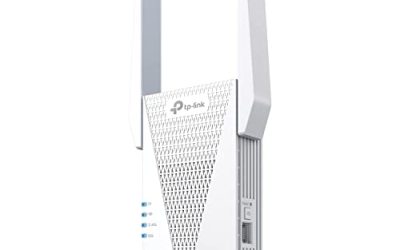
TP-Link Archer AX21 AX1800 Dual Band WiFi 6 Router
- AX1800 dual-band Wi-Fi 6
- Works with Alexa, Certified for Humans device
- Gigabit Ethernet ports
- EasyMesh support for adding nodes
TP-Link Archer AX21 AX1800 Dual Band WiFi 6 Router
The Archer AX21 is the natural first pick for a Firestick household, because its own listing states that it works with Alexa and carries a Certified for Humans badge, and the Firestick itself is an Alexa device. Voice commands through Alexa can control the network, and the AX1800 Wi-Fi 6 radio with OFDMA and MU-MIMO keeps a 4K stream steady while phones and laptops share the airwaves. Gigabit ports cover wired devices, and EasyMesh support lets a matching node join later when a stick moves to a far room.
Who it is for: Alexa and Firestick households that want voice control of the network from the router itself.
Caveats: Its AX1800 class is the lowest wireless class in this guide, so a home with several 4K streams at once should look at a faster pick below.
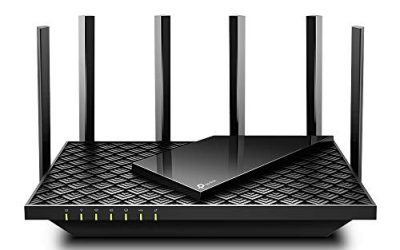
TP-Link Archer AX73 AX5400 Dual Band WiFi 6 Router
- AX5400 dual-band Wi-Fi 6
- Six-stream radio for many devices
- Gigabit WAN and LAN ports
- HomeShield security features
TP-Link Archer AX73 AX5400 Dual Band WiFi 6 Router
The Archer AX73 is the step up for a household where the Firestick streams alongside a busy network. Its AX5400 six-stream radio serves many devices at once, so a 4K stream keeps its lane while phones, laptops and smart speakers chatter in the background, and the HomeShield features add parental controls and security scanning. The gigabit ports cover wired devices near the router, and the Alexa compatibility through the Tether app keeps voice control in reach.
Who it is for: busy households where a Firestick streams alongside many other devices.
Caveats: Its Ethernet ports are gigabit-only with no multi-gigabit port, and it has no 6 GHz band for the busiest airwaves.
TP-Link Deco X55 AX3000 Whole Home Mesh WiFi 6 System (3-Pack)
TP-Link Deco X55 AX3000 Whole Home Mesh WiFi 6 System (3-Pack)
- AX3000 dual-band mesh Wi-Fi 6
- Three units under one network name
- Gigabit Ethernet ports on each unit
- HomeShield security features
- Deco app for guided setup
The Deco X55 is the mesh answer for a Firestick in a far room. Three units work as one network, so a stick in the far bedroom streams on the same network name as the living room set, and a node in that room gives the stick a nearby source instead of a weak signal through thick walls. Each unit carries wired ports for a nearby television, and the Deco app guides setup room by room. For a home where televisions sit far from the router, this is the pick that ends buffering in the far room.
Who it is for: multi-room homes where a Firestick lives far from the router or on a second floor.
Caveats: Its AX3000 class is below the standalone routers above, so a home with heavy streaming on every screen may prefer a faster single router plus a node later.
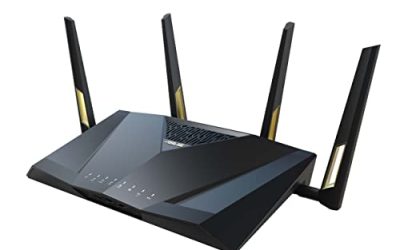
ASUS RT-AX86U Pro AX5700 Dual Band WiFi 6 Router
- AX5700 dual-band Wi-Fi 6
- 2.5-gigabit WAN port
- Adaptive QoS for video traffic
- AiProtection Pro security suite
ASUS RT-AX86U Pro AX5700 Dual Band WiFi 6 Router
The RT-AX86U Pro is the most capable single router in this guide, and the one with the strongest video protection. Its AX5700 radio handles a fast broadband plan alongside a large device count, and the 2.5-gigabit WAN port passes a faster plan to wired devices. Adaptive QoS recognises video traffic and gives it priority when the network gets busy, which is exactly what a Firestick needs during a busy evening, and AiMesh support lets a matching node join later when a stick moves to a far room.
Who it is for: households that want the highest single-router class with automatic video priority.
Caveats: It has no 6 GHz band, and its feature depth means setup takes longer than the simpler TP-Link picks above.
NETGEAR Nighthawk RAX50 AX5400 Dual Band WiFi 6 Router
- AX5400 dual-band Wi-Fi 6
- Four-stream radio
- Gigabit WAN and LAN ports
- Nighthawk app for setup
NETGEAR Nighthawk RAX50 AX5400 Dual Band WiFi 6 Router
The Nighthawk RAX50 is the Nighthawk pick for a Firestick household, an AX5400 Wi-Fi 6 router with a four-stream radio and the Nighthawk app for setup. Its OFDMA and MU-MIMO features keep a 4K stream steady while phones and laptops share the airwaves, and the gigabit ports cover wired devices near the router. The app walks through setup and shows which devices use the network, which helps when a stream stutters and the cause needs finding.
Who it is for: households that prefer the Nighthawk app and a straightforward strong router.
Caveats: The maker states capacity around twenty-five devices, so a very large smart home should favour a tri-band pick, and its ports are gigabit-only.
Comparison Table
| Router | Wi-Fi class | Bands | QoS | Mesh | Best for |
|---|---|---|---|---|---|
| TP-Link Archer AX21 | Wi-Fi 6, AX1800 | Dual-band | Basic | EasyMesh | Alexa and Firestick homes |
| TP-Link Archer AX73 | Wi-Fi 6, AX5400 | Dual-band | HomeShield | No | Busy households |
| TP-Link Deco X55 (3-pack) | Wi-Fi 6, AX3000 | Dual-band | HomeShield | Yes, mesh | Far-room televisions |
| ASUS RT-AX86U Pro | Wi-Fi 6, AX5700 | Dual-band | Adaptive QoS | AiMesh | Highest class, video priority |
| NETGEAR RAX50 | Wi-Fi 6, AX5400 | Dual-band | Basic | No | Nighthawk households |
Which One Is Right for You?
Start with the television room. If the main television sits near the router and the household runs on Alexa, the TP-Link Archer AX21 is the most direct answer, because its listing carries the Alexa badge and the Firestick is an Alexa device. If the household is busy with many devices, step up to the Archer AX73 for its six-stream radio, or to the ASUS RT-AX86U Pro for the highest single-router class and Adaptive QoS that protects video traffic automatically. If a Firestick lives in a far room or on a second floor, stop comparing single routers and buy mesh: the Deco X55 puts a node in that room so the stick has a nearby source. If the Nighthawk app is already familiar, the RAX50 is the straightforward choice. In every case, put the Firestick on the 5 GHz band, and wire the television when the room allows it.
Frequently Asked Questions
Does a Firestick need a special router?
No. A Firestick connects over ordinary Wi-Fi like any other streaming device, so no router is made for it alone. What it needs is a steady connection in the television room, a 5 GHz band for the stream, and a router that protects video traffic when the household is busy.
Should a Firestick use the 2.4 GHz or 5 GHz band?
5 GHz in most homes, because it is faster and less crowded, and it carries a 4K stream with room to spare. 2.4 GHz reaches further through walls, so it suits a stick in a far room, but it shares airtime with neighbours and smart home gadgets.
Why does a Firestick buffer in a far room?
Weak signal is the usual cause: the stick sits far from the router, behind thick walls, and the connection drops to a lower quality. A mesh node in that room gives the stick a nearby source, and a wired connection to the television removes the problem entirely.
Can one router handle several Firesticks at once?
Yes, when the streams sit on separate bands or on wired connections and the broadband plan has enough headroom. A tri-band router or a mesh system handles several simultaneous streams far more comfortably than a dual-band single router in a crowded home.
Disclosure: As an Amazon Associate, we may earn from qualifying purchases.
Related guides
More from Amazon
Programs that pair well with the guide above. Offers and eligibility are set by Amazon and may change.
Free shipping on eligible items, Prime Video and more. Eligible new members can start with a free trial.
Start a Prime free trialAd-free music streaming. Eligible new subscribers can start with a free trial.
Try Music Unlimited freeA Prime membership for ages 18-24 with a trial period. Eligibility is set by Amazon.
See Prime for Young AdultsAudiobooks and podcasts to listen to on the go. Eligible new members can start with a free trial.
Try Audible freeAs an Amazon Associate we earn from qualifying purchases.