Our Short List of 3
All 4 Picks at a Glance
| Product | Specs | Action |
|---|---|---|
 ASUS RT-AX88U Pro | Check price on Amazon | |
 TP-Link Archer AXE75 | Check price on Amazon | |
 NETGEAR Nighthawk RAXE300 | Check price on Amazon | |
 ASUS RT-AXE7800 | Check price on Amazon |
Most homes need both kinds of connection at once. The work computer, the console, and the streaming box sit near the router and run best on a cable, while the phones, tablets, laptops, and smart gadgets move around the house and need Wi-Fi that reaches every room. The best routers for wired & wireless do both jobs well, instead of trading one for the other: enough Ethernet ports for the desk, a multi-gig port for the fastest wired device, and modern Wi-Fi with enough lanes to keep the wireless side steady when the household is busy.
A router that is strong in only one half creates a lopsided network. Plenty of wired ports with weak Wi-Fi leaves the phones struggling in the far rooms, while fast Wi-Fi with only two LAN ports forces the desk setup onto wireless or onto a separate switch. The picks in this guide are judged on both halves together: the count and speed of the wired ports, the Wi-Fi standard and band layout, the processor and capacity that decide how many devices stay responsive at once, and the traffic controls that keep calls and streams steady when downloads start.
This guide compares five routers that cover both sides of the home network. Two are dual-band Wi-Fi 6 routers with generous wired panels, two are tri-band Wi-Fi 6E routers with a 6 GHz lane, and one is a tri-band mesh system whose satellites each carry wired ports of their own. Every pick below is a complete router sold on Amazon US, and each one is described with the wired and wireless features that decide whether it fits a mixed household.
Our Top Picks
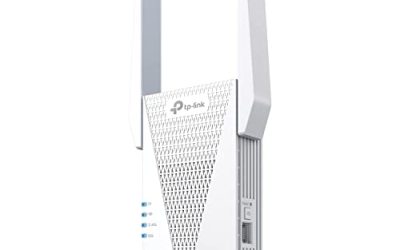
- TP-Link AXE5400 Tri-Band WiFi 6E RouterWiFi 6E, Tri-Band AXE540012.91 x 10.43 x 4.72 inches1.5 poundsCheck on Amazon
Top 3 picks at a glance
How to Choose
Count the wired ports
Start by counting the devices that should connect by cable, because the port count decides whether a switch is needed on day one. A work computer, a console, a streaming box, and a network storage device already fill four ports, and a printer or a second console fills a fifth. Four gigabit LAN ports cover the usual desk setup, while eight ports suit a household with a storage device, a switch, and several wired gadgets. Mesh systems need the same count at each satellite, because a satellite with only one spare port cannot serve a wired device in a far room. If the count falls short, a small unmanaged switch adds ports, but a router with enough ports built in keeps the setup simpler.
Multi-gig ports
A gigabit port caps a wired device at one gigabit, which is enough for most uses, but a 2.5G port matters on a gigabit internet plan, because it lets one wired device use the full plan speed without sharing the gigabit ceiling with the WAN connection. Look for a router where the 2.5G port can serve as a LAN port, not only as the WAN port, since a port locked to WAN duty does nothing for the wired devices. Some routers in this guide have a single 2.5G port that switches between roles, while others pair a 2.5G WAN port with a separate 2.5G LAN port. Check the role of each port on the model page before buying, because the headline figure alone does not say which side of the router the fast port serves.
Wi-Fi standard and bands
Wi-Fi 6 is the baseline for a mixed household, because it serves many devices at once far better than Wi-Fi 5, and it keeps latency steadier when several people stream at the same time. Wi-Fi 6E adds a 6 GHz band, which is still quiet in most neighbourhoods, and it suits a household with newer phones and laptops that can use it. Dual-band routers cover the 2.4 GHz and 5 GHz bands, which is enough for most homes, while tri-band routers add a third lane that separates traffic or serves as a dedicated backhaul in a mesh system. The 2.4 GHz band reaches further through walls and suits smart gadgets, while the 5 GHz band carries the faster traffic for laptops and streams.
Wired backhaul for mesh
A mesh system can connect its satellites over Wi-Fi or over Ethernet, and the choice changes how well the whole network performs. A wireless backhaul shares the airwaves with the devices, so a satellite’s speed drops when the household is busy, while a wired backhaul carries traffic between units over Ethernet and leaves the Wi-Fi bands free for devices. If Ethernet cables can reach the satellite locations, choose a mesh system with wired backhaul support and wired ports on each unit, because that combination gives the far rooms a wired-grade connection. Where no cable can reach, a tri-band mesh with a dedicated backhaul band is the next best option, since the third band keeps unit-to-unit traffic off the bands the devices use.
Processor and device capacity
A router that serves both wired and wireless devices needs a capable processor, because every packet passes through it, and a weak processor shows its limits as delay when the household is busy. Look for a multi-core processor and enough memory to hold the connection table for dozens of devices, since a modern home easily reaches thirty or more connected gadgets once phones, tablets, laptops, consoles, televisions, and smart devices are counted. OFDMA and MU-MIMO let the router serve several devices in one transmission window instead of one at a time, which keeps the network responsive when the household is busy. A router that lists capacity for many devices is a safer choice than one built for a handful of laptops.
Traffic controls and QoS
When wired and wireless devices share one internet connection, the router needs a way to protect the traffic that cannot wait. Quality of service, or QoS, lets the router prioritise calls, streams, and games over downloads and backups, and the best implementations have a preset that the owner can enable in a few taps. Some routers let the owner set a priority rule for a specific device, such as a wired work computer or a console, which is the most direct way to keep a call clear while someone else starts a download. Adaptive QoS that recognises traffic types is easier to live with than manual rules, because it adjusts itself when the household’s habits change.
Top Picks
ASUS RT-AX88U Pro
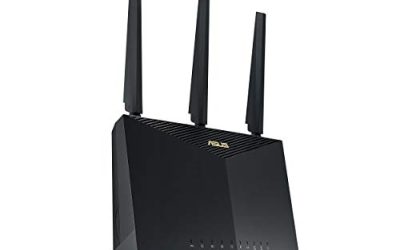
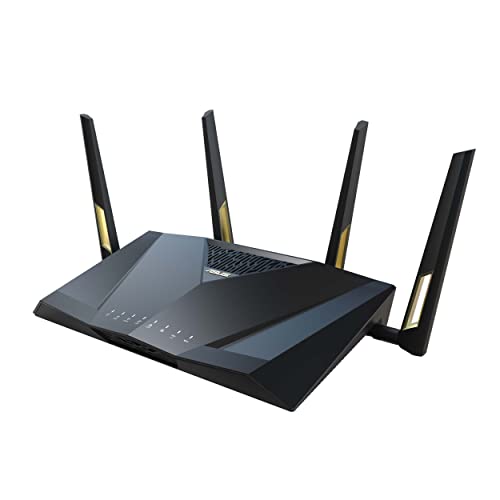
The ASUS RT-AX88U Pro is the wired champion in this guide, and the pick for a desk setup with many cabled devices. Eight gigabit LAN ports cover a work computer, a console, a streaming box, a storage device, and still leave room to grow, and a 2.5G port adds a fast lane for the one device that needs it. Its AX6000 dual-band Wi-Fi 6 keeps the wireless side strong, with Adaptive QoS presets for gaming, streaming, and work, and AiMesh support means a satellite can join later if the far rooms need help.
Key specifications:
– Dual-band Wi-Fi 6 with AX6000 class wireless
– Eight gigabit LAN ports plus a 2.5G port
– Adaptive QoS with presets for gaming, streaming, and work
– AiProtection security and VPN server included
– AiMesh support for adding satellite units later
Who it is for: a household with a large wired desk setup that also wants strong Wi-Fi, and that would rather have eight ports built in than add a switch.
Caveats: it is dual-band only, so there is no 6 GHz lane for newer devices, and its size suits a desk or a shelf rather than a small side table.
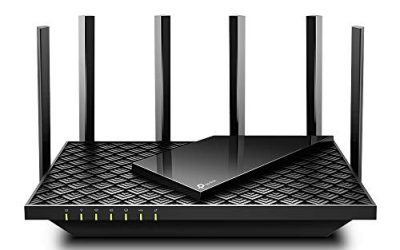
TP-Link Archer AXE75
The TP-Link Archer AXE75 is the tri-band pick for a household with newer devices, adding a 6 GHz band to the usual 2.4 GHz and 5 GHz lanes. The 6 GHz band is still quiet in most neighbourhoods, so it gives newer phones and laptops a lane that nearby networks cannot reach, while the 2.5G WAN port suits a gigabit internet plan. Six antennas push the signal across a flat or a small house, and the USB 3.0 port turns an attached drive into simple shared storage for the household.
Key specifications:
– Tri-band Wi-Fi 6E with AXE5400 class wireless, including a 6 GHz band
– One 2.5G WAN port plus four gigabit LAN ports
– Six high-gain antennas for broad coverage
– USB 3.0 port for shared storage
– HomeShield security tools and OneMesh support
Who it is for: a household with Wi-Fi 6E phones and laptops that wants the quiet 6 GHz band, plus a 2.5G WAN port for a gigabit plan.
Caveats: the 2.5G port serves as the WAN port, so the wired devices use gigabit LAN ports, and the 6 GHz band only helps devices with Wi-Fi 6E radios, while older gadgets stay on 5 GHz.
NETGEAR Nighthawk RAXE300
The NETGEAR Nighthawk RAXE300 is the high-capacity pick, with tri-band Wi-Fi 6E and a design built for a house full of devices. Its 6 GHz band gives newer gadgets a quiet lane, and the Nighthawk app makes the everyday jobs, such as checking connected devices and pausing the internet for a child’s tablet, easy to find. A 2.5G port handles the fastest wired device, and five gigabit ports cover the rest of the desk setup, so the wired side is as generous as the wireless side.
Key specifications:
– Tri-band Wi-Fi 6E with AXE7800 class wireless, including a 6 GHz band
– One 2.5G port plus five gigabit Ethernet ports
– Nighthawk app for setup and device management
– Six-stream design for serving several devices at once
– Four external antennas for broad coverage
Who it is for: a busy household with many devices on both sides of the network, where the router must serve wired and wireless traffic at once without slowing down.
Caveats: the 2.5G port is a single port, so only one wired device gets the fast lane, and the router’s size and winged design need shelf space.
TP-Link Deco XE75 Pro (3-Pack)
The TP-Link Deco XE75 Pro is the mesh pick for a larger home where both wired and wireless matter in every room. Three tri-band units form a single network with one name, so phones and laptops move between rooms without dropping, and each unit has a 2.5G port plus a gigabit port, so a wired device can connect at any satellite instead of only at the main unit. The 6 GHz band can serve as a dedicated backhaul between units, and a wired backhaul is supported where Ethernet cables reach the satellites, which is the strongest setup of all.
Key specifications:
– Tri-band Wi-Fi 6E mesh system, three units included, AXE5400 class
– One 2.5G port plus one gigabit port on each unit
– 6 GHz band available as a dedicated backhaul
– Wired backhaul support between units
– Deco app for setup and management
Who it is for: a larger home where the far rooms need both Wi-Fi and a wired port, and where the satellites can use a wired or 6 GHz backhaul.
Caveats: each unit has only two Ethernet ports, so a room with several wired devices still needs a switch, and the system costs more than a single router for a small home.
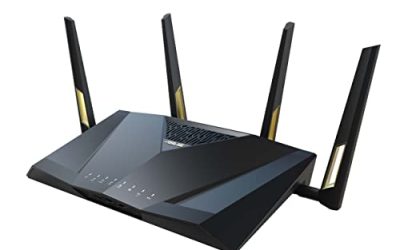
ASUS RT-AXE7800
The ASUS RT-AXE7800 is the balanced tri-band pick, pairing a 6 GHz band with a 2.5G port that switches between WAN and LAN duty. Its AXE7800 class wireless covers the 2.4 GHz, 5 GHz, and 6 GHz bands, so newer devices get the quiet lane while older gadgets keep the bands they already use. Adaptive QoS presets protect calls and streams, AiProtection guards the network, and AiMesh support lets a satellite join later if the house grows or the far rooms need help.
Key specifications:
– Tri-band Wi-Fi 6E with AXE7800 class wireless, including a 6 GHz band
– One 2.5G WAN/LAN port plus four gigabit LAN ports
– Adaptive QoS with presets for gaming, streaming, and work
– AiProtection security and VPN server included
– AiMesh support for adding satellite units later
Who it is for: a household that wants tri-band Wi-Fi 6E and a 2.5G port in one router, with the option to add mesh coverage later.
Caveats: the 2.5G port is shared between WAN and LAN duty, so it cannot serve both roles at once, and a household with many wired devices may want the eight ports of the RT-AX88U Pro instead.
Comparison Table
| Model | Wi-Fi | Wired Ports | Backhaul | Standout Feature |
|---|---|---|---|---|
| ASUS RT-AX88U Pro | Wi-Fi 6, dual-band | 8 gigabit LAN + 2.5G | Not applicable | Eight LAN ports for a large desk setup |
| TP-Link Archer AXE75 | Wi-Fi 6E, tri-band | 4 gigabit LAN, 2.5G WAN | Not applicable | Quiet 6 GHz band, USB storage |
| NETGEAR Nighthawk RAXE300 | Wi-Fi 6E, tri-band | 5 gigabit + 2.5G | Not applicable | High capacity for many devices |
| TP-Link Deco XE75 Pro (3-Pack) | Wi-Fi 6E, tri-band mesh | 2.5G + gigabit per unit | 6 GHz or wired | Wired ports in every room |
| ASUS RT-AXE7800 | Wi-Fi 6E, tri-band | 4 gigabit LAN + 2.5G | Not applicable | Balanced tri-band with AiMesh |
Which One Is Right for You?
Start by counting the wired devices, because the port count splits the guide in two. If the desk setup needs more than four wired connections, the ASUS RT-AX88U Pro is the pick, with eight LAN ports and no switch required. If four ports are enough, the choice turns on the wireless side and the size of the home.
For a flat or a small house, the TP-Link Archer AXE75 and the ASUS RT-AXE7800 are the two single-router options, and the difference is capacity: the AXE75 suits a household with several Wi-Fi 6E devices and a USB drive to share, while the RT-AXE7800 suits a household that wants stronger QoS presets and the AiMesh path to add coverage later. The NETGEAR Nighthawk RAXE300 is the pick when the device count is the constraint, since its high-capacity design serves wired and wireless traffic at once. The TP-Link Deco XE75 Pro is the pick when coverage is the constraint, which is the case in any larger home where the far rooms need both Wi-Fi and a wired port. Match the router to the home’s real constraint, ports first, then device count, then coverage, and the choice narrows to one pick quickly.
Frequently Asked Questions
How many wired ports do I need?
Count the devices that should connect by cable: a work computer, a console, a streaming box, and a network storage device already fill four ports, and a printer or a second console fills a fifth. Four gigabit LAN ports cover the usual desk setup, while eight ports suit a household with a storage device and several wired gadgets. If the count falls short, a small unmanaged switch adds ports, but a router with enough ports built in keeps the setup simpler.
Is a 2.5G port worth it?
A 2.5G port matters on a gigabit internet plan, because it lets one wired device use the full plan speed without sharing the gigabit ceiling with the WAN connection. On a slower plan it adds little, since the internet connection itself is the limit rather than the port. Check whether the 2.5G port can serve as a LAN port, because a port locked to WAN duty does nothing for the wired devices.
Can a mesh system use a wired backhaul?
Yes, and it is the strongest mesh setup where Ethernet cables can reach the satellites. A wired backhaul carries traffic between units over Ethernet and leaves the Wi-Fi bands free for devices, so the far rooms get a faster connection than a wireless backhaul allows. The Deco XE75 Pro in this guide supports a wired backhaul, and each satellite has wired ports of its own, so a device in a far room can connect by cable to the nearest unit.
Does wired beat wireless for gaming and streaming?
A wired connection is steadier than Wi-Fi for a device that stays in one place, because it avoids interference and keeps latency stable when the household is busy. A console or a streaming box near the router belongs on a cable, while phones and laptops belong on Wi-Fi. The best setup mixes the two: cables for the devices that never move, and strong Wi-Fi for everything else.
Disclosure: As an Amazon Associate, we may earn from qualifying purchases.
Related guides
More from Amazon
Programs that pair well with the guide above. Offers and eligibility are set by Amazon and may change.
Free shipping on eligible items, Prime Video and more. Eligible new members can start with a free trial.
Start a Prime free trialAd-free music streaming. Eligible new subscribers can start with a free trial.
Try Music Unlimited freeA Prime membership for ages 18-24 with a trial period. Eligibility is set by Amazon.
See Prime for Young AdultsAudiobooks and podcasts to listen to on the go. Eligible new members can start with a free trial.
Try Audible freeAs an Amazon Associate we earn from qualifying purchases.