As an Amazon Associate we earn from qualifying purchases.
A 34-inch monitor is not simply a bigger version of a standard display. Most models in this size use a 21:9 ultrawide panel, which means the real decision is about shape, not just size: one wide screen that holds two full windows side by side, instead of two separate monitors or one tall 16:9 panel. That width changes how you work, how games fill your view, and how much desk depth you need before the screen feels comfortable rather than overwhelming. It also asks more of your graphics card, because a wider screen carries more pixels.
This guide is for PC users weighing a 34-inch display for everyday work, gaming, or video editing, and for anyone torn between a 34-inch ultrawide, a 27-inch 4K screen, or a dual-monitor setup. It explains the specifications that actually decide whether a 34-inch monitor fits your desk and your graphics card, using the names and figures manufacturers print on their product pages, and it flags the claims in listings that are easy to misread.
Our Top Picks
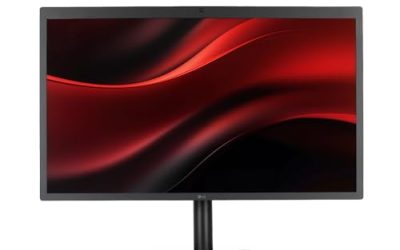
 New! Sceptre Curved 34-inch Prime Gaming Monitor 344034 inches8.5 x 31.8 x 18 inches14 poundsCheck on Amazon

Top 3 picks at a glance
How to Choose
Resolution and Aspect Ratio
Almost every 34-inch monitor for PC is a 21:9 ultrawide, and the resolution that matters most is 3440×1440, marketed as UWQHD. That is wider than 1440p but it is not 4K, and any listing that implies otherwise is misleading you. A smaller group of 34-inch models uses 2560×1080, which looks noticeably softer at this size, while a few premium models reach 5120×2160, sometimes called 5K2K, with far sharper text. Check the exact pixel count in the specification table rather than the marketing name, because two screens that both say 34-inch ultrawide can differ sharply in clarity, and the sharper panel is usually the one worth paying for if you read text all day.
Panel Type and Curvature
The two panel types you will meet most often are IPS and VA, and the trade-off between them is straightforward. IPS panels generally hold colour and viewing angles better when you sit slightly off-centre or share the screen, which suits office work and photo editing. VA panels usually deliver deeper blacks and stronger contrast, which suits films and dark games, though some show more smearing in fast motion. Many 34-inch models are curved, commonly rated 1500R or 1800R, and the curve helps the far edges feel closer on a screen this wide. Flat ultrawides exist too, and they suit anyone who dislikes the wrapped feeling or works with straight lines. Also compare brightness figures, which vary widely at this size.
Refresh Rate and Gaming Features
Refresh rate is where office and gaming needs split. A 60Hz or 75Hz panel is fine for documents, spreadsheets, and video, and it keeps the price and the graphics-card demands down. Gamers should look for 120Hz, 144Hz, or 165Hz, since the wider field of view in racing and simulation titles is where a high-refresh ultrawide earns its keep. Adaptive sync support, listed as FreeSync or G-Sync Compatible, matters because it smooths frame-rate variation without tearing. Confirm the refresh rate applies over the connection you will actually use, since some models only reach their maximum over DisplayPort and run slower over HDMI, and check the response-time figure the same way.
Connectivity, Ergonomics, and Desk Fit
A 34-inch ultrawide is about 80 centimetres wide, so measure the desk first and leave room for speakers or a notebook beside it. Height adjustment, tilt, and a standard VESA mount are worth checking, because many ultrawides sit low on their factory stands and a monitor arm solves that cleanly. On connections, look for at least one DisplayPort and one HDMI input, and if you use a laptop, a USB-C port that carries video and charges the laptop over the same cable removes a dock from the desk. Some models add a built-in KVM switch, which lets one keyboard and mouse serve two connected computers, a useful feature for people who mix a work laptop and a personal desktop.
Which One Fits Your Situation
Office Work and Multitasking
If your day is documents, email, and browser tabs, prioritise a 3440×1440 IPS panel with a height-adjustable stand and a USB-C connection. The wide screen holds a document and a reference window side by side without the bezel gap of two monitors, and sharp text matters more than refresh rate. A curved panel is optional here, so spend the difference on adjustability and connectivity instead, and check that the stand lets the screen sit at eye level.
PC Gaming
Gamers should prioritise refresh rate and adaptive sync first, then panel response. A 144Hz or faster VA or fast IPS ultrawide gives the immersive width that makes racing and open-world games feel different, but it also demands more from the graphics card than a 27-inch 1440p screen, so check that your GPU can drive 3440×1440 at the frame rates you expect before buying, and confirm the game you play most actually supports the 21:9 aspect ratio.
Video Editing and Creative Work
Editors and designers should prioritise colour accuracy and resolution over refresh rate. A 3440×1440 IPS panel gives a long timeline and a usable preview window, while a 5120×2160 model adds sharper text and finer detail for high-resolution footage. Check the colour-space coverage in the specification table and remember that a curved screen can make judging straight lines harder, so a flat panel is often the safer pick here. Flat IPS panels are the usual recommendation for colour-critical work.
Tight Desks and Tight Budgets
If the desk is shallow or the budget is limited, a 2560×1080 ultrawide is the compromise worth considering, but only if you sit close and mainly watch video or play games. Text looks softer than on a 3440×1440 panel, so heavy readers and spreadsheet users should instead consider a smaller 27-inch screen or save for the higher resolution. Sitting too close also makes the far edges hard to follow.
Common Mistakes
- Assuming every 34-inch monitor is 4K: most are 3440×1440 UWQHD, which is not 4K, so read the pixel count in the specification table.
- Buying a high-refresh ultrawide without checking whether the graphics card can drive 3440×1440 at that frame rate in the games you actually play.
- Measuring only the width of the desk and forgetting depth, leaving the screen too close to sit comfortably for a full workday.
- Choosing a model with no height adjustment and then discovering the screen sits too low for long sessions, with no VESA mount to fix it.
- Picking a curved panel for precision drawing or photo work without trying one first, since the curve changes how straight lines look.
Top Picks for 34 Inch Ultrawide Monitors
A 34 inch ultrawide replaces a pair of smaller screens with one continuous display. These models differ mainly in refresh rate, curve and how much they lean toward office or gaming use.
LG 34U60ZB-B 34-Inch UltraWide WQHD 120Hz Curved Monitor
A 3440×1440 panel with a 1800R curve, HDR10 and a 120Hz refresh rate. It is a balanced choice for mixed work and play at a sensible size.

Dell 34 Monitor S3425DW, WQHD VA, 120Hz
A WQHD VA panel with FreeSync Premium and an anti-glare finish. Dell positions it with eye-comfort features, so it suits long document and spreadsheet days.

Samsung 34-Inch ViewFinity S5 (S55GH) Ultrawide QHD 120Hz Curved Monitor
A curved ultrawide QHD display at 120Hz from a well-known brand. It is a tidy pick for creators who want room for timelines and toolbars.

msi PRO MP341CQ E12 34-Inch VA UWQHD, 120Hz
A 3440×1440 VA monitor with adaptive sync, HDMI, DisplayPort and VESA mounting. That mounting support makes it easy to put on an arm and free up desk space.

Sceptre Curved 34-Inch Prime Gaming Monitor, up to 240Hz
A curved 3440×1440 panel that lists up to 240Hz, two DisplayPort and two HDMI inputs. It is aimed at players with a fast graphics card who want maximum smoothness.

Before buying, measure your desk depth and check that your graphics card has a DisplayPort output, since some ultrawide panels reach their top refresh rate only over that connection. A monitor arm can also reclaim space and let you set the curve at a comfortable distance.
Frequently Asked Questions
Is a 34-inch ultrawide monitor 4K?
No, not usually. Most 34-inch ultrawides are 3440×1440, which is wider than 1440p but has fewer pixels than a 4K display. A small number of premium 34-inch models reach 5120×2160, and those are the ones that approach 4K-class sharpness. Always check the exact resolution in the specification table rather than trusting the headline.
Do I need a powerful graphics card for a 34-inch monitor?
It depends on the resolution and refresh rate. A 3440×1440 screen has roughly a third more pixels than a standard 1440p display, so gaming at high frame rates needs a stronger graphics card. Office work, browsing, and video playback run fine on modest integrated graphics, since those tasks do not stress the GPU the way games do, and a 60Hz panel asks far less than a 165Hz one.
Is a curved 34-inch monitor better than a flat one?
For gaming and films, the curve can make the wide screen feel more immersive and keeps the edges at a more even distance from your eyes. For office work it is a matter of taste, and for design or drafting work a flat panel is usually the safer choice because straight lines stay straight. Try one in person first if you possibly can before buying.
Will a 34-inch monitor fit on my desk?
Most 34-inch ultrawides are about 80 centimetres wide and need roughly 60 centimetres of depth for comfortable viewing, plus room for the stand. Measure the desk, check the stand footprint in the product dimensions, and consider a VESA monitor arm if the factory stand is too deep, too low, or takes up space you need for a keyboard tray. A monitor arm can also free space underneath.
Related guides
More from Amazon
Programs that pair well with the guide above. Offers and eligibility are set by Amazon and may change.
Free shipping on eligible items, Prime Video and more. Eligible new members can start with a free trial.
Start a Prime free trialAd-free music streaming. Eligible new subscribers can start with a free trial.
Try Music Unlimited freeA Prime membership for ages 18-24 with a trial period. Eligibility is set by Amazon.
See Prime for Young AdultsAudiobooks and podcasts to listen to on the go. Eligible new members can start with a free trial.
Try Audible freeAs an Amazon Associate we earn from qualifying purchases.