Our Short List of 3

- 40 inch Nano IPS panel, 5120 x 2160 resolution, 72 Hz refresh rate, 2500R curve, 98 percent DCI-P3, HDR10, Thunderbolt 4 with 96 W power delivery, DisplayPort and HDMI inputs.

- 40 inch IPS Black panel, 5120 x 2160 resolution, 120 Hz refresh rate, 2500R curve, 99 percent DCI-P3, HDR600, Thunderbolt 4 with 140 W power delivery, DisplayPort 1.4 and HDMI 2.1, built-in KVM, 2.5 Gb Ethernet.

- 40 inch IPS panel, 5120 x 2160 resolution, 60 Hz refresh rate, 2500R curve, 98 percent DCI-P3, HDR400, Thunderbolt 3 with 90 W power delivery, DisplayPort and HDMI inputs.
All 3 Picks at a Glance
| Product | Specs | Action |
|---|---|---|
| LG 40WP95C-W 40-Inch UltraWide Curved Monitor |
| Check price on Amazon |
| Dell UltraSharp U4025QW 40-Inch Curved Thunderbolt Hub Monitor |
| Check price on Amazon |
| Dell UltraSharp U4021QW 40-Inch Curved Monitor |
| Check price on Amazon |
A 40 inch gaming monitor is a rare and distinctive thing. Most gaming screens stop at 32 or 34 inches, and the step up to 40 inches usually means a 21:9 ultrawide panel with a 5120 x 2160 resolution, which is wide enough to replace two monitors and tall enough to feel like a genuine desktop upgrade. The best 40 gaming monitors use that enormous canvas well, pairing it with a refresh rate that keeps games smooth and the connectivity to make the screen the centre of a whole desk setup.
It is worth being honest about this size class. True 40 inch gaming monitors are scarce, because most 40 inch panels are built for productivity first, with modest refresh rates and colour accuracy as the priorities. The screens in this guide are the closest thing to a 40 inch gaming monitor that exists: huge 5K2K ultrawides with refresh rates from 72 Hz to 120 Hz, strong colour, and Thunderbolt docking. They are not esports screens, and they will not match a 27 inch 240 Hz panel for competitive speed, but for immersive single-player games, simulation, and strategy titles, the sheer scale of a 40 inch ultrawide is hard to beat.
This guide covers three 40 inch screens that can genuinely serve a gamer. Two are from Dell’s UltraSharp line, one older and one current, and one is from LG’s UltraWide line. All three are 5120 x 2160 ultrawides with IPS-type panels, and all three double as excellent work monitors, which is part of the point: a screen this large is an investment, and it should earn its place during the workday as well as after it.
Our Top Picks
Top 3 picks at a glance
How to Choose
Resolution: 5K2K and what it demands
A 40 inch ultrawide almost always uses a 5120 x 2160 resolution, often called 5K2K or WUHD. That is about 11 million pixels, roughly a third more than a 4K screen and more than five times a 1080p screen, so it asks a lot of a graphics card in games. The reward is a very sharp image at around 140 pixels per inch, with text that stays crisp and game worlds that look detailed across a huge field of view. For office work, the resolution is a pure win, giving you room for three windows side by side without squinting.
Refresh rate: what to expect at 40 inches
Refresh rates at 40 inches are lower than at smaller sizes, and it helps to set expectations honestly. Many 40 inch panels run at 60 Hz or 72 Hz, which is fine for strategy games, role-playing games, and simulation, but not a good fit for fast shooters. The newer panels in this guide reach 120 Hz, which is a real step up and makes motion noticeably smoother. If competitive first-person shooters are your main genre, a smaller high-refresh screen will serve you better than any 40 inch panel currently sold.
Panel type and colour accuracy
The 40 inch ultrawides in this guide use IPS or IPS Black panels, which keep colours consistent from wide angles and deliver the accuracy that creative work demands. IPS Black is a newer variant with roughly twice the contrast of standard IPS, which makes dark scenes look deeper without giving up the viewing angles. Look for 98 percent or more of DCI-P3 coverage if you edit video or photos, and HDR600 certification if you want HDR content to look meaningfully better than standard content.
Curve and viewing distance
Most 40 inch ultrawides use a gentle 2500R curve, which pulls the far edges slightly toward you without distorting the image. At this size the curve matters: a flat 40 inch panel would leave its corners noticeably further from your eyes, which makes text at the edges harder to read. Sit at least an arm’s length away, and a desk depth of 70 centimetres or more will make the screen feel comfortable rather than overwhelming. A shallow desk is the most common reason people regret a screen this large.
Connectivity and Thunderbolt docking
A 40 inch monitor usually becomes the hub of a desk, so its ports deserve close attention. Thunderbolt 4 with 90 W or more of power delivery lets a laptop connect with a single cable, and a built-in KVM switch lets you share a keyboard and mouse between two computers. Look for DisplayPort 1.4 and HDMI 2.1 inputs, plus a USB hub with enough ports for your peripherals. A 2.5 Gb Ethernet port is a useful bonus on some models, turning the monitor into a full docking station.
Ergonomics and desk fit
A 40 inch ultrawide is around 95 centimetres wide and can weigh over 10 kilograms, so check your desk width, your monitor arm’s weight limit, and the depth of your workspace before ordering. Height, tilt, and swivel adjustment should be standard at this size, and VESA mounting is worth having for a cleaner setup. The stand on these monitors is large, so a deep desk matters as much as a wide one. If your desk is narrower than 140 centimetres, measure twice.
Graphics card and cable requirements
Driving 5120 x 2160 at high refresh rates needs a strong modern graphics card and the right cable. DisplayPort 1.4 is the reliable choice for the full resolution and refresh rate, while HDMI 2.1 also works on newer cards. Older graphics cards may be limited to lower refresh rates at this resolution, so check your card’s specifications before ordering. For office work and video, any modern laptop with a Thunderbolt or USB-C output will drive these screens without trouble.
Top Picks
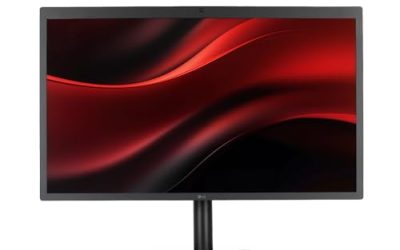
LG 40WP95C-W 40-Inch UltraWide Curved Monitor
- 40 inch Nano IPS panel, 5120 x 2160 resolution, 72 Hz refresh rate, 2500R curve, 98 percent DCI-P3, HDR10, Thunderbolt 4 with 96 W power delivery, DisplayPort and HDMI inputs.
The LG 40WP95C-W is a 40 inch curved ultrawide with a Nano IPS panel, a 5120 x 2160 resolution, and a 72 Hz refresh rate, and it is the most affordable route into the 40 inch class in this guide. Its 98 percent DCI-P3 coverage and HDR10 support make it a strong screen for creative work, while its Thunderbolt 4 port with 96 W power delivery turns it into a single-cable dock for a laptop. The 2500R curve keeps the far edges readable across a very wide canvas.
Who it is for: gamers who play slower, more cinematic titles and want the biggest possible canvas for work as well, with single-cable laptop docking.
Caveats: the 72 Hz refresh rate is the lowest in this roundup and will feel slow in fast-paced shooters. Confirm the listing shows model 40WP95C-W, since a bundle listing with extra accessories uses a different ASIN.
Dell UltraSharp U4025QW 40-Inch Curved Thunderbolt Hub Monitor
- 40 inch IPS Black panel, 5120 x 2160 resolution, 120 Hz refresh rate, 2500R curve, 99 percent DCI-P3, HDR600, Thunderbolt 4 with 140 W power delivery, DisplayPort 1.4 and HDMI 2.1, built-in KVM, 2.5 Gb Ethernet.
The Dell UltraSharp U4025QW is the newest 40 inch screen in this guide and the most gaming-capable, with a 40 inch IPS Black panel, a 5120 x 2160 resolution, and a 120 Hz refresh rate. That 120 Hz refresh rate is the key difference from older 40 inch panels: motion is visibly smoother, and the screen feels responsive in a way that 60 Hz and 72 Hz panels do not. Thunderbolt 4 with 140 W power delivery, a built-in KVM, and a 2.5 Gb Ethernet port make it a complete docking station as well as a display.
Who it is for: gamers and creators who want the fastest 40 inch screen available, with a 120 Hz refresh rate for play and a full Thunderbolt dock for work.
Caveats: it is the most expensive screen in this roundup, and several bundle listings exist with different ASINs, so confirm the listing shows the standalone monitor with model U4025QW before ordering.
Dell UltraSharp U4021QW 40-Inch Curved Monitor
- 40 inch IPS panel, 5120 x 2160 resolution, 60 Hz refresh rate, 2500R curve, 98 percent DCI-P3, HDR400, Thunderbolt 3 with 90 W power delivery, DisplayPort and HDMI inputs.
The Dell UltraSharp U4021QW is the older sibling of the U4025QW, with a 40 inch IPS panel, a 5120 x 2160 resolution, and a 60 Hz refresh rate. It was the first 40 inch curved ultrawide of its kind, and it remains a capable screen for work and slower-paced games, with Thunderbolt 3 docking and strong colour accuracy. Its age is both a strength and a weakness: the panel is proven, but newer models have moved past it on refresh rate and connectivity.
Who it is for: buyers who want a 40 inch ultrawide mainly for work, with light gaming on the side, and who are comfortable with a 60 Hz panel.
Caveats: the 60 Hz refresh rate is the lowest in this roundup and a poor fit for fast-paced games. One guide has noted that the listing had no new stock available in mid-2026, so confirm the listing is live and shows model U4021QW before ordering, and consider the newer U4025QW if the older model is hard to find.
Comparison Table
| Monitor | Panel | Refresh Rate | Curve | Thunderbolt | Best For |
|---|---|---|---|---|---|
| LG 40WP95C-W | Nano IPS | 72 Hz | 2500R | Thunderbolt 4, 96 W | Big-screen value and docking |
| Dell UltraSharp U4025QW | IPS Black | 120 Hz | 2500R | Thunderbolt 4, 140 W | Fastest 40 inch gaming |
| Dell UltraSharp U4021QW | IPS | 60 Hz | 2500R | Thunderbolt 3, 90 W | Work-first use |
Which One Is Right for You?
If you want the fastest 40 inch gaming experience available, the Dell UltraSharp U4025QW is the clear pick. Its 120 Hz refresh rate is the only one in this roundup that feels like a gaming panel, and its IPS Black contrast, HDR600 support, and full Thunderbolt 4 docking make it the most complete screen here. It is the most expensive option, but at this size the premium buys a genuinely better experience rather than a marginal improvement.
If your budget is tighter and your games are slower-paced, the LG 40WP95C-W gives you the same huge 5K2K canvas and the same Thunderbolt docking at a lower figure, with a 72 Hz refresh rate that suits strategy games, role-playing games, and simulation. The Dell U4021QW makes sense only if you find it readily available and your priority is work rather than gaming, since its 60 Hz refresh rate and older Thunderbolt 3 standard are both a step behind the other two picks.
Before ordering any 40 inch monitor, measure your desk honestly. These screens are around 95 centimetres wide and need a deep desk to feel comfortable, and they ask a lot of your graphics card at 5120 x 2160. If your desk is shallow or your graphics card is older, a 38 inch ultrawide will give you most of the immersion with fewer demands.
Frequently Asked Questions
Is a 40 inch monitor too big for gaming?
It depends on your desk and your games. At an arm’s length or more on a deep desk, a 40 inch ultrawide fills your peripheral vision in a way that makes racing, flight simulation, and open-world games feel remarkably immersive. For fast-paced competitive shooters, the size can work against you, since important information sits far from the centre of the screen, and a smaller high-refresh monitor is a better tool.
What graphics card do I need for a 40 inch 5K2K monitor?
A 5120 x 2160 panel has about 11 million pixels, so it needs a strong modern graphics card for high settings in games. A mid-range or better recent card will handle most titles at high settings, while older or entry-level cards will need lower settings to hold a smooth frame rate. For office work and video, any modern laptop or desktop with a Thunderbolt or DisplayPort output is sufficient.
Is 120 Hz enough for gaming on a 40 inch monitor?
Yes, for the kinds of games that suit a screen this large. A 120 Hz refresh rate makes motion visibly smoother than 60 Hz or 72 Hz, and it is fast enough for most single-player and simulation games. Competitive players who chase the highest possible frame rates will still prefer a smaller 240 Hz screen, but that is a different use case from the immersive gaming a 40 inch ultrawide is built for.
Can a 40 inch monitor replace two monitors?
Yes, and this is one of its best use cases. A 5120 x 2160 panel is wide enough for three windows side by side, with no bezel in the middle, and the extra vertical resolution keeps documents and timelines readable. Window management features in your operating system make it easy to arrange applications across the screen, and a built-in KVM lets you share the setup between two computers.
Disclosure: As an Amazon Associate, we may earn from qualifying purchases.
Related guides
More from Amazon
Programs that pair well with the guide above. Offers and eligibility are set by Amazon and may change.
Free shipping on eligible items, Prime Video and more. Eligible new members can start with a free trial.
Start a Prime free trialAd-free music streaming. Eligible new subscribers can start with a free trial.
Try Music Unlimited freeA Prime membership for ages 18-24 with a trial period. Eligibility is set by Amazon.
See Prime for Young AdultsAudiobooks and podcasts to listen to on the go. Eligible new members can start with a free trial.
Try Audible freeAs an Amazon Associate we earn from qualifying purchases.