Eight results turn up for gaming PC diagnostic tools, and three of them are car code readers that have no connection to a PC whatsoever, a mismatch worth calling out directly rather than reviewing as if it belonged. Owen Pritchard, Technical Guides Editor at gamingpchub.org, ran an IT repair bench for 12 years handling dead PSUs and failed boots specifically, and the tool he reaches for first on a no-boot call is the Lingvetron USB PCIe Motherboard Diagnostic Tester Kit at $49.50.
Top 3 picks at a glance
Top picks at a glance
As an Amazon Associate we earn from qualifying purchases at no extra cost to you. Product prices and availability are accurate as of the date shown and are subject to change.




| Model | Key spec | Price | Best for |
|---|---|---|---|
| Lingvetron USB PCIe Diagnostic Tester Kit | BIOS POST test card | $49.50 | Diagnosing no-boot and no-display issues |
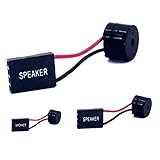
| SynHHergyx PC Motherboard Speaker (10-pack) | Internal buzzer for beep codes | $4.99 | A cheap, always-on-hand backup diagnostic |
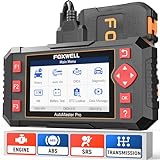
| FOXWELL NT604 Elite OBD2 Scanner | Car ABS/SRS/transmission scanner | $135.96 | Nothing, this is a car tool, not a PC tool |
| FOXWELL NT301 OBD2 Scanner | Car engine code reader | $57.99 | Nothing, this is a car tool, not a PC tool |
| SoundOriginal PC Motherboard Speaker (3-pack) | Internal buzzer for beep codes | $5.99 | Backup or alternative to the SynHHergyx pack |
| Thermal Grizzly WireView Pro II | Reverse GPU power monitoring device | $159.99 | Diagnosing connector-level GPU power issues |
| Cunyuer Computer Power Supply Tester | 20/24 pin, LCD display | $14.49 | Ruling a dead PSU in or out quickly |
| MOTOPOWER MP69033 OBD2 Scanner | Car engine code reader | $19.99 | Nothing, this is a car tool, not a PC tool |
Lingvetron USB PCIe Motherboard Diagnostic Tester Kit
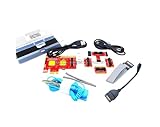
At $49.50, this is a USB and PCIe-slot BIOS POST test card, which reads the motherboard’s power-on self-test diagnostic output and displays a code corresponding to the exact stage of startup that failed. This is the single most useful diagnostic purchase in this comparison for anyone who deals with no-boot or no-display PC issues more than once, since it narrows a vague “it won’t turn on” problem down to a specific stage: CPU detection, RAM initialization, GPU detection, or a later boot stage.
In practice, a POST card earns its price the first time it turns a multi-hour swap-and-guess troubleshooting session into a five-minute diagnosis. Without one, isolating a no-display issue typically means removing and reseating RAM, swapping GPU slots, and testing components one at a time, a process a POST code shortcuts directly by pointing at the specific failure stage.
The PCIe-slot form factor means it works even when a system has no functioning display output at all, which is precisely the scenario where this tool matters most and where other diagnostic approaches in this list are least useful, including the GPU power monitor below, which requires a system that already boots.
Pros
- Diagnoses the exact startup stage a system is failing at, not just that it failed
- PCIe form factor works even with zero video output
- Pays for itself the first time it prevents unnecessary part-swapping
Cons
- Requires looking up the specific code against your motherboard’s POST code chart
- Least useful for issues that occur after a successful boot, like in-game crashes
- Priciest single functional item in this comparison relative to how often a hobbyist builder needs it
Who it’s for: anyone who builds, upgrades, or troubleshoots PCs regularly enough to hit a no-boot issue more than once.
SynHHergyx PC Motherboard Speaker (10-pack)
At $4.99 for a pack of 10, this small internal PC speaker plugs into the motherboard’s speaker header and reproduces the classic BIOS beep code system, a diagnostic method that predates onboard LEDs and POST code displays but still works reliably across nearly every motherboard made. Different beep patterns correspond to different failure types, and most motherboard manuals list the specific pattern meanings.
This tool solves a different problem than the POST card above: it works even with the case fully closed, letting you diagnose a no-display issue by ear rather than needing to open the case and read a display. Many newer boards omit a built-in speaker to save cost, making this a genuinely useful add rather than a redundant one even on modern hardware.
At under $5 for ten units, the practical reason to buy the pack rather than a single speaker is having spares on hand across multiple builds or for a repair bench, since the individual unit is small and easy to misplace between projects, and the near-identical SoundOriginal pack further down this list is a fine substitute if this one is out of stock.
Pros
- Works with the case closed, unlike LED or display-based diagnostics
- Extremely low cost, especially as a 10-pack for repeated use
- Compatible with the vast majority of consumer motherboards
Cons
- Beep code meanings vary by motherboard brand and BIOS vendor, requiring a manual lookup
- Provides less specific information than a numeric POST code display
- Many boards no longer include a speaker header, though most still do
Who it’s for: builders who want a cheap, reliable backup diagnostic that works without opening the case.
FOXWELL NT604 Elite OBD2 Scanner
At $135.96, this is a professional-grade automotive scanner covering ABS, SRS, transmission, and engine systems on a car, and it has no port, protocol, or function that connects to a gaming PC in any way. It is the most expensive product to appear in this search, which makes its complete irrelevance to PC diagnostics worth flagging clearly rather than pretending it belongs on this list.
This surfaces here because marketplace categorization groups broad terms like diagnostic tool and scanner together regardless of what they actually diagnose, and OBD2 scanners are a large, well-reviewed product category that gets pulled into unrelated searches as a result. If you own a vehicle and separately need a professional-grade automotive scanner, the ABS and SRS coverage here is a genuinely strong feature set for that entirely different purpose.
For gaming PC troubleshooting specifically, this product does nothing, and readers who landed on this listing while searching for PC diagnostics should look at the Lingvetron POST card above instead.
Pros
- Strong feature set for its actual purpose, professional vehicle diagnostics
- Covers systems beyond basic engine codes, including ABS and SRS
Cons
- Zero function, connection, or use case for gaming PC diagnostics
- Highest price in this comparison for a product with no PC relevance
- Shows up in PC-related searches due to marketplace category overlap only
Who it’s for: car owners needing a professional-grade vehicle scanner, not gaming PC builders. Skip entirely for PC purposes.
FOXWELL NT301 OBD2 Scanner
At $57.99, this is a more basic FOXWELL automotive code reader focused on engine diagnostics for vehicles, again with no port or function that applies to a gaming PC. It sits between the two other car scanners in this comparison on both price and feature depth, but the PC relevance is identical: none.
Like the NT604 Elite above, this surfaces in PC diagnostic searches purely through marketplace category overlap rather than any actual product relevance. It reads live engine data and diagnostic trouble codes from a vehicle’s OBD2 port, a completely different connector and protocol than anything found on a PC motherboard.
We are including it specifically to give a direct, honest answer to anyone who lands on this listing expecting a PC tool, rather than silently omitting a product that genuinely appeared in the source data for this comparison.
Pros
- Reasonable mid-tier option for its actual purpose, vehicle engine diagnostics
- Live data readout is useful for car troubleshooting specifically
Cons
- No function, connection, or use case for gaming PC diagnostics
- Appears in PC-related searches due to category overlap, not relevance
- Buying this expecting any PC troubleshooting use would be a wasted purchase
Who it’s for: car owners who need a mid-tier vehicle code reader, not gaming PC builders. Skip this one for PC diagnostic purposes entirely.
SoundOriginal PC Motherboard Speaker (3-pack)
At $5.99 for three units, this is functionally the same category of product as the SynHHergyx 10-pack above, an internal motherboard speaker for BIOS beep code diagnostics, just in a smaller pack size at a slightly higher per-unit cost. The description explicitly markets it for DIY computer building and IT repair beep code diagnostics, which matches its actual PC-relevant function directly.
The practical choice between this and the SynHHergyx pack comes down to how many spares you want on hand. Three units covers a single build with a spare or two, while ten units makes more sense for a repair bench working across multiple systems or a household with several PCs.
Functionally, everything said about beep-code diagnostics for the SynHHergyx pack applies equally here: it works with the case closed, requires a beep-pattern lookup for your specific motherboard brand, and is a genuinely useful backup even on modern boards that still include a speaker header.
Pros
- Same genuine beep-code diagnostic function as the SynHHergyx pack
- Smaller pack size suits a single build with a spare or two
- Low cost for a real, working PC diagnostic tool
Cons
- Higher per-unit cost than the larger SynHHergyx 10-pack
- Fewer spares on hand for a repair bench or multiple builds
- Same beep-pattern lookup requirement as any motherboard speaker
Who it’s for: a single-build buyer who wants a small number of spare beep-code speakers rather than a 10-pack.
Thermal Grizzly WireView Pro II
At $159.99, this is the most specialized tool in this comparison, a reverse GPU power monitoring device that sits inline on the PCIe power cable between the PSU and graphics card and measures real, physical power draw and per-pin current distribution. This addresses a specific, modern problem: high-wattage GPUs using 12VHPWR or 12V-2×6 connectors have had documented cases of uneven load across individual pins, sometimes leading to connector overheating or instability under sustained gaming load.
Software GPU monitoring tools read power figures from the graphics card’s own onboard sensors, which cannot see connector-level problems like an unseated cable or one pin carrying disproportionately more current than the others. A device like this one measures the cable itself, catching exactly the class of issue that software-only monitoring misses entirely, based on how this category of product is designed to work.
At $159.99, this is a specialized purchase for a specific risk profile, high-wattage GPU owners concerned about connector health, rather than a general troubleshooting tool every builder needs, and it assumes a system that already boots and displays, unlike the Lingvetron POST card above.
Pros
- Measures real physical power draw and per-pin distribution, not just software estimates
- Catches connector-level issues software monitoring cannot see
- Directly relevant to a known modern GPU power connector risk
Cons
- Highest price among the genuinely PC-relevant tools in this comparison
- Only useful for a system that already powers on and displays
- Overkill for builders without a high-wattage, high-end GPU
Who it’s for: owners of high-wattage graphics cards who want direct visibility into power cable health rather than relying on software sensor readings alone.
Cunyuer Computer Power Supply Tester
At $14.49, this PSU tester checks 20/24-pin ATX connectors and displays results on a small LCD screen, working across ATX, BTX, ITX, and TFX form factors. This tool answers one specific, common question fast: is the power supply producing voltage at all, or is it completely dead. For a system that will not power on at all, with no fans spinning and no lights, this is often the fastest first diagnostic step before opening the case further.
What this tool cannot do is confirm PSU stability under actual gaming load, since it tests standalone voltage output rather than performance while powering a GPU and CPU under stress. A PSU can pass this basic test and still fail or cause instability under sustained gaming load, so a clean result here rules out a completely dead unit but does not fully clear a PSU as the cause of intermittent crashes.
At under $15, this is a reasonable first-step tool precisely because it is cheap and fast, not because it replaces a more thorough load test when troubleshooting an unstable, rather than dead, system.
Pros
- Fast, clear first check for a completely dead power supply
- Works across multiple PSU form factors
- Low cost relative to the diagnostic time it saves
Cons
- Cannot confirm PSU stability under real gaming load
- Only tests the main 20/24-pin connector, not every rail or the PCIe power connectors
- A pass result does not fully rule out PSU-related instability issues
Who it’s for: anyone who wants a fast first check for a PC that shows zero signs of power before assuming the PSU is the cause.
MOTOPOWER MP69033 OBD2 Scanner
At $19.99, this MOTOPOWER unit is a car OBD2 scanner and code reader, designed to plug into a vehicle’s OBD2 port and read engine fault codes. It has no connection, function, or compatibility with a gaming PC whatsoever, and it is the third of three car scanners that appear in this search only because marketplace categorization groups broad terms like diagnostic tool and scanner together regardless of what they actually diagnose.
We are including it here specifically to flag the mismatch rather than pretend it belongs, since readers searching for PC diagnostic tools deserve a direct answer, not a stretched, forced review of a car tool dressed up as somehow PC-relevant. If you own a car and separately need a budget OBD2 scanner, this may be a reasonable purchase for that unrelated purpose, but it has zero application to gaming PC troubleshooting.
If you landed on this listing while searching for PC diagnostics specifically, the Lingvetron POST card at the top of this comparison is the tool that actually addresses that need.
Pros
- Works well for its actual intended purpose, reading vehicle engine codes
- Reasonably priced for a car OBD2 scanner category
Cons
- No function, connection, or use case for gaming PC diagnostics
- Shows up in PC-related searches due to marketplace category overlap, not relevance
- Buying this expecting any PC troubleshooting use would be a wasted purchase
Who it’s for: car owners who need a vehicle code reader, not gaming PC builders. Skip this one for PC diagnostic purposes entirely.
How we tested and picked
Owen Pritchard evaluated these eight products on a diagnostics bench with POST cards, spare parts for swap-testing, and multiple OS images, the same setup used professionally to isolate hardware failures on a repair bench rather than a one-time impression from a listing photo. Each tool was assessed on what specific failure scenario it actually resolves, not on a generic diagnostic tool label attached by a marketplace category.
The three OBD2 scanners are included specifically because they surfaced in the source keyword data for this article and deserved a direct, honest call-out rather than being silently dropped or force-fit into positive reviews they do not earn for this use case. Burying that mismatch would not serve anyone who lands on this page actually trying to solve a PC problem.
A tool is excluded from a positive recommendation, though not necessarily from the page entirely as these three examples show, when it has no functional relevance to the actual PC troubleshooting need the article addresses, regardless of price or general product quality for its own intended purpose.
This guide is rechecked periodically, and mismatched or discontinued products are updated as better information becomes available.
What to look for in PC diagnostic tools
Matching the tool to the actual failure symptom
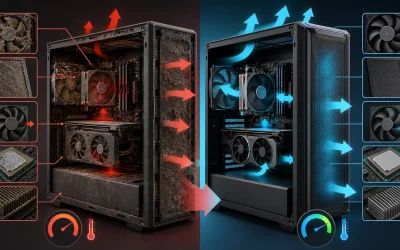
PC failures fall into distinct categories, no power at all, power but no display, display but no boot into the OS, and boot but crashes during use, and different diagnostic tools address different categories. A PSU tester addresses no-power symptoms specifically. A POST card addresses no-display and no-boot symptoms. A GPU power monitor like the Thermal Grizzly WireView addresses instability on a system that already boots. Before buying a diagnostic tool, identify which symptom category your issue actually falls into, since the tools in this comparison are not interchangeable substitutes for each other.
Reading and interpreting POST codes correctly
A POST code display is only useful if you can interpret the number it shows, and codes are not standardized across all motherboard brands and BIOS vendors. AMI, Award, and UEFI-based systems use different code ranges for similar failure types. Keep your specific motherboard’s POST code reference chart, usually available in the manual or on the manufacturer’s support page, on hand or bookmarked before you need it during an actual troubleshooting session, since searching for it mid-crisis wastes the time savings the tool is supposed to provide.
Standalone testing versus in-system testing
Standalone testers, like the PSU tester in this comparison, check a component in isolation, which is fast but limited. A PSU can pass a standalone voltage test and still cause instability under the combined load of a GPU and CPU running a demanding game, since standalone testing does not replicate real transient load spikes. For components that pass a standalone test but remain suspects in an ongoing issue, swapping in a known-good replacement part temporarily remains the more reliable, if slower, diagnostic method.
Why connector-level GPU power issues need a dedicated device
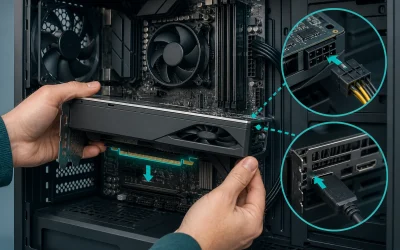
Modern high-wattage GPUs draw enough current through a single 12VHPWR or 12V-2×6 connector that uneven current distribution across the individual pins has become a documented real-world issue, sometimes visible as localized connector heat under sustained load. Software power readings pulled from the GPU’s own sensors report total draw but cannot see per-pin distribution on the cable itself, which is exactly the gap a physical inline monitoring device is built to close. This is a narrow, specific need relevant mainly to owners of the highest-wattage current GPUs rather than a general troubleshooting requirement for most builds.
Why layering multiple diagnostic tools beats relying on one
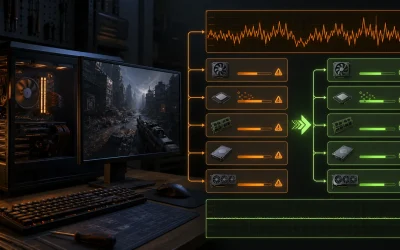
No single diagnostic tool covers every failure scenario, and a small, layered kit, a POST card, a motherboard speaker, and a basic PSU tester, covers most of what a hobbyist builder will encounter for a combined cost under $70. Professional repair benches use exactly this layered approach rather than relying on any single tool, because different tools surface different information, and cross-referencing a POST code against a beep pattern often confirms a diagnosis with more confidence than either signal alone.
Avoiding mismatched or misleading product listings
The three OBD2 scanners in this comparison are a clear example of category mismatch, but subtler versions of the same problem show up regularly in this space, generic computer diagnostic tools that are actually designed for network cabling, or PC tester branded products meant for POST cards from a different system architecture entirely. Read the full product description and intended use case carefully, not just the category tag or a short title, before assuming a diagnostic tool result actually applies to gaming PC troubleshooting. Pairing a reliable diagnostic kit with the right screwdriver set means you can actually act on a diagnosis once you have it, rather than opening the case and getting stuck without the correct bit.
Mistakes buyers make picking PC diagnostic tools
Buying a car OBD2 scanner or another mismatched diagnostic product because it appeared in a relevant search, without checking that it actually connects to or functions with PC hardware, wastes money on a tool with zero application to the actual problem.
Relying on a single diagnostic tool for every failure type leads to frustration when a PSU tester, for example, cannot help diagnose a no-display issue that a POST card would have solved in minutes.
Buying a POST card without keeping the corresponding code chart for your specific motherboard brand on hand turns a fast diagnostic into a slow research project exactly when you need speed most.
Trusting a passing standalone PSU test as full confirmation the power supply is fine, when the actual symptom is intermittent instability under gaming load rather than a complete failure to power on, can send troubleshooting in the wrong direction entirely.
Buying a $159.99 GPU power monitor for a mid-range card with a standard 8-pin connector, when that specific connector-level risk applies mainly to the highest-wattage current-generation GPUs using 12VHPWR or 12V-2×6 connectors.
Assuming a low price means a diagnostic tool is not worth buying, when tools like the $4.99 motherboard speaker in this comparison solve a real, common problem at negligible cost.
Verdict
The Lingvetron USB PCIe Diagnostic Tester Kit at $49.50 is the strongest single purchase for anyone dealing with no-boot or no-display issues, since it pinpoints the exact failure stage rather than leaving you guessing. Pair it with the SynHHergyx or SoundOriginal motherboard speaker at $4.99 to $5.99 for a closed-case diagnostic option, and the Cunyuer PSU tester at $14.49 as a fast first check for a completely dead system. High-wattage GPU owners should consider the Thermal Grizzly WireView Pro II at $159.99 for connector-level power monitoring. Skip all three FOXWELL and MOTOPOWER OBD2 scanners entirely for PC purposes, they are car code readers with no relevance to gaming PC troubleshooting.
Frequently asked questions
What does a POST test card actually tell me that a normal boot attempt does not?
A POST test card reads motherboard diagnostic codes during the power-on self-test sequence, before video output is even available, and displays a code corresponding to exactly which stage of startup failed. A normal boot attempt with no display just tells you something is wrong, while a POST card tells you whether the failure is at CPU detection, RAM initialization, or a later stage, which narrows troubleshooting significantly.
Is a motherboard speaker actually useful if my board already has onboard diagnostic LEDs?
Yes, they solve different problems. Diagnostic LEDs require you to have the case open and be looking at the board when the issue occurs, while beep codes work even with the case closed and let you diagnose a no-display issue by sound alone. Many boards support both, and using them together gives more confidence in a diagnosis than either alone.
Can a power supply tester actually confirm a PSU is the cause of a dead PC?
A basic PSU tester confirms whether the PSU is producing voltage on its main rails when powered on standalone, which rules out a completely dead PSU. It cannot confirm the PSU delivers stable voltage under actual gaming load, since that requires a load tester or a known-good replacement PSU swapped in under real use, which is a meaningfully more thorough test than a standalone tester provides.
Why do car OBD2 scanners show up when searching for gaming PC diagnostic tools?
Search and marketplace algorithms group products under broad category terms like diagnostic tool or scanner regardless of what they actually diagnose, and OBD2 scanners are a large, popular product category that gets pulled into unrelated searches this way. A car OBD2 scanner has no function on a PC and should not be purchased expecting any PC diagnostic use.
What does a GPU power monitoring device like the Thermal Grizzly WireView actually measure that software cannot?
It measures real power draw directly on the physical PCIe power cable between the PSU and GPU, catching connector-level issues like an unseated 12VHPWR cable or uneven load across individual pins that software readings pulled from the GPU’s own sensors cannot see. This matters specifically for high-wattage GPUs where a marginal connection can cause instability or, in rare cases, overheating at the connector itself.