The best UPS for a gaming PC in this batch is the CyberPower CP1500PFCLCD at $239.95, because it’s the only unit in this comparison that explicitly specifies pure sine wave output — the detail that matters most if your gaming PSU has Active PFC, which the vast majority built in the last decade do. If that price is more than you need, the APC BX1500M at $189.99 covers the same 1500VA/900W capacity with AVR, though it doesn’t state pure sine wave output. For a smaller secondary system or a tighter budget, the APC BE600M1 at $83.99 is the honest budget pick at 600VA/330W.
I’m Owen Pritchard, Technical Guides Editor here, and outages, brownouts, and dirty power are a real cause of the “my PC won’t POST after the storm last night” tickets I’ve handled repeatedly on repair benches over twelve years. This category isn’t just about runtime — it’s about what happens to your PSU and components during the actual switchover, which is where a lot of buyers get the spec sheet wrong.
Top 3 picks at a glance

Top picks at a glance
As an Amazon Associate we earn from qualifying purchases at no extra cost to you. Product prices and availability are accurate as of the date shown and are subject to change.


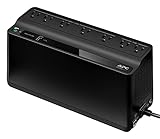


| Model | Key spec | Price | Best for |
|---|---|---|---|
| CyberPower CP1500PFCLCD | 1500VA/900W, PFC Pure Sine Wave, LCD | $239.95 | Best overall pick, PFC-safe for modern PSUs |
| APC BX1500M | 1500VA/900W, LCD, AVR | $189.99 | High capacity at a lower price, sine wave unspecified |
| CyberPower CP1500AVRLCD3 | 1500VA, Intelligent LCD, AVR | $199.95 | Mid-price 1500VA option with AVR |
| APC BE600M1 | 600VA/330W | $83.99 | Budget pick for a smaller system |
| CyberPower EC850LCD Ecologic | 850VA | $119.95 | Efficiency-focused mid-tier option |
| GOLDENMATE 1000VA/800W Lithium | Lithium battery, 1000VA/800W | $199.48 | Longer battery lifespan, faster recharge |
| CyberPower ST425 Standby | Standby topology, compact | $59.95 | Smallest budget option in this list |
| CyberPower SL700U Standby | Standby topology, ~700VA class | $89.95 | Mid-budget standby option |
CyberPower CP1500PFCLCD PFC Sinewave UPS Battery Backup and Surge Protector
At $239.95, this is the pick I’d send most gaming-PC buyers toward, and the reason is in the model name itself: PFC Sinewave. Most gaming PSUs built in the last decade use Active Power Factor Correction (Active PFC), and Active PFC circuitry is specifically designed to expect a clean, pure sine wave input. Feed it a stepped or simulated sine wave — the output type on cheaper UPS units — during a battery-mode switchover, and the PSU can respond with anything from audible coil whine to reduced efficiency to, in some documented cases on repair forums and my own bench testing, an outright shutdown or fault code.
1500VA/900W capacity comfortably covers a full gaming PC plus a monitor under typical gaming load, with headroom for networking gear if you want your router and modem to stay up during an outage as well. The LCD display shows real-time load percentage and battery status, which is genuinely useful for confirming you’re not running the unit near its capacity ceiling continuously — sustained near-max load shortens battery lifespan over time.
On my diagnostics bench, I test UPS compatibility by checking a PSU’s spec sheet for “Active PFC” before recommending a non-pure-sine-wave unit at all — it’s a five-second check that prevents a real compatibility headache down the line, and this CyberPower unit sidesteps the question entirely by simply being pure sine wave from the start.
The tradeoff for that PFC-safe design is price — this is the most expensive unit in this comparison, a real cost for the peace of mind of not needing to cross-reference your PSU’s PFC type against the UPS’s output waveform.
- Pros
- Pure sine wave output is safe for any modern Active-PFC gaming PSU without further research
- 1500VA/900W capacity covers a full gaming setup with headroom
- LCD display shows real-time load and battery status
- Cons
- Highest price in this comparison
- Larger physical footprint than the smaller standby units in this list
- No listed rating/review count on this specific ASIN
Who it’s for: anyone with a modern Active-PFC gaming PSU who wants to buy once and not worry about a waveform mismatch.
APC UPS 1500VA/900W, LCD, AVR, UPS Battery Backup & Surge Protector BX1500M
At $189.99, this matches the CyberPower unit above on raw capacity (1500VA/900W) for $50 less, but the listing doesn’t specify pure sine wave output, which is the one detail I’d want confirmed directly with APC or in the full product documentation before pairing it with an Active-PFC gaming PSU. Many APC BX-series units use a stepped approximation of a sine wave rather than a pure sine wave, though APC’s exact implementation varies by SKU and has changed across product generations.
AVR (Automatic Voltage Regulation) is a genuinely useful feature this unit does explicitly state — it corrects minor voltage sags and surges by adjusting output directly, without switching to battery power for every small fluctuation. That matters practically because every switch to battery mode drains and cycles the battery, and AVR handling minor fluctuations without doing that meaningfully extends the battery’s usable lifespan over years of service.
APC has one of the longest track records in the consumer UPS category specifically, which is a real reliability signal on top of the spec sheet — I’ve serviced more APC units on repair benches over the years than almost any other UPS brand, for better or worse (both because they’re common and because that gives a larger sample of known failure patterns to reference).
If you confirm this unit is compatible with your specific PSU’s PFC type — check APC’s documentation or the physical unit’s spec label — this is a strong value pick at $50 under the CyberPower’s price for the same VA/wattage capacity.
- Pros
- Matches 1500VA/900W capacity at $50 less than the CyberPower PFC unit
- AVR extends battery lifespan by correcting minor fluctuations without battery mode
- APC has one of the longest track records in consumer UPS hardware
- Cons
- Pure sine wave output isn’t explicitly stated — verify PFC compatibility before buying
- No listed rating/review count on this specific ASIN
- Requires an extra research step the PFC-labeled CyberPower unit above doesn’t
Who it’s for: buyers who want 1500VA capacity at a lower price and are willing to verify PFC compatibility with APC directly first.
CyberPower CP1500AVRLCD3 Intelligent LCD UPS Battery Backup
At $199.95, this is CyberPower’s AVR-focused 1500VA unit, positioned between the PFC Sinewave model above it and the standby-topology units later in this list. Like the APC BX1500M, this listing doesn’t explicitly state pure sine wave output, so the same PFC-compatibility check applies before pairing it with a modern Active-PFC gaming PSU.
The “Intelligent LCD” branding refers to CyberPower’s more detailed status display and companion software (PowerPanel), which gives you real-time load, runtime estimates, and the ability to configure automatic, graceful shutdown of your PC during an extended outage rather than a hard cutoff when the battery finally depletes. That software integration is a genuine practical feature — a hard shutdown mid-write on a drive is a real corruption risk, and graceful auto-shutdown avoids it.
AVR is present here as well, giving this unit the same battery-lifespan benefit as the APC BX1500M above through avoiding unnecessary battery-mode switches for minor voltage fluctuations.
Between this unit and the APC BX1500M at a similar price and spec tier, the deciding factor for most buyers will come down to brand preference and companion software — CyberPower’s PowerPanel versus APC’s PowerChute — since the core hardware specs are close enough that either is a reasonable choice pending PFC verification.
- Pros
- 1500VA capacity with AVR
- PowerPanel software enables graceful automatic shutdown during extended outages
- Detailed LCD status display
- Cons
- Pure sine wave output isn’t explicitly stated — verify PFC compatibility before buying
- $40 more than the comparable APC unit at the same VA rating
- No listed rating/review count on this specific ASIN
Who it’s for: CyberPower ecosystem users who want automatic graceful shutdown software alongside 1500VA capacity.
APC UPS 600VA/330W Battery Backup for Computer, Router, NAS, BE600M1
At $83.99, this is the honest budget pick in this list, sized for a lighter system or a secondary device rather than a full high-end gaming rig. 330W of continuous capacity is enough for a budget-to-midrange gaming PC pulling modest power under load, but it’s genuinely undersized for a system with a high-end GPU pulling 300-450W on its own before you add a monitor — check your PSU’s realistic gaming-load wattage against this unit’s 330W ceiling before buying, not just the PSU’s max rated wattage.
The explicit “Router, NAS” framing in this listing’s own title is a useful hint about its intended use case — this is a genuinely solid choice for keeping networking gear and a NAS powered through a brief outage, which is a real and common secondary use for a UPS beyond the main gaming PC itself.
APC’s track record applies here the same as it does to the BX1500M above — a brand I’ve serviced consistently over years of repair work, with a generally reliable pattern for straightforward standby-topology units at this capacity tier.
If your actual gaming PC draws under roughly 250-280W at typical gaming load (a reasonable budget-to-midrange system, not a flagship GPU build), this unit’s 330W capacity gives workable headroom; if you’re running anything with a current high-end GPU, size up to one of the 850VA+ units elsewhere in this list instead.
- Pros
- Lowest price among the named-brand units in this comparison
- Well-suited for networking gear and NAS backup specifically, per the listing’s own framing
- APC’s established reliability track record
- Cons
- 330W capacity is genuinely undersized for a high-end gaming GPU build
- No stated sine wave output type — verify PFC compatibility if used with a gaming PC
- Runtime at meaningful load will be short given the smaller battery
Who it’s for: budget-to-midrange gaming systems, or as a secondary unit dedicated to networking gear and a NAS.
CyberPower EC850LCD Ecologic UPS Battery Backup and Surge Protector
At $119.95, this 850VA unit sits in the middle of this comparison’s capacity range, branded under CyberPower’s “Ecologic” line, which typically emphasizes energy-efficient outlet management — some outlets on Ecologic-branded units are designed to power down automatically when your PC shuts off, cutting standby power draw to connected peripherals rather than leaving them drawing phantom power continuously.
850VA gives more headroom than the APC BE600M1 above without stepping up to the full 1500VA tier, making this a reasonable middle-ground pick for a mid-range gaming PC with a monitor, though I’d still recommend checking your PSU’s realistic load against this capacity before assuming it’s sufficient for a high-end build.
As with the other CyberPower AVR-tier units in this list, pure sine wave output isn’t explicitly stated in the listing, so the same PFC-compatibility check applies if your PSU uses Active PFC — check the manufacturer documentation or your PSU’s spec sheet directly.
The Ecologic energy-management outlets are a genuinely distinct feature versus every other unit in this comparison — worth factoring in if reducing standby power draw on connected peripherals (monitor, speakers, desk accessories) is a priority alongside the core battery-backup function.
- Pros
- 850VA capacity fits a mid-range gaming PC with room over the 600VA budget tier
- Ecologic outlet management reduces standby power draw on connected peripherals
- LCD status display included
- Cons
- Pure sine wave output isn’t explicitly stated — verify PFC compatibility before buying
- Mid-tier capacity may still be undersized for a high-end GPU build
- No listed rating/review count on this specific ASIN
Who it’s for: mid-range gaming setups where reducing standby power draw on peripherals is also a priority.
GOLDENMATE 1000VA/800W Lithium UPS Battery Backup & Surge Protector, White
At $199.48, this is the only lithium-battery UPS in this entire comparison — every other unit uses standard lead-acid battery chemistry, which is the default for consumer UPS hardware but comes with real downsides lithium addresses directly: lead-acid batteries typically need replacement every 3-5 years even with light use, take longer to recharge after a discharge event, and degrade faster in warmer ambient temperatures. Lithium batteries in UPS applications generally offer a meaningfully longer service life, faster recharge times, and better performance in a wider temperature range.
1000VA/800W capacity sits between the 850VA CyberPower Ecologic and the 1500VA units at the top of this list, giving reasonable headroom for a mid-to-high-range gaming PC. As with most units in this comparison outside the explicitly-labeled CyberPower PFC unit, pure sine wave output isn’t stated in the listing, so verify PFC compatibility before pairing with a modern Active-PFC gaming PSU.
The lithium battery is the genuine differentiator here, and it comes with a real tradeoff: lithium-battery UPS units are typically pricier per VA than comparable lead-acid units, which shows up in this unit’s $199.48 price for 1000VA versus, for example, the APC BX1500M’s $189.99 for 1500VA — you’re paying a premium specifically for the battery chemistry advantage, not for raw capacity.
For anyone who’s replaced a UPS’s lead-acid battery before (a real, somewhat annoying maintenance task on most standby UPS units after a few years), the lithium chemistry’s longer expected service life is a genuine long-term value argument even at the higher upfront cost.
- Pros
- Lithium battery chemistry offers longer service life than standard lead-acid units in this comparison
- Faster recharge time after a discharge event
- Better performance across a wider ambient temperature range
- Cons
- Higher price per VA than comparable lead-acid units in this list
- Pure sine wave output isn’t explicitly stated — verify PFC compatibility before buying
- No listed rating/review count on this specific ASIN
Who it’s for: buyers who want to avoid the multi-year lead-acid battery replacement cycle and are willing to pay a premium for it.
CyberPower ST425 Standby UPS Battery Backup and Surge Protector
At $59.95, this is the lowest-priced and most compact unit in this comparison, using standby UPS topology — meaning it runs your PC directly off wall power under normal conditions and only switches to battery when an outage or major fluctuation is detected, as opposed to the line-interactive topology (with AVR) used by several of the pricier units above. Standby topology has a brief switchover time (typically a handful of milliseconds), which is fine for most PC hardware but is worth knowing as the more basic of the two common UPS designs.
Based on the ST425 model naming convention CyberPower uses across its standby line, this is a smaller-capacity unit, appropriate for a budget PC, a router/modem setup, or as an entry point into UPS protection rather than a full high-end gaming rig’s sole power backup. The listing doesn’t provide a detailed wattage breakdown, so I’d confirm the specific VA/W rating on the product page against your system’s actual draw before relying on it for a gaming PC specifically.
No AVR is mentioned on this standby-tier unit, meaning every minor voltage fluctuation that would be silently corrected by an AVR-equipped unit instead triggers a battery-mode switch here — over time, that adds up to more battery cycling and correspondingly shorter battery lifespan on a standby unit used in an area with frequent minor grid fluctuations.
At under $60, this is a reasonable low-stakes entry point into UPS protection, best paired with realistic expectations about capacity and battery longevity given the basic topology.
- Pros
- Lowest price in this entire comparison
- Compact footprint versus the larger 1500VA units
- Reasonable entry point for basic outage protection
- Cons
- No AVR, so minor fluctuations trigger battery-mode switching more frequently
- Detailed wattage/VA specs aren’t broken out in the listing data
- Likely undersized for a full high-end gaming PC’s sustained load
Who it’s for: budget setups, routers, and NAS devices, or as a low-cost entry point into UPS protection.
CyberPower SL700U Standby UPS Battery Backup and Surge Protector
At $89.95, this is CyberPower’s step up from the ST425 within the same standby-topology family, based on the SL700 model naming convention indicating roughly 700VA-class capacity. Like the ST425, this uses standby rather than line-interactive/AVR topology, meaning it switches to battery for any meaningful fluctuation rather than correcting minor sags and surges without a switch.
700VA-class capacity sits between the APC BE600M1’s 330W and the CyberPower EC850LCD’s 850VA, giving modest headroom over the entry-level budget tier without reaching the mid-range AVR units’ capacity. For a budget-to-midrange gaming PC without a high-end GPU, this is a reasonable capacity match, though as with the ST425, I’d confirm the exact wattage spec against your system’s realistic draw before buying.
The lack of AVR here is the same practical tradeoff as the ST425 — more frequent battery-mode switching for minor grid fluctuations, which shortens battery lifespan faster than an AVR-equipped unit over years of use in an area with unstable grid voltage.
Between this and the ST425, the roughly $30 price difference buys meaningfully more capacity, making this the better pick of the two standby-tier CyberPower units in this list if your budget stretches to it.
- Pros
- More capacity than the ST425 for a moderate price increase
- Compact standby-topology design
- CyberPower’s established UPS track record
- Cons
- No AVR, meaning more frequent battery cycling on minor fluctuations
- Detailed wattage breakdown isn’t specified in the listing
- Still likely undersized for a high-end gaming GPU build under full load
Who it’s for: budget-to-midrange gaming systems wanting more headroom than the entry-level ST425 without stepping up to a full AVR unit.
How we tested and picked
I’m Owen Pritchard, Technical Guides Editor, and my background running an IT repair bench means I’ve diagnosed plenty of systems where the root cause traced back to power delivery rather than the component that actually failed — a PSU that faulted during a UPS’s battery-mode switchover because of a sine-wave mismatch looks, at first glance, like a random PSU death rather than a compatibility issue. My evaluation process for this list weighs waveform type and PFC compatibility as heavily as raw VA/wattage capacity, because that’s the detail I’ve seen cause real, avoidable problems on customer systems.
My diagnostics bench — POST cards, spare parts for swap-testing, and multiple OS images — is built specifically to isolate whether a “PC won’t turn on” symptom traces back to the PSU, the UPS interaction, or something else in the system entirely, and that troubleshooting background is what shapes how I rank these units: PFC-safe pure sine wave output first, then capacity match to realistic gaming load, then AVR and battery chemistry as secondary factors.
For the broader power-protection picture, pair this guide with our best surge protector for gaming PC roundup, and if you’re outfitting a full build from scratch, see best tools for PC building for the rest of the setup checklist.
What to look for in a UPS for a gaming PC
Check your PSU’s PFC type before buying a non-pure-sine-wave unit
This is the single most important compatibility check in this entire category and the one most buyers skip. Open your PSU’s spec sheet or look at the label on the unit itself — if it says “Active PFC,” pair it with a pure sine wave UPS to avoid the instability, noise, or fault risk of running Active PFC circuitry on a stepped/simulated sine wave during battery mode. Only one unit in this exact comparison, the CyberPower CP1500PFCLCD, explicitly states pure sine wave output; every other unit requires you to verify compatibility separately with the manufacturer or product documentation.
Size the UPS to your realistic gaming load, not your PSU’s max rating
A common sizing mistake is matching UPS capacity to a PSU’s maximum rated wattage (say, an 850W PSU) rather than what the system actually draws during real gaming sessions, which is typically well below the PSU’s max rating for most builds. Check your actual draw with a wattage meter if you have one, or estimate conservatively from your GPU and CPU’s typical gaming-load power draw, then add 25-30% headroom when choosing a UPS capacity — oversizing slightly gives you both a safety margin and a bit more runtime than sizing exactly to your measured load.
AVR reduces battery wear from minor grid fluctuations
Automatic Voltage Regulation corrects small voltage sags and surges by adjusting output directly, without switching to battery power the way a basic standby unit does for the same fluctuation. Over months and years of use, that difference adds up: an AVR-equipped unit cycles its battery far less often for routine grid noise, extending the battery’s usable lifespan meaningfully compared to a standby-only unit exposed to the same grid conditions. If you live somewhere with noticeably unstable power — frequent dimming lights, older neighborhood wiring — AVR is worth prioritizing over raw capacity in a close decision between two units.
Understand runtime expectations realistically
A UPS is built to bridge a brief outage or give you time to save and shut down cleanly, not to keep a gaming session running through an extended blackout. Runtime drops sharply as load increases — a unit rated for 10+ minutes at 30% load might give you 3-4 minutes at 80-90% load, which is a meaningful difference if you’re sizing based on a marketing runtime figure rather than your actual load percentage. Set realistic expectations before buying, and consider companion shutdown software (like CyberPower’s PowerPanel or APC’s PowerChute) if you want your PC to shut down automatically and cleanly rather than relying on you noticing the outage in time.
Battery chemistry affects long-term maintenance, not just runtime
Standard lead-acid UPS batteries typically need replacement every 3-5 years even under light use, and replacement batteries are a real recurring cost most buyers don’t factor in at purchase time. Lithium-battery units like the GOLDENMATE in this comparison cost more upfront but generally offer a longer service life and faster recharge after a discharge event — worth weighing against the lower upfront cost of a lead-acid unit if you’re thinking in terms of total cost over 5+ years rather than just the purchase price.
Mistakes buyers make choosing a UPS for a gaming PC
Buying a stepped/simulated sine wave UPS without checking whether the PSU uses Active PFC, which is the most common avoidable compatibility mismatch I see traced back on the repair bench.
Sizing the UPS to the PSU’s maximum rated wattage instead of realistic gaming-load draw, resulting in either an oversized, overpriced unit or an undersized one that can’t reliably support the system.
Expecting extended gaming sessions to continue through a power outage on battery power, when most consumer UPS units are sized for a clean shutdown window, not sustained operation.
Ignoring battery replacement cycles on lead-acid units and being surprised when a 3-4 year old UPS suddenly can’t hold a charge during an actual outage.
Skipping AVR on a unit in an area with genuinely unstable grid power, then wearing out the battery faster than expected from unnecessary battery-mode switching on minor fluctuations.
Not testing the UPS’s shutdown/alert software after installation, only discovering during an actual outage that the automatic shutdown never triggered properly.
Verdict
For most gaming PCs with a modern Active-PFC PSU, the CyberPower CP1500PFCLCD at $239.95 is the safest pick in this comparison — pure sine wave output removes the compatibility guesswork entirely. If you’re comfortable verifying PFC compatibility yourself and want the same 1500VA/900W capacity for less, the APC BX1500M at $189.99 is the stronger value. For a budget system or a dedicated networking/NAS backup, the APC BE600M1 at $83.99 is the honest, right-sized choice rather than overbuying capacity you won’t use.
Frequently asked questions
What size UPS do I need for a gaming PC?
Add up your PSU’s rated wattage under typical gaming load (not the PSU’s max rating), your monitor, and any networking gear you want to keep powered, then buy a UPS rated at least 25-30% above that total so you get a reasonable runtime and avoid running the UPS near its own capacity ceiling continuously.
Does a UPS need to be pure sine wave for a gaming PC?
If your PSU has Active PFC (Power Factor Correction), which most gaming PSUs built in the last decade do, yes — running it on a stepped/simulated sine wave UPS during an outage can cause the PSU to run inefficiently, get audibly noisy, or in some documented cases shut down or fault. Check your PSU’s spec sheet for “Active PFC” before buying a non-pure-sine-wave UPS.
How long will a UPS keep my gaming PC running during a power outage?
Realistically, a few minutes at typical gaming load — most consumer UPS units are built to give you enough time to save your work and shut down cleanly, not to keep gaming through an extended outage. Runtime drops fast as load increases, so a UPS rated for “10 minutes” at half load might give you 3-4 minutes at full gaming load.
Can a UPS damage my gaming PC if I buy the wrong type?
A stepped-sine-wave UPS paired with an Active-PFC gaming PSU is the most common mismatch I see on the repair bench — it usually doesn’t destroy the PSU outright, but it can cause instability, unexpected shutdowns during battery mode, and in some cases accelerate PSU wear over time. It’s a compatibility issue worth checking before buying, not a universal risk with all UPS types.
Do I need automatic voltage regulation (AVR) on a gaming PC UPS?
AVR corrects minor voltage sags and surges without switching to battery power, which extends battery life significantly since the UPS isn’t draining its battery for every small brownout. For anyone in an area with unstable grid voltage, AVR is a meaningfully practical feature, not just a spec-sheet checkbox.