Carbon monoxide is colorless and odorless, so a fixed alarm is the practical way to know when levels rise indoors. The picks below are all standalone plug-in or battery-powered carbon monoxide alarms that mount on a wall or plug into an outlet and sound an alarm on their own. They are not handheld combustible gas detectors: those tools, covered in our gas detector guide, sniff for leaking fuel gas on the spot and need a separate sensor for carbon monoxide. This guide sticks to fixed CO alarms for rooms, hallways, and sleeping areas.
Disclosure: As an Amazon Associate, I earn from qualifying purchases. If you buy through links in this article, I may earn a commission at no extra cost to you.
Top 3 picks at a glance

How to Choose a Carbon Monoxide Detector
Start with power. A plug-in alarm draws from an outlet and keeps monitoring during an outage only if it has a battery backup, so check the backup type: a 9V battery, two AA batteries, or a sealed lithium cell. A battery-only alarm goes anywhere, including rooms without a free outlet, but it depends entirely on its batteries, so note the listed battery life and the low-battery signal.
Next, decide whether you want a digital display. A display shows the current CO reading in parts per million, which helps you see low-level readings before the alarm sounds.
Check the alarm sound level and the sensor life. Most listed models sound at 85 dB and carry a sensor life of around seven to ten years, after which the unit chirps to signal end of life and should be replaced. Finally, match the form to the room: a plug-in unit suits a hallway or living room outlet, while a battery unit suits a bedroom wall or a spot far from any outlet. Always follow the manufacturer’s placement and installation instructions, and test each unit with its test button on a regular schedule.
1. Kidde Nighthawk KN-COPP-3

The Kidde Nighthawk KN-COPP-3 is the classic plug-in choice for a hallway or living room. It plugs into a standard outlet, shows the CO level on a digital display, and keeps working on a 9V battery if the power goes out. The display updates the current reading, and a peak-level memory recalls the highest level recorded, which is useful after an alarm event when you want to know what the unit saw. LED indicators show power, alarm, and fault status at a glance, and the test and reset button sits on the front for quick checks.
Specs
- Power: plug-in with 9V battery backup
- Display: digital CO level display with peak-level memory
- Alarm: listed 85 dB alarm
- Indicators: LED status lights for power, alarm, and fault
- Mounting: plugs into a standard wall outlet
2. First Alert CO615
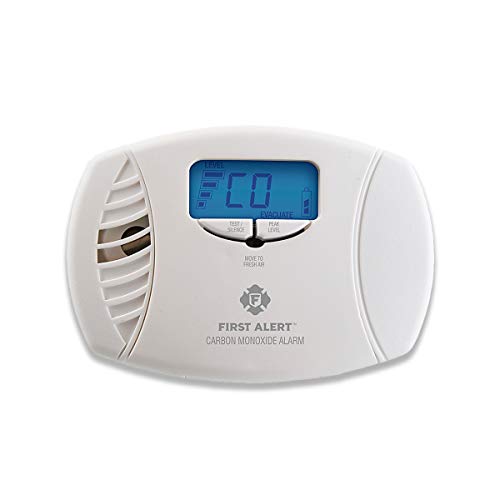
The First Alert CO615 is the plug-in pick for anyone who wants a backlit digital display. It runs on household power with two AA batteries as backup, so it keeps monitoring during an outage, and the display shows the current CO reading and the power status. The electrochemical sensor is the listed sensing technology across this lineup, and the unit includes a silence feature for muting a nuisance alarm and an end-of-life signal that tells you when the sensor has reached the end of its listed service life. Its slim plug-in body leaves the second outlet free in many duplex receptacles, which matters in a busy hallway.
Specs
- Power: plug-in with two AA battery backup
- Display: backlit digital display showing CO level
- Alarm: listed 85 dB alarm with silence feature
- Sensor: listed electrochemical CO sensor
- Mounting: plugs into a standard wall outlet
3. First Alert CO606
The First Alert CO606 is the straightforward plug-in alarm for buyers who do not need a display. It plugs into any standard outlet, monitors continuously on household power, and switches to its 9V battery backup during an outage. A single test and silence button handles weekly checks and quiets the unit after an event, and the listed sensor life runs about seven years, with a distinct end-of-life chirp when replacement is due. The compact body suits bedrooms and hallways where a display would add bulk and cost, and the electrochemical sensor is the same listed technology used in the display models above.
Specs
- Power: plug-in with 9V battery backup
- Display: none, LED indicators only
- Alarm: listed 85 dB alarm with test and silence button
- Sensor: listed electrochemical CO sensor
- Sensor life: listed at about seven years
4. First Alert CO400

The First Alert CO400 is the battery-only pick for rooms without a convenient outlet. It mounts on a wall and runs entirely on batteries, so it works in a bedroom, a finished basement, or a hallway far from any receptacle. The unit uses a listed electrochemical sensor, sounds a listed 85 dB alarm, and carries a single test and silence button plus an end-of-life warning. Because it has no cord and no plug, placement is flexible, but the trade-off is battery upkeep: check the batteries on the schedule in the manual and replace them when the low-battery signal sounds.
Specs
- Power: battery-operated, wall mount
- Display: none, LED indicators only
- Alarm: listed 85 dB alarm with test and silence button
- Sensor: listed electrochemical CO sensor
- Mounting: wall mount, no outlet needed
5. First Alert CO710
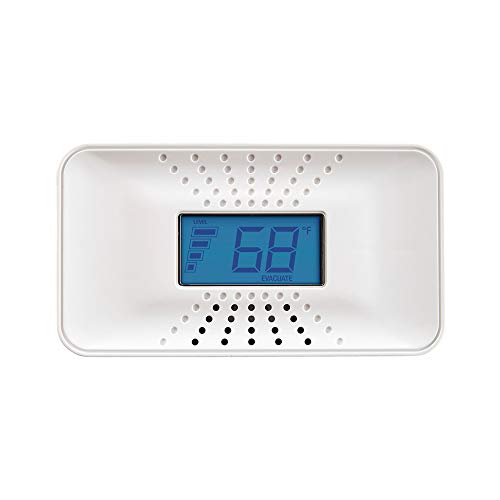
The First Alert CO710 pairs a battery-powered CO alarm with a digital temperature display, which makes it the most informative battery pick here. It mounts on a wall, runs on a sealed lithium battery with a listed ten-year life, and shows both the room temperature and the CO reading on its display. The long-life battery removes the routine of swapping cells, and the unit signals end of life when its listed service period ends. This is a good fit for a bedroom or a nursery wall where you want a quick glance at temperature as well as CO status, though the temperature reading is a convenience feature and does not change how the CO alarm itself works.
Specs
- Power: battery-operated with sealed lithium battery
- Display: digital display showing temperature and CO level
- Alarm: listed 85 dB alarm with test and silence button
- Battery life: listed ten-year battery
- Mounting: wall mount, no outlet needed
Comparison Table
| Model | Power | Display | Battery backup | Best for |
|---|---|---|---|---|
| Kidde Nighthawk KN-COPP-3 | Plug-in | Digital CO level | 9V battery | Hallway or living room with display |
| First Alert CO615 | Plug-in | Backlit digital CO level | Two AA batteries | Plug-in alarm with a clear display |
| First Alert CO606 | Plug-in | None | 9V battery | Simple plug-in alarm without a display |
| First Alert CO400 | Battery | None | Battery-powered | Rooms without a free outlet |
| First Alert CO710 | Battery | Digital temperature and CO level | Sealed lithium, ten-year listed life | Bedroom wall with temperature readout |
Frequently Asked Questions
Is a carbon monoxide detector the same as a gas detector?
No. A fixed carbon monoxide alarm monitors CO levels in a room and sounds an alarm on its own. A handheld combustible gas detector is a tool you point at pipes and fittings to find leaking fuel gas, and it needs a separate sensor to detect carbon monoxide. The two cover different jobs, and one does not replace the other.
Where should I place a carbon monoxide detector?
Manufacturer guidance generally calls for one on every level of the home and one in or near each sleeping area. Mount or plug the unit where the manual directs, away from fuel-burning appliances, cooking fumes, and steamy bathrooms.
Do plug-in models work during a power outage?
Only if they have a battery backup. The plug-in picks above list a 9V or AA backup, and the battery models run entirely on batteries, so they keep monitoring when household power drops. Replace backup batteries on the schedule in the manual.
How long does a carbon monoxide detector last?
Listed sensor life is usually around seven to ten years, depending on the model. The unit chirps in a distinct pattern at end of life, and it should be replaced then rather than kept in service. Check the manufacture date on the back of the unit and note the replacement date when you install it.
Should I choose a display model or a no-display model?
A display shows the current CO reading and, on some models, the peak reading, which helps you understand low-level events before the alarm sounds. A no-display model is simpler and still sounds the same loud alarm at listed thresholds. Pick a display when you want that information, and a no-display unit when you want the simplest possible alarm.
Conclusion
For most homes, a plug-in alarm with a display, such as the Kidde Nighthawk KN-COPP-3 or the First Alert CO615, is the easiest starting point: it shows the CO level, keeps working on battery backup, and needs no wiring. Add a simple plug-in unit like the First Alert CO606 for extra rooms, and use a battery model like the CO400 or the CO710 where no outlet is handy. Whichever models you choose, place one on every level and near sleeping areas, test them regularly, and swap any unit that signals end of life.
Related guides
More from Amazon
Programs that pair well with the guide above. Offers and eligibility are set by Amazon and may change.
Free shipping on eligible items, Prime Video and more. Eligible new members can start with a free trial.
Start a Prime free trialAd-free music streaming. Eligible new subscribers can start with a free trial.
Try Music Unlimited freeA Prime membership for ages 18-24 with a trial period. Eligibility is set by Amazon.
See Prime for Young AdultsAudiobooks and podcasts to listen to on the go. Eligible new members can start with a free trial.
Try Audible freeAs an Amazon Associate we earn from qualifying purchases.