A hard hat is the first thing most job sites ask you to put on, and the last thing you want to think about once the shift starts. The right one stays put when you bend over, lets air move on a hot afternoon, and leaves room for the earmuffs, lamp, or face shield your task calls for. The wrong one slides forward, pinches after an hour, or turns out to be vented near live power.
This guide compares five distinct designs, from the classic cap-style shell to modern Type II helmets with foam liners and chin straps. Every pick is listed to ANSI/ISEA Z89.1, with its type and electrical class stated so you can match the hat to the work.
Disclosure: As an Amazon Associate, I earn from qualifying purchases. If you buy through links in this article, I may earn a commission at no extra cost to you.
Top 3 picks at a glance


How to Choose a Hard Hat
Start with the impact type. A Type I hard hat is listed for blows to the top of the head, such as a dropped bolt. A Type II hard hat or safety helmet is listed for blows to the top as well as the front, back, and sides, as when you slip, trip, or walk into a beam. Type II designs usually add a foam liner and a chin strap, and suit work at height or around moving equipment. A Type I cap is still a sound choice where the main hazard is something falling from above, and it costs far less.
Next, check the electrical class, because vents change it. Class E shells are listed for electrical work to 20,000 volts, Class G for general electrical hazards at a lower voltage. Class C shells carry no electrical listing, and nearly every vented hard hat falls into this group because vent holes break the shell’s insulation. Near panels or overhead lines, choose a non-vented Class E shell. Away from energized equipment, a vented Class C shell feels cooler.
Then pick the brim. A cap-style hat has a short front brim that keeps your view clear overhead. A full-brim hat runs all the way around, shading your face, ears, and neck and shedding rain, but it can catch on ductwork in tight spaces. A ratchet suspension adjusts with one hand, even in gloves. Check that replacement suspensions are sold for your model, since they wear out sooner than the shell.
Fit is personal, so measure before you order. Most standard shells fit hat sizes from about 6.5 to 8. The shell should sit level and stay put when you bend forward without pressing hard. Inspect the shell and suspension before each use, retire the hat right away after any hard hit even if it looks fine, and follow the maker’s guidance on replacement, commonly about five years for shells.
1. Milwaukee BOLT Type 2 Vented Safety Helmet
The Milwaukee BOLT Type 2 suits crews moving to modern helmet protection. It is listed ANSI/ISEA Z89.1 Type 2, covering top impacts plus blows to the front, back, and sides, and the included chin strap keeps it on during a slip or fall. The vented version linked here is Class C, while Milwaukee also sells a non-vented version listed Class E.
BOLT slots plus universal slots accept Milwaukee headlamps, earmuffs, visors, and face shields without straps or tape, and the swing-wheel ratchet adjusts the fit with a gloved hand. The padded suspension, liner, and sweatband are removable and washable. The trade-off is bulk and cost: it runs heavier and dearer than a classic cap.
- Shell: polycarbonate helmet, front brim
- Standard: listed ANSI/ISEA Z89.1 Type 2
- Electrical class: Class C vented; Class E non-vented version available
- Suspension: padded swing-wheel ratchet
- Chin strap: included, multi-point adjustable
- Accessories: BOLT and universal slots for lamps, earmuffs, and visors
- Liner: removable, washable, antimicrobial treatment
2. Studson SHK-1 Full Brim Safety Helmet
The Studson SHK-1 is the most protection-focused helmet here, and the only pick pairing a full brim with a Type II listing. It uses a Koroyd core of thin welded tubes that crush to absorb impact energy, plus Brainshield pads. It is listed ANSI/ISEA Z89.1 Type II, and the full-brim version also carries CSA Z94.1 certification.
Every SHK-1 includes a twICEme NFC chip that a first responder can tap for emergency contacts and medical information. The vented version linked here is Class C, and Studson sells a non-vented version listed Class E. The full brim gives real shade for the face, ears, and neck. Studson lists it at about 525 g, light for the protection it offers. It costs well above a basic hard hat, so it makes most sense if you buy your own helmet and want the strongest protection in a full-brim shape.
- Shell: full-brim helmet with Koroyd impact core
- Standard: listed ANSI/ISEA Z89.1 Type II; full brim also listed CSA Z94.1
- Electrical class: Class C vented; Class E non-vented version available
- Suspension: adjustable, fits 53 to 63 cm
- Chin strap: included
- Extra: twICEme NFC emergency ID chip
- Weight: about 525 g per manufacturer
3. Klein Tools 60564 Type 2 Safety Helmet, Class E
The Klein Tools 60564 is the pick for electricians and anyone working around live power. This non-vented Type 2 helmet is listed Class E to 20,000 volts, combining side-impact protection with the electrical listing vented helmets cannot offer. It is also listed to ANSI Z89.1-2014 (R2019) and CSA Z94.1-2015.
The shell is compact and low profile, with a short bill that stays out of your line of sight when you look up at a panel or cable tray. That suits crawl spaces, ceilings, and lifts. The 6-point suspension adjusts with a ratchet knob and pivots for a better fit, and the chin strap is removable for sites that allow it. Patented mounts click a Klein headlamp on without straps, and side slots take hearing protection, visors, and face shields. It runs warm in summer, with almost no sun or rain cover from the short bill. For electrical work, that is the right trade.
- Shell: low-profile, non-vented helmet, short bill
- Standard: listed ANSI/ISEA Z89.1-2014 (R2019) Type 2; CSA Z94.1-2015
- Electrical class: Class E, listed to 20,000 volts
- Suspension: 6-point ratchet, pivoting
- Chin strap: included, removable
- Accessories: click-in headlamp mounts, side slots for earmuffs and visors
- Pads: washable sweatband and top pad
4. MSA V-Gard Cap Style Hard Hat, Fas-Trac III
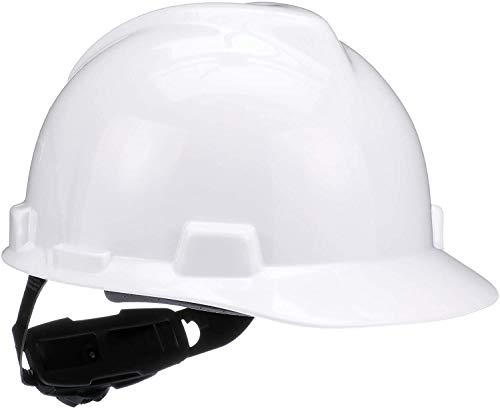
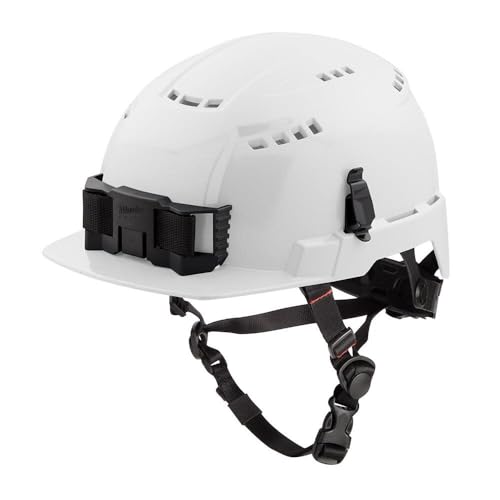
The MSA V-Gard is the classic cap-style hard hat. The white model 475358 linked here has a high-density polyethylene shell with a UV inhibitor to slow sun damage, listed ANSI/ISEA Z89.1 Type I, Class E, with CSA Z94.1 certification as well. Its short front brim keeps your view clear overhead.
The Fas-Trac III suspension is a 4-point ratchet that tightens with a rear knob, and a replacement is sold separately. The standard size fits hat sizes from 6.5 to 8. Accessory slots take MSA face shields, earmuffs, and lamps, so it works as a base for many trades. The trade-off is coverage: the short brim gives less sun and debris cover than a full brim. If your site allows Type I hard hats, or you need a spare for visitors and new hires, the V-Gard is hard to beat.
- Shell: high-density polyethylene, cap style
- Standard: listed ANSI/ISEA Z89.1 Type I, Class E; CSA Z94.1
- Electrical class: Class E
- Suspension: Fas-Trac III 4-point ratchet
- Fit: standard size, hat sizes 6.5 to 8
- Accessories: side slots for MSA earmuffs, face shields, and lamps
- Model: 475358, white
5. Pyramex Ridgeline Full Brim Hard Hat, HP54117

The Pyramex Ridgeline full brim is the value pick for outdoor work. The non-vented model HP54117 has a high-impact ABS shell in matte black graphite, listed ANSI/ISEA Z89.1 Type I with Class E, G, and C listings on the one shell, suiting crews that move between general trades and electrical work. The full brim shades the face and covers the neck and shoulders.
The 4-point ratchet adjusts while the hat is on, the soft brow pad is replaceable, and the suspension converts to 6-point with the HP6PTSUS accessory. The matte finish hides scuffs. The trade-offs are a warm head in summer and a wide brim that can bump into overhead obstacles. Pyramex also sells a vented version, listed Class C only, for crews that want airflow and do not work near live power.
- Shell: ABS, full brim, matte black graphite pattern
- Standard: listed ANSI/ISEA Z89.1 Type I
- Electrical class: Class E, G, and C, non-vented
- Suspension: 4-point ratchet, convertible to 6-point with HP6PTSUS
- Fit: hat sizes 6.5 to 8
- Brow pad: soft, replaceable
- Model: HP54117
Comparison Table
| Hard hat | Type | Electrical class | Brim | Suspension | Chin strap |
|---|---|---|---|---|---|
| Milwaukee BOLT Type 2 | Type 2 | Class C vented | Front brim | Ratchet, padded | Included |
| Studson SHK-1 | Type II | Class C vented | Full brim | Adjustable, 53 to 63 cm | Included |
| Klein Tools 60564 | Type 2 | Class E | Short bill | 6-point ratchet | Included, removable |
| MSA V-Gard Cap | Type I | Class E | Cap, short front brim | 4-point ratchet | Not included |
| Pyramex Ridgeline HP54117 | Type I | Class E, G, C | Full brim | 4-point ratchet | Not included |
Frequently Asked Questions
What is the difference between Type I and Type II hard hats?
A Type I hard hat is listed for blows to the top of the head, such as a dropped tool. A Type II hard hat or safety helmet is listed for blows to the top as well as the front, back, and sides, as in a fall or when you walk into a beam. Type II designs usually add a foam liner and a chin strap.
Can I wear a vented hard hat near live power?
No, not as a rule. Vents break the shell’s insulation, so nearly every vented hard hat is listed Class C, with no electrical listing. Near energized equipment, choose a non-vented shell listed Class E and check the label inside the shell.
What is the difference between a cap-style and a full-brim hard hat?
A cap-style hat has a short front brim, which keeps your view overhead clear. A full-brim hat has a brim all the way around, adding shade and cover for the neck and shoulders but catching on overhead obstacles in tight spaces.
How often should I replace a hard hat?
Inspect the shell and suspension before each use and replace the hat right away after any hard hit, even if it looks fine. Replace it for cracks, dents, or a chalky, faded surface. Many makers suggest replacing shells about every five years and suspensions sooner.
Conclusion
There is no single best hard hat for every job, because the right choice follows the hazard. The Milwaukee BOLT Type 2 is the strongest default for commercial sites, with side-impact protection and an accessory system for lamps, earmuffs, and visors. The Studson SHK-1 is the pick for maximum protection in a full-brim shape, with a Koroyd core and an NFC emergency chip. The Klein 60564 is the clear choice for electrical work, pairing a Type 2 listing with a Class E shell. The MSA V-Gard cap remains the classic for general trades, and the Pyramex Ridgeline is the value pick for long days outdoors.
Match the type and class to your site first, then choose the brim and suspension that fit the way you work. Check the label inside the shell when the hat arrives and replace the hat on schedule or after any hard hit.
Related guides
More from Amazon
Programs that pair well with the guide above. Offers and eligibility are set by Amazon and may change.
Free shipping on eligible items, Prime Video and more. Eligible new members can start with a free trial.
Start a Prime free trialAd-free music streaming. Eligible new subscribers can start with a free trial.
Try Music Unlimited freeA Prime membership for ages 18-24 with a trial period. Eligibility is set by Amazon.
See Prime for Young AdultsAudiobooks and podcasts to listen to on the go. Eligible new members can start with a free trial.
Try Audible freeAs an Amazon Associate we earn from qualifying purchases.