Our Short List of 3
All 4 Picks at a Glance
| Product | Specs | Action |
|---|---|---|
 ASUS RT-AX86U Pro | Check price on Amazon | |
 NETGEAR Nighthawk RAX50 | Check price on Amazon | |
 TP-Link Archer AX73 | Check price on Amazon | |
 ARRIS SURFboard G36 | Check price on Amazon |
Time Warner Cable is now Spectrum, and the internet that arrives through a coaxial cable in a former Time Warner Cable home is still cable internet. A DOCSIS modem turns the cable signal into an Ethernet connection, and the router turns that connection into Wi-Fi for the whole home and wired ports for the devices that sit near the desk. The best routers for time warner cable internet are the routers that pair cleanly with that setup: a fast WAN port for the modem, strong Wi-Fi for the rooms the cable cannot reach, and enough wired ports for the console, the work computer, and the streaming box.
A cable connection has one quirk that shapes the choice. The modem belongs to the cable line, and the router belongs to the home network, so the two boxes have separate jobs. A standalone router connects to any DOCSIS modem with a single Ethernet cable, which means the household can keep a modem that already works and replace only the router. A modem-router combination does both jobs in one box, which suits a household that wants fewer cables and a single device to manage, but it ties the router to the modem, so replacing one means replacing both.
This guide compares five routers for Time Warner Cable internet, now Spectrum cable. Four are standalone routers that connect to a cable modem, and one is a modem-router combination with a DOCSIS 3.1 modem built in. Every pick below is a complete router sold on Amazon US, and each one is judged on modem pairing, Wi-Fi strength, wired ports, coverage, and the traffic controls that keep streams and calls steady when the household is busy.
Our Top Picks

Top 3 picks at a glance
How to Choose
Pairing with the cable modem
The first check is the connection between the router and the modem. A standalone router needs one Ethernet WAN port, and that port should be at least gigabit, because a slower port would cap the whole connection before the Wi-Fi ever gets a chance. A router with a 2.5G WAN port suits a gigabit cable plan, since it leaves headroom above the plan’s headline speed instead of capping the connection at exactly one gigabit. If the household already owns a DOCSIS modem, confirm that the modem is on Spectrum’s approved device list, and keep it, because a working modem is no reason to buy a new one. If the household is starting fresh, a modem-router combination removes the pairing question entirely, but check the same approved list before ordering, since Spectrum publishes which modems it accepts.
Wi-Fi standard and bands
Wi-Fi 6 is the baseline for a cable router today, because it handles many devices at once far better than the older Wi-Fi 5 standard, and it keeps latency steadier when several people stream at the same time. Wi-Fi 6E adds a 6 GHz band, which is still quiet in most neighbourhoods, and it suits a household with newer phones and laptops that can use it. Dual-band routers cover the 2.4 GHz and 5 GHz bands, which is enough for most homes, while tri-band routers add a third lane that separates traffic or serves as a dedicated backhaul in a mesh system. Match the band layout to the household: a flat with a dozen devices is happy with dual-band Wi-Fi 6, while a busy house with consoles, streams, and work calls benefits from tri-band.
Wired ports and multi-gig
Wired connections still matter on a cable plan, because a console, a work computer, and a streaming box near the router all run better on cable than on Wi-Fi. Count the LAN ports before buying: four ports cover the usual desk setup, while eight ports suit a household with a network switch, a storage device, and several wired gadgets. A 2.5G port is worth having on a gigabit plan, because it lets one wired device use the full plan speed without sharing the gigabit ceiling with the WAN connection. Mesh systems deserve a second look here too, since a satellite with a wired backhaul option can carry traffic over Ethernet instead of competing for airtime.
Coverage and mesh
Cable enters the home at one point, and the router usually sits where the coaxial outlet is, which is rarely the centre of the house. A single powerful router covers a flat or a small house, but a larger home with thick walls needs a mesh system so the far rooms get a usable signal. Mesh satellites should sit within range of each other, roughly one or two rooms apart, and a system with a dedicated backhaul band keeps traffic between units from crowding the bands the devices use. Check the coverage figure for the home’s size, and remember that a mesh system can grow later by adding a satellite, while a single router cannot.
Traffic controls and QoS
A cable plan shares its bandwidth among everyone in the house, so the router needs a way to protect the traffic that cannot wait. Quality of service, or QoS, lets the router prioritise calls, streams, and games over downloads and backups, and the best implementations have a preset that the owner can enable in a few taps. Some routers let the owner set a priority rule for a specific device, such as a work computer or a console, which is the most direct way to keep a call clear while someone else starts a download. Adaptive QoS that recognises traffic types is easier to live with than manual rules, because it adjusts itself when the household’s habits change.
Security and app controls
A router is the front door of the home network, so its security tools deserve attention. Built-in protection that blocks malicious sites and intrusion attempts adds a layer of defence for every device, including the ones that cannot run their own security software, such as a smart television or a camera. A guest network keeps visitors off the main network, and parental controls let the household set schedules and filters for children’s devices. A companion app matters more than it first appears, because the router will be managed from a phone far more often than from a computer, so the app should make the common jobs, such as pausing a device or checking who is connected, easy to find.
Top Picks
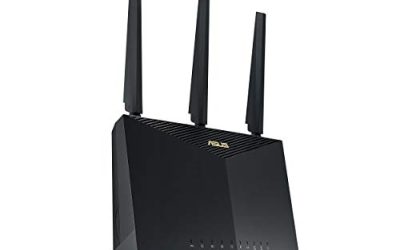
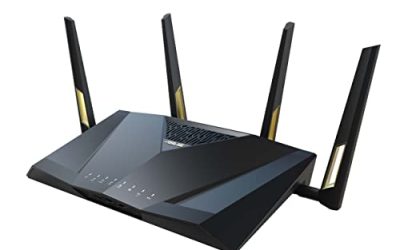
ASUS RT-AX86U Pro
The ASUS RT-AX86U Pro is the all-rounder in this guide, and the pick that fits the most Time Warner Cable homes. Its Adaptive QoS has presets for gaming, streaming, and work, so a call stays clear while someone else starts a download, and its 2.5G WAN/LAN port suits a gigabit cable plan without capping the connection at the WAN port. AiMesh support means a satellite can join later if the house grows or the far rooms need help, and the built-in VPN server lets a remote worker connect back to the home network as if they were on site.
Key specifications:
– Dual-band Wi-Fi 6 with AX5700 class wireless
– One 2.5G WAN/LAN port plus four gigabit LAN ports
– Adaptive QoS with presets for gaming, streaming, and work
– AiProtection security and VPN server included
– AiMesh support for adding satellite units later
Who it is for: a household on a gigabit cable plan that wants one router to handle streams, calls, and games without fuss, and that may add mesh coverage later.
Caveats: it is a dual-band router, so a household with many Wi-Fi 6E devices may prefer a tri-band pick below, and the 2.5G port is shared between WAN and LAN duty, so it cannot serve both roles at once.
NETGEAR Nighthawk RAX50
The NETGEAR Nighthawk RAX50 is the straightforward choice for a household that wants strong Wi-Fi 6 without tri-band complexity. Its six-stream design serves several devices at once, and the Nighthawk app makes the everyday jobs, such as checking connected devices and pausing the internet for a child’s tablet, easy to find. Five gigabit ports give the desk setup room to grow, and the router pairs with any DOCSIS modem through a standard Ethernet WAN connection, so it drops into an existing Time Warner Cable setup with a single cable.
Key specifications:
– Dual-band Wi-Fi 6 with AX5400 class wireless
– Six-stream design for serving several devices at once
– One gigabit WAN port plus four gigabit LAN ports
– Nighthawk app for setup and device management
– Four external antennas for broad coverage
Who it is for: a flat or small house that wants a capable standalone router for a cable modem, with enough wired ports for a console and a work computer.
Caveats: it has no 2.5G port, so a gigabit plan is capped at the gigabit WAN port, and it is dual-band only, with no 6 GHz lane for newer devices.
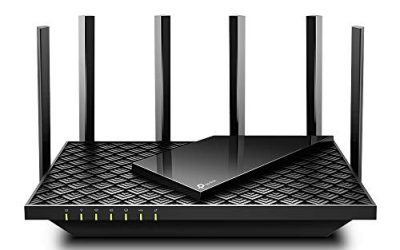
TP-Link Archer AX73
The TP-Link Archer AX73 is the sensible middle of this guide, with six antennas and a straightforward feature set that covers the needs of a busy cable household. Its AX5400 dual-band Wi-Fi 6 handles streams, calls, and downloads at the same time, and the USB 3.0 port turns an attached drive into simple shared storage for the household. OneMesh support lets a compatible extender join the same network name, which is a gentler upgrade path than replacing the router when one room has a weak signal.
Key specifications:
– Dual-band Wi-Fi 6 with AX5400 class wireless
– Six high-gain antennas for broad coverage
– One gigabit WAN port plus four gigabit LAN ports
– USB 3.0 port for shared storage
– HomeShield security tools and OneMesh support
Who it is for: a household that wants solid Wi-Fi 6 and wired ports for a cable modem setup, with a USB port for shared storage as a bonus.
Caveats: like the RAX50 it has no 2.5G port, so a gigabit plan meets the gigabit WAN ceiling, and its QoS controls are simpler than the ASUS preset system above.
TP-Link Deco X55 (3-Pack)
The TP-Link Deco X55 is the mesh pick for a larger home where the coaxial outlet sits far from the bedrooms. Three units form a single network with one name, so phones and laptops move between rooms without dropping, and each unit has three gigabit Ethernet ports, so a wired device can connect at any satellite instead of only at the main unit. Setup runs through the Deco app, and the system handles the handover between units itself, which is the part of mesh that matters most day to day.
Key specifications:
– AX3000 dual-band Wi-Fi 6 mesh system, three units included
– Three gigabit Ethernet ports on each unit
– Single network name across the whole home
– Deco app for setup and management
– Wired backhaul support between units
Who it is for: a larger home, or a home with thick walls, where a single router leaves dead zones and the coaxial outlet is far from the rooms that need Wi-Fi.
Caveats: each unit is dual-band only, so there is no dedicated backhaul band, and the AX3000 class is a step below the standalone routers above on headline wireless speed, trading it for coverage.
ARRIS SURFboard G36
The ARRIS SURFboard G36 is the one-box answer in this guide, combining a DOCSIS 3.1 cable modem with an AX3000 Wi-Fi 6 router. It replaces both the modem and the router, which suits a household that wants fewer boxes and fewer cables, and its DOCSIS 3.1 modem suits gigabit cable plans. Four gigabit LAN ports cover the desk setup, and the SURFboard Central app handles setup and management. Before ordering, check Spectrum’s approved device list for the G36, since approval is what decides whether a customer-owned modem can be activated on the line.
Key specifications:
– DOCSIS 3.1 cable modem with AX3000 Wi-Fi 6 router in one box
– Four gigabit Ethernet LAN ports
– Wi-Fi 6 with OFDMA and MU-MIMO for many devices
– SURFboard Central app for setup and management
– Replaces a separate modem and router
Who it is for: a household starting fresh on Spectrum cable, or one replacing both a modem and a router, that wants a single device to manage.
Caveats: the modem and router are tied together, so replacing one means replacing both, and a separate modem plus a standalone router gives more freedom to upgrade each half on its own schedule.
Comparison Table
| Model | Type | Wi-Fi | Wired Ports | Standout Feature |
|---|---|---|---|---|
| ASUS RT-AX86U Pro | Standalone router | Wi-Fi 6, dual-band | 2.5G + 4 gigabit LAN | Adaptive QoS presets and AiMesh |
| NETGEAR Nighthawk RAX50 | Standalone router | Wi-Fi 6, dual-band | 4 gigabit LAN | Six-stream design, simple app |
| TP-Link Archer AX73 | Standalone router | Wi-Fi 6, dual-band | 4 gigabit LAN | USB 3.0 shared storage, OneMesh |
| TP-Link Deco X55 (3-Pack) | Mesh system | Wi-Fi 6, dual-band | 3 gigabit LAN per unit | Whole-home coverage, wired backhaul |
| ARRIS SURFboard G36 | Modem-router combo | Wi-Fi 6, dual-band | 4 gigabit LAN | DOCSIS 3.1 modem built in |
Which One Is Right for You?
Start with the modem question, because it splits the guide in two. If the household already owns a DOCSIS modem that works, or Spectrum supplied one, buy a standalone router and connect it with a single Ethernet cable. If the household is starting fresh and wants one box, the ARRIS SURFboard G36 does both jobs, provided it appears on Spectrum’s approved device list for the plan.
Among the standalone routers, the ASUS RT-AX86U Pro is the default choice for a gigabit plan, because its 2.5G port and Adaptive QoS presets handle the fastest cable plans and the busiest evenings. The NETGEAR Nighthawk RAX50 and the TP-Link Archer AX73 suit households on slower plans, or homes where the router’s job is simply to be reliable: the RAX50 for its six-stream design and simple app, the AX73 for its USB storage port and OneMesh path. The TP-Link Deco X55 is the pick when coverage is the problem rather than speed, which is the case in any larger home where the coaxial outlet sits far from the bedrooms. Match the router to the home’s real constraint, modem first, then plan speed, then coverage, and the choice narrows to one pick quickly.
Frequently Asked Questions
Do I need a separate modem with these routers?
Four of the five picks are standalone routers, and each one needs a DOCSIS cable modem connected to its WAN port with an Ethernet cable. The ARRIS SURFboard G36 is the exception, because it has a DOCSIS 3.1 modem built in and connects directly to the coaxial cable. A household that already owns a modem only needs a standalone router, while a household starting fresh can choose either route.
Will any router work with Time Warner Cable internet?
Any standalone router with an Ethernet WAN port works with a DOCSIS modem on Spectrum cable, because the router only sees the Ethernet connection from the modem, not the cable line itself. The part that needs approval is the modem, not the router, so check Spectrum’s approved device list for the modem model and plan. A modem-router combination must appear on that list as a whole device.
Should I rent Spectrum’s router or buy my own?
Spectrum’s own router is the simplest option, because it arrives configured and the provider supports it, but a customer-owned router gives the household control over features such as QoS presets, VPN tools, parental controls, and mesh expansion. The picks in this guide all add features that a basic supplied router may not include, and a standalone router can move with the household if the modem changes later.
What if my house has dead zones?
A single router can only cover so much, especially when the coaxial outlet sits in a corner room. A mesh system such as the Deco X55 places satellites between the router and the dead zones, and each satellite repeats the signal while keeping one network name. Place satellites one or two rooms apart, keep them out in the open rather than inside a cabinet, and use a wired backhaul where an Ethernet cable can reach a satellite.
Disclosure: As an Amazon Associate, we may earn from qualifying purchases.
Related guides
More from Amazon
Programs that pair well with the guide above. Offers and eligibility are set by Amazon and may change.
Free shipping on eligible items, Prime Video and more. Eligible new members can start with a free trial.
Start a Prime free trialAd-free music streaming. Eligible new subscribers can start with a free trial.
Try Music Unlimited freeA Prime membership for ages 18-24 with a trial period. Eligibility is set by Amazon.
See Prime for Young AdultsAudiobooks and podcasts to listen to on the go. Eligible new members can start with a free trial.
Try Audible freeAs an Amazon Associate we earn from qualifying purchases.