If your frametime graph looks like a seismograph during an earthquake, you have a stuttering problem, not a low-fps problem. Stuttering is almost never caused by one setting. It is caused by the GPU and CPU finishing their work at unpredictable intervals, and by memory or shader systems scrambling to keep up. That means the settings that smooth things out are not always the ones that boost your average fps. This guide prioritizes consistency first: capping your frame rate, locking in a stable resolution scale, disabling features that generate work at random moments, and keeping the engine from compiling shaders mid-fight. Get these right and your 1% lows can climb dramatically even when your average fps barely moves.
One note before the table: apply these settings one or two at a time and test in the same game area for a few minutes each. If a setting makes things worse, revert it. Also patch your game before tuning anything; many stuttering bugs in 2026 releases are fixed by a patch within weeks, and no setting will out-engineer a broken build.
As an Amazon Associate we earn from qualifying purchases at no extra cost to you.




Our Top Picks
Top 3 picks at a glance
Quick Recommended Settings
| Setting | Recommended value | Why |
|---|---|---|
| Frame rate cap | 3–5 fps below your average fps (e.g., 137 on a 144 Hz panel) | Prevents frametime spikes when fps fluctuates; the single biggest anti-stutter lever |
| V-Sync | Off; use driver-level Low Latency Mode or Anti-Lag instead | In-game V-Sync adds input lag and can cause frametime pulsing at odd refresh rates |
| Resolution scale | Fixed 90–100%, never dynamic | Dynamic resolution changes GPU load mid-frame, a classic stutter generator |
| Shader quality / precompiled shaders | On / let it finish before playing | Eliminates traversal stutter from on-the-fly shader compilation |
| Texture quality | Highest that fits in ~80% of your VRAM | VRAM overflow causes hitching that no other setting can mask |
| Draw distance / LOD | One notch below maximum | Streaming data in large chunks causes hitches when new areas load in |
| Frame generation | Off while troubleshooting | It inserts frames and can mask or amplify frametime irregularities |
| On-screen frametime counter | On (Steam: Settings > In Game > Performance overlay; NVIDIA: Alt+R) | You cannot fix stutter you cannot measure; watch 1% lows, not average fps |
Setting-by-Setting
Frame Rate Cap
What causes it: When your fps swings between, say, 110 and 160, each frame arrives at an unpredictable interval. Your monitor and your brain both read that as stutter, even at high averages.
How to check: Enable a frametime graph. In Steam, go to Settings > In Game and enable the Performance overlay, set to detail level “advanced”. On NVIDIA, press Alt+R for the statistics overlay; on AMD, Ctrl+Shift+O.
What to do: Find your typical fps, then cap 3–5 below it. Use the in-game cap if the game offers one (many modern engines have caps that are frametime-clean); otherwise use the NVIDIA Control Panel under Manage 3D Settings > Max Frame Rate, or AMD Software > Gaming > Frame Rate Target Control. On high-refresh displays, capping at a divisor of your refresh rate (72 on 144 Hz) keeps V-Sync off cleanly.
How to undo: Set Max Frame Rate back to “Off” in the driver or the in-game slider to “Unlimited”.
V-Sync and Latency Settings
What causes it: In-game V-Sync forces the GPU to buffer frames, and when your fps sits just under the refresh rate it can snap to half-rate (72 fps on a 144 Hz panel), producing a rhythmic hitch.
How to check: If your fps jumps between a number and exactly half of your refresh rate, V-Sync is pulsing. Also check for doubled input latency.
What to do: Turn in-game V-Sync off. If you use G-Sync/FreeSync, enable V-Sync in the driver (not the game) with an fps cap 3 below your refresh rate; that is the cleanest combination. Add NVIDIA Low Latency Mode set to “Ultra” or AMD Anti-Lag to keep input lag in check without buffering.
How to undo: Restore V-Sync to your previous in-game preference and set Low Latency Mode back to “On” or “Off”.
Shader Compilation and Shader Quality
What causes it: Open-world and Unreal Engine 5 games compile shaders during play if you skip the precompilation step, causing one-to-two-second freezes the first time you see each new effect.
How to check: If stutters occur once per unique location or effect and never repeat in the same spot, it is shader compilation. Some games show a “compiling shaders” screen at launch; never Alt+F4 or alt-tab out of it.
What to do: Let precompilation finish every time the game patches. In games with a setting like “Precompiled Shaders” or “Shader Pre-caching” (Steam has one under Settings > Downloads; leave it enabled), keep it on. After major driver updates, clear the shader cache: NVIDIA users can use the “Clean installation” checkbox in the driver installer or delete %localappdata%\NVIDIA\DXCache; AMD users use AMD Software > Settings > Graphics > Reset Shader Cache.
How to undo: Nothing to undo; the cache rebuilds automatically as you play.
Texture Quality and VRAM Headroom
What causes it: When texture memory demand exceeds VRAM, textures spill into system RAM across the PCIe bus. The result is periodic hitching that gets worse the longer you play.
How to check: Press Alt+R (NVIDIA) or Ctrl+Shift+O (AMD) and watch VRAM usage. If it sits within a few hundred MB of your total or spikes to 100%, you are overflowing. Task Manager > Performance > GPU shows “Dedicated GPU memory” too.
What to do: Drop texture quality until VRAM peak usage stays below roughly 80–90% of capacity. Texture quality affects framerate very little when it fits, so never lower other settings before lowering this one on a card with modest VRAM.
How to undo: Raise it back one notch at a time while re-checking VRAM.
Dynamic Resolution and Upscaling
What causes it: Dynamic resolution rendering changes render target size frame-to-frame, which changes GPU workload and can cause frametime jitter even though it protects your fps number.
How to check: Look for “Dynamic Resolution” or “Resolution Scaling” set to a range (e.g., 60–100%). If the effective resolution readout changes during play, that is your suspect.
What to do: Disable dynamic resolution and set a fixed scale. If you need performance, use a fixed upscaler mode instead — DLSS Quality or FSR Quality at a fixed internal resolution — which is far more frametime-stable than the game’s own dynamic scaler.
How to undo: Re-enable it if you prefer fps headroom over frametime consistency; the trade-off is real on low-end GPUs.
Object Streaming, Draw Distance, and LOD
What causes it: Long draw distances force the engine to stream large amounts of geometry and texture data whenever you move, causing traversal hitches, especially in dense cities.
How to check: Stutters when entering new areas, turning quickly, or fast-traveling point to streaming. Test by sprinting the same route three times; loading hitches repeat at the same landmarks.
What to do: Set draw distance, crowd density, and LOD to one notch below maximum. In games with a “Streaming” or “World streaming” budget setting (common in open-world titles), increase it if you have 32 GB of RAM, otherwise leave defaults.
How to undo: Return sliders to maximum one at a time and retest.
Frame Generation and Reflex/Anti-Lag
What causes it: Frame generation inserts interpolated frames; when the base framerate is low or inconsistent, inserted frames make frametime patterns look worse and add latency.
How to check: Compare frametime graphs with it on and off. If the graph looks smoother off, leave it off.
What to do: Only enable frame generation once your base framerate is already stable — ideally above 60 fps at the base layer. Keep Reflex or Anti-Lag enabled either way; they reduce input buffering without hurting frametimes.
How to undo: A single toggle in the display or graphics menu.
By Hardware Tier
Low-End (entry GPUs, 8 GB VRAM or less, 16 GB RAM)
Cap fps at 60 or even 48 if your frametime graph still zigzags — a rock-solid 48 feels better than a wobbling 60. Run textures at Medium or lower to guarantee VRAM headroom, disable dynamic resolution, and use FSR Balanced or Performance at a fixed scale. Set everything else to Low before touching upscaler settings. Do not use frame generation. Close background apps, especially browsers with hardware acceleration, since you have little RAM and VRAM to spare.
Mid-Range (8–12 GB VRAM, 16–32 GB RAM, 1440p targets)
Cap 3–5 fps below your average, textures at High if VRAM allows, and upscaling at Quality mode fixed. Set draw distance and LOD one notch below max. Enable shader precompilation everywhere and never skip it after patches. You can try frame generation here, but only if the base framerate is stable at 60+ first; verify with the frametime graph, not the fps counter.
High-End (16 GB+ VRAM, strong CPU, 4K or high-refresh 1440p)
Your stutters are usually CPU-side or engine-side, not GPU-side. Cap fps at your refresh rate minus 3 and use driver V-Sync with G-Sync/FreeSync. If hitching persists at high settings, check CPU utilization: if one thread pegs at 100%, reduce crowd density, physics, or simulation-related settings rather than visual ones. Keep Resizable BAR enabled in BIOS, leave shader caches alone unless you just updated drivers, and treat frame generation as a bonus, never a fix.
Common Mistakes
Chasing average fps instead of frametime. A 90 fps average with 40 ms spikes feels worse than a locked 70. Always tune against the frametime graph.
Stacking every tweak at once. Change one or two settings, test the same route, then move on. Otherwise you cannot tell what helped.
Skipping shader precompilation after every patch. Most “the stutter came back” reports follow a game update or driver install. Let the compile screen finish and clear stale caches if needed.
Maxing textures on an 8 GB card. Texture quality is nearly free when it fits and catastrophic when it does not.
Using frame generation to fix stutter. It multiplies whatever pattern your base frametime has. Fix the base framerate first.
Forgetting the CPU side. Background overlays (multiple launchers, Discord hardware acceleration, RGB suites) inject work into your frametime budget. Disable overlays in Settings within each app before blaming the game.
FAQ
Why does my game stutter even at high fps?
Because stutter is about frame delivery consistency, not quantity. Shader compilation, VRAM overflow, dynamic resolution shifts, and CPU spikes all produce stutters at 100+ fps. Cap your framerate and watch 1% lows instead of the average.
Should I cap fps in-game or in the driver?
In-game caps are usually cleaner because they integrate with the engine’s frame pacing. If the game’s cap feels rough, try the driver cap (NVIDIA Max Frame Rate or AMD Frame Rate Target Control) instead, and set the in-game limiter to unlimited so only one cap is active.
Does more RAM reduce stuttering?
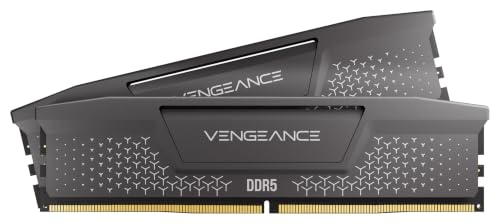
Up to a point. If you are at 100% RAM usage or swapping to disk, going from 16 GB to 32 GB meaningfully reduces hitches in modern open-world games. Beyond your actual usage, extra RAM does nothing. Check Task Manager > Performance > Memory while playing; sustained usage above ~90% is your upgrade signal.
Can a driver update fix stuttering on its own?
Sometimes, especially right after a major game launch when vendors ship game-ready fixes. But a fresh driver can also introduce stutter until caches rebuild. If stutter starts immediately after an update, perform a clean installation, delete the DXCache folder at %localappdata%\NVIDIA\DXCache (or use Reset Shader Cache in AMD Software), and let shader precompilation run again.