The best back stretcher devices for spinal decompression are adjustable, gently supportive devices that match your symptoms and mobility: a contoured arch is usually best for targeted thoracic or lumbar stretching, while an inversion table provides stronger whole-spine traction but demands more safety precautions.
As an Amazon Associate we earn from qualifying purchases at no extra cost to you.


Our Top Picks
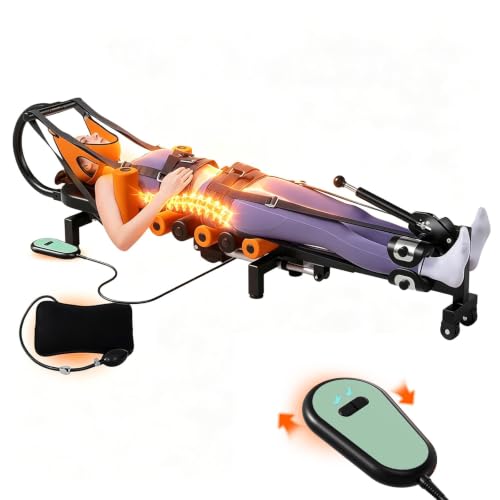 Decompression Table Lumba Traction Device Back Spinal StretcherBlack And Red46.45 x 16.9 x 9.69 inches32 PoundsCheck on Amazon
 Spinal Decompression Machine Decompression Table for Back Pain6.5-Inch Backrest Height47 x 6.7 x 17 inchesCheck on Amazon

Top 3 picks at a glance
Quick comparison: which back stretcher fits your situation?
| Device type | Typical adjustment range | Support zones | Typical materials | Portability | Common user limit | Best suited to |
|---|---|---|---|---|---|---|
| Low-profile lumbar arch | 3–5 height levels or fixed curve | Lower back, sometimes mid-back | ABS or polypropylene frame, EVA foam pad | High; commonly 0.5–1.5 kg | Usually 100–150 kg | Desk-related stiffness and controlled daily stretching |
| Multi-arch wheel | Usually 2–4 curvature options | Thoracic, lumbar, and occasionally neck-adjacent upper back | Plastic core, foam or rubber contact surface | High; commonly 1–2.5 kg | Often 100–150 kg | People wanting several stretch intensities in one device |
| Inflatable lumbar stretcher | Air pressure and strap position | Lower back, with variable waist support | TPU or PVC air bladder, fabric cover | Very high; often under 1 kg | Frequently 100–120 kg, depending on design | Travel and mild, adjustable support |
| Inversion table | Typical rotation range from 20° to 60° or more | Whole body, ankles, pelvis, and spine | Steel frame, padded table, ankle restraints | Low; commonly 25–35 kg | Often 136 kg, but model-specific | Users seeking stronger traction who can safely mount and dismount |
These figures are useful comparison ranges, not universal specifications. Always confirm the exact height, weight, angle, and warranty limits for the model you intend to buy.
What to look for before buying
1. Adjustment range
A fixed arch can work well if its curve matches your body, but an adjustable stretcher is easier to personalize. Look for at least three positions. Start with the lowest or least curved setting, then increase gradually only if the stretch feels even rather than sharp.
Inversion tables use angle rather than arch height. A sensible progression is 15–20 degrees for initial sessions, 25–30 degrees after several comfortable uses, and only then a deeper angle if a healthcare professional has not identified a contraindication. A larger angle is not automatically better: it increases body loading on the ankle restraints and may intensify pressure changes in the head and eyes.
2. Support zones and pressure distribution
A good lumbar stretcher should support both sides of the spine rather than pressing directly on the spinous processes. Wide contact areas reduce pressure points and make it easier to relax. For upper-back use, choose a broader thoracic curve and place it below the shoulder blades; do not force the neck over a small, hard ridge.
Look for rounded edges, a stable base, and enough width that your pelvis does not slide off the device. A product that feels aggressive after 30 seconds is usually a poor match, even if its advertised curve looks impressive.
3. Materials, grip, and comfort
ABS and polypropylene are common structural plastics. They are light and easy to clean, but a thin plastic surface can become uncomfortable quickly. EVA foam, textured rubber, or a removable padded cover improves comfort and reduces slipping. Check whether the padding compresses completely under your weight; excessive compression can turn a supportive arch into a hard pressure point.
For a home device, a wipe-clean surface matters more than decorative upholstery. If you plan to use it over clothing, a non-slip base is more important than extra-soft padding.
4. Portability and storage
A lumbar arch or wheel is practical for a bedroom, office, or suitcase. An inversion table needs a clear floor area, ceiling clearance, and enough space to rotate safely. Measure the folded dimensions as well as the operating footprint. Some tables are heavy enough that moving one alone is awkward, which matters if you need to store it after every session.
5. Weight and height limits
Never treat a maximum user weight as a comfort recommendation. Leave a margin below the stated limit, especially with an inversion table. Also check the supported height range: ankle placement and the table’s balance depend on it. If you are near either boundary, choose a different model or obtain professional guidance before use.
Best choices by use case
- For mild lower-back stiffness: choose a three- or four-position lumbar arch with a wide base and padded contact zones.
- For thoracic tightness from desk work: choose a multi-arch wheel or a broad thoracic stretcher. The device should sit between the shoulder blades, not under the neck.
- For frequent travel: an inflatable lumbar stretcher is easiest to pack, but inspect the air valve and seams and use it on a firm, level surface.
- For stronger full-body traction: consider an inversion table only if you can control the descent and return upright without assistance.
- For limited mobility or balance: favor a floor-based arch used beside a stable surface. Avoid devices that require climbing, hanging, or rapid position changes.
A safe-use routine that starts conservatively
- Check the device. Confirm that adjustment pins are fully seated, the base does not rock, and straps or ankle clamps are undamaged.
- Warm up for two minutes. Walk slowly or perform gentle pelvic tilts. Cold muscles are more likely to resist the stretch.
- Use the lowest setting. Lie down slowly and keep your knees bent if that reduces lumbar strain.
- Hold for 30–60 seconds. Repeat two or three times rather than forcing one long session.
- Increase gradually. Add one adjustment level only after several sessions without increased pain later that day or the next morning.
- Exit slowly. Roll to your side before sitting up from a floor device. Return an inversion table to upright before releasing restraints.
A useful intensity rule is that the stretch should feel mild to moderate—about 2 or 3 on a 10-point discomfort scale—with no numbness, tingling, electric pain, dizziness, or loss of strength. Stop immediately if any of those symptoms appear.
Worked decision example: choosing between an arch and an inversion table
Suppose a 90 kg user wants 10 minutes of decompression after desk work and has only a 1.5 m by 0.6 m storage area. A portable arch weighing 1 kg fits the space and leaves a 46 kg margin below a 136 kg example weight limit. An inversion table weighing 30 kg may also support the user, but its operating and storage footprint can exceed that available area. The arch is therefore the more practical choice—not because it creates more traction, but because it meets the user’s actual space, setup, and control requirements.
This illustrates an important buying principle: select the least intense device that solves the problem consistently. Stronger traction is not a substitute for a suitable fit or safe technique.
When not to use a back stretcher without medical advice
Ask a clinician before using spinal decompression equipment if you have diagnosed osteoporosis, a recent fracture, spinal surgery, significant spinal instability, inflammatory spinal disease, uncontrolled high blood pressure, glaucoma or another condition affected by pressure changes, heart disease, pregnancy, or persistent radiating pain.
Seek urgent medical care for new bowel or bladder problems, numbness around the groin, rapidly worsening leg weakness, or severe back pain after an injury. A stretcher can temporarily change symptoms, but it cannot diagnose or correct a disc problem, fracture, nerve compression, or other underlying condition.
Frequently asked questions
Can I use a lumbar arch for upper-back tightness?
You can use a lumbar arch for upper-back tightness only if its shape and placement provide broad, comfortable support without forcing your neck. For thoracic use, a broader curve should sit below the shoulder blades rather than under the neck. A multi-arch wheel may be a better choice when you want support for both the thoracic and lumbar areas.
How often should I increase the stretcher’s intensity?
Increase intensity only after several sessions without increased pain later that day or the next morning. Begin with the lowest or least curved setting and add one adjustment level gradually. The stretch should feel mild to moderate, about 2 or 3 on a 10-point discomfort scale, rather than sharp or aggressive. A larger curve or angle is not automatically better.
Can I use a back stretcher while wearing clothes?
You can use a back stretcher over clothing, but a non-slip base becomes especially important. EVA foam, textured rubber, or a removable padded cover can improve comfort and reduce slipping. The device should support both sides of the spine and avoid pressing directly on the spinous processes. A wipe-clean surface is also useful for regular home use.
What should I do if I feel dizzy during use?
Stop immediately if you feel dizzy during use. You should also stop for numbness, tingling, electric pain, or loss of strength. With an inversion table, return to an upright position before releasing the restraints. With a floor device, exit slowly and roll to your side before sitting up. Persistent or serious symptoms require appropriate medical attention.
Is an inversion table suitable if I live in a small space?
An inversion table may not be suitable if your available space is limited. It needs a clear floor area, ceiling clearance, and enough room to rotate safely, and it can be awkward to move because it is heavy. Measure both its folded dimensions and operating footprint. A lumbar arch or wheel is generally more practical when storage space is restricted.
Bottom line
For most home users, the best back stretcher devices for spinal decompression are adjustable lumbar arches or multi-arch wheels with stable bases, rounded support zones, non-slip surfaces, and clear weight limits. Choose an inflatable model for portability and an inversion table only when you have the space, balance, and medical clearance for stronger traction. Compare adjustment range, body support, materials, user limits, and exit safety before comparing price; a comfortable device that you use gently and consistently is usually more useful than a more aggressive model left in storage.