Our Top Picks
 Sony ZV-E10 APS-C Mirrorless Camera with 16-50mm LensBase1.8 x 4.5 x 2.5 Inches1 PoundsCheck on Amazon
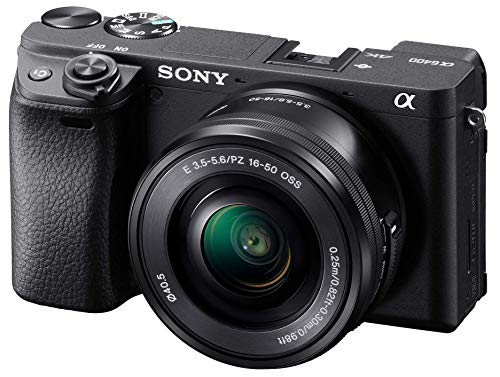 Sony Alpha a6400 Mirrorless Camera: Compact APS-C Interchangeable6.2 x 9.2 x 4.55 inches6.2 x 9.2 x 4.55 inches0.6 poundsCheck on Amazon
 Sony Alpha a7 IV Mirrorless Camera with 28-70mmCompact6.4 x 9.1 x 9.1 inches3.3 poundsCheck on Amazon
Top 3 picks at a glance


Quick Comparison
The table below maps every model in this roundup to the job it does best. Prices are given as market tiers rather than fixed figures, because Sony’s compact and mirrorless lines get discounted and repriced constantly — a camera that sits at the top of one tier today can drop into the one below it during a seasonal sale. Use the tier, the sensor class and the video ceiling to shortlist, then read the full section for the pick that matches how you actually shoot.
| Product | Best For | Key Specs | Price Tier |
|---|---|---|---|
| Sony ZV-E10 with 16-50mm lens | Vlogging and gaming content, clean HDMI into a capture card | APS-C sensor, interchangeable E-mount, real-time eye AF, 4K video, fully articulating screen, directional mic | Premium |
| Sony DSC-WX500 | Travel and pocket zoom shooting | Compact body, 30x optical zoom class, 3-inch LCD, built-in stabilisation, 1080p video | Mid-range |
| Sony Alpha a6400 | Hybrid photo and video on a budget, fast autofocus | APS-C sensor, E-mount, Real-Time Eye AF with subject tracking, 4K video, 180-degree flip screen | Mid-range |
| Sony Cyber-Shot RX100 VII bundle | Pro-level compact shooting and travel video | 1-inch stacked sensor, 24-200mm equivalent zoom, fast hybrid AF, 4K video, pop-up viewfinder | Premium |
| Sony Cyber-Shot DSC-W830 | Absolute lowest-cost stills | 20.5 MP sensor, 8x optical zoom, 2.7-inch LCD, 720p video | Budget |
| Sony DSC-W330 | Basic point-and-shoot backup | 14.1 MP sensor, 4x wide-angle zoom, optical SteadyShot, 3-inch LCD | Budget |
| Sony RX100 (original) | Best image quality per dollar in a pocket body | 1-inch sensor, 20.2 MP, 28-100mm Zeiss zoom, 3-inch LCD, 1080p video | Mid-range |
| Sony Alpha a7 IV with 28-70mm lens | Full-frame hybrid work, heavy cropping, low light | Full-frame sensor, E-mount, advanced real-time tracking AF, 4K video, dual card slots | Premium |
| Sony DSC-WX300 (Red) | Long-zoom pocket stills and clip recording | 18 MP sensor, 20x optical stabilised zoom, 3-inch LCD, 1080p video | Budget |
How We Chose
Every camera on this list had to clear three filters before it earned a section. First, sensor class: the size of the imaging chip drives low-light behaviour, depth of field and how much you can crop, so we grouped picks by sensor rather than by brand marketing. A 1-inch sensor compact and an APS-C mirrorless are answering different questions, and treating them as interchangeable would be misleading. Second, autofocus architecture: the difference between contrast-detect hunting and phase-detect tracking is the single biggest day-to-day usability gap in this price bracket, and it decides whether a camera is viable for talking-head video or moving subjects.
Third, category fit against a realistic budget ceiling. We weighed video ceilings (1080p versus 4K), whether the lens mount lets you upgrade later, whether the screen flips toward the shooter, and how the camera behaves when tethered to a computer for streaming. Upgrade path mattered a great deal: an E-mount body can borrow lenses for years, while a fixed-lens compact is a closed system you keep until you replace it wholesale.
This research draws on Sony’s published specifications, established category conventions for sensor sizes and optical zoom ratings, and widely reported behaviour of each product line. We did not benchmark these cameras, did not shoot with them, and make no claim of physical evaluation. Where a figure isn’t confirmed by the listing or a well-known spec class, we describe the camera by class rather than inventing a number.
1. Sony ZV-E10 with 16-50mm Lens – Best for Vlogging and Gaming Content Creation
As an Amazon Associate we earn from qualifying purchases at no extra cost to you.
The ZV-E10 is the camera Sony built specifically for people who point a lens at themselves. If your content is commentary, streaming, face-cam plus gameplay, or a mix of desk shots and talking segments, this is the pick that needs the least workaround. It takes the APS-C sensor and E-mount from the a6000-series bodies and repackages it around video-first controls: a screen that flips fully forward, a top-mounted directional microphone with a wind screen, and a body that’s light enough to sit on a boom arm without sagging.
The bundled 16-50mm power zoom gives you a 24-75mm full-frame equivalent field of view, which covers a seated presenter at arm’s length and a reasonably wide desk shot without swapping lenses. The power zoom rocker matters more than it sounds for solo creators — you can push in or pull out smoothly while the camera is in front of you, without reaching for a lens ring you can’t see.
Key specifications
- Sensor: APS-C format, larger than any compact on this list, which buys better low-light performance and shallower depth of field
- Mount: Sony E-mount, interchangeable — the only mirrorless bodies here share this system, so lenses transfer across them
- Autofocus: Real-time Eye AF and subject tracking, including dedicated product-showcase behaviour that snaps focus to an object held up to the lens
- Video: 4K capture with full pixel readout class processing, plus slow-motion modes at reduced resolution
- Audio: Built-in directional three-capsule microphone plus a windscreen supplied in the box, and a mic input for a shotgun or lav
- Display: Fully articulating 3-inch-class touchscreen
- Connectivity: Clean HDMI output, which is the spec that makes it usable as a webcam or capture-card source
Why it wins for this use case
The clean HDMI output is the feature that separates the ZV-E10 from the fixed-lens compacts. Feeding a capture card means the camera does the encoding once, in hardware, and your streaming software just receives a signal. That’s far lighter on your CPU than routing a USB webcam through software encoding while a game is also running — and on a mid-range gaming PC, that headroom is the difference between a stable stream and dropped frames.
The APS-C sensor also gives you more room to crop a 4K frame in editing and still land on a sharp 1080p timeline, which is useful for punch-ins on a single-camera setup. And because it’s E-mount, the kit lens can eventually be replaced by a wider prime for desk work or a longer lens for product close-ups without changing bodies.
Pros
- Purpose-built vlogging features: forward screen, directional mic, product-showcase AF
- Clean HDMI out makes it a genuine streaming camera, not just a recorder
- Interchangeable E-mount lens system with a long upgrade runway
- APS-C sensor delivers better low light and subject separation than any compact here
- Light enough for boom arms, tripods and desk mounts
Cons
- Premium tier — you’re paying for the video-first design and the lens
- No in-body stabilisation, so handheld walking shots need a gimbal or careful bracing
- Rolling shutter is visible in fast pans at 4K
- Battery life is mediocre; a spare or two is effectively mandatory for long sessions
- Overkill if you only shoot stills
How it compares
Against the Sony Alpha a6400, the ZV-E10 is the better video tool and the a6400 is the better stills tool. The a6400 has a viewfinder, which the ZV-E10 lacks entirely, and its body is more photography-oriented. If you shoot both, the decision comes down to how much of your output is you on camera talking. The ZV-E10 also clearly outclasses the RX100 VII for work that involves a fixed position and a capture card, because the RX100’s strength is pocketability, not studio integration.
2. Sony DSC-WX500 – Best for Travel and Pocket Zoom Flexibility
The DSC-WX500 is the compromise camera: small enough to disappear into a jacket pocket, but with a zoom range that reaches across a street, a stadium or a valley. If you want one device for a trip that covers architecture, distant wildlife and casual family shots without carrying a bag of lenses, this is the most flexible thing you can carry without committing to a system.
It’s a compact with a built-in long zoom and sensor-shift stabilisation, which is the combination that makes handheld telephoto shots possible at all. Without stabilisation, a 30x-class zoom at full extension is essentially unusable in daylight let alone indoors — you’d need a tripod for every long shot. Sony’s stabilisation doesn’t make it a tripod replacement, but it moves the shutter speed threshold down far enough that a careful two-hand grip works at moderate zoom.
Key specifications
- Sensor: small compact-class sensor, the trade-off you accept for a long zoom in a pocket body
- Zoom: 30x optical class, covering a wide angle through to a long telephoto equivalent
- Stabilisation: optical, which is what makes the long end usable handheld
- Display: 3-inch LCD, no electronic viewfinder
- Video: 1080p full HD class capture
- Form factor: pocketable body with a retracting lens barrel
Strengths
The zoom range is the entire argument. A camera you have with you beats a camera in a bag, and the WX500’s reach means you’re not constantly wishing for more lens when something interesting happens 40 metres away. Built-in stabilisation earns its keep across the whole zoom range, and the small sensor means the lens can be compact — the physics here are not a flaw, they’re the design brief.
Sony’s compact interface is straightforward, the menu system is simple enough that you can hand the camera to someone else and they’ll manage, and the 1080p video is perfectly serviceable for clips that end up on social feeds where compression eats fine detail anyway.
Pros
- Genuinely pocketable despite a very long zoom range
- Optical stabilisation makes handheld telephoto shots realistic
- Simple enough for casual shooters and non-photographers
- Mid-range tier, so well below the mirrorless bodies here
- One device covers wide through telephoto without lens changes
Cons
- Small sensor means noisy results indoors and poor subject separation
- No 4K video, which limits it for modern content workflows
- No viewfinder and no hot shoe for accessories
- Fixed lens — no upgrade path, ever
- Autofocus is contrast-based and slower than the mirrorless picks
How it compares
Against the Cyber-Shot RX100 VII, the WX500 is the value play. The RX100 VII has the far better 1-inch sensor, faster autofocus and 4K video, but it costs several times as much and its zoom, while long, isn’t dramatically longer in practical terms. If your priority is reach per dollar and you shoot mostly outdoors in good light, the WX500 does the job. If you shoot indoors, in the evening, or want 4K, the RX100 VII is the correct answer and the extra cost is real, not marketing.
3. Sony Alpha a6400 – Best for Hybrid Photo and Video Shooters
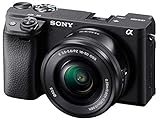
The a6400 is the camera that put Sony’s fast-tracking autofocus into the hands of people who weren’t prepared to pay flagship money, and years after release it remains a sensible entry into the E-mount system. It suits the shooter who genuinely does both stills and video and doesn’t want to own two cameras — a photographer who occasionally vlogs, or a video creator who needs decent stills for thumbnails and product shots.
Where the ZV-E10 strips out photography conveniences to cut cost, the a6400 keeps them. There’s an electronic viewfinder, a mode dial with proper exposure controls, and a body that behaves like a camera for stills rather than a capture appliance. That viewfinder matters more than specs suggest: in bright sun, an LCD becomes a mirror, and a viewfinder is the only way to frame accurately.
Key specifications
- Sensor: APS-C, shared class with the ZV-E10
- Mount: Sony E-mount, interchangeable and cross-compatible with the ZV-E10 and a7 IV
- Autofocus: Real-Time Eye AF with subject tracking, the headline capability of this generation
- Video: 4K capture, plus high-frame-rate slow motion at reduced resolution
- Display: 180-degree flip screen, so it faces forward for self-shooting
- Viewfinder: built-in electronic viewfinder
- Mounting: hot shoe for lights, mics and triggers
Strengths
The autofocus is the reason to buy it. Eye-detection tracking that holds onto a face as the subject moves, turns and dips out of frame is transformative for solo shooters — you stop thinking about focus and start thinking about what you’re saying. For stills, the same system tracks moving subjects well enough for casual sports and pets.
The hot shoe is an underrated advantage over the ZV-E10. Adding a compact LED panel or a shotgun microphone without any adapters keeps the rig simple, and the viewfinder plus articulated screen combination covers almost every shooting position. Because it’s E-mount, lenses bought for it survive an eventual move to a full-frame body, which is the best upgrade path in this entire list.
Pros
- Excellent tracking autofocus for both stills and video
- Has both an electronic viewfinder and a forward-flipping screen
- Hot shoe for microphones and lights
- E-mount upgrade path that carries lenses forward
- Mid-range tier, well under the video-first mirrorless and full-frame options
- Mature, well-documented system with a huge lens ecosystem
Cons
- No in-body image stabilisation, same as the ZV-E10
- Rolling shutter in 4K, noticeable in fast movement
- Older generation menu interface that newcomers find fiddly
- Battery life is modest
- Single card slot, so no in-camera backup for paid work
- Lacks the ZV-E10’s directional microphone for run-and-gun talking-head audio
How it compares
Against the ZV-E10, this is the stills-first version of the same platform. Buy the a6400 if you want a viewfinder and shoot photographs regularly. Buy the ZV-E10 if almost everything you make is video and you want the better built-in mic and cleaner creator controls. Both share lenses, so the choice costs you nothing later. Against the a7 IV, the a6400 is the budget-conscious choice: you give up the full-frame sensor, the better low-light performance and the dual card slots, and you keep the fast autofocus philosophy at a fraction of the price.
4. Sony Cyber-Shot RX100 VII Bundle – Best for Professional Compact Shooting
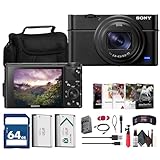
The RX100 VII is the compact you buy when you’ve decided size is non-negotiable but you refuse to accept compact-camera image quality. It packs a stacked 1-inch sensor, a long zoom, fast hybrid autofocus and 4K video into a body that fits in a shirt pocket. The bundle listing typically adds the accessories you’d otherwise buy separately — spare battery, case, memory card — which is meaningful on a camera at this level.
It suits two distinct buyers. The first is the traveller or street shooter who wants serious capability with zero bag. The second is the creator who needs a second camera for angles a phone or a main rig can’t reach, without adding bulk to a carry-on. It’s also the only compact here with a pop-up electronic viewfinder, which is the single feature that makes shooting in hard sunlight practical.
Key specifications
- Sensor: 1-inch stacked CMOS, roughly four times the light-gathering area of a typical compact sensor
- Lens: 24-200mm equivalent Zeiss zoom, covering wide through telephoto
- Autofocus: fast hybrid AF with phase-detection points and real-time eye tracking
- Video: 4K capture, plus high-frame-rate modes for slow motion
- Viewfinder: pop-up electronic viewfinder
- Display: flip screen that faces forward
- Burst: very fast continuous shooting class suited to action
Strengths
The stacked sensor is the technical heart of the camera. Stacked designs move memory onto the sensor die itself, which is what allows the rapid readout that underpins the fast autofocus, the high burst rate and the reduced rolling shutter. In practice that means the RX100 VII focuses and tracks like a much larger camera while remaining pocket-sized.
The 1-inch sensor is the other decisive advantage. Compared with the small sensors in the budget compacts here, it gathers dramatically more light, so indoor shots and evening shots stay usable at higher ISO settings. It also allows more control over depth of field — you can actually separate a subject from a background, which small-sensor compacts simply can’t do convincingly. The pop-up viewfinder is the feature people underestimate until they try shooting at noon.
Pros
- Pocketable body with genuinely serious image quality
- 1-inch stacked sensor delivers fast readout and better low light
- Hybrid phase-detection autofocus with eye tracking — rare in a compact
- 4K video and high-frame-rate slow motion
- Pop-up electronic viewfinder for bright conditions
- Bundle typically includes battery, case and card
Cons
- Premium tier — the most expensive fixed-lens option here
- Genuinely small controls that large-handed shooters find fiddly
- Fixed lens means no upgrade path
- Battery life is limited; a spare is essential
- Expensive to repair relative to its size
- Overkill if you only post to social platforms that compress heavily
How it compares
Against the original RX100, the VII is the modern version of the same idea and the difference is substantial: stacked sensor, hybrid autofocus, 4K, longer zoom and a viewfinder. The original is the value entry into 1-inch compacts; the VII is the finished product. Against the ZV-E10, the trade is system versus portability. The ZV-E10 gives you interchangeable lenses, clean HDMI and better subject separation from the larger sensor. The RX100 VII gives you a camera that’s always on you, which for travel and street work is worth more than any spec.
5. Sony Cyber-Shot DSC-W830 – Best for the Lowest-Cost Still Photography

The DSC-W830 exists to do one thing: take a competent photograph for as little money as possible. If you need a camera for occasional documentation, a child’s first camera, a glovebox backup, or a listing-photo tool where a phone isn’t practical, this is the entry point. The 20.5 MP sensor is a high pixel count for the class, and it’s paired with an 8x optical zoom.
Optical zoom is worth emphasising because it’s the one thing phone cameras still don’t match at this price. Cropping a phone photo loses resolution; an 8x optical zoom genuinely magnifies. For anyone photographing distant subjects — a school sports day, a bird at a feeder, a building detail — that optical reach is the reason to carry a separate device at all.
Key specifications
- Sensor: 20.5 MP compact-class sensor
- Zoom: 8x optical
- Display: 2.7-inch LCD
- Video: 720p class capture
- Stabilisation: digital, which helps framing more than it prevents blur
- Form factor: slim point-and-shoot body
Strengths
The pixel count gives you headroom to crop, and for daylight shooting the results are perfectly acceptable at normal viewing sizes and on social platforms. The camera is simple to operate — the interface doesn’t demand any photographic knowledge — and it takes standard SD storage and batteries. It ships as an international model in some listings, which is why the price sits where it does; check the charger type and warranty terms before ordering.
As a no-consequence camera it has real value: you can hand it to a stranger to take a group photo, toss it in a bag, and not worry about damage in the way you would with a thousand-dollar body.
Pros
- Budget tier — among the cheapest ways to get optical zoom
- High pixel count for the class, useful for cropping
- 8x optical zoom beats digital-only phone zoom
- Very simple to operate for non-photographers
- Light, slim and easy to carry
Cons
- Small sensor performs poorly indoors and in low light
- 720p video only — not viable for modern content work
- Small 2.7-inch screen with no viewfinder
- Digital stabilisation, not optical
- International model listings may have warranty and charger caveats
- Fixed lens, no manual controls worth the name
How it compares
Against the DSC-W330, the W830 is the newer and higher-resolution camera with the longer zoom, and it’s the better pick of the two budget compacts if both are available at similar money. Against the DSC-WX300, the WX300 wins on zoom reach and video resolution while the W830 wins on portability and pixel count. If your budget genuinely stops at the entry tier, the W830 is the sensible choice; if you can stretch at all, the mid-range compacts deliver visibly better indoor results.
6. Sony DSC-W330 – Best for a Simple Backup Point-and-Shoot

The DSC-W330 is an older entry in Sony’s Cyber-Shot line, and it’s included here because it still shows up at genuinely low prices and does the essentials competently. A 14.1 MP sensor, a 4x wide-angle zoom and optical SteadyShot image stabilisation cover the fundamentals, and the 3-inch screen is larger than several newer budget compacts manage.
It suits a specific reader: someone who wants a second camera to leave in a bag or a car, a parent buying a first camera for a child, or a buyer who needs something that takes photographs and nothing more. It is not a content-creation tool and shouldn’t be presented as one.
Key specifications
- Sensor: 14.1 MP compact-class sensor
- Zoom: 4x wide-angle optical
- Stabilisation: optical SteadyShot, a genuine advantage over digital-only stabilisation
- Display: 3-inch LCD
- Video: standard-definition class capture
- Controls: fully automatic with basic scene modes
Strengths
Optical stabilisation is the standout. Even at 4x zoom, optical stabilisation meaningfully improves hit rate in moderate light, and it’s the kind of feature that separates a usable budget camera from a frustrating one. The wide-angle zoom is also more useful day to day than a longer, narrower lens — group shots, interiors and landscapes are the common cases, not distant subjects.
Because it’s automatic throughout, there’s no learning curve. It turns on, it focuses, it shoots. For a backup or a first camera, that simplicity is the feature.
Pros
- Budget tier with optical image stabilisation — uncommon at this price
- Wide-angle 4x zoom suits interiors and groups
- 3-inch screen, larger than some newer budget peers
- Fully automatic operation with no learning curve
- Cheap enough to treat as disposable
Cons
- Low resolution by modern standards and an old sensor design
- Video quality is far below current expectations
- No viewfinder, no hot shoe, no manual control
- Poor low-light performance
- Parts, batteries and support may be harder to find as the model ages
- Fixed 4x zoom limits reach compared with the other compacts here
How it compares
Against the DSC-W830, the W330 has the better stabilisation and the larger screen but loses on resolution, zoom reach and video. If you can find the W830 at a similar price, take it. Against the DSC-WX300, the W330 is comprehensively outgunned on zoom and video but may be cheaper still. Buy it only when the price is genuinely the deciding factor and the job is daylight snapshots.
7. Sony RX100 (Original) – Best Value 1-Inch Sensor Compact

The original RX100 is the camera that created the premium compact category, and it remains the single best image-quality-per-dollar option in this roundup if you can find one in good condition. A 1-inch 20.2 MP sensor, a 28-100mm Zeiss zoom lens and a 3-inch LCD in a body that fits in a jeans pocket — that combination was revolutionary and it’s still compelling at mid-range money.
It suits the buyer who wants better-than-phone image quality without paying premium-tier prices, doesn’t need 4K, and values genuine pocketability. It’s also an excellent learning camera: the 1-inch sensor gives you real depth-of-field control and usable high-ISO performance, but the fixed lens forces you to work within a focal range instead of zooming to solve every composition problem.
Key specifications
- Sensor: 1-inch Exmor CMOS, 20.2 MP — roughly four times the area of a typical compact sensor
- Lens: 28-100mm equivalent Zeiss Vario-Sonnar, with a bright maximum aperture at the wide end
- Display: 3-inch LCD
- Video: 1080p full HD class capture
- Controls: a control ring around the lens plus a rear dial, unusually good for a compact
- Body: aluminium, genuinely pocket-sized
Strengths
The sensor is the whole point. Moving from a small compact sensor to a 1-inch chip is the largest single image-quality jump available in this price range. You get noticeably cleaner indoor shots, the ability to blur a background at close range, and files that hold up to cropping. The bright wide-end aperture helps in low light without pushing ISO as hard.
The control ring around the lens is the other reason photographers liked this camera. Assigning aperture or zoom to it turns a point-and-shoot into something you operate deliberately, and it’s a better manual interface than most newer compacts at this price. Build quality is genuinely good — the aluminium body has survived a decade of used-market abuse, which is why so many still work.
Pros
- 1-inch sensor at mid-range money — the best value proposition here
- Genuinely pocketable
- Bright Zeiss zoom with a usable control ring
- Solid aluminium construction that ages well
- Usable depth-of-field control for a compact
- Cheap enough to buy as a second camera
Cons
- 1080p video only — no 4K at any setting
- No viewfinder, so bright-light framing is guesswork
- No touchscreen, no forward-facing screen
- Autofocus is contrast-detect and slow compared with newer models
- Battery life is poor; buy spares
- Zoom range is shorter than the WX500 or RX100 VII
How it compares
Against the RX100 VII, the original gives up the stacked sensor, the phase-detect autofocus, 4K video, the longer zoom and the viewfinder — but it costs a fraction as much and delivers the same fundamental sensor advantage. If you shoot stills mostly in daylight, the original is remarkable value. Against the ZV-E10 and a6400, the RX100 is the one you’ll actually have with you, but it can’t match their autofocus, interchangeable lenses or video ceilings. Portability versus capability is the entire decision.
8. Sony Alpha a7 IV with 28-70mm Lens – Best for Full-Frame Hybrid Work
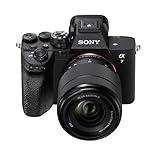
The a7 IV is the ceiling of this list and the only full-frame body on it. If your work involves paid photography, low-light event coverage, portrait or product work where clean high-ISO files matter, or video that needs serious dynamic range, this is the camera that stops you upgrading again for a long time. It’s also the pick for creators whose stills output is as important as their video — thumbnail-quality images, brand photography, print work.
The full-frame sensor is roughly twice the area of the APS-C sensors in the a6400 and ZV-E10, and the practical consequences are concrete: cleaner images at high ISO, shallower depth of field for the same framing, and more latitude to crop without the file falling apart. The bundled 28-70mm covers a standard zoom range that suits events, portraits and general walk-around shooting.
Key specifications
- Sensor: full-frame, the largest in this roundup
- Mount: Sony E-mount, compatible with every APS-C E-mount lens as well as full-frame glass
- Autofocus: advanced real-time tracking with eye detection for people and animals, plus subject recognition modes
- Video: 4K capture with high-bitrate options and good dynamic range
- Stabilisation: in-body image stabilisation, which none of the other mirrorless bodies here offer
- Storage: dual card slots, enabling in-camera backup or separate photo and video cards
- Viewfinder: high-resolution electronic viewfinder plus an articulating screen
- Bundled lens: 28-70mm standard zoom
Strengths
In-body stabilisation is the biggest practical upgrade over the a6400 and ZV-E10. It means handheld video is dramatically steadier without a gimbal, and it buys several stops of hand-holdability for stills in low light. Combined with the full-frame sensor’s high-ISO performance, it makes available-light event and evening shooting genuinely practical rather than a compromise.
The dual card slots matter for anyone being paid. Recording simultaneously to two cards means a card failure doesn’t destroy a shoot. That single feature is often the dividing line between a hobbyist body and a professional one, and it’s absent from every other camera in this list. Full-frame E-mount also gives access to the widest lens selection in the ecosystem, including fast primes that APS-C bodies can’t exploit to the same degree.
Pros
- Full-frame sensor with the best low-light performance and dynamic range here
- In-body image stabilisation, unique in this roundup
- Dual card slots for professional redundancy
- Advanced subject-tracking autofocus
- Compatible with the entire E-mount ecosystem, including APS-C lenses
- Articulating screen plus a high-resolution viewfinder
Cons
- Premium tier — the most expensive option here by a wide margin
- Heavier and bulkier than anything else on the list
- Full-frame lenses are expensive, which makes the system commitment real
- Overkill for vlogging and gaming content that ends up on compressed platforms
- Battery drain is higher than on the APS-C bodies
- Larger files demand more storage and a faster editing machine
How it compares
Against the a6400, the a7 IV is a different category of tool. The a6400 shares the autofocus philosophy and the E-mount, so it’s a natural stepping stone — buy the a6400, learn the system, and your APS-C lenses still mount if you later move up. The a7 IV’s advantages are all about light, stabilisation and professional redundancy. Against the ZV-E10, the a7 IV is worse value for pure vlogging: the ZV-E10’s forward screen, directional mic and lighter body make it easier for talking-head work, and the image quality difference largely disappears once a platform recompresses your upload.
9. Sony DSC-WX300 (Red) – Best for Long-Zoom Pocket Shooting on a Budget

The DSC-WX300 sits at the top of the budget compacts here because of one number: a 20x optical image-stabilised zoom. That’s a huge amount of reach for the price, and it’s paired with an 18 MP sensor and a 3-inch LCD. If you want to photograph distant subjects — wildlife in the garden, aircraft, stage performances from the back of a hall — and your budget is tight, this is the strongest argument in the budget tier.
It also records 1080p video, which puts it ahead of the other budget compacts for clip capture. It’s a pocket camera with a serious telephoto and modern-enough video, and it covers a lot of ground for very little money.
Key specifications
- Sensor: 18 MP compact-class sensor
- Zoom: 20x optical with image stabilisation
- Display: 3-inch LCD
- Video: 1080p full HD class capture
- Stabilisation: optical, essential at 20x extension
- Form factor: compact body, coloured finish
Strengths
Twenty times optical zoom in a pocket body is the entire pitch. With stabilisation active, the long end becomes usable in decent light, which opens up subject types a normal compact simply can’t reach. The 1080p video is also a meaningful step above the 720p and standard-definition capture of the cheaper models here, and the 3-inch screen is comfortable to frame with.
Sony’s compact interface keeps things simple, and the camera is small enough to live in a bag permanently. As a second camera for opportunistic long shots, it’s a low-risk buy.
Pros
- 20x stabilised optical zoom — the longest reach in the budget tier
- 1080p video, ahead of the other budget compacts
- 3-inch LCD for comfortable framing
- Small and light enough to carry always
- Budget tier pricing
Cons
- Small sensor struggles indoors and in low light
- 18 MP sensor is dated and noise appears quickly as ISO climbs
- No viewfinder and no hot shoe
- Autofocus is slow by current standards, especially at full zoom
- Long zoom demands good light and steady hands
- Fixed lens, no upgrade path
How it compares
Against the DSC-W830, the WX300 wins decisively on zoom reach and video resolution while the W830 wins on portability and pixel count. Against the DSC-W330, the WX300 is simply the more capable camera in every direction except size. Against the DSC-WX500, the WX300 gives up a decade of processing refinement but keeps most of the zoom reach for less money — a reasonable trade if the WX500 is above your ceiling.
How to Choose
The single most consequential decision you’ll make is sensor size, and it’s worth understanding what you’re actually trading before you look at any other spec. Sensor area determines how much light the camera collects. A full-frame sensor in the a7 IV has roughly twice the area of the APS-C sensors in the a6400 and ZV-E10, which in turn have dramatically more area than the 1-inch sensors in the RX100 models, which again dwarf the small sensors in the W-series compacts. Each step up buys you cleaner images in dim light, more control over background blur, and more room to crop — and costs you size, weight and money.
Matching sensor class to your actual shooting conditions
Be honest about the light you shoot in. If the majority of your photography happens outdoors during the day, a small-sensor compact will produce images you’re happy with and you should not pay for a bigger sensor. The moment your shooting moves indoors, into evening, or into any situation where you can’t control the light, sensor size becomes the dominant factor in whether your photos are usable.
There’s a rough rule worth internalising: an APS-C or full-frame sensor with a modest aperture lens will outperform a small-sensor compact with a bright lens in almost every low-light scenario. That’s why the a6400 and ZV-E10 are the right recommendations for anyone shooting video indoors, and why the W-series compacts should be understood as daylight cameras.
Autofocus: the spec that decides usability
There are two broad classes of autofocus in this list, and the gap between them is larger than any other difference in the roundup.
- Contrast-detect autofocus — used by the budget compacts and the original RX100. The camera hunts back and forth to find maximum contrast. It’s accurate for still subjects and frustrating for anything moving.
- Phase-detect and hybrid autofocus — used by the RX100 VII, a6400, ZV-E10 and a7 IV. The camera measures distance directly, which allows it to predict where a moving subject will be. This is what makes eye-tracking possible.
If you’re filming yourself talking, tracking autofocus is close to essential. A contrast-detect camera will drift onto the background when you move, hunt back to your face, and repeat — visibly, in your final footage. This single capability justifies the jump from a budget compact to an a6400 or ZV-E10 for video work.
4K versus 1080p: when it actually matters
Only the a6400, ZV-E10, RX100 VII and a7 IV in this list capture 4K. The WX300 and WX500 manage 1080p, and the W830 and W330 fall below that. It’s tempting to treat 4K as a checkbox, but the real benefit isn’t playback resolution — most viewers watch on a 1080p phone or monitor. The benefit is cropping headroom in editing. A 4K frame downscaled to a 1080p timeline lets you punch in to roughly half the frame and still deliver full 1080p detail, which effectively gives you a second camera angle from one recording.
For gaming content specifically, this matters. If you record a face-cam and game capture separately and cut between them, 4K face-cam footage lets you reframe wide-to-medium in post without a second camera. If you’re outputting 1080p to a streaming platform, 4K is a nice-to-have rather than a requirement.
The streaming and capture-card question
If any part of your plan involves feeding the camera into a computer — as a webcam, a capture source, or a face-cam in a streaming setup — the clean HDMI output matters enormously. The ZV-E10 and the mirrorless bodies offer it. Most compact point-and-shoots in this list do not.
Here’s why it’s not a minor detail. A camera connected over USB in webcam mode typically delivers compressed video, and many models impose a resolution or frame-rate cap in that mode. A camera feeding clean HDMI into a capture card delivers an uncompressed signal at full quality. If you’re already running a game and an encoder on the same machine, the capture card approach also offloads the video capture entirely from your CPU, because the capture card handles it in hardware. On a mid-range gaming PC, that’s meaningful headroom.
System versus fixed lens: the upgrade-path calculation
Three of the nine cameras here are E-mount interchangeable-lens bodies. Their long-term value is fundamentally different from the compacts, and the arithmetic is straightforward. Suppose you buy a compact for $400 and replace it with another compact for $500 three years later. You’ve spent $900 and you own one camera at a time. Now suppose you buy an E-mount body and one lens, then add a second lens a year later for $300. You’ve spent more up front but you now own a two-lens system that covers a much wider range of subjects, and both lenses work on your next body.
The compacts win on one axis only, and it’s not a small one: they’re with you. A camera left at home takes no photographs. If you know from experience that you won’t carry a bag, a compact is the correct choice regardless of the arithmetic above.
Video-first versus stills-first bodies
The ZV-E10 and a6400 sit on the same sensor and the same mount but are aimed at different people. The decision rules are simple:
- Choose the ZV-E10 if more than half your output is video of yourself or your desk, if you stream, and if you rarely use a viewfinder.
- Choose the a6400 if you shoot stills regularly, want a viewfinder, need a hot shoe, and treat video as a secondary output.
- Choose the a7 IV if you’re paid for your work, shoot in difficult light, need dual card slots, or want in-body stabilisation.
- Choose an RX100 if you’ve accepted that a camera you carry beats a camera you own.
- Choose a W-series compact if the budget is the constraint and your shooting is daylight snapshots.
A note on storage, batteries and total cost of ownership
Budget for the accessories, not just the body. Modern mirrorless cameras consume batteries quickly, and a spare or two roughly doubles your usable shooting time. Full-frame files from the a7 IV are much larger than APS-C files, so plan on faster, higher-capacity cards and more external storage for editing. Compact cameras use smaller batteries with shorter life still, so a second cell is effectively required for a day out. None of this changes which camera is right for you, but it changes what the system costs over two years, and it’s the part of the decision buyers most often forget.
Setting up for a hybrid workflow
If you shoot both photos and video on the same body, a few configuration decisions make the switch painless. Assign a custom button to toggle between stills and movie modes so you never dig through menus mid-shoot. Set the movie mode to your target resolution and frame rate and leave it there, rather than changing it for every clip. On bodies with dual card slots, direct stills to one card and video to the other — that keeps file management simple and gives you redundancy where it matters most. And if you’re shooting 4K for the cropping headroom described earlier, remember to allow extra card capacity; the files are considerably larger than 1080p.
Frequently Asked Questions
Is a 1-inch sensor compact better than an APS-C mirrorless for travel?
For pure portability, yes — the RX100 models fit in a pocket and the mirrorless bodies don’t, at least not with a lens attached. For image quality in poor light and flexibility with different lenses, the APS-C bodies win clearly. Most travellers who value both end up with a compact as their only camera and accept the low-light compromise. If your travel involves evening markets, interiors or performances, the mirrorless route will produce noticeably better results.
Can the Sony ZV-E10 be used as a webcam or streaming camera?
Yes, and it’s one of the better options in this list for that job. It provides clean HDMI output, which means you can feed it into a capture card and get full-quality video into your streaming software. It also supports USB webcam-style connection for simpler setups where quality is less critical. The HDMI route is the better one for anyone running a game and an encoder simultaneously, because the capture card handles the video work in hardware.
Do I need 4K video, or is 1080p enough?
For delivery, 1080p is usually enough — most viewers watch on phones and monitors that can’t show more. The reason to shoot 4K is editing flexibility. A 4K clip placed on a 1080p timeline can be cropped to roughly half the frame while still delivering full resolution, which effectively gives you a second angle from a single camera. If you edit your videos and want punch-ins, 4K earns its keep. If you stream at 1080p or post directly, it’s optional.
How much does sensor size really affect low-light performance?
It’s the dominant factor, more than megapixel count or lens brightness in most cases. A full-frame sensor in the a7 IV has roughly twice the light-gathering area of the APS-C sensors in the a6400 and ZV-E10, which in turn have far more area than the 1-inch sensors in the RX100 line, which again dwarf the small sensors in the W-series compacts. Each step down means more visible noise and less colour accuracy as ISO rises, which is why budget compacts should be treated as daylight cameras.
Which of these cameras is best for gaming content specifically?
The ZV-E10, and the margin isn’t close. It offers clean HDMI output for capture cards, a screen that faces you, a built-in directional microphone with a windscreen, product-showcase autofocus that locks onto an object you hold up to the lens, and a lightweight body that mounts easily on a boom arm. The a6400 is a reasonable alternative if you also shoot stills, but it lacks the directional mic and the video-first controls.
Can I use full-frame lenses on the APS-C Sony cameras?
Yes. Sony’s E-mount is shared across the a6400, ZV-E10 and a7 IV, so full-frame E-mount lenses mount and work on the APS-C bodies. The APS-C sensor only uses the centre portion of the image circle, which effectively crops the field of view by roughly 1.5x. That’s a benefit if you want extra reach, and a drawback if you want a wide angle. It also means lenses you buy for an APS-C body carry forward if you later upgrade to full frame.
Is it worth buying an older camera like the original RX100 or the DSC-W330?
It depends entirely on price and expectations. The original RX100 remains the best image-quality-per-dollar option here because its 1-inch sensor still outperforms today’s budget compacts decisively, and its autofocus and 1080p-only video are the compromises you accept. The DSC-W330 is a much harder recommendation: it’s an old small-sensor camera with standard-definition video, and it only makes sense if the price is genuinely minimal and the job is daylight snapshots.
What accessories should I budget for on top of the camera?
At minimum: spare batteries, a memory card rated for the video bitrate you plan to shoot, and a bag or case. Mirrorless and compact bodies both drain batteries quickly, so two spares is a realistic target for a full day. If you’re shooting video, add a microphone — even the ZV-E10’s built-in mic benefits from an external upgrade for anything more than casual use. If you’re streaming, you’ll need a capture card and an HDMI cable you’ve confirmed is the correct type.
Which One Should You Buy?
If you make video of yourself and you stream: the Sony ZV-E10 with the 16-50mm lens. Clean HDMI, a forward screen, a directional mic and product-showcase autofocus cover the entire creator workflow without workarounds, and the E-mount gives you somewhere to go later.
If you shoot stills and video roughly equally: the Sony Alpha a6400. You keep the fast tracking autofocus and the E-mount, and you gain a viewfinder and a hot shoe, which is the better balance for anyone who photographs as much as they film.
If you need the smallest camera that still delivers serious quality: the Sony Cyber-Shot RX100 VII bundle if the budget stretches, or the original RX100 if it doesn’t. Both give you the 1-inch sensor advantage in a body you’ll actually carry.
If you’re paid for your work: the Sony Alpha a7 IV. Full-frame light gathering, in-body stabilisation and dual card slots are the features that stop a shoot going wrong, and they’re worth the premium once someone else is paying for the results.
If you’re travelling and want one lens for everything: the Sony DSC-WX500, or the DSC-WX300 if the budget is tighter. The long stabilised zoom is the reason to carry a separate camera at all when your phone already takes decent wide shots.
If the budget is the hard constraint: the Sony Cyber-Shot DSC-W830. It’s a daylight snapshot camera and it should be bought as one, but for occasional documentation, a child’s first camera or a bag backup, it does the job at entry-tier money.