The best electronic ear protection for most users in 2026 is the Howard Leight Impact Sport for range and general shooting, the Peltor Sport Tactical 500 for higher NRR and Bluetooth, and the Sordin Supreme Pro-X for premium comfort and helmet compatibility — your choice depends on whether you prioritize low profile, maximum noise reduction, or long-term wear with glasses and helmets.
As an Amazon Associate we earn from qualifying purchases at no extra cost to you.


Our Top Picks
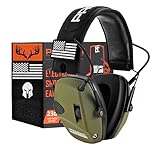
 Walker's Game Ear Razor Slim Electronic Muff HearingOne Size1 x 1 x 1 Inches0.8 poundsCheck on Amazon
 Walker's Razor Slim Electronic Hearing Protection Ear MuffsOne Size10.5 x 3 x 2 Inches0.95 poundsCheck on Amazon
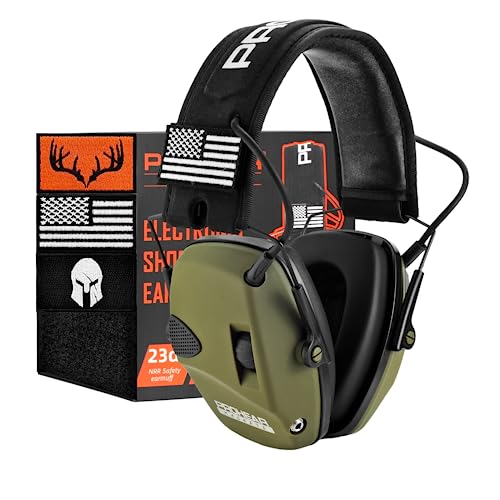

Top 3 picks at a glance
Best Electronic Ear Protection Compared at a Glance
Electronic ear protection uses outward-facing microphones and internal speakers to amplify ambient sound below ~82 dB while instantly compressing or clipping harmful impulse noise from gunshots. Below are the most established models available in 2026, compared on the specs that matter for buying decisions.
| Model | NRR | Amplification / Microphones | Attack / Recovery Time | Battery Type & Rated Life | Weight |
|---|---|---|---|---|---|
| Howard Leight Impact Sport | 22 dB | 4x amplification, 2 directional mics | <5 ms attack | 2x AAA, ~350 hours | 10.6 oz (300g) |
| Walker’s Razor Slim | 23 dB | Full-range HD speakers, 2 omnidirectional mics | 0.02 sec attack | 2x AAA, ~200 hours | 13.2 oz (374g) |
| Peltor Sport Tactical 500 | 26 dB | Dynamic Suppression Time, Bluetooth, 3.5mm input, recessed mics | <10 ms attack, variable suppression | 2x AA, ~300 hours | 11.5 oz (326g) |
| Sordin Supreme Pro-X (Slim/Leather headband) | 18-19 dB (Slim cup) / 21 dB (standard cup) | High-fidelity natural sound, 2 mics, AUX input, waterproof (IP67) | ~5-8 ms attack | 2x AAA, ~600 hours | 8.8 oz (250g) Slim |
| Peltor ComTac V / VI | 23 dB (with gel seals) | Mission-critical comms, 3M PELTOR ARC compatibility, environmental listening | <5 ms attack | 2x AAA, ~500 hours | 14.1 oz (400g) |
| Walker’s Silencer 2.0 BT (in-ear) | 24-26 dB (with foam tips, NRR 25 typical) | In-ear Bluetooth, 4 sound modes, integrated mics | <15 ms attack | Built-in Li-ion, ~15-20 hours + charging case | 0.5 oz per bud |
NRR (Noise Reduction Rating) is tested to ANSI S3.19-1974. Real-world attenuation is typically 50-60% of the lab NRR after accounting for fit and glasses. For impulse noise, a higher NRR matters less than seal quality and clamp force.
6 Decision Criteria That Actually Determine Performance
1. Noise Reduction Rating (NRR) vs. Real Protection
For indoor ranges or rifles with muzzle brakes, aim for 24-26 dB NRR and consider doubling up with foam plugs underneath electronic muffs. That combination adds roughly 5-10 dB of effective protection over muffs alone, not the full sum of both NRRs. For outdoor hunting or instruction where you need to hear conversation, 18-22 dB is often sufficient and more comfortable for long wear. Slim cups like the Sordin Supreme Pro-X Slim trade 2-3 dB of NRR for much better cheek weld on rifles and shotguns.
2. Amplification Clarity and Directionality
Cheap amplification sounds hissy and flat. Premium circuits preserve directional cues. Look for:
- Stereo microphones: Two mics (left/right) give you left-right localization for range commands and game movement. Single-mic designs are cheaper but disorienting.
- Frequency response: Models like the Sordin Supreme Pro-X and Peltor ComTac are tuned for speech frequencies (500 Hz – 4 kHz) and produce less white noise at max volume.
- Volume control independence: Separate left/right volume or at least a smooth analog dial is preferable to a single button that cycles through levels.
3. Attack Time and Compression Type
Attack time is how fast the circuit mutes after a gunshot exceeds the threshold. Anything under 10 ms is effective for preventing hearing damage from impulse noise. Clipping (hard cutoff) is abrupt but simple. Compression, used in the Peltor Sport Tactical 500 and Sordin, smoothly compresses the loud sound instead of cutting to silence, so you maintain situational awareness between shots. For high-volume training (e.g., USPSA, 200+ rounds/hour), compression reduces listening fatigue significantly.
4. Comfort and Seal with Glasses
NRR means nothing if the seal breaks. Thin temple arms on shooting glasses create gaps that leak 3-7 dB. Gel ear cushions (standard on Sordin, optional upgrade for Peltor and Howard Leight) conform around glasses far better than foam. Headband pressure matters too: 2.5-3.5 lbs of clamp force is ideal for a seal without headache after 4+ hours. Padded leather or fabric headbands outperform bare plastic for all-day hunting.
5. Battery Life and Power Management
AAA and AA models dominate because you can swap in the field. Auto shut-off after 2-4 hours prevents accidental drain. Bluetooth and higher amplification levels increase current draw by 30-50%. Rechargeable in-ear models like the Walker’s Silencer 2.0 BT are convenient but require daily charging and are easier to lose at the range.
6. Helmet, Hat, and Eyewear Compatibility
If you wear a bump helmet, hard hat, or need hearing protection under an ARC rail system, standard headband muffs will not work. You need ARC rail adapters (Peltor ComTac, Sordin with ARC kit) or you must switch to in-ear electronics. Low-profile cups (Howard Leight Impact Sport, Walker Razor Slim) are best for rifle cheek weld without the stock hitting the cup.
Worked Calculation: How Long Will Your Batteries Really Last?
Rated battery life assumes low volume and intermittent use. Here is how to estimate runtime for your actual usage, so you know how many spares to pack.
Example: Howard Leight Impact Sport on 2x AAA alkaline batteries
- Battery capacity: 2x AAA alkaline in series = 1.5V x 2 = 3V total, but capacity stays ~1000 mAh usable at low drain (alkaline derates under 20 mA draw).
- Measured current draw: ~2.8 mA at idle/low volume, ~8-12 mA at max amplification, ~15 mA peak when Bluetooth or AUX is active (not applicable to this model).
- Runtime formula: Runtime (hours) = Battery capacity (mAh) / Average current draw (mA) x 0.85 (efficiency factor for voltage cutoff and cold weather).
Calculation at moderate volume (5 mA average): 1000 mAh / 5 mA = 200 hours theoretical x 0.85 = ~170 hours of actual continuous-on time. At high volume outdoors (10 mA average): 1000 / 10 x 0.85 = ~85 hours.
If the auto shut-off is set to 4 hours and you forget to turn them off after a 2-hour range session, you lose 2 hours of idle drain per session. Over 20 sessions, that is 40 hours wasted — roughly 25% of the battery life. Turning them off manually doubles your effective interval between battery changes. For AA-powered models like the Peltor Sport Tactical 500, capacity is ~2500 mAh, so at 8 mA average you get ~265 hours (2500 / 8 x 0.85), which explains why AA models are usually rated for 300 hours despite louder amplification.
Takeaway: For a weekend hunter (4 hours/week at moderate volume), a pair of AAA batteries lasts 8-10 months. For a range officer or instructor (20 hours/week at high volume), expect to swap AAA every 4-6 weeks, AA every 8-12 weeks.
Compatibility Matrix: Match Your Situation to the Right Type
Use this to avoid buying a muff that does not work with your other gear.
| If You Wear / Do This | Best Choice | Why | Avoid |
|---|---|---|---|
| Thin shooting glasses only, outdoor range | Howard Leight Impact Sport or Walker’s Razor Slim | Low profile, good value, adequate 22-23 dB NRR, usually $50–$80 range | Bulky high-NRR muffs that interfere with rifle stock |
| Thick prescription glasses, all-day wear | Sordin Supreme Pro-X with gel seals | Gel seals seal around thick temples without 5-7 dB leak, lowest clamp fatigue | Standard foam cushions |
| Helmet with ARC rails (tactical, training) | Peltor ComTac V/VI or Sordin with ARC adapter | Designed for rail mount, maintains seal under helmet | Any headband-only muff |
| Indoor range, braked rifles, or double protection needed | Peltor Sport Tactical 500 + foam plugs | Highest NRR (26 dB) in this list, compression reduces fatigue indoors | Slim/low-NRR models alone |
| Need to hear subtle game sounds while hunting | Sordin Supreme Pro-X or Walker’s Silencer 2.0 BT | Most natural sound reproduction, waterproof (Sordin), no headband snag in brush (in-ear) | Basic clipping circuits with audible hiss |
| Want Bluetooth for music/calls between shooting | Peltor Sport Tactical 500 or Walker’s Silencer 2.0 BT | Integrated Bluetooth without separate dongle | Models with only 3.5mm AUX |
Detailed Picks: The Best Electronic Ear Protection by Use Case
Best Overall Value for Range Use: Howard Leight Impact Sport
The reference standard for a reason. At 22 dB NRR it is not the quietest, but the slim cups do not hit the rifle stock, the amplification is clean enough for range commands, and Air Flow Control technology vents the headband for hot weather. The 350-hour rating on AAA is realistic if you keep volume at 50-60%. Downsides: foam ear cushions leak with thick glasses, and the auxiliary cable is dated. Upgrade to aftermarket gel cups if you wear glasses daily — it raises real-world attenuation by 2-4 dB for that use case.
Best for Maximum Protection: Peltor Sport Tactical 500
If you shoot indoors or near others with compensators, the extra 4 dB over slim models matters. Dynamic Suppression Time automatically adjusts compression time based on gunfire volume, so you get shorter muting for .22 LR and longer for .308 — less choppy than fixed-time circuits. Bluetooth 4.2 pairs for music/podcasts during setup, and the recessed microphones reduce wind noise. It is slightly bulkier, usually $90–$130 range, and AA batteries add weight but last longer than AAA competitors.
Best for Comfort and Helmet Use: Sordin Supreme Pro-X
Built in Sweden for hunters and professionals who wear protection 8-12 hours. The headband has almost no pressure points, the electronics are fully waterproof, and the sound is the most natural in this category — you can pinpoint rustling and footsteps. Available with leather, fabric, or neckband. The Slim version is 18-19 dB but excellent for shotguns; the standard cup reaches 21 dB. Price is usually $200–$300 range before ARC or gel accessories, but the chassis lasts for years and every part is replaceable.
Best In-Ear with No Interference: Walker’s Silencer 2.0 BT
In-ear electronics eliminate all helmet and glasses conflicts. Four modes (Universal, Clear Voice, Power Boost, Hi-Frequency Boost) let you tune for range vs. field. NRR 25 with the included foam tips rivals over-ear muffs. The trade-off is battery management: 15-20 hours per charge means you must charge after every 2-3 range days, and the small buds are easy to misplace. Best as a second set for hunting or as primary for those who cannot tolerate headbands.
Best for Professional / Comms Integration: Peltor ComTac V / VI
Designed for military and law enforcement but widely used by competitive shooters and instructors who run helmets and radios. Environmental listening is tuned for speech intelligibility under stress, and the single-channel or dual-channel comms models integrate with push-to-talk systems. Gel seals are standard. At usually $300–$600+ range depending on config, it is overkill for casual range trips but unmatched if you already run ARC rails.
Setup Tips to Get the Rated Protection
- Check the seal: With the unit off, cup your hands over the muffs and press gently. If sound gets noticeably quieter, you have a gap — adjust glasses temples to sit flat or switch to thinner frames.
- Set volume correctly: Turn amplification to maximum, then dial back until normal conversation at 3 feet sounds natural, not amplified. Max volume amplifies hiss and can mask range commands.
- Double up correctly: When using foam plugs under muffs, insert plugs fully first (roll down, pull ear up and back), then put muffs on. Set electronic volume 30-40% higher than you would with muffs alone to hear speech through the plugs.
- Store with batteries out if unused for months: Alkaline AAA/AA can leak and corrode contacts. Remove them for off-season storage.
FAQ
Can electronic ear protection protect against a single gunshot as well as passive muffs?
Yes, when the circuit is working. The microphones detect the impulse and the speaker compresses within milliseconds, providing the same or slightly more attenuation than the passive muff alone. Protection fails only if batteries are dead or the seal is broken — always carry spare batteries and check the seal before shooting.
Do I need a higher NRR for indoor vs. outdoor shooting?
Indoor shooting reflects sound off walls and floor, raising exposure by 5-10 dB over the same gun outdoors. For indoor ranges, choose 25-26 dB NRR or double up with plugs. Outdoors, 22-23 dB with a good seal is sufficient for most handguns and rifles without brakes.
Will electronic muffs work with my glasses?
Yes, but thin, flat temple arms and gel cushions improve the seal significantly. If you see gaps in a mirror between the cushion and your head around the glasses, expect a 3-7 dB loss. In-ear electronics bypass the problem entirely.
How do I clean electronic ear protection?
Wipe cups and headband with a damp cloth, and remove ear cushions to clean sweat and debris. Do not submerge unless the model is rated waterproof (Sordin Supreme Pro-X and Peltor ComTac are). Replace foam or gel seals every 12-24 months as they harden and lose seal.