The best phones with fast charging in 2026 are the OnePlus 13 for balanced everyday use, the Xiaomi 15 Ultra for premium wired and wireless charging, and the HONOR Magic7 Pro for its large silicon-carbon battery; however, the fastest advertised wattage is not automatically the best choice.
As an Amazon Associate we earn from qualifying purchases at no extra cost to you.


Our Top Picks


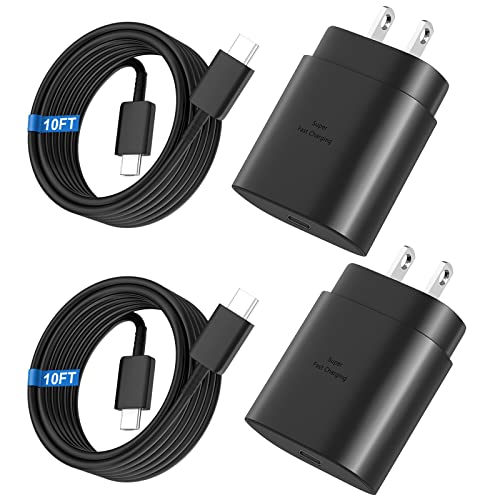
Top 3 picks at a glance
Best phones with fast charging at a glance
| Phone | Battery | Maximum wired charging | Maximum wireless charging | Best for |
|---|---|---|---|---|
| OnePlus 13 | 6,000 mAh | Up to 100W, region-dependent | Up to 50W | Fast daily charging and gaming |
| Xiaomi 15 Ultra | 5,410 mAh | Up to 90W | Up to 80W | Fast wired and wireless charging |
| HONOR Magic7 Pro | 5,850 mAh | Up to 100W | Up to 80W | Large battery and short top-ups |
| REDMAGIC 10 Pro | 7,050 mAh | Up to 100W | Not supported | Gaming endurance and active cooling |
| Google Pixel 9 Pro XL | 5,060 mAh | Up to 37W | Up to 23W with the appropriate stand | Moderate charging with long software support |
Charging figures are manufacturer maximums. Actual speed depends on the charger, cable, battery temperature, charge level, software limits, and regional configuration. A charger may also be sold separately, particularly for Xiaomi, HONOR, and other international models.
1. OnePlus 13: the best all-round fast-charging phone
The OnePlus 13 is the easiest recommendation for most buyers who want high charging speed without giving up a large battery or wireless charging. Its 6,000 mAh battery provides more capacity than many competing flagship phones, while wired charging can reach 100W in supported markets. Wireless charging reaches 50W with a compatible OnePlus charging stand or pad.
Its practical advantage is not just the headline wattage. A large battery means that a 10-minute charge can restore a useful amount of gaming or screen time without requiring a full recharge. The phone also supports USB Power Delivery for broader charger compatibility, although the maximum 100W rate generally requires the correct proprietary charger and cable.
Choose the OnePlus 13 if you want one phone that charges quickly at home, in the car, and at a desk. Check the box contents before purchase: included chargers vary by country and retailer, and a generic USB-C charger may charge the phone more slowly.
2. Xiaomi 15 Ultra: the strongest wireless-charging option
The Xiaomi 15 Ultra combines up to 90W wired charging with up to 80W wireless charging, making it one of the most capable choices for people who dislike plugging in. The 5,410 mAh battery is smaller than the OnePlus 13’s, but the difference is not large enough to outweigh Xiaomi’s wireless advantage for desk or bedside use.
The important compatibility detail is that 80W wireless charging is not a universal Qi2 result. It normally requires Xiaomi’s compatible charging hardware. With an ordinary Qi pad, the phone will charge at a much lower rate. The same principle applies to wired charging: a third-party USB-C charger can work, but it may not reproduce Xiaomi’s maximum speed.
This is the best pick when you want to place the phone on a stand between gaming sessions, navigation trips, or video calls. It is less attractive if the required proprietary accessories are unavailable in your market.
3. HONOR Magic7 Pro: best for a big battery and quick top-ups
The HONOR Magic7 Pro pairs a 5,850 mAh silicon-carbon battery with up to 100W wired and 80W wireless charging. Silicon-carbon battery designs can provide high capacity without making the phone proportionally thicker, although battery chemistry alone does not guarantee better long-term health.
Its charging system is particularly useful for short, frequent top-ups. A phone that begins the day at 25% can regain a substantial reserve during breakfast or while getting ready for work. As with Xiaomi, the fastest wireless mode depends on HONOR-compatible hardware, and the included charger can differ by region.
Choose the Magic7 Pro if battery capacity matters as much as charging speed. It is also a strong option for travelers who want fewer charging interruptions, provided compatible accessories are easy to obtain where they live.
4. REDMAGIC 10 Pro: best for gaming endurance
The REDMAGIC 10 Pro takes a different approach: its 7,050 mAh battery prioritizes long gaming sessions, while wired charging reaches up to 100W. It does not offer wireless charging, but that omission can be reasonable for a gaming phone because wired charging is faster, more predictable, and easier to combine with active cooling.
Gaming while charging creates more heat than ordinary web browsing. The REDMAGIC’s internal fan and gaming-focused thermal design can help control temperatures, but the phone still draws power while the display, processor, and network radios are active. For competitive play, use the phone’s charge-separation or bypass-charging feature when available. This can power the system directly and reduce unnecessary battery cycling.
Pick the REDMAGIC 10 Pro if long sessions and sustained performance matter more than camera features, slimness, or wireless convenience.
Wired versus wireless charging: which is actually faster?
Wired charging is usually faster, cooler, and more efficient. A 100W wired rating can deliver a large amount of power directly through the cable, while wireless charging loses energy as heat and commonly slows down as the phone warms. Wireless charging is more convenient, but its maximum speed often requires a proprietary stand, precise alignment, and a cool phone.
Consider a simplified power calculation. A 6,000 mAh battery at an average nominal voltage of 3.85 volts stores about 23.1 watt-hours:
6 Ah × 3.85 V = 23.1 Wh
If a 100W charger were perfectly efficient, it could theoretically fill that battery in about 14 minutes. Real charging is slower because of conversion losses, cable resistance, temperature control, and the gradual reduction in power above roughly 50–80% charge. A realistic full-charge time may be closer to 30–40 minutes, depending on the phone and charger.
An 80W wireless system may deliver substantially less energy to the battery after accounting for coil and conversion losses. It can still be very fast, but do not compare wired and wireless wattage as if the numbers were equivalent.
What charger and cable do you need?
- For maximum proprietary speed: use the phone maker’s approved charger and cable. Some systems identify the cable before enabling their highest charging mode.
- For cross-brand compatibility: look for USB Power Delivery with PPS support. This is more useful than choosing a charger based only on its maximum wattage.
- For laptops and travel: a 65W or 100W multi-port USB-C charger can be convenient, but its total output may be shared between devices.
- For car charging: verify that the car adapter supports the phone’s required voltage and charging protocol. A 100W label alone does not guarantee the phone will receive 100W.
- For wireless charging: use the manufacturer’s compatible pad or stand if you want the advertised 50W or 80W mode.
Decision matrix: choose by your charging habits
| Your situation | Best match | Why |
|---|---|---|
| You want the best balance of speed, battery, and features | OnePlus 13 | 6,000 mAh battery, fast wired charging, and 50W wireless charging |
| You want to charge mainly on a wireless stand | Xiaomi 15 Ultra | Up to 80W wireless charging with compatible accessories |
| You frequently start the day with a low battery | HONOR Magic7 Pro | Large 5,850 mAh battery and fast wired top-ups |
| You play demanding games for several hours | REDMAGIC 10 Pro | 7,050 mAh capacity, fast wired charging, and gaming thermal hardware |
| You prefer broad charger compatibility and slower battery stress | Google Pixel 9 Pro XL | More conservative charging with strong software support |
Heat management and long-term battery health
Heat is the main trade-off of very fast charging. Charging at high power generates heat in the charger, cable, charging circuitry, and battery. Gaming, direct sunlight, thick cases, and wireless misalignment can raise temperatures further.
- Remove a thick case during maximum-speed charging if the phone becomes noticeably hot.
- Do not fast-charge in direct sunlight or inside a hot car.
- Avoid demanding games while charging unless the phone offers bypass or charge-separation mode.
- Use optimized charging or an 80% charge limit overnight when the phone supports it.
- For everyday use, stop around 80–90% when you do not need maximum range; charge to 100% before travel or a long gaming session.
- Replace damaged, loose, or unusually hot cables rather than continuing to use them.
Battery aging depends on temperature, time spent at very high charge levels, and the number of full equivalent cycles. Fast charging does not automatically ruin a battery: modern phones reduce power near full charge and monitor temperature continuously. The healthiest routine is to keep the phone cool, avoid leaving it at 100% for many hours, and use the fastest mode when the time saved is valuable.
Frequently asked questions
Can I use a third-party charger with these phones?
Yes, but it may not deliver the phone’s maximum charging speed. Third-party USB-C chargers can work with phones such as the Xiaomi 15 Ultra, while USB Power Delivery with PPS offers broader cross-brand compatibility. Maximum proprietary charging modes generally require the manufacturer’s approved charger and cable, and the charger’s wattage label alone does not guarantee the phone will receive that power.
Why does charging slow down before the battery is full?
Charging slows down as the battery approaches a high charge level because the phone gradually reduces power, particularly above roughly 50–80% charge. Temperature control, conversion losses, cable resistance, and the phone’s charging system also affect the overall speed. As a result, a realistic full-charge time is longer than a simple calculation based on the charger’s advertised wattage.
Is a larger battery always better for fast charging?
No. A larger battery provides more capacity and can restore useful usage time during a short top-up, but battery size is only one factor. Charging speed also depends on the charger, cable, temperature, charge level, software limits, and regional configuration. The OnePlus 13, HONOR Magic7 Pro, and REDMAGIC 10 Pro combine large batteries with fast wired charging in different ways.
Do these phones include a charger in the box?
Not necessarily. Included chargers can vary by country and retailer, and a charger may be sold separately, particularly for Xiaomi, HONOR, and other international models. Check the box contents before buying. If the included or chosen charger does not support the phone’s required charging protocol, the phone may charge more slowly than its advertised maximum.
Should I remove my phone case while fast charging?
Remove a thick case if the phone becomes noticeably hot during maximum-speed charging. Heat can increase during high-power charging, wireless misalignment, gaming, direct sunlight, or use inside a hot car. Avoid demanding games while charging unless the phone supports bypass or charge-separation mode, and replace cables that are damaged, loose, or unusually hot.
Bottom line
The OnePlus 13 is the best overall choice for most people seeking fast charging with a large battery. Choose the Xiaomi 15 Ultra if high-speed wireless charging is your priority, the HONOR Magic7 Pro for maximum capacity without giving up wireless speed, and the REDMAGIC 10 Pro for gaming endurance. Whichever model you choose, verify the regional charger bundle and buy the correct cable before assuming the advertised charging speed will be available.