The best professional light meter systems for studio flash metering in 2026 are the Sekonic L-858D Speedmaster for full-featured wireless triggering and 1-degree spot metering, the Sekonic L-478D for touchscreen simplicity, and the Gossen Starlite 2 for photographers who want ambient color-temperature data alongside flash readings. Choosing between them comes down to three things: how accurately the meter reads flash at your shutter speed and sync voltage, whether its radio trigger system matches your strobe ecosystem, and how cleanly it separates flash from ambient contributions.
As an Amazon Associate we earn from qualifying purchases at no extra cost to you.

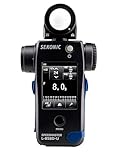


Our Top Picks
 Sekonic L-308X-U Flashmate Light Meter2.5 x 4.3 x 0.9 inches4.3 x 2.5 x 0.9 Inches0.22 PoundsCheck on Amazon
 Sekonic L-858D-U Speedmaster Light Meter with RT-GX Transmitter6.93 x 3.7 x 1.93 Inches1 poundsCheck on Amazon
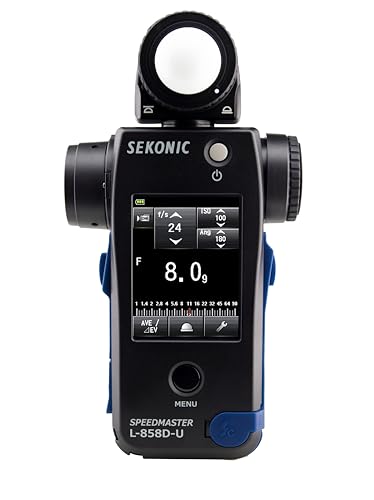

Top 3 picks at a glance
Why a Meter Still Matters in a Histogram World
A camera histogram tells you what happened; a light meter tells you what will happen, and—critically—what the ratio between your key, fill, and rim lights is. If your studio workflow shoots the same lighting setup across a product catalog of 200 SKUs, a meter locks exposure consistency so every shot lands in the same tonal zone, which cuts retouch time dramatically. Meters also measure flash duration (t0.5/t0.1) and cumulative flash exposure across multiple pops—two things no histogram can show.
The Three Modes You Actually Use
Understanding modes prevents most metering errors before they happen:
- Flash (cordless incident): Press the button, fire the strobes, and the meter reads peak flash output. This is your workhorse mode for incident readings at subject position.
- Flash (cord/PC): The meter triggers the strobe itself via a sync cable. Useful for testing a pack’s output consistency and verifying recycle behavior.
- Ambient (continuous): Reads constant light for mixed-light scenes. In flash+ambient mode, premium meters can report the percentage of exposure contributed by flash—essential when balancing strobe against window light or tungsten practicals.
The ambient-vs-flash split is the feature that separates professional meters from entry-level ones. If a scene reads f/8 in flash mode but f/5.6 in ambient mode, your flash is contributing roughly 60–70% of total exposure—meaning at slower shutter speeds ambient bleed will start dragging colors and ghosting motion.
Head-to-Head: The Top Systems in 2026
| Model | Flash metering | Spot metering | Radio trigger support | Flash/ambient split | Typical price range |
|---|---|---|---|---|---|
| Sekonic L-858D Speedmaster | Incident + reflected, t0.1/t0.5 duration, cumulative multi-pop | 1° through-lens spot | Elinchrom, Broncolor, PocketWizard, Phottix, Godox (via transmitter modules) | Yes, percentage readout | $600–$700 |
| Sekonic L-478D / DR-U | Incident, cumulative multi-pop | No | PocketWizard (DR-U transmitter built in on select versions) | Yes | $350–$450 |
| Gossen Starlite 2 | Incident + reflected, cord and cordless | 5°/10° reflected | No native radio (cord triggering) | Yes | $500–$650 |
| Kenko KFM-1100 (legacy class) | Incident | No | No | Limited | $250–$350 used/discontinued stock |
Wireless Triggering Compatibility: The Deal-Breaker Check
A meter that can’t fire your strobes remotely forces you to walk to the power pack or use a separate trigger—killing the workflow advantage. Before buying, map your strobe system:
- Broncolor Siros/Satros or Scoro: The L-858D with the Broncolor RT-BR transmitter module fires packs directly. Profoto shooters need the Profoto-compatible module variant instead.
- Elinchrom: The Elinchrom module for the L-858D handles triggering and, on some pack generations, power-level display.
- Godox/X system: Module support exists but firmware pairing varies—verify your exact module revision supports your Godox generation before committing.
- PocketWizard universality: The L-478DR-U and PW module variants trigger any strobe with a PocketWizard receiver attached, which makes them the safest choice for mixed-brand rental studios.
- Unknown or mixed gear: If your strobes lack radio integration, any meter in cordless flash mode works—you just trigger the pack manually. Don’t pay for modules you won’t use.
A Worked Example: Reading a Three-Light Setup
Say your target is f/8 at ISO 100 for a product shot. Here’s the metering math that separates pros from guesswork:
- Key light: Meter at subject position aimed at the key strobe (Lumisphere retracted for narrow sources). It reads f/8 — correct.
- Fill light: Reading shows f/5.6. That’s a 1-stop gap, giving a classic 2:1 ratio. If you want 4:1 contrast, power the fill down another stop to f/4-equivalent contribution.
- Rim/separation: Reads f/11 — 1 stop hotter than key, producing clean edge separation without flare.
- Cumulative check: Combined reading at subject position, dome toward camera: f/8.9. The overlapping sources add roughly a third of a stop, so dial camera aperture to f/9 or pull key power down 1/3 stop.
If the scene reads f/8 for flash but f/4 for ambient under modeling lamps, ambient contributes only about 25% of exposure—safe to ignore at 1/125s. If it reads f/5.6, ambient hits ~50%, and you’ll want a faster shutter or dimmer modeling lamps to avoid warm contamination.
Decision Matrix: Which Meter Fits Your Workflow
| Your situation | Recommended choice | Why |
|---|---|---|
| Multi-brand strobe rental studio or assistant-heavy team | Sekonic L-858D + PocketWizard module | Universal triggering, 1° spot for background sweeps, flash duration checks for pack aging |
| Solo photographer, Elinchrom or Broncolor ecosystem | Sekonic L-858D with matching RT module | Single-device control of power and triggering from subject position |
| Portrait/product work, cordless workflow, budget-conscious | Sekonic L-478D | Touchscreen speed, no spot metering needed if you meter incident-only |
| Motion+gels or LED/flash mixed studio | Gossen Starlite 2 | Color temperature readout (with CCT mode) alongside flash measurement |
| Secondhand/backup meter | Kenko KFM-1100 or older Sekonic L-758DR | Cordless flash metering only; acceptable as a check meter |
Accuracy Pitfalls That Ruin Consistent Exposure
- Aiming the dome wrong: Incident readings must be taken at the subject position with the Lumisphere aimed at the camera for overall exposure, or at each individual light for ratios. Tilting even 15° shifts readings by ~1/3 stop.
- Metering too fast after strobe pop: Some packs exhibit pre-flash or inconsistent first pop after idle. Fire a test pop, then meter the second.
- Ignoring flash duration at low power: Fast packs vary output at minimum power. The L-858D’s duration mode reveals if your pack’s t0.1 is long enough to blur at 1/250s sync—a spec sheet never tells you your specific unit’s behavior.
- High-speed sync confusion: Standard flash mode can’t meter HSS tails accurately. Use the dedicated HSS mode (available on the L-858D) or meter ambient+flash combined.
- Angle of acceptance on spot mode: A 1° spot reads a tiny circle—on a skin tone, a half-degree shift into specular highlight reads a full stop hot. Spot backgrounds and seamless paper, not faces.
Frequently asked questions
Where should I place the meter when taking an incident reading?
Place the meter at the subject position, with the Lumisphere aimed toward the camera for an overall exposure reading. For individual lighting ratios, aim it at each light separately. The article notes that tilting the dome even 15° can shift readings by about 1/3 stop, so consistent positioning is important when comparing key, fill, and rim output.
How do I interpret a one-stop difference between the key and fill lights?
A one-stop difference between the key and fill produces a classic 2:1 ratio. In the article’s example, the key reads f/8 and the fill reads f/5.6. For 4:1 contrast, reduce the fill by another stop to an f/4-equivalent contribution. These separate readings help establish the lighting relationship before combining the sources.
Can the meter measure high-speed sync accurately?
Use the meter’s dedicated HSS mode to measure high-speed-sync flash accurately. Standard flash mode cannot meter HSS tails accurately, so the article recommends either the dedicated HSS mode available on the L-858D or an ambient-plus-flash measurement. HSS readings require particular care because the exposure is not represented like a conventional single flash pop.
Why should I fire a test pop before taking a flash reading?
Fire a test pop before taking the reading, then meter the second pop. Some packs produce a pre-flash or an inconsistent first pop after sitting idle, which can make the initial measurement unreliable. This procedure is especially relevant when checking a pack’s output consistency or comparing readings across a repeatable studio setup.
When should I use spot metering instead of incident metering?
Use spot metering for backgrounds and seamless paper rather than faces. The L-858D’s 1° spot samples a tiny circle, so shifting half a degree onto a specular highlight can make the reading appear a full stop hotter. Use incident readings at the subject position for overall exposure and individual-light ratio checks.
Bottom Line
For most professional studios in 2026, the Sekonic L-858D Speedmaster is the default answer: it’s the only meter that combines 1° spot, flash duration analysis, HSS-capable modes, ambient/flash percentage splits, and modular radio support across major strobe systems. Step down to the L-478D if you shoot incident-only and want touchscreen speed; choose the Gossen Starlite 2 if color-temperature data matters to your mixed-light work. Whichever you pick, the consistency gain is real—once your ratios are locked by meter instead of chimped by histogram, every frame in the session lands in the same exposure window.