The best radar detectors for balanced speed protection in 2026 are the Uniden R8 for maximum highway range, the Escort Max 360c MkII for the best false-alert filtering and GPS lockouts in the city, and the Valentine One Gen2 for enthusiasts who want directional arrows and deep customization.
As an Amazon Associate we earn from qualifying purchases at no extra cost to you.

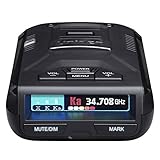

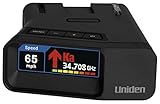
Our Top Picks
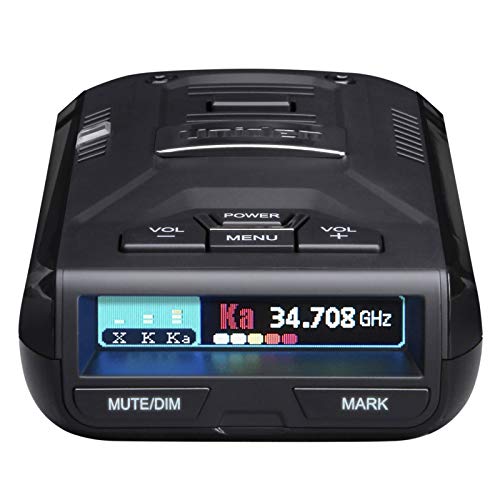 Uniden R3 EXTREME LONG RANGE Laser/Radar DetectorNo Size4.5 x 2.8 x 1.25 inches1.65 poundsCheck on Amazon
 Uniden R7 Extreme Long-Range Laser/Radar DetectorR73.86 x 4.81 x 1.38 Inches0.42 poundsCheck on Amazon


Top 3 picks at a glance
How to Choose: The 4 Decision Criteria
Buying a radar detector is a trade-off between sensitivity and quietness. Highway drivers need raw range on Ka-band and low-noise Ka segmentation, while city drivers need advanced filtering for K-band collision-avoidance systems and automatic GPS lockouts. Use these four criteria to match a detector to where you actually drive.
1. Detection Range and Band Coverage
All modern detectors cover X, K, Ka, and laser, plus MultaRadar CD/CT (MRCD/MRCT) if you drive in areas that use photo radar. What matters is usable range on Ka-band (33.8, 34.7, 35.5 GHz), which is what state troopers use at highway speed. Long-range detectors give you 1.5 to 2.5+ miles of warning on flat, open highway, while mid-range models typically alert at 0.7 to 1.2 miles. Range drops by 30-50% around curves, over hills, and in heavy traffic where the radar signal is obstructed.
Directional arrows (front, side, rear) are not just a convenience. They help you determine if a threat is ahead, behind, or a false alert from a roadside sign, which reduces hard braking and second-guessing.
2. False-Alert Filtering
Since 2020, most false alerts come from Blind Spot Monitoring (BSM) and Adaptive Cruise Control on other cars, which transmit on K-band (24.050-24.250 GHz). A detector without modern BSM filtering will alert constantly in traffic. Look for:
- Digital Signal Processing (DSP) + BSM Filters: Uniden’s K/Ka filters and Escort’s IVT filters analyze the signal shape to reject Honda, Toyota, GM and other BSM systems instead of just muting K-band entirely.
- Ka Segmentation and Custom Sweeps: Allows you to scan only the Ka frequencies used in your region (e.g., 34.7 GHz in most of the US) to improve reaction time and reduce sweep time.
- Low-Noise Amplifier (LNA): Improves weak-signal detection without amplifying noise, which is why detectors like the Valentine One Gen2 and Uniden R8 can run high sensitivity with fewer falses.
3. GPS Lockouts and Quiet Ride
GPS is what makes a detector livable in the city. A GPS-equipped detector learns your fixed false locations (automatic door openers, speed signs) and mutes them next time you pass. Escort’s AutoLearn and Uniden’s GPS lockout both do this, but Escort’s database is larger and updates weekly.
- Auto Lockouts: Automatically mutes a location after 3 passes of the same signal.
- Manual Lockouts: You press mute to lock out a known false on the spot.
- Speed-Based Sensitivity: Auto Mode / Quiet Ride mutes X and K alerts below a set speed (e.g., under 30 mph) where you don’t need protection from highway radar.
- Red Light / Speed Camera Database: GPS detectors alert to fixed camera locations even when no radar is present. This requires periodic database updates via Wi-Fi or USB.
4. App Integration and Updates
Wi-Fi and Bluetooth apps are no longer optional. Escort Live, Uniden R-series app, Valentine V1 Companion, and Waze-style crowd reporting let you get cloud alerts from other drivers and update firmware without a computer. Direct Wi-Fi (Escort Max 360c MkII, Redline 360c) updates firmware and camera databases automatically when parked on your home network. Bluetooth-only models (Uniden R8, R4, Valentine One Gen2) require a phone for live alerts and updates.
Best Radar Detectors Compared in 2026
| Model | Best For | Arrows / Range | GPS Lockouts | App / Connectivity | Typical Price Range |
|---|---|---|---|---|---|
| Escort Max 360c MkII | City + Highway balance | Dual-antenna, 360-degree arrows; long-range Ka detection | AutoLearn, Defender database, speed-based Auto Mode | Built-in Wi-Fi + Escort Live, Auto updates | usually $600–$700 |
| Uniden R8 | Maximum highway range | Dual-antenna with arrows; extreme Ka range, MRCD/MRCT | GPS auto/mute memory, red light camera alerts | Bluetooth to Uniden app, USB updates | usually $600–$700 |
| Valentine One Gen2 (V1 Gen2) | Customization and situational awareness | Front/rear arrows + bogey counter; very long Ka range, LNA | No internal GPS; relies on phone app for lockouts | Bluetooth to V1 Companion / JBV1, Ka segmentation | usually $500–$600 |
| Escort Redline 360c | Stealth highway driving | 360-degree arrows; long range, total stealth (undetectable to RDD) | GPS lockouts + Defender database | Built-in Wi-Fi + Escort Live | usually $700–$800 |
| Uniden R4 | High performance on a budget | Single forward-facing horn; long Ka range, no arrows | GPS lockouts + camera database | Bluetooth app, USB updates | usually $350–$450 |
| Radenso DS1 | Quiet city commuting | Single antenna; good Ka range, excellent BSM filtering | GPS lockouts + camera alerts | Bluetooth to Radenso app, USB updates | usually $400–$500 |
Which Detector Should You Buy? Decision Matrix
Match your driving mix to the right class instead of just buying the most expensive model:
| If You Drive… | Your Biggest Problem | Choose This Type | Why |
|---|---|---|---|
| 80% Highway / Interstate | Need maximum warning before instant-on Ka | Uniden R8 or Escort Redline 360c | Dual-horn sensitivity and LNA pull weak forward scatter from 2+ miles away |
| 50/50 Mixed Commute | K-band falses from traffic but need Ka range | Escort Max 360c MkII | Best AutoLearn GPS lockouts + IVT filtering keeps it quiet without sacrificing Ka performance |
| 90% City / Suburbs | Constant door openers and BSM | Radenso DS1 or Uniden R4 | Strong K-band filtering and speed-based muting; you don’t need dual antennas for short-range threats |
| Enthusiast / Wants Full Control | Want to see where threat is and tune sweeps | Valentine One Gen2 + V1 Companion or JBV1 | Arrows + bogey counter + full Ka segmentation and custom frequencies |
| Need Radar-Detector-Detector Immunity | Driving where detectors are restricted | Escort Redline 360c | Certified stealth to VG-2 / Spectre RDD |
Why Range Matters: A Worked Reaction-Time Calculation
Spec-sheet range numbers don’t mean much until you convert them to time. This shows why a half-mile difference matters at highway speed.
Scenario: You are traveling at 80 mph (117.3 feet per second). Officer uses Ka 34.7 GHz instant-on ahead on a straight road.
- Detector A warns at 0.8 miles = 4,224 feet. Time to radar source = 4,224 / 117.3 = 36.0 seconds.
- Detector B warns at 1.8 miles = 9,504 feet. Time to source = 9,504 / 117.3 = 81.0 seconds.
- Difference = 45 seconds of extra warning.
- Even subtracting 3 seconds to check speed and lift throttle, Detector B gives you 42 seconds vs. 33 seconds to adjust before you’re in the clocking zone. On a curved road where range is cut 40%, Detector A may only give 21.6 seconds (0.48 miles), while Detector B still gives 48.6 seconds — enough to avoid an instant-on trap.
The takeaway: If you regularly drive 75+ mph on open interstates, prioritize a dual-antenna long-range unit. If your average speed is under 55 mph in dense traffic, filtering and lockouts save you more stress than an extra mile of range.
Recommended Settings After Unboxing
Default settings are intentionally noisy. Change these for real-world quietness without losing protection:
- Enable Ka Segmentation and turn off X-band: In most US states X-band is obsolete for police radar. Disable X unless you live in Ohio or New Jersey where it still appears. On V1 Gen2, R8, and Escort models, enable Ka segments 2/5/8 (33.8/34.7/35.5) and disable the rest to speed up sweeps.
- Set K-Block / BSM Filter to ON: On Uniden R8/R4 set K Filter On, K Block On. On Escort set IVT Filter On. This is the single biggest reducer of BSM falsing.
- Set Quiet Ride / Auto Mode threshold to 30-35 mph: Below this speed, K and X are muted but Ka and laser remain active. Prevents parking-lot door alerts in town.
- Turn on Auto Lockouts and connect Wi-Fi/Bluetooth: Drive your normal commute 3 times to let AutoLearn lock out stationary falses. Update the Defender / camera database monthly.
- Laser detection ON, but don’t rely on it: Laser alerts mean you have already been targeted. Consider it a notification, not protection, unless paired with a separate laser jammer where legal.
When a Radar Detector Isn’t Enough
Radar detectors are illegal for commercial vehicles in many states and for all vehicles in Virginia, Washington D.C., and on US military bases. They also do not detect pacing, VASCAR, or aircraft timing. Check your state and local laws before mounting, and use a detector as a situational awareness tool, not a license to speed.
FAQ
Do I need directional arrows?
Not strictly, but they significantly reduce uncertainty. With arrows you can tell a rear Ka alert after you pass a cruiser from a new forward threat ahead. For highway driving, arrows are strongly recommended. For pure city commuting under 45 mph, you can save money with a non-arrow model like the Uniden R4 or Radenso DS1.
Are GPS lockouts important if I use Waze?
Yes. Waze reports human-sighted police, while a detector’s GPS remembers fixed false sources that Waze doesn’t know about. Using both gives you fewer false alerts and better coverage — detector for radar, app for police sightings and cameras.
Will a radar detector drain my car battery?
Power draw is very low, typically 0.5 to 1.0 amp (6-12 watts at 12V). Wired via a switched fuse or cigarette lighter it turns off with the car. Hardwiring with a parking-mode feature should use a voltage cutoff module to avoid draining the battery overnight.