The best concert ukuleles for live performance are the Cordoba 20CM-CE for warm amplified tone, the Kala KA-C for a dependable all-round acoustic, and the Lanikai ACST-CET for players who want strong projection, a comfortable neck, and a stage-ready pickup.
Concert size is usually the best compromise for gigging: it has more volume and low-end than a soprano, while remaining easier to carry and fret than a tenor. The right choice depends less on the word “concert” and more on how the instrument behaves through a PA system.
As an Amazon Associate we earn from qualifying purchases at no extra cost to you.



Our Top Picks
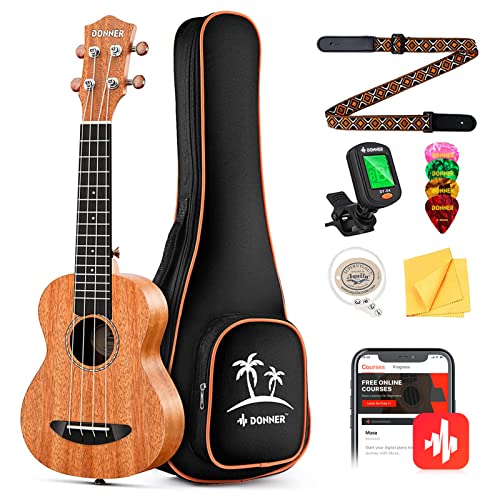
 Donner Concert Ukulele Professional 23 Inch Mahogany Ukelele23 Inch-Regular24 x 8.26 x 2.75 InchesCheck on Amazon

Top 3 picks at a glance
Quick comparison: the strongest live-performance choices
| Model | Body and tonewood | Scale / nut feel | Pickup | Typical market range | Best for |
|---|---|---|---|---|---|
| Cordoba 20CM-CE | Concert body, mahogany construction | About 15 in; medium concert neck | Built-in active electronics on CE version | Usually $250–$400 | Warm amplified tone and fingerstyle |
| Lanikai ACST-CET | Concert body with solid spruce top | About 15 in; comfortable stage neck | Built-in preamp and tuner | Usually $300–$500 | Projection, strumming, and mixed venues |
| Kala KA-C | Mahogany laminate | About 14.75 in; compact concert feel | None on standard model | Usually $150–$250 | Reliable acoustic playing and easy transport |
| Martin 0XK Concert Uke | HPL construction | About 15 in; stable, familiar feel | None on standard model | Usually $400–$600 | Touring durability and consistent tone |
| Flight DUC380 CEQ | Concert body, laminated construction | Concert scale; relatively slim neck | Onboard electronics on CEQ version | Usually $200–$350 | Budget amplification and frequent travel |
Specifications can vary slightly by production run and regional version, so confirm the exact electronics package before buying. A model name containing “CE,” “CET,” or “CEQ” commonly indicates an acoustic-electric version, but the preamp and pickup system are not identical across brands.
Head-to-head: what matters on stage
Body size and projection
A concert body typically adds roughly 1–2 inches of scale length over a soprano and offers a larger sound chamber without the reach of a tenor. That extra air volume usually produces a fuller C string and more headroom when strumming hard.
The Lanikai ACST-CET is the strongest choice when unamplified projection matters. Its solid spruce top is designed to respond noticeably to picking dynamics: a light touch stays articulate, while a firm strum produces more volume. Spruce can sound bright when new, which suits rhythmic playing but may be less forgiving of an overly aggressive pick.
The Cordoba 20CM-CE uses mahogany, giving it a rounder and less glassy sound. It is a good fit for vocal accompaniment, fingerstyle passages, and venues where the PA supplies most of the volume. The Kala KA-C is quieter than many solid-top instruments, but its laminate construction is less vulnerable to humidity changes and rough transport.
Tonewood: choose the response, not the label
- Mahogany: generally emphasizes a warm midrange and controlled attack. It works well when the ukulele must support vocals without sounding piercing.
- Spruce: usually delivers more immediate attack and perceived projection. It can cut through a small acoustic ensemble, but may need careful EQ at high volume.
- HPL or laminate: offers consistent performance across changing humidity and temperature. It may sound less complex than a solid top, but that predictability is valuable on tour.
For a single instrument covering open-mic nights, rehearsals, and outdoor events, laminate or HPL is often the sensible choice. For a seated performance where the instrument’s natural response matters, a solid-top model such as the Lanikai ACST-CET can offer more expressive contrast.
Pickup quality and feedback control
Pickup quality is where an inexpensive stage uke can become frustrating. A piezo pickup under the saddle is common because it is compact and resistant to microphone bleed, but it can sound thin or “quacky” if the preamp has limited shaping controls. A built-in tuner is useful, but it does not indicate that the pickup itself is better.
The Cordoba 20CM-CE and Lanikai ACST-CET are more practical stage choices than their non-electric counterparts because they include onboard controls. Before a performance, set the preamp volume conservatively and use the amplifier or PA for final level changes. Running the instrument’s output at maximum can exaggerate piezo harshness and increase feedback risk.
For a typical small PA, begin with these settings:
- Preamp volume: around 40–60 percent.
- Bass: flat or slightly below center.
- Treble: flat, then reduce it if the attack sounds brittle.
- Notch or feedback control: use only when a specific ringing frequency appears.
- PA high-pass filter: approximately 80–120 Hz, if available, to remove stage rumble without thinning the instrument.
These are starting points, not universal settings. The room, strings, playing force, and PA speakers all affect the result.
Neck comfort and tuning stability
Concert instruments differ substantially in neck feel even when their measurements appear similar. A shorter concert scale can reduce left-hand stretching, while a slightly wider nut may make fingerstyle chord shapes cleaner. Players moving from soprano to concert usually adapt quickly, but those with larger hands may prefer the additional spacing of a roomier neck.
The Kala KA-C is approachable for chord-heavy playing because it has a familiar, compact concert profile. The Martin 0XK Concert Uke has a stable-feeling neck and durable construction that suit regular travel. The Cordoba 20CM-CE is a good middle ground for players who alternate between strumming and individual-note work.
Tuning stability depends on more than the tuners. New strings stretch, the nut may bind, and temperature changes can move the neck and top. Use this pre-gig routine:
- Install or inspect the strings at least several days before the show.
- Stretch each string gently along its length, then retune repeatedly.
- Check that the string returns to pitch after bends or vigorous strumming.
- Make sure each tuner post has neat, firm wraps rather than loose coils.
- Tune again after the instrument has acclimated to the venue.
If one string repeatedly goes sharp or flat while the others remain stable, the problem may be at the nut or tuner rather than with the ukulele’s body. A qualified repair technician can check the slot depth and tuner mounting without replacing the entire instrument.
Decision matrix: which concert uke fits your gig?
| Your situation | Best direction | Why | Trade-off |
|---|---|---|---|
| Mostly vocal accompaniment through a PA | Cordoba 20CM-CE | Warm mahogany voice and onboard electronics | Less naturally bright than spruce |
| Unamplified café or acoustic ensemble | Lanikai ACST-CET | Solid spruce top gives stronger attack and projection | More sensitive to humidity and setup |
| Frequent flights, outdoor work, or variable climate | Martin 0XK Concert Uke or Kala KA-C | HPL or laminate is relatively consistent and durable | Standard versions need an external microphone or retrofit pickup |
| First stage uke under a moderate budget | Flight DUC380 CEQ | Provides amplification without moving into premium pricing | Electronics may sound less refined than a higher-end system |
| Fingerstyle with delicate dynamics | Cordoba 20CM-CE | Mahogany response is smooth and controlled | May not cut through a loud strumming group as easily |
Gig-bag portability and stage preparation
A concert uke is portable, but the gig bag determines whether it remains protected. Look for at least 10–15 mm of padding, a reinforced headstock area, a neck-support strap, two shoulder straps, and enough depth for an instrument with a pickup and endpin. A thin fashion-style bag is fine for a short walk but offers little protection in a vehicle or crowded backstage area.
Leave space for a clip-on tuner, spare strings, a short instrument cable, spare batteries if the preamp uses them, a strap, and a microfiber cloth. A compact cable with a right-angle plug can reduce leverage on the endpin jack, especially when sitting or moving around a microphone stand.
For air travel, use the gig bag only as an inner layer inside a rigid case or a carefully padded travel solution. Keep the instrument away from direct heat and do not leave it in a hot vehicle. Solid-top ukuleles generally require more attention to humidity than laminate or HPL models.
Frequently asked questions
Can a standard Kala KA-C be plugged directly into a PA?
No. The standard Kala KA-C has no pickup, so it requires an external microphone or a retrofit pickup for amplification. Its laminate construction is less vulnerable to humidity changes and rough transport, making it a practical acoustic option, but it does not provide the onboard electronics found on the Cordoba 20CM-CE or Lanikai ACST-CET.
What should I check before buying an acoustic-electric concert ukulele?
Confirm the exact electronics package for the production run and regional version. Model names containing “CE,” “CET,” or “CEQ” commonly indicate an acoustic-electric version, but the preamp and pickup systems differ across brands. Check whether the instrument includes onboard controls, a tuner, and the connection features needed for your PA or amplifier.
How should I prepare new strings before a performance?
Install or inspect the strings several days before the show. Stretch each string gently along its length, retune repeatedly, and check that it returns to pitch after bends or vigorous strumming. Make sure the tuner posts have neat, firm wraps, then tune again after the ukulele acclimates to the venue.
What should I pack in a concert ukulele gig bag?
Pack a clip-on tuner, spare strings, a short instrument cable, spare batteries if the preamp uses them, a strap, and a microfiber cloth. A protective bag should have 10–15 mm of padding, headstock reinforcement, neck support, and enough depth for an instrument with a pickup and endpin.
How can I reduce harshness and feedback when using a piezo pickup?
Start with the preamp volume around 40–60 percent, keep bass flat or slightly below center, and begin treble flat. Reduce treble if the attack sounds brittle, and use notch or feedback control only when a specific ringing frequency appears. If available, set the PA high-pass filter around 80–120 Hz to remove stage rumble.
Final recommendation
Choose the Cordoba 20CM-CE if balanced amplified tone and neck comfort are your priorities. Choose the Lanikai ACST-CET if you need the best acoustic projection from this group. Choose the Kala KA-C for a dependable non-electric concert uke that can later receive a pickup. For the most travel-oriented setup, the Martin 0XK Concert Uke offers durable construction, while the Flight DUC380 CEQ is a practical lower-cost route into live amplification.