Our Top Picks
 HIKEMOON 34'' Extra Long Folding Portable Wagon Cart33.97 x 16.37 x 41.34 inches14 PoundsCheck on Amazon
 Blomoba Folding Wagon Cart with WheelsMedium Without Tailgate27.17 x 16.54 x 17.91 inches11.24 PoundsCheck on Amazon
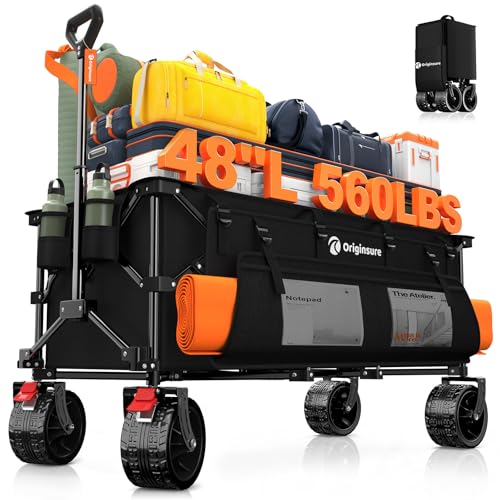 Originsure 300L Collapsible Beach Wagon Cart with Big48.43 x 24.02 x 42.52 inches28.43 poundsCheck on Amazon

Top 3 picks at a glance
Best Festival Wagons for Easy Transport
The best festival wagons for most people are the Mac Sports XL Folding Wagon for a roomy, simple hauler, the Veer Cruiser for rough ground and premium build quality, and the Radio Flyer Odyssey Stroll ’N Wagon for families who want a canopy and stroller-style handling. The right choice depends less on the biggest advertised capacity than on how the folded wagon fits your car, how its wheels handle your route, and whether you need covered storage.
Festival wagon comparison
Specifications can vary by version and retailer, so confirm the exact model before buying. The figures below are useful for comparing common configurations; they are not a guarantee that every wagon will feel stable at its maximum load.
As an Amazon Associate we earn from qualifying purchases at no extra cost to you.


| Model | Folded size (approx.) | Capacity | Weight (approx.) | Wheels and canopy | Best fit |
|---|---|---|---|---|---|
| Mac Sports XL Folding Wagon | 31 × 21 × 9 in | 150 lb | 22 lb | Four wide wheels; no canopy included | Budget-minded hauling on firm paths and short grass |
| Veer Cruiser | 37 × 20 × 14 in | 300 lb | 32.5 lb | Large all-terrain wheels; canopy sold separately | Rougher routes, family use, and frequent trips |
| Radio Flyer Odyssey Stroll ’N Wagon | About 33 × 18 × 10 in | 120 lb | About 28 lb | Stroller-style steering; canopy included on common versions | Families who value shade and controlled steering |
| Timber Ridge Folding Camping Wagon | About 30 × 20 × 9 in | 150 lb | About 23 lb | Wide wheels; canopy availability depends on version | General-purpose hauling with a compact fold |
Folded dimensions are especially important when a festival has a full parking lot, shuttle bus, or narrow campsite. Measure the smallest opening the wagon must pass through—not just the trunk. A folded wagon that is easy to lift but too wide for a door or packed car can be more trouble than a heavier model.
Which wagon fits your route?
| Your situation | What to prioritize | Likely match |
|---|---|---|
| Mostly paved paths, short walk from parking | Low weight, compact fold, adequate capacity | Mac Sports XL or a similar 150 lb class wagon |
| Long stretches of grass or uneven ground | Large, wide wheels; strong frame; comfortable handle | Veer Cruiser or another all-terrain wagon |
| Loose gravel or rutted access roads | Wider wheels and a longer wheelbase; avoid tiny hard wheels | All-terrain class, ideally tried on similar ground |
| Young children riding along | Brakes, harness or seat configuration, canopy, and event rules | Family-focused model such as the Radio Flyer Odyssey |
| Small car trunk or frequent public transport | Folded width and weight before maximum capacity | Compact-fold model you can lift comfortably |
What matters on grass and gravel
Wheel performance beats a high load rating
Grass increases rolling resistance, and soft ground can make narrow wheels dig in. Gravel adds vibration and can catch small wheels. Larger, wider wheels generally roll more easily over both, but they do not make every wagon suitable for deep mud, steep slopes, or very loose sand. For a mostly paved festival with a short grass crossing, standard wide wheels may be enough. If the route includes a long field or gravel service road, prioritize an all-terrain design and accept the extra weight and folded bulk.
Turning also changes with terrain. A wagon with front swivel wheels can pivot neatly on hard ground, while a long handle and larger wheels may be easier to control over bumps. On loose gravel, sharp turns can drag the wheels sideways. Slow down, make broad turns, and keep heavy items low in the bed.
Capacity is not the same as a comfortable load
A stated 150 lb capacity is a structural limit, not a promise that 150 lb will be easy to pull across grass. As a practical planning target, keep the load around 60–70% of rated capacity for a long, uneven route, then reduce it further if the wagon carries children or bulky items that shift. For a 150 lb wagon, that means roughly 90–105 lb of gear as a more manageable starting point.
For example, a cooler weighing 35 lb, two folding chairs at 12 lb each, a 10 lb shade tent, and 15 lb of blankets and supplies add up to 84 lb. That is 56% of a 150 lb rating—more comfortable than loading to the limit, and with room for water or last-minute items. Put the cooler near the axle and secure loose gear so it does not slide when the wagon tips over bumps.
Canopies, storage, and maneuverability
A canopy is useful for shade and light sun protection, but it adds wind resistance and may not be included with every version. Check whether it comes in the box, whether it can be removed quickly, and whether its support bars interfere with loading tall chairs. Do not treat a fabric canopy as rain protection unless the manufacturer specifies that use. In gusty weather, remove it if permitted and keep the wagon secured.
Storage details make a noticeable difference during a full day out. Look for a rear pocket or organizer for tickets, sunscreen, and a phone; a covered compartment for small items; and a removable liner that can be cleaned. A drain plug is handy for wet gear, but not essential for a dry-weather event. Check whether accessories are included or sold separately before comparing total cost.
For maneuverability, consider the handle’s length and grip, whether it locks upright, and how easily it steers when loaded. A heavy wagon can feel manageable when pulled on pavement but tiring over a long field. If you expect to lift it into a car, compare the wagon’s weight with what you can comfortably raise repeatedly—not just once in a shop.
How to choose without overbuying
- Measure the route and storage space. Check the car opening, home storage spot, and any event shuttle or gate restrictions.
- Estimate the real load. Add up chairs, cooler, water, and bags, then leave a capacity margin for uneven ground.
- Match wheels to the worst surface. Choose for the longest or loosest section, not the easiest part of the walk.
- Decide whether you need a canopy. If shade is important, verify it is included and removable; otherwise, a simpler wagon may save weight and space.
- Check festival rules. Some venues restrict wagon size, canopies, or wagons carrying passengers. Confirm before arrival.
For a short, mostly paved haul, a compact 150 lb class wagon is usually the sensible value. For repeated use on grass and gravel, spend more attention on wheel size and steering than on extra capacity. For family use, prioritize brakes, secure seating, and event approval; a cargo wagon’s weight rating alone does not establish that it is safe or permitted for passengers.
Frequently asked questions
How can I tell whether a wagon will fit in my car?
Compare the wagon’s folded dimensions with the car’s smallest opening and available trunk space. The article lists approximate folded sizes, but versions can vary, so confirm the exact model. Also consider whether you can lift its weight comfortably, especially if you expect to load and unload it repeatedly.
Is a wagon with a canopy suitable for rainy weather?
Not necessarily; the article says not to treat a fabric canopy as rain protection unless the manufacturer specifies that use. Check whether the canopy is included and removable, and consider wind resistance in gusty weather. If permitted, remove it when conditions call for it and keep the wagon secured.
Can I use a cargo wagon to transport children?
A cargo wagon’s weight rating alone does not establish that it is safe or permitted for passengers. For family use, prioritize brakes, secure seating, and event approval. Check the venue’s rules before arrival, since some festivals restrict wagons carrying passengers.
What should I look for in a wagon handle?
Look for a handle with a comfortable grip and enough length, and check whether it locks upright. Steering can feel different when the wagon is loaded, and pulling a heavy wagon over a long field may be tiring. The article also recommends broad turns and slowing down on loose gravel.
Which wagon features help keep small items organized?
A rear pocket or organizer can hold items such as tickets, sunscreen, and a phone, while a covered compartment can protect small belongings. A removable liner may be easier to clean, and a drain plug can help with wet gear. Check which accessories are included or sold separately.