Disclosure: As an Amazon Associate, I earn from qualifying purchases. If you buy through links in this article, I may earn a commission at no extra cost to you.
Our top pick: Klein Tools 56001 Steel Fish Tape, 50 ft. Runner-up: Gardner Bender EFT-15 Mini Cable Snake, 15 ft.
A fish tape is the tool that turns an impossible wire run into a routine one. You push the tape through conduit, a wall cavity, or a ceiling void, attach the cable to the tip, and pull everything back through. The catch is that fish tapes are not interchangeable: a stiff steel tape that powers through a long, straight conduit run will fight you in a short wall bay full of bends, and a flexible non-conductive tape that is safe around crowded panels gives up pushing force on long pulls. Length, tape material, and tip design matter more than brand loyalty.
This guide compares five fish tapes across the main material families: flat steel, fiberglass, and a low-friction polymer design. Two of the five picks come from Klein Tools, which is stated openly here because Klein’s range covers both the classic steel tape and the long fiberglass class in this comparison; the other three come from Southwire, Greenlee, and Gardner Bender. Every length and material below is given as listed by the maker, and listed pull strengths are noted only where the maker publishes one.
Top 3 picks at a glance


How to Choose a Fish Tape
Start with the material. Steel tape is the traditional choice: it is stiff, pushes well through straight conduit, and tolerates rough handling. Its downside is that it conducts electricity, so it calls for de-energized circuits and extra care around live panels. Fiberglass tape is non-conductive and more flexible, which makes it the safer pick for crowded boxes and retrofit work, though it usually pushes with less force. Polymer tapes such as Southwire’s SIMpull design aim for very low friction in the conduit, trading some stiffness for glide.
Match the length to the run, with headroom. A tape that barely reaches forces awkward mid-pull splices of effort; a tape far longer than the run adds bulk and rewind time. Short in-wall work is often covered by 15 to 50 feet, while commercial conduit runs regularly call for 100 feet or more. Buy for the longest run you realistically expect, not the longest that exists.
Look at the tip and leader. A formed hook or double-loop tip gives you something solid to tape conductors to. Flexible leaders, including spiral steel and flexible metal designs, help the tape head round bends instead of digging into them. On long fiberglass tapes, the leader also protects the end of the tape itself.
Consider the case and markings. A sturdy winder case keeps a springy steel tape under control and protects it between jobs. Laser-etched length markings, where fitted, let you measure a conduit run as you feed the tape, which saves a separate measuring step when estimating cable.
The 5 Best Fish Tapes
1. Klein Tools 56001 Steel Fish Tape, 50 ft
The 56001 is the classic electrician’s fish tape format: a flat steel tape, 1/8 inch wide and 50 feet long as listed, wound in a winder case. Steel’s stiffness is the point here — it pushes through straight and gently bent conduit with authority, and the flat profile resists the twisting that round wire-style pullers can suffer from. Klein lists an updated model (Cat. No. 56331) alongside this one, so check which version a listing describes before ordering; this pick is the long-running 56001. For residential and light commercial runs where circuits are de-energized, it remains the straightforward benchmark in this group.
Specs
- Brand: Klein Tools
- Model: 56001
- Material: Steel
- Tape size: 50 ft x 1/8 in, as listed
- UPC: 092644560019
2. Gardner Bender EFT-15 Mini Cable Snake, 15 ft
At the opposite end of the length range, the EFT-15 Mini Cable Snake is a compact 15 ft flat steel tape built for short, non-conduit work: fishing under carpets, down wall cavities, and over ceilings. Gardner Bender describes the tape as low-memory, meaning it does not curl as it extends, which is exactly what you want when the tape has no conduit to guide it. The high-impact housing is small enough to clip to a belt or drop in a toolbox, and the flat eyelet tip is designed to connect cable without extra materials. It will not replace a conduit tape, but for speaker wire, network cable, and doorbell runs it is the right-sized tool.
Specs
- Brand: Gardner Bender
- Model: EFT-15
- Material: Steel
- Tape length: 15 ft, as listed
- Tape behavior: Low-memory flat steel, as listed
- Housing: High-impact
3. Klein Tools 56059 Fiberglass Fish Tape, 200 ft
The 56059 moves to fiberglass: a non-conductive, multi-groove tape, 200 feet long and 3/16 inch wide as listed, with a listed pull strength of 500 pounds. The multi-groove profile is intended to reduce friction and keep the tape tracking straight in the conduit, and the non-conductive construction makes it the appropriate choice when you cannot be fully certain a panel or run is dead. Two hundred feet covers long commercial runs that would defeat a standard 50 ft tape, and the fiberglass flex helps it through the bends that accumulate over that distance. It is the safety-first, long-reach pick of this group.
Specs
- Brand: Klein Tools
- Model: 56059
- Material: Fiberglass (non-conductive)
- Tape size: 200 ft x 3/16 in, as listed
- Listed pull strength: 500 lb
- UPC: 092644560590
4. Southwire FTSP3-240FML SIMpull Fish Tape, 240 ft
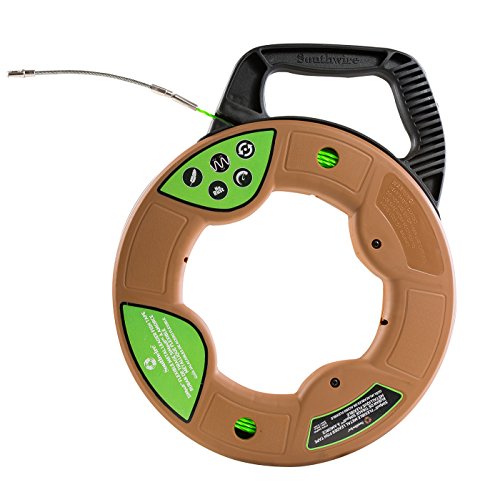
Southwire’s SIMpull design takes a different approach to friction: the FTSP3-240FML uses a 3 mm polymer tape, 240 feet long as listed, in a large case, finished with a flexible metal leader. The polymer tape is built to glide through EMT and PVC with less resistance than steel or fiberglass, and Southwire positions the design as combining steel-like push with a non-conductive tape body; the metal leader restores a durable, attachable head for the pull. At 240 feet it is the longest tape here, aimed at extended conduit runs where friction, not reach, is usually what stops a pull.
Specs
- Brand: Southwire
- Model: FTSP3-240FML
- Material: Polymer tape with flexible metal leader
- Tape size: 3 mm x 240 ft, as listed
- Case: Large case
- UPC: 032886961847
5. Greenlee FTS438DL-250 Steel Fish Tape, 250 ft

Greenlee’s FTS438DL-250 is the long steel option: 250 feet of steel tape for extended conduit work where fiberglass flex is not needed and maximum push is the priority. Greenlee’s fish tape line is built around laser-etched steel tapes with flexible leaders, and this model sits at the long end of that range. Steel at this length demands respect on the rewind — a 250 ft tape stores a lot of spring energy — but for long, mostly straight commercial runs it offers the reach of the polymer and fiberglass picks with steel’s pushing stiffness. It is the specialist choice here rather than the all-rounder.
Specs
- Brand: Greenlee
- Model: FTS438DL-250
- Material: Steel
- Tape length: 250 ft, as listed
- UPC: 783310263012
Quick Comparison
| Pick | Material | Length (as listed) | Best for |
|---|---|---|---|
| Klein Tools 56001 | Steel | 50 ft | Everyday conduit pulls |
| Gardner Bender EFT-15 | Steel | 15 ft | Short in-wall and under-carpet runs |
| Klein Tools 56059 | Fiberglass | 200 ft | Long runs, non-conductive work |
| Southwire FTSP3-240FML | Polymer, metal leader | 240 ft | Long, friction-heavy conduit runs |
| Greenlee FTS438DL-250 | Steel | 250 ft | Long, straight commercial runs |
FAQ
Is steel or fiberglass fish tape better?
Neither is universally better. Steel pushes harder and is the default for straight conduit on de-energized circuits. Fiberglass is non-conductive and more flexible, so it suits crowded panels, retrofit work, and runs with more bends. Polymer tapes split the difference by cutting friction.
How long a fish tape do I need?
Measure or estimate your longest expected run and add headroom for bends and handling. Fifteen to 50 feet covers most in-wall residential work; conduit runs in larger buildings regularly need 100 feet or more, which is where the 200 ft and longer tapes in this guide come in.
What does listed pull strength mean?
It is the tensile load the maker states the tape can handle. The Klein 56059, for example, is listed at 500 lb. Treat published figures as the maker’s specification for that model, and stay well within them; most failed pulls damage the tape or the cable insulation long before a headline number is reached.
Can I use a fish tape in a wall without conduit?
Yes, for short runs — that is exactly what compact tapes like the 15 ft Mini Cable Snake are made for. Feed slowly, expect insulation and blocking to redirect the tape, and keep steel tapes away from live wiring inside the cavity.
How do I attach wire to a fish tape?
Strip the conductors, thread them through the hook, loop, or leader eye, fold them back along the tape, and wrap the joint smoothly with electrical tape so it cannot snag. A smooth, tapered joint matters more than brute tightness.
Conclusion
For most conduit work, the Klein Tools 56001 remains the sensible default: 50 feet of flat steel in a proven format. Short in-wall jobs are better served by the compact Gardner Bender EFT-15, while long runs split three ways — the non-conductive Klein 56059 fiberglass tape for safety-conscious work, the low-friction Southwire SIMpull for crowded conduit, and the Greenlee FTS438DL-250 where a long steel tape’s push is what the run demands. Choose by material first and length second, and the tape will do the rest.
Related guides
More from Amazon
Programs that pair well with the guide above. Offers and eligibility are set by Amazon and may change.
Free shipping on eligible items, Prime Video and more. Eligible new members can start with a free trial.
Start a Prime free trialAd-free music streaming. Eligible new subscribers can start with a free trial.
Try Music Unlimited freeA Prime membership for ages 18-24 with a trial period. Eligibility is set by Amazon.
See Prime for Young AdultsAudiobooks and podcasts to listen to on the go. Eligible new members can start with a free trial.
Try Audible freeAs an Amazon Associate we earn from qualifying purchases.