
Picture the shopping decision first: Crimson Desert is the sort of sprawling, visually rich open-world action game where the graphics card sets the ceiling. On that basis, the Skytech Gaming O11 Vision is the best all-round pick in this set, because its title pairs an RTX 5070 12GB with a Ryzen 7 7700X, 32GB of DDR5, a 1TB Gen4 drive, an 850W Gold ATX 3 supply and a 360mm liquid cooler. The MSI Codex R2 is the value alternative, the Skytech Archangel 5 listings are the entry route, and the Legacy 4 is the extravagant extreme.
The mini PC and one low-end tower in this set are flagged as weaker for this game. All specifications come from listing titles, which are seller claims, so confirm them on each page.
Our Top Picks
Top picks at a glance

Skytech Gaming PC Desktop, Intel i5 14400F, RTX 5060, 16GB RAM, 1TB SSD | Windows 11, NVMe SSD, DDR5 6000, 750W GOLD PSU, Wi-Fi 5, Archangel 5 Series


As an Amazon Associate we earn from qualifying purchases. Product prices and availability are accurate as of the date/time indicated.

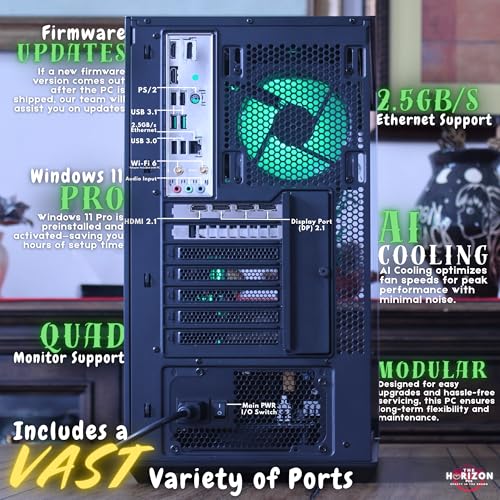
The Horizon Autherium Dragon RGB I9 RTX Gaming PC || 64GB RAM || 5TB Storage || Core I9 Upto 5.4Ghz || RTX 5070 OC || Windows 11 PRO || 360MM AIO || 2.4GB/s WiFi, VR, Gaming Ready Desktop Computer





As an Amazon Associate we earn from qualifying purchases. Product prices and availability are accurate as of the date/time indicated.

ACEMAGICIAN S3A Gaming Mini PC, Ryzen 7 H 255 (Up to 4.9GHz, 8C/16T), Radeon 780M Graphics, 16GB RAM, 512GB PCIe4.0 SSD, Mini Desktop Computer for Content Creation, Programming, Gaming & Home Office


As an Amazon Associate we earn from qualifying purchases. Product prices and availability are accurate as of the date/time indicated.

msi Codex R2 Gaming Desktop PC | NVIDIA GeForce RTX 5070 12GB | Intel Core i5-14400F | 32GB DDR5 RAM | 1TB NVMe SSD | Air Cooling | Wi-Fi 6E | Windows 11 Home | VR Ready | D14NVP5-613US


As an Amazon Associate we earn from qualifying purchases. Product prices and availability are accurate as of the date/time indicated.

Qehi Gaming PC Desktop, Ryzen 7 RTX3050 8G for Gaming Live Streaming | 8Core 16Threads, 6RGB Fans ,WiFi 6 | Gamers Prebuilt Computer Tower for Gaming Live Streaming Home & Office-Black


As an Amazon Associate we earn from qualifying purchases. Product prices and availability are accurate as of the date/time indicated.
Skytech Gaming Archangel 5 Gaming PC, AMD Ryzen 7 7700 3.8GHz, NVIDIA RTX 5060, 1TB NVMe SSD, 32GB DDR5 RAM 6000, 750W Gold PSU, Wi-Fi, Win 11, Desktop


As an Amazon Associate we earn from qualifying purchases. Product prices and availability are accurate as of the date/time indicated.
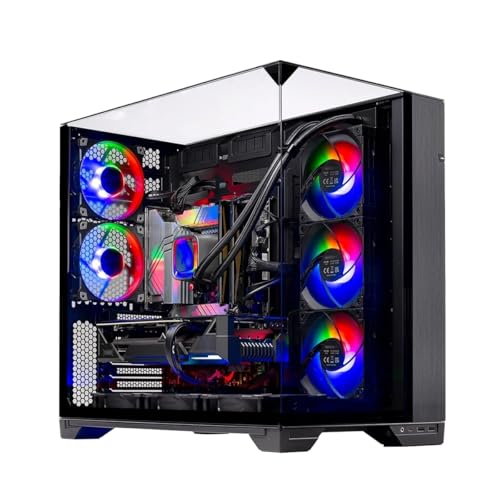
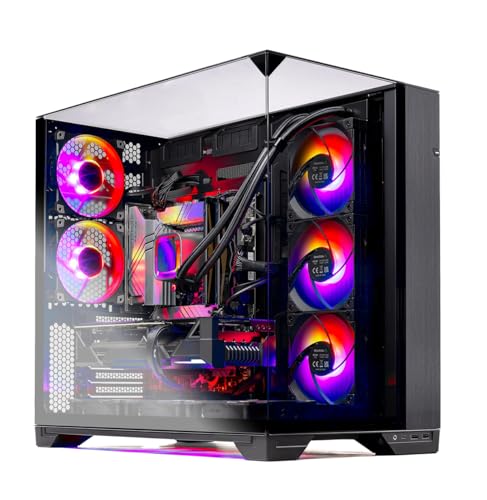
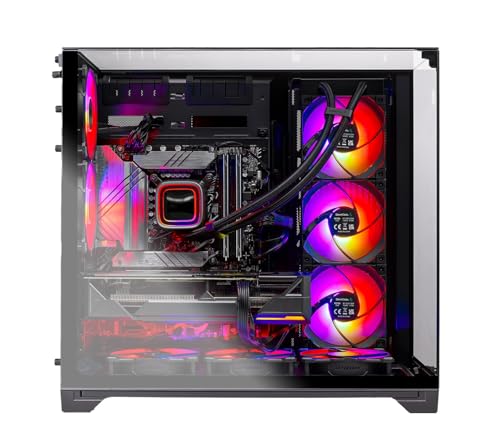
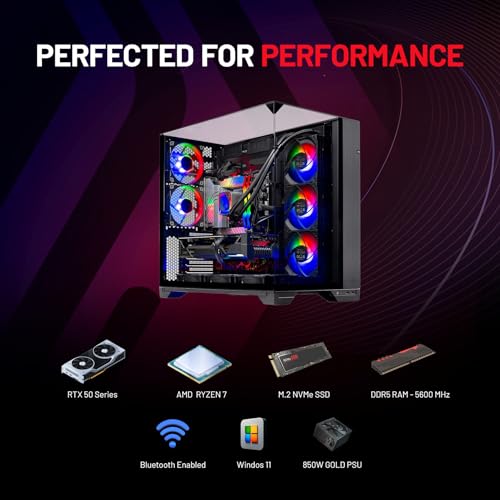
Skytech Gaming O11 Vision Gaming PC, AMD Ryzen 7 7700X 4.5GHz, NVIDIA RTX 5070 12GB, X670 Board, 1TB Gen4 NVMe SSD, 32GB DDR5 RAM 5600, 850W Gold ATX 3 PSU, 360 ARGB AIO, Wi-Fi, Win 11, Desktop





As an Amazon Associate we earn from qualifying purchases. Product prices and availability are accurate as of the date/time indicated.

Skytech Gaming Legacy 4 Gaming PC, Ryzen 9 9950X3D, RTX 5090 | | 64GB DDR5 RAM 6000, 4TB Gen4 NVMe M.2 SSD, Windows 11, X870 Board, 1200W GOLD ATX 3 PSU, 360 ARGB AIO , Wi-Fi 7


As an Amazon Associate we earn from qualifying purchases. Product prices and availability are accurate as of the date/time indicated.
| Listing | Key point from the title | Price tier | Best for |
|---|---|---|---|
| Skytech O11 Vision | Ryzen 7 7700X, RTX 5070 12GB, 32GB DDR5, 850W Gold ATX 3, 360 AIO | Mid to premium (check listing) | Best overall balance |
| MSI Codex R2 | i5-14400F, RTX 5070 12GB, 32GB DDR5, 1TB, air cooling | Mid | Value at the RTX 5070 tier |
| Skytech Archangel 5 (Ryzen 7) | Ryzen 7 7700, RTX 5060, 32GB DDR5, 750W Gold | Mid | 1080p to 1440p with ample RAM |
| Skytech Archangel 5 (i5) | i5 14400F, RTX 5060, 16GB, 1TB, 750W Gold | Budget to mid | Lowest modern entry |
| The Horizon Autherium Dragon | Core i9, RTX 5070 OC, 64GB RAM, 5TB storage, 360mm AIO | Premium | Storage and memory hoarders |
| Skytech Legacy 4 | Ryzen 9 9950X3D, RTX 5090, 64GB DDR5, 4TB, 1200W Gold | Premium (extreme) | Maximum settings and creative work |
| Qehi Gaming PC | Ryzen 7, RTX 3050 8G, 6 RGB fans | Budget | Light play only |
| ACEMAGICIAN S3A mini PC | Ryzen 7 H 255, Radeon 780M integrated graphics, 16GB, 512GB | Budget | Office work, not this game |
Reading the requirements before the shopping list
Large open-world games tend to publish a minimum and a recommended specification, and the gap between the two is wide. The minimum line usually describes a machine that starts the game at low settings and modest resolution. The recommended line is a better guide to a comfortable purchase, and many players aim one tier above it if they want a high-resolution display or high settings. Since those figures can be revised after launch, the store page is the authority, not this article.
Three questions steer the choice. What resolution is your monitor? How much do you value maximum settings over a lower price? And do you want one PC for this game and everything else for the next several years? Answer those and the lineup sorts itself: an RTX 5060 tier for 1080p, an RTX 5070 tier for 1440p, and the very top for 4K or workloads beyond gaming.
How the picks were made
This is an editorial comparison built from published specifications, manufacturer documentation and buyer reviews. Each title is read for the graphics card, processor, memory, storage, cooling and power supply, and then matched to what a demanding open-world game plausibly needs. Nobody on the team used or measured these units, and no frame rates are quoted. Details missing from a title are marked “check the listing”.
The eight listings
Skytech Gaming O11 Vision (Ryzen 7 7700X, RTX 5070 12GB)
This is the one to start from. Its title lists an eight-core Ryzen 7 7700X, an RTX 5070 with 12GB, an X670 board, 32GB DDR5 at 5600, a 1TB Gen4 NVMe drive, an 850W Gold ATX 3 power supply and a 360mm ARGB liquid cooler. The ATX 3 label is useful: it indicates a newer power supply standard designed for modern graphics cards. The X670 board also leaves room for later upgrades.
It suits a player who wants a strong 1440p machine with room to grow. The memory is rated at 5600 rather than 6000, a small difference for most games. The brief did not list a price, so check the listing for the current tier. Look at the case’s glass and airflow description too, since the “O11” name hints at a showcase chassis where airflow can vary.
A scenario: you plan to run a 1440p monitor, record clips and keep a browser open. Ask whether the 32GB is two sticks and whether front-panel airflow is clear, as glass-heavy cases can run warm.
- Pros: RTX 5070 with 32GB DDR5; ATX 3 power supply; 360mm AIO; upgradeable X670 board.
- Cons: Only 1TB storage; showcase-style case may need airflow checking; price not in the data.
MSI Codex R2 (i5-14400F, RTX 5070 12GB)
MSI’s tower gives you the same graphics tier as the O11 Vision, 32GB of DDR5 and a 1TB NVMe drive, but pairs them with a Core i5-14400F and air cooling, and the model number D14NVP5-613US is printed in the title for easy matching. The i5-14400F is a mid-range processor, adequate for a graphics-bound game when the card is the main load. Wi-Fi 6E and Windows 11 Home are listed.
The practical advantage is simplicity: a large brand, a fixed model number and a straightforward configuration make it easy to compare warranty and support terms. The compromise is the lack of an aftermarket-style liquid cooler, which matters less for a 14400F than for a hotter chip. It suits a buyer who prefers a recognizable manufacturer to an enthusiast integrator. Check the power supply wattage, which the title leaves out.
A scenario: you want a tower that a friend or a local shop can service. Ask where the warranty is honored and whether upgrading the RAM or storage affects any terms.
- Pros: RTX 5070 and 32GB DDR5; model number supplied; Wi-Fi 6E.
- Cons: PSU not named in the title; modest CPU class; 1TB storage; air cooling only.
Skytech Gaming Archangel 5 (Ryzen 7 7700, RTX 5060, 32GB)
This Archangel 5 pairs a Ryzen 7 7700 with an RTX 5060, 32GB DDR5 at 6000, a 1TB NVMe drive, a 750W Gold supply and Wi-Fi. Compared with the entry version below, the main change is the processor and doubled RAM. For a game that is more graphics-bound than processor-bound, the extra memory is welcome insurance rather than a necessity.
The RTX 5060 tier is a sensible match for 1080p high settings or a more conservative 1440p approach. It is the choice when you want a well-rounded system without paying for the RTX 5070 jump. Note that “Archangel 5” is a series name shared with the i5 listing, so confirm the exact configuration before ordering.
A scenario: you play on a 1080p or modest 1440p monitor and run a chat app and browser while gaming. Ask the seller for the motherboard model so you can judge later upgrades.
- Pros: 32GB DDR5 at a mid tier; 750W Gold supply; recent CPU.
- Cons: RTX 5060 may need lowered settings at higher resolutions; same series name as a weaker listing.
Skytech Gaming Archangel 5 (i5 14400F, RTX 5060, 16GB)
The cheaper sibling uses an i5 14400F, an RTX 5060, 16GB of DDR5 at 6000, a 1TB SSD and the same 750W Gold supply. On paper it is a clean entry-level modern build. The processor is capable, the graphics card is current, and the platform uses DDR5, so adding a second memory kit is a straightforward upgrade.
The weak spot for a big open-world game is RAM, because 16GB is the floor many players would want to double. It suits a first purchase when the budget is firm. The near-identical naming with the Ryzen version makes it easy to order the wrong one, so match the processor in the title against your cart.
A scenario: you buy now with 16GB and add a second kit later when budget allows. Ask whether both memory slots are free and what speed the existing sticks run at, so a second kit matches.
- Pros: Lowest modern-GPU entry; DDR5 platform; Gold PSU.
- Cons: 16GB RAM is tight for a large game; Wi-Fi 5 per the title; 1TB storage.
The Horizon Autherium Dragon RGB (Core i9, RTX 5070 OC)
This tower stands out for volume: 64GB of RAM, 5TB of storage, an RTX 5070 OC, a 360mm AIO and Windows 11 Pro. For someone who keeps a large game library installed or edits video, those numbers are attractive. The title, however, leaves gaps. It says “Core I9 Upto 5.4Ghz” without a specific model, and “2.4GB/s WiFi” is probably a mislabelled wireless speed.
The seller is a smaller name, so warranty terms and support deserve extra attention. Because the graphics tier matches the O11 Vision and Codex R2 while the price tier is higher, you are paying mostly for storage and memory. That is only a good deal if you will use them. Check the listing for the exact CPU model, the PSU and the cooler brand.
A scenario: you keep many large games installed and edit videos on the same machine. Ask whether the 5TB is one drive or several, because that changes speed and failure risk.
- Pros: 64GB RAM and 5TB storage; 360mm AIO; Windows 11 Pro.
- Cons: CPU model and PSU not named; ambiguous Wi-Fi wording; lesser-known seller.
Skytech Gaming Legacy 4 (Ryzen 9 9950X3D, RTX 5090)
The Legacy 4 is the headline machine: a Ryzen 9 9950X3D, an RTX 5090, 64GB of DDR5 at 6000, a 4TB Gen4 SSD, an X870 board, a 1200W Gold ATX 3 supply, a 360mm ARGB cooler and Wi-Fi 7. Everything in the title points to a no-compromise configuration. If maximum resolution and settings are the goal, this is the class of hardware for it.
It is also by far the most expensive listing here, and a game rarely needs it. Most players will see a bigger improvement from spending on a good monitor. It fits a buyer who also renders video, trains models or wants the highest tier for years. For the bulk of readers the RTX 5070 tier is a more reasonable stopping point.
A scenario: a 4K display, maximum settings and heavy creative work on the same machine. Ask about the case size and how the 1200W supply is rated, and check your outlet and surge protection.
- Pros: Top-tier GPU and CPU; 4TB storage; 1200W ATX 3 supply.
- Cons: Extreme price tier; far beyond what one game requires; large power draw.
Qehi Gaming PC (Ryzen 7, RTX 3050 8G)
Here the title names an eight-core, sixteen-thread Ryzen 7 without a model number, an RTX 3050 8GB, six RGB fans and Wi-Fi 6, and markets it for gaming, live streaming, home and office use. RAM and storage amounts are not in the title at all, which is a significant omission.
The RTX 3050 is an older, entry-level graphics class, and a demanding open-world release is likely to push it hard. It may work for lighter games, but as a pick for this keyword it is the weakest dedicated-GPU option. Consider it only after reading the full specifications and comparing it with the RTX 5060 builds above.
Ask the seller for the exact Ryzen model, RAM and storage before considering it, because a title that hides them makes comparison impossible. A scenario where it could suit is a light-gaming desk that doubles as a home-office machine.
- Pros: Lowest cost among the dedicated-GPU towers; Wi-Fi 6.
- Cons: Entry graphics class; CPU model, RAM and storage unspecified; broad “home and office” positioning.
ACEMAGICIAN S3A Gaming Mini PC (Ryzen 7 H 255)
This is the off-type listing in the set. A small form factor with a Ryzen 7 H 255, Radeon 780M integrated graphics, 16GB RAM and a 512GB PCIe 4.0 SSD is a respectable compact computer, but it is not in the same class as a tower with a dedicated graphics card. Its title mentions content creation, programming, gaming and home office, which reads as a general-purpose machine.
For Crimson Desert, integrated graphics are the main concern, so check the publisher’s requirements before considering it. It makes more sense as a desk computer or a media box that can play lighter games. Treat the word “gaming” in its name as branding.
A scenario: a compact desk setup that needs a quiet, small computer for work and occasional light games. Ask whether memory and storage are upgradeable, since mini PCs often limit that.
- Pros: Compact; low power use; PCIe 4.0 storage.
- Cons: Integrated graphics; 512GB storage; poor fit for a demanding open-world title.
Which listing for which player
| Your situation | Start with | Why | Check before buying |
|---|---|---|---|
| 1440p and long-term headroom | O11 Vision | RTX 5070 with a 360mm AIO and ATX 3 | Price and case airflow |
| Wanting a big-brand warranty | MSI Codex R2 | Named model number and mainstream support | PSU wattage |
| 1080p on a defined budget | Archangel 5 (i5) | Cheapest modern GPU in the set | RAM upgrade plan |
| Streaming and mods | Archangel 5 (Ryzen 7) | 32GB DDR5 at a mid tier | Matching the exact version |
| Large game library | Horizon Autherium | 5TB storage and 64GB RAM | CPU model and seller support |
| Maximum settings, creative work | Legacy 4 | RTX 5090 and Ryzen 9 9950X3D | Space, power and price |
Buying guide
Match the GPU tier to your monitor
The easiest rule of thumb is to match the graphics tier to your display. An RTX 5060 class card suits a 1080p monitor and many 1440p plans at slightly reduced settings. An RTX 5070 class card is a comfortable 1440p tier. The RTX 5090 is for 4K or for people who need the extra capability for work. Upscaling features on modern cards can stretch these tiers further, but they are tools to enable, not guarantees.
If you are shopping with VR or an unusually large monitor in mind, the roundup of gaming PCs for VR covers what changes at those workloads.
Memory and storage
Treat 16GB as a floor and 32GB as the comfortable setting for a large open-world game with background apps. For storage, 1TB is the practical minimum. Look at the worksheet below to see how quickly a drive fills.
Power supply and cooling
Cards at the RTX 5070 tier are served by 750W to 850W supplies in these titles, and the Legacy 4’s 1200W unit reflects the demands of an RTX 5090. An ATX 3 label denotes a newer standard intended for modern graphics cards. Liquid coolers on the O11 Vision, Autherium and Legacy 4 provide thermal margin, while air cooling on the Codex R2 suits its modest processor. The cost of running these machines varies with hours played, and the electricity cost guide shows a way to estimate it.
Warranty, seller and what arrives in the box
Prebuilt towers differ in who stands behind them. A major brand names its model and support channel in the listing, while a smaller integrator or marketplace seller may publish less. Before ordering, find out who provides the warranty, how long it runs, whether parts or the whole system are covered, and how returns work if something arrives damaged. Titles never settle these points, so read the seller policy rather than assuming. It is also worth checking whether Windows comes activated and which edition is installed, since the Pro edition appears on some listings and Home on others.
On arrival, inspect the case for transit damage, confirm the graphics card is seated and the monitor cable is plugged into the card instead of the motherboard, and update graphics drivers from the manufacturer before the first long session. These steps cost little and catch the most common first-day problems.
Upscaling features and sensible expectations
Current graphics cards usually offer upscaling and frame generation options that can raise frame rates in supported games. Whether Crimson Desert supports a given feature, and how good it looks, is something to confirm on the publisher’s page and in post-launch patch notes, not in a shopping list. Treat these features as a way to stretch a card one tier, particularly at 1440p and above, and not as a reason to buy beneath the recommended specification.
Spec concepts and what to look for
| Spec concept | What to look for | Why it matters here |
|---|---|---|
| Graphics tier | Match the store page’s recommended GPU, then step up one tier for high resolution | Sets resolution and quality ceiling |
| VRAM | 12GB or 16GB on current cards; 8GB is the thin end | Large textures and high resolutions consume video memory |
| CPU | A recent six-core or better, with the exact model named | Keeps world streaming and physics from stalling |
| RAM | 32GB DDR5 in two sticks where possible | Headroom for the game plus background apps |
| SSD | NVMe, ideally Gen4, 1TB or more | Faster loading and room for patches |
| PSU | Named wattage, Gold rating, ATX 3 for newer cards | Stable power and upgrade margin |
Treat these as a checklist to read against the full listing, because titles often omit a line or two. When a listing refuses to name the CPU model or the power supply, that gap is itself information, and a reason to look at a competitor with a more complete description.
Worked example: how many big games fit on the drive
This storage worksheet uses assumptions that you should replace. Assume Windows, drivers and everyday applications reserve about 150GB, assume a formatted 1TB drive offers roughly 930GB, and assume each large game takes a placeholder 100GB. The real install size is on the store page; the arithmetic is the useful part.
| Drive size (as listed) | Approx. usable space | After 150GB reserved | Large games at 100GB each |
|---|---|---|---|
| 512GB | about 465GB | about 315GB | 3 |
| 1TB | about 930GB | about 780GB | 7 |
| 2TB | about 1,860GB | about 1,710GB | 17 |
| 4TB | about 3,720GB | about 3,570GB | 35 |
| 5TB | about 4,650GB | about 4,500GB | 45 |
The point is the headroom, not the exact count. Patches and updates enlarge installs over time, so leave a margin of free space. If you keep many games installed, a second drive is a cheaper route than paying a premium for a larger first one.
Compatibility and decision flow
| Step | Question | If yes | If no |
|---|---|---|---|
| 1 | Does the store page list a recommended GPU above RTX 5060 tier? | Look at the RTX 5070 listings | An RTX 5060 listing is enough |
| 2 | Is your monitor 1440p or higher? | Prefer the RTX 5070 tier | RTX 5060 is reasonable |
| 3 | Do you stream, mod or multitask? | Require 32GB RAM | 16GB works to start |
| 4 | Is the PSU wattage in the title? | Compare against the card | Read the full listing |
| 5 | Is the listing a mini PC or an unnamed CPU? | Verify requirements carefully | Continue to checkout checks |
Mistakes buyers make
The most common slip is buying on the headline graphics card and ignoring RAM and storage, so a strong GPU ends up starved by a 16GB, 512GB machine. A second is trusting marketing words such as “gaming”, “VR ready” or “OC” as proof of quality. A third is mixing up near-identical series names; two Archangel 5 listings differ in processor and memory. A fourth is neglecting the warranty and seller, particularly on smaller brands. Finally, some buyers pay for an RTX 5090 when a mid-range card would serve their monitor just as well.
If you are comparing platforms, the guide to AMD Ryzen gaming PCs and the prebuilt gaming PCs under 2000 roundup help narrow the field.
Verdict by use case
For most buyers, the Skytech O11 Vision offers the best blend of graphics, memory, power supply and cooling. The MSI Codex R2 is the cheaper route to the same graphics tier. The Archangel 5 listings suit 1080p, with the Ryzen version better for multitasking. The Autherium suits storage-heavy users willing to verify details, and the Legacy 4 is for those with budget to spare. Skip the Qehi and the mini PC for a title of this size.
Frequently asked questions
Which part matters most for Crimson Desert?
For a large, graphically ambitious open-world action game, the graphics card is usually the part that sets your resolution and quality ceiling, with the processor, memory and a fast SSD supporting it. Because system requirements can change with patches, read the publisher’s minimum and recommended specifications on the store page and match your graphics tier to the recommended line, not the minimum.
Is 16GB of RAM enough for a game like this?
It may meet a published recommendation, but large open-world games benefit from headroom, and background apps share the same pool. Two listings here pair a recent graphics card with 16GB, which works as a starting point. If you stream, mod or keep a browser open, 32GB is the safer choice. Check whether the memory is installed as two sticks.
Can the mini PC with Radeon 780M graphics run Crimson Desert?
The ACEMAGICIAN S3A uses integrated graphics, which sit in a much lower class than the dedicated cards in the other listings. Integrated graphics can play lighter games, but a demanding open-world title usually calls for a dedicated GPU. Compare its graphics against the publisher’s published requirements before considering it, and treat the listing as better suited to office work and light gaming.
How much storage should I plan for?
Modern large games commonly take tens of gigabytes to well over a hundred, and patches add more. A 512GB drive fills quickly once Windows and a few titles are installed, so 1TB is a practical floor and 2TB is comfortable. The storage worksheet in this article shows the arithmetic with a placeholder install size you should replace with the real figure from the store page.
Is an RTX 5090 system overkill?
For most players, yes. The Skytech Legacy 4 with an RTX 5090 and Ryzen 9 9950X3D sits at the very top of the price range and suits people who want maximum resolution and settings or who also do heavy creative or AI work. A mid-range card such as an RTX 5070 serves most 1440p play for far less money, so decide your resolution before deciding the tier.


