The best rugged smartwatch for outdoor adventures is the Garmin Instinct 3 AMOLED for hikers, campers, and active users who want a bright display, modern navigation features, and a durable watch from an established outdoor brand. The Garmin Instinct 2 is the better value for serious backcountry use, while the Instinct E is the simpler mid-range choice for buyers who want core GPS and outdoor-watch features without paying for the newest model. On a tight budget, the Oliimptek Built-in GPS Military Smart Watch and NAIXUES Military Smartwatch offer large displays, fitness tracking, and rugged styling, but their listings provide less evidence of the long-term navigation ecosystem, software support, and repair path available from Garmin.
Choosing among these watches is less about finding the largest screen or the highest-sounding battery number and more about matching the watch to the trip. A weekend hiker may value readable maps and reliable route recording; a field worker may prioritize impact resistance and a long interval between charges; a gym-and-camping buyer may want notifications and health features; and a budget buyer may accept less mature navigation software to keep the purchase cost low. This roundup separates those priorities so the “best” model means the best fit, not simply the most expensive option.
Our Top Picks




Top 3 picks at a glance


Quick Comparison
| Product | Best for | Key specs and capabilities | Price tier |
|---|---|---|---|
| Garmin Instinct 3 AMOLED | Best overall for demanding outdoor use with a vivid display | 45mm rugged GPS smartwatch; AMOLED display; outdoor activity tracking; satellite positioning; smartwatch and fitness functions | Premium |
| Garmin Instinct 2 Camo Edition | Best value for established outdoor navigation | Rugged outdoor watch; GPS; multi-GNSS support; outdoor activity profiles; camouflage styling; fitness and smartwatch features | Mid-range |
| Garmin Instinct E | Best for straightforward GPS and fitness features | 45mm rugged GPS smartwatch; charcoal finish; outdoor activity and fitness tracking; smartwatch functions; GPS positioning | Mid-range |
| Oliimptek Built-in GPS Military Smart Watch | Best budget option for a large outdoor-style display | Built-in GPS; 2.02-inch outdoor rugged fitness-watch design; fitness tracking and smartwatch-style functions listed by the product category | Budget |
| NAIXUES Military Smartwatch for Men | Best budget option for long stated battery capacity and two bands | 1,000mAh battery claim; rugged military-style fitness tracker; two-band bundle; smartwatch and fitness-tracking functions | Budget |
How We Chose
This selection is based on the capabilities stated in each product listing, established facts about the Garmin outdoor-watch ecosystem, and the practical requirements of hiking, camping, travel, field work, and everyday fitness. The comparison considers positioning support, display usability, physical design, battery strategy, activity tracking, phone dependence, software ecosystem, and the likelihood that a buyer can keep using the device after the first charging cable or phone is replaced.
Category fit matters as much as headline specifications. A watch with GPS in its name is not automatically equivalent to a mature route-navigation platform, and a large battery does not guarantee long GPS recording if the screen, cellular radio, or sensors consume power heavily. Garmin models receive additional consideration for their recognizable outdoor-watch platform and established navigation and fitness features. The two budget watches remain useful comparisons for buyers who mainly want a rugged appearance, basic activity data, and a lower initial cost, but their listings do not establish the same level of mapping, update, accessory, or support depth.
1. Garmin Instinct 3 AMOLED – Best for the best overall outdoor experience
As an Amazon Associate we earn from qualifying purchases at no extra cost to you.
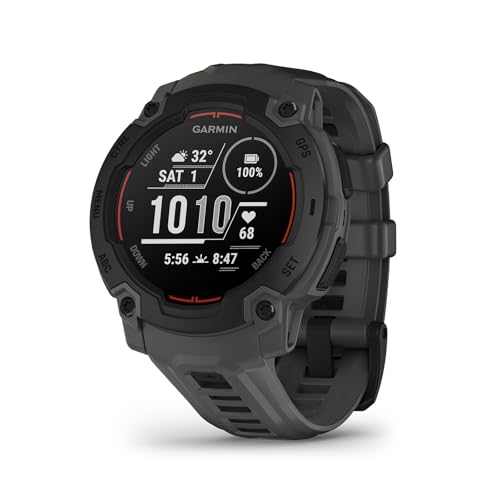
The Garmin Instinct 3 AMOLED is the strongest all-round choice in this group for someone who wants a current, purpose-built outdoor smartwatch without moving into a specialist expedition computer. Its 45mm format is substantial enough for readable information while remaining more wearable than an oversized wrist device, and the AMOLED display gives menus, workout fields, and notifications a sharper, more phone-like appearance than a traditional monochrome outdoor display.
That display is the main reason to choose the Instinct 3 AMOLED over the other Garmin models here. A high-contrast color screen is easier to enjoy during everyday use, especially when checking a workout summary, viewing a data field, or reading a notification in normal conditions. The trade-off is power management: bright displays can consume more energy than low-power screen technologies when they remain active frequently. Buyers should therefore use a display timeout, lower brightness when practical, and raise the screen only when needed during long GPS activities.
Key specifications and capabilities
- 45mm rugged GPS smartwatch format.
- AMOLED display designed for a bright, high-contrast viewing experience.
- GPS-based outdoor activity recording and location features.
- Fitness and health-tracking functions associated with Garmin’s outdoor smartwatch category.
- Smartwatch features such as notifications and activity summaries when paired with a compatible phone.
- Rugged construction intended for outdoor and active use.
Who should buy it
Choose this model if one watch must cover hiking, running, camping, travel, and normal daily wear. It is especially suitable for a user who checks the screen often and prefers a vivid display over the maximum possible low-power endurance. It also makes sense for someone entering Garmin’s ecosystem for the first time and wanting a current model rather than an older discounted design.
It is less compelling for a user who spends most trips away from charging and rarely cares about display appearance. That person may get better value from the Instinct 2. It is also not the obvious budget choice: the price tier is premium, and the extra cost is justified by the newer presentation and broader current-generation appeal rather than by a single specification that makes every other model obsolete.
Strengths
- Bright AMOLED presentation improves everyday readability and makes the watch feel more modern.
- 45mm sizing balances information space with manageable wrist wear for many users.
- GPS and outdoor-watch functionality make it appropriate for hiking, training, and camping.
- Garmin’s established fitness and outdoor software approach gives it more upgrade potential than generic budget trackers.
Pros
- Best display experience in this comparison.
- Strongest premium all-purpose choice.
- Rugged design is better aligned with outdoor use than a conventional lifestyle smartwatch.
- Useful for both structured workouts and unstructured adventures.
Cons
- Premium pricing is difficult to justify if the buyer only needs step counting and notifications.
- AMOLED brightness and frequent screen interaction can require more careful power management on long trips.
- The 45mm case may feel large on a small wrist.
- Buyers seeking a simple, low-distraction outdoor watch may prefer a less screen-forward model.
How it compares with the nearest alternative
The nearest alternative is the Garmin Instinct 2 Camo Edition. The Instinct 2 is the value-oriented choice for a buyer who prioritizes established outdoor functions, multi-GNSS support, and long-trip practicality over a newer AMOLED presentation. The Instinct 3 AMOLED is the better choice when the watch will also be worn every day and the display matters at least as much as the basic GPS record.
A useful decision rule is simple: select the Instinct 3 AMOLED if you will look at the screen many times each day; select the Instinct 2 if you mainly start an activity, glance at a few fields, and want the purchase cost and power burden kept under control. Neither decision is a mistake—the difference is the role the watch plays between adventures.
2. Garmin Instinct 2 Camo Edition – Best for value-focused navigation
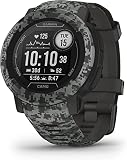
The Garmin Instinct 2 Camo Edition is the most convincing value pick for outdoor users who want a recognizable GPS watch platform without paying for the newest display generation. Its listing identifies it as a rugged outdoor watch with GPS and multi-GNSS support, and that combination is important for hiking, travel, and field activities where a recorded route and location data matter more than a fashion-oriented screen.
The camouflage edition changes the visual identity rather than the underlying buying logic. It suits people who like an outdoors-focused appearance, but the more important feature is the Instinct 2 family’s position as a mature outdoor smartwatch line. Buyers should still check the exact included accessories and software functions for the particular listing, because bundles and regional configurations can vary. The product should be evaluated as a GPS outdoor watch, not as a substitute for a dedicated satellite communicator or emergency beacon.
Key specifications and capabilities
- Rugged outdoor-watch design.
- GPS positioning for compatible outdoor activity recording.
- Multi-GNSS support, useful where one satellite system alone may provide less favorable coverage or geometry.
- Fitness tracking and sport-oriented activity profiles.
- Smartwatch functions when connected to a compatible phone.
- Camouflage-edition exterior styling.
Who should buy it
This is the best choice in the list for a practical hiker who wants a Garmin outdoor platform but does not need an AMOLED screen. It also suits campers, runners, trail users, and travelers who prefer to spend less on the watch and more on footwear, lighting, navigation backups, or other equipment. The simpler screen can be an advantage when battery discipline matters more than rich graphics.
It is a particularly sensible option for first-time GPS-watch buyers. A newcomer can learn route recording, activity profiles, alerts, and phone synchronization without immediately paying for the newest premium model. The limitation is that buyers who expect a highly colorful, phone-like user interface may find it less visually engaging than the Instinct 3 AMOLED.
Strengths
- Multi-GNSS support is a meaningful capability for outdoor positioning.
- Rugged category fit is clear from the product’s intended design.
- Mature model family offers a more credible upgrade path than an anonymous generic watch.
- Usually a better value than a current premium model when the buyer does not need a bright AMOLED screen.
Pros
- Best balance of outdoor capability and mid-range cost.
- GPS and multi-GNSS support suit hiking and trail activities.
- Distinctive camouflage styling.
- Less dependent on flashy display features.
Cons
- Older-generation positioning means it may lack some newer presentation or feature refinements.
- Display experience is less vivid than the Instinct 3 AMOLED.
- Exact battery behavior depends on activity mode, satellite recording, sensors, and notifications.
- It is not a replacement for an emergency communication device in remote terrain.
How it compares with the nearest alternative
The Garmin Instinct E is the closest alternative. Both are mid-range Garmin rugged GPS watches, but the Instinct 2 Camo Edition is the better pick when multi-GNSS support and a proven outdoor-watch feature set are central to the purchase. The Instinct E is more appropriate for someone who wants a straightforward current-feeling Garmin watch in a restrained charcoal finish and does not specifically need the Instinct 2 Camo Edition’s positioning emphasis.
Compared with the budget watches, the Instinct 2 costs more but provides a clearer path into a serious fitness and navigation ecosystem. That difference matters after the initial purchase: activity history, compatible accessories, software updates, phone integration, and familiar controls can save time on every subsequent trip.
3. Garmin Instinct E – Best for straightforward GPS fitness tracking
The Garmin Instinct E is the sensible middle ground for users who want a rugged GPS smartwatch in a familiar 45mm size but do not need every premium presentation feature. Its charcoal finish is understated, making it easier to wear at work, while its outdoor-watch design keeps the focus on location, activity, and fitness data rather than on luxury materials.
This model is best understood as a focused tool. It gives the buyer the core concept of a Garmin outdoor smartwatch—record activities, monitor fitness, use GPS-based features, and receive smartwatch functions—without requiring the buyer to move to the premium Instinct 3 AMOLED. That can be a benefit for people who prefer a watch that feels functional rather than visually elaborate.
Key specifications and capabilities
- 45mm case format.
- Rugged GPS smartwatch design.
- Charcoal finish with a neutral, everyday appearance.
- Outdoor activity and fitness tracking.
- GPS-based positioning for compatible activities.
- Smartwatch features when paired with a compatible phone.
Who should buy it
The Instinct E suits a casual-to-serious fitness user who hikes, walks, runs, cycles, or camps but does not need the brightest display or the most elaborate navigation experience. It is also a good choice for someone who wants a recognizable brand and a durable-looking case while keeping the purchase below the premium tier.
It can be the right model for a household where one person wants a GPS watch mainly for route recording and another wants ordinary smartwatch alerts. The neutral charcoal styling is less specialized than the camouflage Instinct 2 and less conspicuous than a large military-style budget watch.
Strengths
- 45mm sizing provides a useful compromise between readability and wearability.
- Rugged GPS design fits outdoor and fitness activities.
- Charcoal styling works in casual and work settings.
- Garmin’s ecosystem gives it a more credible long-term path than a generic tracker.
Pros
- Focused feature set is easier to justify for everyday fitness.
- Mid-range positioning avoids both premium excess and generic-budget uncertainty.
- Outdoor appearance without camouflage styling.
- Suitable for users who want one watch for normal days and weekend trips.
Cons
- It may not offer the same display appeal as the Instinct 3 AMOLED.
- Buyers specifically seeking multi-GNSS support should verify the exact configuration rather than assume it.
- 45mm may be too large for some smaller wrists.
- It is more expensive than generic watches aimed at basic fitness tracking.
How it compares with the nearest alternative
The closest alternative is the Garmin Instinct 2 Camo Edition. Choose the Instinct E when the charcoal design and focused 45mm GPS smartwatch format matter most. Choose the Instinct 2 when multi-GNSS support, the established Instinct 2 feature position, or camouflage styling is more important than having the simpler choice.
The Instinct E is also the most logical Garmin comparison for the Oliimptek and NAIXUES watches. It costs more, but the added price buys into a known outdoor-watch ecosystem rather than only a collection of hardware claims. If the budget watches are being considered because of their large screens or battery claims, the Instinct E should be selected only when software continuity and brand support are worth more than those headline numbers.
4. Oliimptek Built-in GPS Military Smart Watch – Best budget large-screen option

The Oliimptek Built-in GPS Military Smart Watch is aimed at the buyer who wants an inexpensive, oversized outdoor-style fitness watch with GPS listed in the product name. Its standout specification is the 2.02-inch display, which should make on-screen text, menus, and workout fields easier to see than on a small watch. That extra visual area can be useful for users who find compact watch displays difficult to read during exercise.
The large screen also changes the practical trade-offs. A bigger display can be easier to operate with gloves or while moving, but it may feel bulky on a smaller wrist and can expose more glass and case area to knocks. Buyers should not treat “military” in the product title as proof of a particular military certification. The relevant question is whether the watch has the water, dust, impact, and temperature protection needed for the intended activity, and the listing should be checked for those details before purchase.
Key specifications and capabilities
- Built-in GPS is stated in the product name.
- 2.02-inch outdoor rugged fitness-watch display.
- Large-screen format intended to improve visibility of fitness and smartwatch information.
- Fitness-tracking functions associated with this category.
- Military-style rugged exterior.
- Budget price tier.
Who should buy it
This watch makes sense for a buyer who mainly wants a large display, basic fitness information, and GPS capability at a low initial price. It may suit walking, gym sessions, casual cycling, day hikes, and everyday notification use. Someone who is frustrated by tiny text on ordinary fitness bands may prefer its 2.02-inch presentation even if the watch is less refined than the Garmin alternatives.
It is not the safest recommendation for remote navigation. The product name establishes built-in GPS, but it does not by itself establish multi-GNSS support, detailed offline maps, route navigation, a mature training platform, or long-term software support. For isolated terrain, pair it with a paper map, a charged phone, and a separate emergency plan rather than treating the watch as the only safety tool.
Strengths
- Very large 2.02-inch display is the clearest differentiator.
- Built-in GPS addresses a need that many inexpensive fitness bands do not cover.
- Lower price makes it accessible for occasional outdoor users.
- Military-style appearance may appeal to buyers who want a visibly rugged design.
Pros
- Large, potentially easy-to-read screen.
- GPS is explicitly included in the product name.
- Budget-friendly route into outdoor-style smartwatch features.
- Suitable for casual fitness and everyday use.
Cons
- Listing information does not establish the same navigation depth as the Garmin models.
- Large case may be uncomfortable on a small wrist or under clothing.
- “Military” styling should not be confused with a verified military standard.
- Long-term app, update, and accessory support may be less predictable.
How it compares with the nearest alternative
The NAIXUES Military Smartwatch is the nearest budget alternative. The Oliimptek is the better fit if screen size and stated built-in GPS are the priorities. The NAIXUES is more appealing if the stated 1,000mAh battery capacity and two-band bundle matter more than having a 2.02-inch display.
Against the Garmin Instinct E, the Oliimptek wins on initial affordability and screen size. The Garmin wins on ecosystem confidence, outdoor-watch specialization, and the likelihood of a more coherent activity-history experience. Pick Oliimptek for casual use and a constrained budget; pick Garmin when a trip depends on the watch being a dependable part of a broader navigation and fitness routine.
5. NAIXUES Military Smartwatch – Best budget battery-capacity choice

The NAIXUES Military Smartwatch for Men targets buyers who want an inexpensive rugged fitness tracker with a large stated battery capacity and a spare-band-style bundle. The product name identifies a 1,000mAh battery, two bands, and a military-style watch design. Those details make it attractive to users who dislike frequent charging or want a second band for different clothing, exercise, or replacement convenience.
Battery capacity is useful information, but it is not the same as runtime. A watch’s actual endurance depends on screen brightness, display-on time, GPS recording, Bluetooth activity, notifications, health sensors, and software efficiency. For example, if a 1,000mAh battery delivered an average electrical load of 10mA, the theoretical calculation would be 1,000 ÷ 10 = 100 hours. At 25mA, the same calculation becomes 1,000 ÷ 25 = 40 hours. Real use is less tidy because voltage conversion, standby behavior, and battery protection reduce the usable total.
Key specifications and capabilities
- 1,000mAh battery claim in the product name.
- Military-style rugged fitness-tracker design.
- Two bands included according to the listing name.
- Fitness-tracking and smartwatch-style functions associated with this category.
- Budget price tier.
Who should buy it
This is a reasonable budget candidate for everyday fitness, walking, gym sessions, and casual outdoor use where a long stated battery capacity is more important than advanced navigation. It also suits buyers who want a rugged-looking watch and a second band without reaching the mid-range price tier.
The right expectations are important. The listing name does not establish the same GPS, multi-GNSS, mapping, or outdoor software capability associated with the Garmin models. A buyer planning long hikes should confirm whether the exact configuration includes GPS and how route data is handled before relying on it. If that information is unclear, treat the watch as a fitness tracker first and a navigation device second.
Strengths
- 1,000mAh capacity is unusually prominent in the product description and may appeal to low-charging users.
- Two-band bundle increases practical flexibility.
- Budget tier lowers the risk of trying a rugged-style smartwatch.
- Fitness-tracker format can cover basic daily activity needs.
Pros
- Strong headline battery capacity.
- Two bands add convenience and replacement value.
- Rugged styling for a low initial cost.
- Appropriate for basic fitness and casual outdoor use.
Cons
- Battery capacity alone does not prove long GPS runtime.
- Listing name does not establish a mature navigation ecosystem.
- Exact sensor, GPS, water-resistance, and app details should be verified before purchase.
- Large military-style cases may not suit every wrist or workplace.
How it compares with the nearest alternative
The Oliimptek is the direct competitor. Choose NAIXUES if the 1,000mAh claim and two-band bundle are more valuable than a large 2.02-inch screen. Choose Oliimptek if the display and stated built-in GPS are the more important buying criteria.
Both budget models are best viewed as affordable general-purpose smart fitness watches, not automatic substitutes for a specialist outdoor GPS watch. The Garmin Instinct 2, Instinct E, and Instinct 3 AMOLED cost more, but their category fit is clearer for route recording, training history, and repeated outdoor use. The NAIXUES is most attractive when the buyer wants inexpensive daily tracking and accepts the need to verify the detailed specification before depending on it in remote terrain.
How to Choose
Start with the consequence of a failed watch
The first question is not “Which watch has the biggest battery?” It is “What happens if the watch stops recording, loses its phone connection, or cannot show the route I expected?” If the answer is “I lose a workout summary,” a budget watch may be adequate. If the answer is “I may miss a turn several hours from the trailhead,” choose a Garmin model, carry a charged phone or dedicated navigation backup, and keep a physical emergency plan.
None of these watches should be treated as a satellite messenger unless the exact product is explicitly designed and sold for two-way satellite communication. GPS receives signals; it does not automatically send your location to rescuers. A rugged case and a military-style name also do not prove waterproofing, shock certification, or survival suitability.
Choose the display by the information you need
The Garmin Instinct 3 AMOLED is the clear display-focused pick. AMOLED screens offer strong contrast and attractive graphics, which is useful when a watch also serves as a daily smartwatch. The cost is power management: brightness and frequent interaction can increase consumption. Lower brightness, a shorter screen timeout, and a raise-to-wake gesture are sensible settings for a long hike.
The Oliimptek offers the largest stated screen at 2.02 inches. That is potentially helpful for large text and touch targets, but a large display does not guarantee detailed maps or better GPS accuracy. It can also increase case size. Measure the flat width of a watch you already wear: a difference of several millimeters can be noticeable when sleeping, wearing a jacket, or bending the wrist.
The Garmin Instinct 2 Camo Edition and Instinct E are better choices for a user who values glanceable outdoor data and lower visual complexity. If you need to see a route while moving, prioritize confirmed navigation behavior rather than screen size alone.
Match the watch to wrist size and wear pattern
A 45mm watch is a substantial everyday device. It often works well for medium and larger wrists, but case diameter is only part of comfort. Case thickness, lug shape, strap flexibility, and the weight of the watch influence whether it moves during running or presses into the wrist during sleep.
Use a strip of paper to make a loop around your wrist and mark the circumference. Then compare that measurement with the manufacturer’s case and strap information. The watch should sit securely above the wrist bone without requiring the band to be painfully tight. During hiking, looseness causes heart-rate and motion data to become less consistent; excessive tightness creates discomfort and can discourage wearing the watch at all.
The 2.02-inch Oliimptek and military-style NAIXUES may be visually appealing but should be checked carefully against wrist size. A large watch can catch on pack straps and jacket cuffs. Smaller users may prefer the less conspicuous Garmin shape even if its listed display is not the largest.
Understand GPS and GNSS wording
GPS is one satellite positioning system. GNSS is the broader category covering GPS and other compatible satellite systems. The Garmin Instinct 2 listing specifically mentions multi-GNSS support, which is a meaningful advantage where terrain, buildings, tree cover, or satellite geometry make positioning harder. It does not mean the watch will never lose signal: dense forest, steep canyon walls, indoor spaces, and poor sky visibility remain difficult.
“Built-in GPS” on the Oliimptek indicates that GPS is part of the product description, but it does not tell you whether the watch supports multi-GNSS, how often it records points, whether it follows a loaded route, or how tracks are exported. Before buying a budget model for navigation, verify four details: the watch can record without a phone, the phone app can display or export the activity, the positioning mode is documented, and the battery estimate is stated for GPS use rather than only standby.
For route accuracy, wear the watch with an unobstructed view of the sky when possible. Start recording several minutes before entering dense trees so the receiver can establish a position. Avoid judging a watch from one track through a canyon or city street; the environment may be the limiting factor.
Calculate a realistic power budget
Battery capacity is only one input. A rough energy model is useful even when the manufacturer does not provide complete data. If a watch has a nominal 1,000mAh battery and averages 20mA during a particular activity, the ideal runtime is:
1,000mAh ÷ 20mA = 50 hours.
If GPS, a bright display, frequent notifications, and continuous sensors raise the average load to 50mA, the same calculation becomes:
1,000mAh ÷ 50mA = 20 hours.
Those are estimates, not promises. Battery age, temperature, radio conditions, screen wake frequency, and conversion losses reduce usable runtime. The calculation demonstrates why a high capacity number cannot be compared directly with a Garmin endurance claim unless the test mode is the same. For a two-day trip, begin with a full charge, disable unnecessary notifications, reduce display brightness, avoid leaving the screen continuously active, and carry the correct charging cable if the watch is critical.
Decide whether ecosystem depth matters
Garmin’s advantage is not only the hardware. A mature outdoor-watch ecosystem can make it easier to view activity history, update software, use recognized activity profiles, pair accessories, and move from casual walking to structured training. That matters to users who expect to wear the watch for years.
Budget watches can still be perfectly useful for basic steps, notifications, workouts, and health summaries. Their lower price is valuable when the watch may be used occasionally or exposed to loss and damage. The decision becomes less favorable when the buyer needs documented route workflows, reliable data export, recurring updates, or an accessory ecosystem. In that case, the Instinct E or Instinct 2 is usually the more defensible mid-range purchase.
Prioritize the right materials and protection
“Rugged” is a category description, not a universal test result. Look for specific information about the lens, bezel, case material, strap, water resistance, temperature range, and impact testing. A raised bezel can help protect the screen from direct contact with a rock, while a flexible strap can be more comfortable after repeated sweat and rain exposure. A metal-looking case may add style but can also add weight.
Water resistance is not the same as waterproofing under every condition. Rain, hand washing, swimming, hot showers, salt water, and high-pressure spray create different stresses. Rinse salt and mud with fresh water, dry the charging contacts, and follow the manufacturer’s cleaning instructions. Do not press touchscreen controls underwater unless the instructions specifically allow it.
Use case matrix
| Your situation | Recommended pick | Why | What to compromise on |
|---|---|---|---|
| One watch for hiking, fitness, travel, and daily wear | Garmin Instinct 3 AMOLED | Bright display plus rugged GPS smartwatch format | Premium cost and more careful display power management |
| Trail use where multi-GNSS and value matter | Garmin Instinct 2 Camo Edition | Rugged GPS design with stated multi-GNSS support | Less modern display presentation |
| Simple Garmin GPS fitness watch in neutral styling | Garmin Instinct E | 45mm rugged GPS smartwatch with focused feature set | Potentially fewer reasons to upgrade from an older Garmin model |
| Low-cost watch with the biggest stated display | Oliimptek Built-in GPS Military Smart Watch | 2.02-inch display and built-in GPS listed | Less certain navigation and software depth |
| Low-cost tracker with a large stated battery and two bands | NAIXUES Military Smartwatch | 1,000mAh claim and two-band bundle | Verify GPS, app, protection, and activity details |
Plan concrete settings before leaving
For a long hike, begin with a full charge and synchronize the watch. Select the activity profile that most closely matches the trip, confirm the time and date, and check that the watch has acquired a position before moving into heavy cover. Use only the data fields you will actually read, such as elapsed time, distance, elevation, heart rate, and battery percentage. More fields do not automatically improve navigation and can make the screen harder to interpret.
Disable nonessential phone notifications when battery or concentration matters. Keep safety alerts that you understand and will act on. If the watch permits an always-on display, consider disabling it for a multi-hour GPS activity unless immediate glanceability is more important than endurance. Turn off sensors or music controls you will not use, but do not disable a feature that your emergency plan depends on without a backup.
Consider the total cost, not only the watch
A lower-priced watch can require a compatible phone, a proprietary charging cable, replacement straps, and a separate navigation app. A Garmin model may cost more initially but reduce the need to experiment with multiple apps and accessories. Conversely, an occasional user may save money by buying the budget watch and carrying the phone that already provides mapping.
Keep the purchase in its proper role. Footwear, weather protection, water, lighting, first-aid supplies, and a reliable navigation backup are more important to outdoor safety than a watch display. Select the watch that helps you use that equipment better rather than the watch with the most dramatic product title.
Frequently Asked Questions
Which is the best rugged smartwatch for outdoor adventures?
The Garmin Instinct 3 AMOLED is the best overall choice in this group for buyers who want a modern display, rugged GPS smartwatch design, and everyday fitness use. The Garmin Instinct 2 Camo Edition is the better value choice when multi-GNSS support and outdoor practicality matter more than AMOLED presentation.
Is the Garmin Instinct 3 AMOLED worth the premium price?
It is worth considering if the watch will be worn every day and the bright display matters for notifications, workouts, and general readability. If you mainly record occasional hikes and want to control spending, the Instinct 2 or Instinct E can provide a better value balance.
Is the Garmin Instinct 2 good for hiking?
Yes, its rugged outdoor-watch design, GPS, and stated multi-GNSS support make it a strong hiking-oriented choice. Carry a phone, paper map, or other backup in remote terrain because a GPS watch is not the same thing as a satellite emergency communicator.
Does a 1,000mAh smartwatch battery last longer than a Garmin battery?
Not necessarily. Capacity is only one factor, and actual runtime depends on screen use, GPS, sensors, Bluetooth, notifications, temperature, and software efficiency. Compare battery estimates measured in the same mode rather than comparing capacity numbers alone.
Is a 2.02-inch watch screen better for hiking?
A large display can make text and controls easier to see, particularly for users with limited near vision or when wearing gloves. It does not prove better GPS accuracy or map quality, and a larger case may be less comfortable on a small wrist.
Can the budget watches replace a dedicated hiking GPS?
They may be adequate for casual walks and short, familiar outings if their GPS and app functions meet your needs. The listing information for the Oliimptek and NAIXUES models does not establish the same navigation depth as the Garmin models, so verify route recording, data export, battery behavior, and offline operation before relying on either for remote trips.
What does multi-GNSS mean on the Garmin Instinct 2?
Multi-GNSS means the watch can use more than one satellite positioning system rather than relying on GPS alone. This can improve the opportunity for a position fix in difficult environments, although trees, buildings, canyon walls, weather, and satellite geometry can still affect accuracy.
How should I protect a rugged smartwatch on a long trip?
Charge it fully, clean and dry the charging contacts, confirm the activity mode, and carry the appropriate charging cable. Reduce unnecessary screen and notification activity, protect the watch from sharp impacts, and carry an independent navigation or emergency backup when the route is remote.
Final Recommendations by Reader Situation
Choose the Garmin Instinct 3 AMOLED if you want the best all-purpose combination of modern display quality, rugged outdoor design, GPS activity use, and daily smartwatch appeal. Choose the Garmin Instinct 2 Camo Edition if you are a value-focused hiker who specifically wants multi-GNSS support and an established outdoor platform. Choose the Garmin Instinct E if you want a simpler 45mm Garmin GPS smartwatch in neutral styling.
Choose the Oliimptek Built-in GPS Military Smart Watch if the lowest price and 2.02-inch display are the priorities, while accepting that the listing does not establish the same navigation ecosystem. Choose the NAIXUES Military Smartwatch if the stated 1,000mAh battery capacity and two-band package are more important than screen size. For serious or remote adventures, the Garmin models are the safer long-term category fit; for casual outdoor fitness on a tight budget, either budget option can be considered after verifying the exact protection, GPS, app, and battery details.