Swapping a dial or basic programmable thermostat for a smart one is a weekend project that touches your comfort every day, so the decision is worth a few minutes of homework. The question is rarely “which one is smartest” and more often “which one will work with my wiring, my voice assistant, and my household routine.” A thermostat that wants a wire your walls lack, or an ecosystem you do not use, becomes an expensive wall ornament.
This guide is for homeowners and renters with permission to swap the unit, comparing eight models from Google, ecobee, Sensi, and the Alexa and Ring ecosystem. Most carry Energy Star certification and Wi-Fi control, and they differ mainly in sensors, assistant support, and install complexity. As 2026 shopping goes, the sensible approach is to match the wiring first, then the assistant, then the extras like remote room sensors and air quality readouts.
Our Top Picks
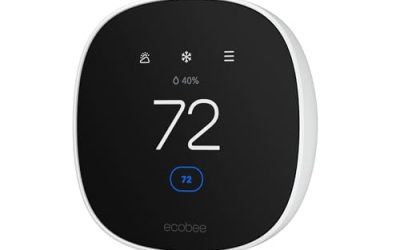
 ecobee Smart Thermostat Premium2.9 x 4.09 x 4.09 inches1.02 x 4.09 x 4.09 inches1.32 PoundsCheck on Amazon


Top 3 picks at a glance
Quick Picks
As an Amazon Associate we earn from qualifying purchases at no extra cost to you.


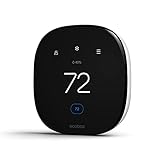
| Product | Best for | Key spec from the title |
|---|---|---|
| Smart Thermostat (Alexa and Ring) | Alexa households | Works with Alexa and Ring |
| Google Nest Thermostat (Charcoal) | Google Home users, darker walls | Programmable Wi-Fi |
| ecobee Essential | Multi-assistant homes | Siri, Alexa, Google Assistant, Energy Star |
| Sensi Smart ST55 | DIY installers | Wi-Fi, DIY, Alexa, Energy Star |
| Google Nest Thermostat (Snow) | Google Home users, lighter walls | Programmable Wi-Fi |
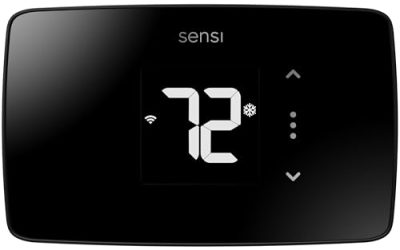
| Sensi Lite ST25 | Simplest upgrade | Wi-Fi, Alexa, DIY |
| ecobee Premium | Whole-home comfort | Smart sensor, air quality monitor |
| ecobee Enhanced | Mid-tier ecobee | Programmable Wi-Fi, three assistants |
How to Choose
Check your wiring before you shop
Open your existing thermostat and look for a common wire, usually labeled C. Many smart models need it for steady power, though some ship with an adapter or can work without it. Also confirm what you heat and cool with: a standard forced-air system is the easy case, while heat pumps, baseboard electric heat, and high-voltage systems need specific compatibility. Every maker offers a wiring checker, so use it first.
Pick the assistant ecosystem you already use
Siri, Alexa, and Google Assistant support varies by model. If you own smart speakers from one brand, favor the model that works with it natively. Households mixing phones and speakers get the most flexibility from thermostats that list all three assistants. The Alexa-branded unit pairs with Ring devices too, which can tie into security routines and alerts.
Decide whether you need room sensors
A single wall thermostat reads the temperature in the hallway, not the bedroom. Models with a remote sensor, such as the ecobee Premium, can balance comfort across rooms and respond to occupancy. If your home has a hot upstairs and cool downstairs, that is the feature that pays off. In a small apartment, a basic model usually does the job.
Look at certification, setup, and where budget units cut corners
Energy Star certification signals efficient operation. Check whether setup is DIY-friendly and whether an app or account is required. Budget models usually drop features such as remote sensors, air quality monitoring, and advanced scheduling, and they may rely on a single assistant. Verify that the model supports your system type, because that is the most common reason for returns.
The 8 Best Options
Smart Thermostat (Alexa and Ring)
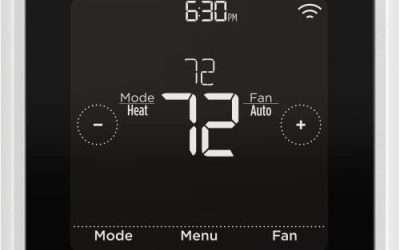
This model is built around the Alexa and Ring ecosystem, with a pitch about saving money and energy. It suits households already invested in Alexa speakers and Ring cameras, who value a simple scheduling experience that fits into existing routines, voice commands, and a single app for the rest of the smart home.
- Strength: Designed to work with Alexa and Ring devices.
- Strength: Energy-saving focus stated in the title.
- Trade-off: The title lists no Siri or Google Assistant support.
Skip it if your household lives on Google Home or Apple devices. Also check your wiring compatibility before ordering, because the title does not spell out system types. The value here is ecosystem fit, so weigh it against rivals mainly on how well it fits the speakers, cameras, and routines you already own rather than on raw feature counts.
Google Nest Thermostat (Charcoal)
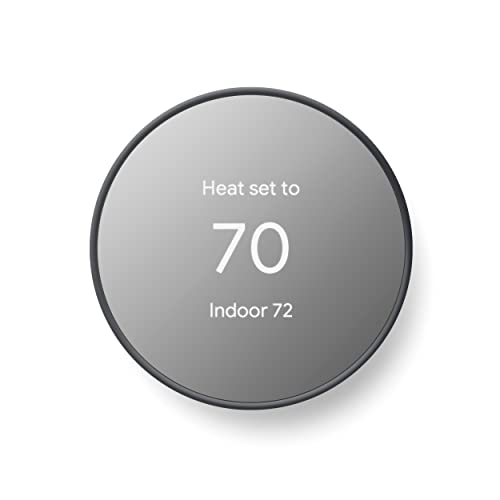
The title calls it a programmable Wi-Fi smart thermostat for the home, in a dark charcoal finish. It suits Google Home households that want a clean, simple interface and a programmable schedule without a lot of extra hardware. The dark shade tends to look best on painted walls in mid to dark tones or on wood trim.
- Strength: Programmable Wi-Fi control for a simple routine.
- Strength: Clean, unfussy design in a darker finish.
- Trade-off: The title mentions no remote room sensors.
Skip it if you need multi-room balancing or you are mostly an Alexa or Siri household. Match the color to your wall before buying, since it is the only visible difference from the lighter version. Renters should also confirm they are allowed to replace the thermostat and keep the old unit so it can be restored when they move out.
ecobee Essential
The Essential is an Energy Star certified, programmable Wi-Fi thermostat that works with Siri, Alexa, and Google Assistant. It suits mixed-device households, such as one person on an iPhone and another on Android, who want a single thermostat that talks to every assistant without compromise or workarounds.
- Strength: Works with all three major assistants.
- Strength: Energy Star certification.
- Trade-off: Listed without the smart sensor or air quality extras of the Premium.
Skip it if you want remote room sensors included. Compare it with the Premium and Enhanced models to see which extras you would actually use in your daily routine. Many households find the middle of the ecobee range hits the sweet spot, but a larger or oddly laid-out home may justify the sensor package of the top model.
Sensi Smart ST55
The Sensi ST55 lists Wi-Fi, DIY installation, Alexa compatibility, and Energy Star certification. It suits handy owners who like to wire their own thermostat and want a straightforward device with an app, without paying for sensors they would not use. It is a sensible step up from a basic programmable model.
- Strength: DIY-friendly installation emphasized in the title.
- Strength: Energy Star certified with Alexa support.
- Trade-off: Fewer assistant integrations are listed than on ecobee models.
Skip it if you want Siri or Google Assistant control named in the title, or if you prefer an installer to handle the wiring. Take a photo of the old wiring before disconnecting anything, label each wire, and use the maker compatibility checker so the DIY approach stays safe and quick.
Google Nest Thermostat (Snow)
The same programmable Wi-Fi Nest model as the charcoal version, in a lighter finish. It is the pick for white or pale walls where a dark thermostat would stand out, and for buyers who want the Nest interface and Google Home integration in a color that blends in with the room.
- Strength: Programmable Wi-Fi control with a light finish.
- Strength: Blends into pale walls and trim.
- Trade-off: Identical functionality to the charcoal version, so color is the only difference.
Skip it if your walls are dark. Both listings describe the same device, so pick the finish that suits your hallway and ignore any urge to pay extra for the color. If both finishes show up in stock, the lower-priced one is the smarter buy, since nothing in the specs separates them.
Sensi Lite ST25
The Sensi Lite ST25 is the stripped-down option: Wi-Fi, Alexa, DIY installation, and Energy Star certification. It suits renters and first-timers who want remote control and scheduling at the lowest practical level of complexity, and who would rather learn a simple app than manage sensors, profiles, and advanced reports.
- Strength: Simple, DIY-friendly upgrade with Wi-Fi control.
- Strength: Energy Star certification.
- Trade-off: A lighter feature set than the ST55 and ecobee models.
Skip it if you want advanced features, multiple assistants, or room sensors, since this model keeps things basic by design. It is also a good fit for a guest room, rental unit, or vacation home where you mostly want to check in remotely and avoid heating an empty space.
ecobee Premium
The Premium adds Siri and Alexa built in, a smart sensor, and an air quality monitor, and lists compatibility with Alexa, Siri, and Google Home plus a live view feature. It suits larger homes where temperature varies between rooms and buyers who want indoor air readings on the same device.
- Strength: Smart sensor for room-to-room comfort.
- Strength: Built-in assistants and an air quality monitor.
- Trade-off: Likely the premium tier of this list in cost.
Skip it if you live in a small apartment or just want a basic schedule. The extra features will go underused there. In a larger home, the air quality readings and live view feature give you data worth acting on, such as when to run a fan or change a filter.
ecobee Enhanced
A programmable Wi-Fi thermostat that works with Siri, Alexa, and Google Assistant and carries Energy Star certification. It sits between the Essential and Premium in the ecobee lineup and suits households that want broad assistant support and an established smart-home brand, without paying for the full sensor and air-quality package.
- Strength: Three assistants and Energy Star certification.
- Strength: A mid-tier ecobee for smart home buyers.
- Trade-off: The title does not mention the remote sensor included in the Premium.
Skip it if you need room sensors or an air quality monitor out of the box. Because it shares the broad assistant support of its siblings, it is a good default for a household that has not yet settled on a single smart speaker brand.
Which One Fits Your Situation
Alexa and Ring household
The Smart Thermostat from the Alexa and Ring ecosystem keeps everything in one app and one set of voice commands.
Two-story home with a hot upstairs
The ecobee Premium includes a smart sensor, which helps balance temperatures between floors.
Mixed iPhone and Android family
The ecobee Essential lists Siri, Alexa, and Google Assistant, so every family member can use their preferred assistant.
First-time DIY installer on a tight budget
The Sensi Lite ST25 emphasizes DIY installation and basic Wi-Fi control, keeping the learning curve gentle.
Common Mistakes
- Skipping the wiring check and discovering mid-install that a common wire is missing.
- Buying a thermostat for an assistant you do not use.
- Paying for room sensors in a small apartment.
- Assuming every model supports heat pumps or electric baseboard heat.
- Forgetting to turn off the breaker before removing the old thermostat.
Related guides
- Windows Macos Linux Gaming Performance Comparison Strengths Weaknesses
- Desktop Operating Systems Gaming Performance Strengths Weaknesses
- 5G Home Internet Wifi Modem Settings Low Latency Gaming
Frequently Asked Questions
Do I need a common wire?
Many smart thermostats want one for steady power. Check the wiring checker from the maker, and look for models that include a power adapter if you lack it.
Will a smart thermostat lower my energy use?
It can help by automating schedules and setbacks. Actual results depend on your habits, your home, and your climate.
Can I install it myself?
Many buyers do, especially with models listing DIY installation. If your system is unusual, a licensed installer is a safer path.
Does it work without Wi-Fi?
Most still hold a local schedule, but remote control and voice features need a connection.