Apartment thermostats come with a set of rules that a homeowner never meets. The unit on the wall may belong to the landlord, the heating system may be a basic one-stage furnace, a wall heater, or something older, and the lease may say nothing about swapping hardware. The smart move is to buy a thermostat that fits the equipment you have, installs with a screwdriver, and can be reversed on move-out day. Fancy features matter far less than compatibility and a clean uninstall.
This guide is for renters, condo owners, and property managers shopping in 2026. The lineup covers basic non-programmable models, simple programmable ones, two well-known smart thermostats, a millivolt model for wall-heater setups, and a tamper-resistant unit for shared or managed spaces. Each description sticks to what the listing says, so use the compatibility notes to match your own system.
Our Top Picks
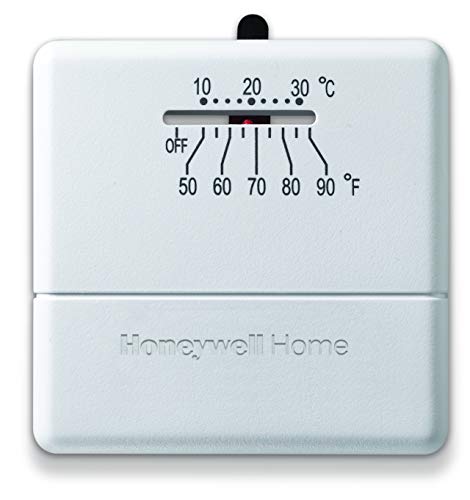 Honeywell Home Economy Millivolt Non-Programmable Thermostat(Pack of 1)3.12 x 0.88 x 3.12 inches0.15 poundsCheck on Amazon

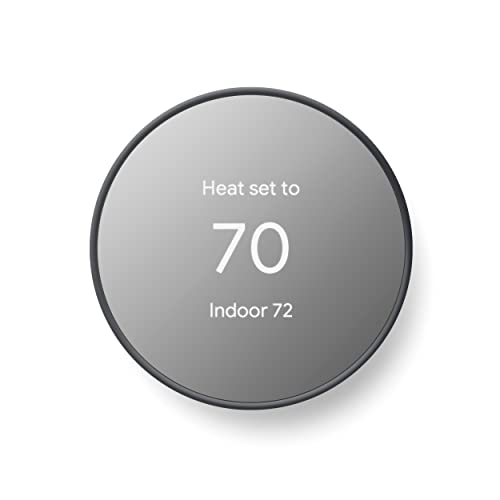

Top 3 picks at a glance
Quick Picks
As an Amazon Associate we earn from qualifying purchases at no extra cost to you.




| Product | Best for | Key spec from the title |
|---|---|---|
| Suuwer Non-Programmable | Lowest-effort swap | 1 Heat/1 Cool single-stage, blue backlight |
| Honeywell Home X2P (RTH20B) | Simple scheduling | 1 Heat/1 Cool, 5-2 day schedule |
| Digital Non-Programmable (White Backlight) | Easy DIY on a budget | Single-stage, 1 Heat/1 Cool, easy DIY install |
| ControlTemp CT400 | Shared or managed spaces | Tamper proof, 5.5in W x 3.75in H x 1in D |
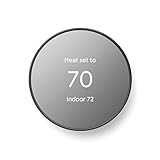
| Google Nest Thermostat | Renters wanting a smart upgrade | Programmable WiFi, charcoal |
| Sensi Lite Smart ST25 | App and voice control | WiFi, Alexa, DIY, Energy Star certified |
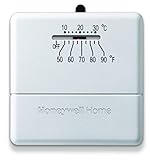
| Honeywell Home Economy Millivolt CT33A1009 | Wall heaters and fireplaces | Millivolt, non-programmable |
| Programmable 5-1-1 Thermostat | Budget schedule control | 5-1-1 day, single-stage 1 Heat/1 Cool |
How to Choose
Match the heating and cooling system first
Most listings here are for conventional single-stage systems, written as 1 Heat/1 Cool. That covers a basic furnace with a single air conditioner, which is common in apartments. It does not cover multi-stage systems, heat pumps with auxiliary heat, or line-voltage baseboard heaters. A separate millivolt listing is meant for wall furnaces and fireplaces. Open your existing thermostat, photograph the wiring, and note the terminal letters before buying. If the wiring does not match the listing, return the unit rather than forcing a fit.
Wiring, power, and the missing C-wire
Smart thermostats with a screen and Wi-Fi radio generally need steady power, and many apartments only have the minimum wires. Look at the product page for what the thermostat needs and whether it includes adapters. Basic digital and non-programmable units often run on batteries and need fewer wires. If you must keep the original wires untouched, take a photo and label them so you can reverse the install.
Programmable, smart, or basic
A non-programmable thermostat is the simplest and has the fewest things to break, but it relies on you to adjust it. A 5-2 day or 5-1-1 day schedule lets weekdays, Saturday, and Sunday follow different plans, which saves energy if you are out most weekdays. Smart models add app control, voice assistants, and remote adjustment. If your utilities are included in rent, the savings go to the landlord, so spend only what the comfort is worth to you.
Lease rules and what to ignore
Ask your landlord in writing before replacing a thermostat, and keep the old one in a labeled bag. Ignore colored backlight and styling claims, and be skeptical of vague energy-saving promises without schedule details. Budget thermostats may cut corners on display clarity, terminal labeling, and instructions, so read the diagram before you start. Turn off power at the breaker or furnace switch before touching any wire, and cap unused wires individually so they cannot touch. If anything about the wall box looks unusual, such as thick wires or a line-voltage label, stop and ask the property manager. For rentals with shared control or frequent tenant changes, tamper resistance can matter more than smart features.
The 8 Best Options
Suuwer Non-Programmable
Suuwer’s non-programmable thermostat is built for conventional single-stage systems with one heating and one cooling stage, and it has a blue backlight. There is no schedule to set, no app to pair, and little to forget. For a renter who wants to replace a failed unit with something plain, the straightforward design is the point. It also suits a studio or one-bedroom where the whole space heats evenly and a single set-point is all anyone needs.
- Strength: simple operation with no programming to learn.
- Strength: clear 1 Heat/1 Cool single-stage compatibility.
- Trade-off: no scheduling, so it will not lower the temperature while you are away unless you do.
Skip it if you want a weekday and weekend schedule.
Honeywell Home X2P (RTH20B)
The X2P is a programmable thermostat from a well-known brand, compatible with single-stage 1 Heat/1 Cool systems and offering a 5-2 day schedule. That means one program for weekdays and one for weekends. It suits a working renter who wants a set-it-and-forget-it setup without a smartphone app. A typical routine is a lower setting during the workday and a comfortable one before and after, with weekends set to a different rhythm.
- Strength: familiar brand name and a 5-2 day schedule.
- Strength: single-stage compatibility is stated in the title.
- Trade-off: no Wi-Fi or app control is listed.
Skip it if you want remote control from your phone.
Digital Non-Programmable (White Backlight)
This unbranded digital thermostat is described as energy-saving with an easy DIY install, for single-stage systems with 1 Heat/1 Cool and a white backlight. It is pitched at the apartment dweller who wants a clean replacement for an old dial. Because there are no schedules, the learning curve is almost nothing. It is a reasonable spare to keep on hand if the landlord’s unit fails and you need heat restored quickly.
- Strength: easy DIY installation described in the title.
- Strength: backlit digital display.
- Trade-off: a generic brand means you should check the instructions carefully.
Skip it if you want a recognized brand for resale or support.
ControlTemp CT400
The CT400 is described as an advanced tamper proof thermostat, with dimensions of 5.5 inches wide, 3.75 inches tall, and 1 inch deep. The tamper-proof language makes it relevant to property managers and shared spaces where tenants should not change settings freely. For a single renter, it is probably more control than you need or are allowed to use. The listed dimensions are handy when you are covering an old paint outline or fitting into a tight wall box.
- Strength: tamper-resistant design aimed at managed spaces.
- Strength: dimensions are listed, which helps with wall plate planning.
- Trade-off: the title gives no system compatibility, so verify before ordering.
Skip it if you are a tenant who needs daily control.
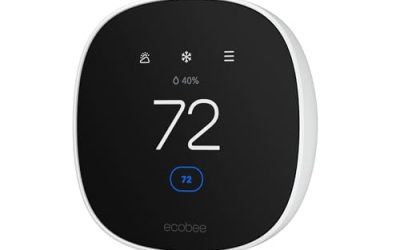
Google Nest Thermostat
The Nest Thermostat in charcoal is a programmable Wi-Fi smart thermostat. It is a popular route for renters who want phone control and learn-your-schedule convenience in a simple design. Check your wiring and the compatibility tool before buying, since the title does not list system types. It appeals to tenants who travel and like adjusting the temperature from afar, or who share a lease and want one app everyone can use.
- Strength: smart control from a phone with a programmable schedule.
- Strength: well-known brand with an easy-to-read look.
- Trade-off: it costs more than basic models and may not suit every apartment wiring setup.
Skip it if you only need a basic thermostat or have unusual wiring.
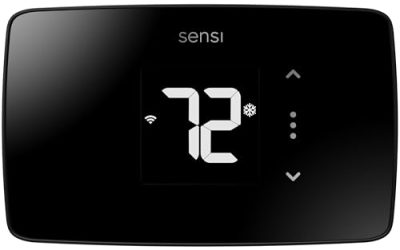
Sensi Lite Smart ST25
Sensi Lite is a Wi-Fi smart thermostat that works with Alexa, is Energy Star certified, and is marked as DIY friendly. The Alexa support suits renters already living in a voice-controlled home, and the DIY label signals that an installer is not required. For a renter who plans to take the thermostat to the next apartment, the wall-plate swap is a weekend job, not a service call.
- Strength: Wi-Fi, Alexa support, and Energy Star certification.
- Strength: DIY-oriented installation.
- Trade-off: the title does not list heating system compatibility, so confirm it.
Skip it if your system uses millivolt or other non-standard wiring.
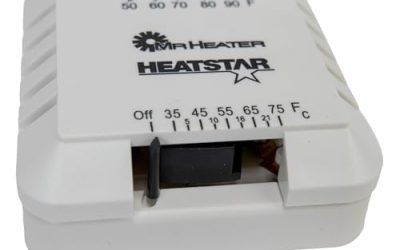
Honeywell Home Economy Millivolt CT33A1009
This Honeywell model is a millivolt, non-programmable thermostat, a type used with certain wall heaters, gas fireplaces, and similar self-powered systems. It matters in older apartments where standard 24-volt thermostats do not work. Its title is short on features because it is a purpose-built part rather than a gadget. If you can see a pilot light behind a grille or a wall unit with a simple dial, ask a professional or the landlord to confirm the system before ordering.
- Strength: designed for millivolt systems that many thermostats cannot support.
- Strength: a simple, economy design from a known brand.
- Trade-off: it is non-programmable and has no smart features.
Skip it if your heating uses a standard furnace and air conditioner.
Programmable 5-1-1 Thermostat
This unbranded programmable thermostat offers a 5-1-1 day schedule, with weekdays, Saturday, and Sunday programmed separately, for conventional single-stage 1 Heat/1 Cool systems. It sits between a basic dial and a smart device, giving a detailed schedule without an app. Splitting Saturday and Sunday is useful for people who sleep in on one day and head out early on the other.
- Strength: three-part weekly schedule.
- Strength: energy-saving positioning and single-stage compatibility.
- Trade-off: a generic brand means support depends on the seller.
Skip it if you prefer a name brand or need Wi-Fi.
Which One Fits Your Situation
A renter who must reverse the install
The Suuwer Non-Programmable is the simplest unit to swap in and out, with minimal wiring beyond the basics.
A tenant with a work-from-home and away schedule
The Honeywell Home X2P (RTH20B) provides a weekday and weekend program without a phone app.
A tech-friendly renter with a voice assistant
The Sensi Lite Smart ST25 adds Wi-Fi and Alexa support, and the Google Nest Thermostat is the alternative if you prefer that ecosystem.
An older unit with a wall furnace
The Honeywell Home Economy Millivolt CT33A1009 is made for that system type.
Common Mistakes
- Buying a thermostat before identifying the heating system type.
- Replacing the unit without written landlord permission.
- Throwing away the old thermostat instead of storing it for move-out.
- Assuming a smart thermostat will work without a power wire.
- Paying for features when utilities are included in rent.
Related guides
- Windows Macos Linux Gaming Performance Comparison Strengths Weaknesses
- Desktop Operating Systems Gaming Performance Strengths Weaknesses
- 5G Home Internet Wifi Modem Settings Low Latency Gaming
Frequently Asked Questions
Can renters replace a thermostat?
Often yes, but get permission in writing and keep the original for move-out. Some leases and landlords restrict changes, and a few buildings run central systems where an in-unit thermostat is only a request panel for the heating plant.
Do I need a smart thermostat?
No. A basic or programmable unit handles most apartments. Smart models help when you want remote control or voice commands.
What does 1 Heat/1 Cool mean?
It means one stage of heating and one stage of cooling, a common setup in apartments. Multi-stage and heat pump systems need different thermostats.
Why does the millivolt model look so basic?
Millivolt systems generate their own tiny power, so thermostats for them are simple. They cannot run complex smart features.