
The best gaming keyboards under $100 are the Keychron V1, HyperX Alloy Origins Core, Razer Huntsman Mini, Logitech G413 SE, and Corsair K55 RGB Pro, with the right choice depending more on switch feel, layout, software, and connectivity than on RGB lighting.
At this price, you can get a keyboard with reliable anti-ghosting, low-latency USB performance, hot-swappable or mechanical switches, and useful remapping software. The trade-offs usually appear in layout size, wireless support, stabilizer quality, keycap material, and whether the keyboard is designed mainly for competitive play or general use.
As an Amazon Associate we earn from qualifying purchases at no extra cost to you.


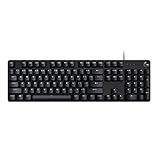
Our Top Picks


Top 3 picks at a glance
Best gaming keyboards under $100: quick comparison
| Keyboard | Typical market range | Layout | Switch type | Best for | Software |
|---|---|---|---|---|---|
| Keychron V1 | Usually $75–$100 | 75% | Hot-swappable mechanical | Customisation and everyday use | VIA/QMK |
| HyperX Alloy Origins Core | Usually $70–$100 | TKL | Linear, tactile, or clicky mechanical variants | Fast-feeling competitive play | HyperX NGENUITY |
| Razer Huntsman Mini | Usually $60–$100 | 60% | Optical linear or clicky | Minimalist competitive setups | Razer Synapse |
| Logitech G413 SE | Usually $55–$80 | Full-size or TKL, depending on version | Tactile mechanical | Simple full-size gaming | Limited Logitech G HUB support |
| Corsair K55 RGB Pro | Usually $45–$70 | Full-size | Membrane | Quiet, affordable macro control | Corsair iCUE |
1. Keychron V1: the best all-rounder for customisation
The Keychron V1 is one of the strongest choices if you want a compact layout without giving up dedicated arrow keys, navigation keys, or a function row. Its 75% arrangement saves desk space while retaining most of the controls used for work and gaming.
Its biggest advantage is the combination of hot-swappable mechanical switches, key remapping, and broad VIA/QMK support. You can change the function of almost any key, create multiple layers, and assign shortcuts without depending entirely on a vendor-specific gaming application. That makes it particularly useful for players who also edit video, write, program, or use productivity shortcuts.
The V1 is generally available with linear or tactile switches. Linear switches suit rapid repeated presses in games, while tactile switches provide a noticeable bump that helps prevent accidental presses during typing. Its latency is suitable for normal competitive gaming over USB, although it is not the specialist high-polling-rate choice for esports players chasing every possible millisecond.
Choose it under the $100 ceiling if you want the most flexibility. Be aware that it is relatively heavy, has a conventional wired connection, and its standard keycap and stabilizer tuning may benefit from later upgrades.
2. HyperX Alloy Origins Core: the best TKL gaming keyboard
The HyperX Alloy Origins Core is a strong fit for players who want a traditional tenkeyless keyboard: it removes the number pad but keeps the arrow cluster, navigation keys, and function row. This leaves more room for a low-sensitivity mouse without forcing you to learn a 60% layout.
HyperX mechanical switches are available in different variants depending on the exact model and market. Linear switches are the safest choice for fast-action games because the keypress is smooth from top to bottom. Tactile switches are more versatile for typing, while clicky versions produce a louder, sharper sound that may be unsuitable for shared rooms.
The aluminium body gives the Alloy Origins Core a more rigid feel than many inexpensive plastic keyboards. Its USB connection provides consistent performance, and onboard memory lets you save lighting and profile settings. HyperX NGENUITY handles RGB effects, profiles, macros, and remapping, though the software is less open-ended than QMK/VIA.
This is usually one of the best gaming keyboards under $100 for someone who wants a sturdy, conventional board rather than a custom keyboard project. Its main limitation is that it is less compact than a 60% board and does not provide the same level of switch experimentation as a hot-swappable model.
3. Razer Huntsman Mini: the best 60% option
The Razer Huntsman Mini is aimed at players who want maximum mouse space and are comfortable accessing arrows, navigation commands, and function-row shortcuts through secondary key combinations. Its 60% layout removes dedicated arrows, the number pad, and most navigation keys.
Razer’s optical switches use light-based actuation rather than traditional metal contacts. In practical use, the important benefit is a crisp, consistent keypress and a low-latency response. The linear version is the better match for fast shooters and action games; the clicky version offers more audible and tactile feedback for typing.
Razer Synapse provides remapping, macros, profiles, lighting control, and game-specific settings. You can also use secondary functions printed on the keycaps, but the small layout demands a short adjustment period. Before buying, check whether your games require frequent arrow-key use, function-row commands, or dedicated navigation keys.
The Huntsman Mini typically fits a $60–$100 ceiling. It is a good purchase for a competitive player with a large mousepad and a simple desk, but less suitable as a single keyboard for office work unless you already like compact layouts.
4. Logitech G413 SE: the practical mechanical choice
The Logitech G413 SE focuses on the essentials: a conventional mechanical layout, tactile switches, a solid-feeling top plate, and restrained backlighting. It does not offer the broad lighting customisation of many RGB rivals, but that simplicity can be an advantage if you want fewer background services and less setup.
Its tactile switches provide a bump before actuation, which can make typing more controlled than a very light linear switch. They are also less loud than clicky switches, although the bottom-out sound remains audible in a quiet room. The full-size version includes a number pad, while the TKL version gives the mouse more lateral space.
Logitech G HUB may provide configuration options depending on the exact model and firmware, but the G413 SE is not as feature-rich as higher-tier Logitech keyboards. Do not buy it expecting extensive onboard macro layers or advanced analog input.
It is usually priced around $55–$80, leaving room in the budget for a wrist rest or replacement keycaps. Select this model when you value a familiar layout and tactile feedback more than elaborate software or lighting.
5. Corsair K55 RGB Pro: the best quiet budget option
The Corsair K55 RGB Pro uses rubber-dome membrane switches rather than mechanical switches. That makes it quieter and often more forgiving for shared spaces, while keeping the price well below the $100 limit.
It includes dedicated macro keys and media controls, which can be more useful than a mechanical switch upgrade for streamers, MMO players, or anyone who regularly changes audio, activates push-to-talk, or launches commands. Corsair iCUE supports lighting, profiles, macros, and integration with compatible Corsair devices.
Membrane keys generally feel softer and less sharply responsive than mechanical or optical switches. They can still be perfectly adequate for gaming, but players who prefer a defined actuation point or quick reset may notice the difference immediately.
At roughly $45–$70, the K55 RGB Pro is the value pick for quiet operation and extra controls. It is not the best choice if your priority is mechanical switch feel, extensive key remapping, or the most rigid build.
Switch types: which one should you choose?
- Linear mechanical: Smooth travel with no tactile bump. Best for rapid repeated presses and players who dislike resistance during movement.
- Tactile mechanical: A bump signals the actuation point. Best for a mixed gaming-and-typing setup and for reducing accidental keypresses.
- Clicky mechanical: Tactile and deliberately loud. Enjoyable for typing, but a poor choice for microphones, bedrooms, or shared offices.
- Optical: Uses light-based actuation and can provide a crisp, fast feel. The switch ecosystem may be less interchangeable than standard mechanical switches.
- Membrane: Quiet and inexpensive, with a softer feel. Good for basic gaming and macro controls, but less precise-feeling for enthusiasts.
Layout decision matrix
| Your situation | Best layout | Recommended pick | Why |
|---|---|---|---|
| Low-sensitivity mouse and limited desk width | 60% | Razer Huntsman Mini | Leaves the most room for mouse movement |
| Gaming plus work or study | 75% | Keychron V1 | Keeps arrows and navigation keys in a compact body |
| Traditional gaming controls without a number pad | TKL | HyperX Alloy Origins Core | Familiar layout with more mouse room |
| Spreadsheets, number entry, or many macros | Full-size | Logitech G413 SE or Corsair K55 RGB Pro | Includes number pad and dedicated controls |
Does latency matter under $100?
Yes, but layout and consistency usually matter more. A keyboard polling at 1,000 Hz reports its state every 1 millisecond, while 125 Hz checks every 8 milliseconds. That creates a theoretical reporting difference of up to 7 milliseconds in the worst timing alignment, not a constant 7-millisecond delay. USB keyboards in this group are generally fast enough for ordinary competitive play.
To reduce avoidable delay, connect the keyboard directly to the computer rather than through an overloaded hub, use a wired connection when available, and close unnecessary configuration software if it causes CPU or input problems. Do not pay extra solely for a higher polling-rate number unless the rest of your system and play style already justify it.
What to prioritise with a $100 ceiling
Spend first on the layout you can use comfortably, then on switch feel and build quality. A durable TKL keyboard that gives your mouse enough room is more useful than a faster-feeling 60% board that makes you hunt for arrow keys. Choose hot-swappable hardware if you expect to experiment with switches. Choose onboard profiles if you move between computers. Choose dedicated macro keys if you actually use them; otherwise, they add bulk without improving your games.
For most buyers, the Keychron V1 is the most flexible choice, the HyperX Alloy Origins Core is the safest traditional gaming recommendation, and the Razer Huntsman Mini is the specialist option for compact competitive setups. If quiet operation and low cost matter most, the Corsair K55 RGB Pro remains a sensible alternative to mechanical keyboards.
Frequently asked questions
Is the Keychron V1 suitable for work as well as gaming?
Yes. Its 75% layout keeps dedicated arrow keys, navigation keys, and a function row while saving desk space. VIA/QMK support lets you remap keys, create multiple layers, and assign shortcuts, which can help with writing, programming, video editing, and productivity tasks. Its wired connection and hot-swappable mechanical switches also make it flexible for everyday use.
Are clicky switches a good choice for a shared room?
Usually not. Clicky switches produce a louder, sharper sound than linear or tactile switches, making them less suitable for shared rooms, bedrooms, quiet offices, or microphones. Tactile switches provide a noticeable bump without the deliberate click, while membrane switches are generally quieter and have a softer feel.
Which keyboard is best if I need dedicated macro keys?
The Corsair K55 RGB Pro is the clearest choice in this article. It includes dedicated macro keys and media controls, and Corsair iCUE supports lighting, profiles, macros, and integration with compatible Corsair devices. Those controls may be especially useful for streamers, MMO players, push-to-talk commands, audio changes, or frequently launched actions.
Can the Razer Huntsman Mini be used for office work?
Yes, but it is less suitable as a single work-and-gaming keyboard unless you already like compact layouts. Its 60% design removes dedicated arrow keys, the number pad, and most navigation keys, so you access many commands through secondary key combinations. It is better suited to people comfortable with that arrangement and wanting maximum mouse space.
Do these keyboards require gaming software to remap keys?
It depends on the model. The Keychron V1 supports VIA/QMK, while HyperX NGENUITY, Razer Synapse, Logitech G HUB, and Corsair iCUE provide different configuration features for their respective keyboards. The article presents the Keychron as the most flexible for remapping and layers, whereas the Logitech G413 SE offers fewer advanced configuration features.







