The best subwoofers for most home theaters are the SVS PB-1000 Pro for deep movie bass, the SVS SB-1000 Pro for compact rooms and music, the RSL Speedwoofer 10S MKII for strong value, and the HSU VTF-2 MK5 when maximum output matters more than cabinet size.
A subwoofer choice should match four things: room volume, the lowest frequencies you want to reproduce, how loudly you listen, and whether your system favors movies, music, or both. The specifications below are useful starting points, but placement and calibration can change the result as much as a modest difference in amplifier power.
As an Amazon Associate we earn from qualifying purchases at no extra cost to you.
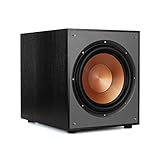


Our Top Picks

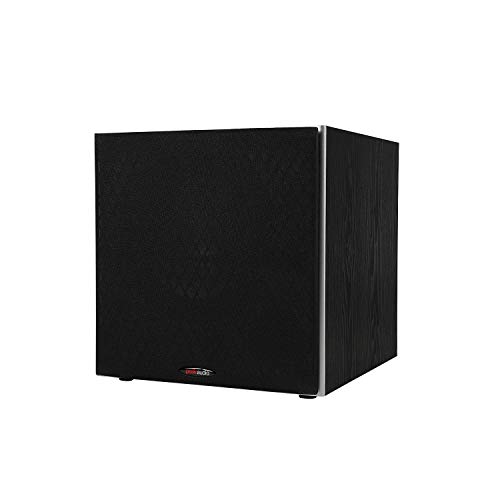

Top 3 picks at a glance
Best subwoofers by room and priority
| Recommended model | Best use | Design | Published low-frequency extension | Approximate room category | Typical market range |
|---|---|---|---|---|---|
| SVS SB-1000 Pro | Music, apartments, small rooms | Sealed, 12-inch driver | About 20 Hz | Small to medium | Usually $500–$700 |
| RSL Speedwoofer 10S MKII | Movies and value | Ported, 10-inch driver | About 24 Hz | Small to medium | Usually $450–$600 |
| SVS PB-1000 Pro | Deep movie effects | Ported, 12-inch driver | About 17 Hz | Medium | Usually $600–$900 |
| SVS SB-2000 Pro | Controlled bass and music | Sealed, 12-inch driver | About 19 Hz | Medium | Usually $800–$1,100 |
| HSU VTF-2 MK5 | High output and customization | Ported, 12-inch driver | About 16 Hz in its deepest configuration | Medium to large | Usually $700–$1,000 |
| SVS PB-2000 Pro | Large-room home theater | Ported, 12-inch driver | About 16 Hz | Large | Usually $1,000–$1,300 |
| KEF KC62 | Premium compact systems | Sealed, dual opposed 6.5-inch drivers | About 11 Hz with DSP specifications | Small to medium | Usually $1,300–$1,700 |
Manufacturer extension figures are normally measured under specified conditions and do not represent identical maximum output at every frequency. A large ported subwoofer generally produces more usable deep bass at cinema volume than a compact sealed model, even when both claim a similar lowest frequency.
Choose by room size, not just floor area
Small rooms and apartments: up to about 1,500 cubic feet
For a room around 10 by 12 feet with an 8-foot ceiling, the volume is approximately 960 cubic feet. A sealed subwoofer such as the SVS SB-1000 Pro is usually a sensible fit. It has a relatively compact cabinet, good control for bass guitar and acoustic music, and enough output for moderate listening levels.
The RSL Speedwoofer 10S MKII is the stronger movie-oriented alternative in this size range. Its ported design is more efficient around the low-bass region, so explosions and electronic effects can sound more forceful without requiring the same amplifier headroom. In an apartment, however, deep bass travels through walls easily; lower volume and careful placement may matter more than buying a larger model.
Medium rooms: about 1,500–3,000 cubic feet
This is the range where the SVS PB-1000 Pro is an especially versatile recommendation. Its 12-inch driver and ported cabinet are designed to reach into the sub-20-Hz region, where movie soundtracks contain infrasonic-feeling effects and the lowest organ or synthesizer notes begin to matter.
Choose the SVS SB-2000 Pro instead when music is the main priority, the listening position is close to a wall, or you prefer a smaller sealed enclosure. Sealed subs do not automatically sound “tighter”—integration, room modes, crossover choice, and equalization have greater influence—but they often offer a compact shape and smooth low-frequency roll-off that works well in a two-channel system.
Large rooms or open-plan spaces: above about 3,000 cubic feet
Large spaces require displacement and output, not merely a low frequency number on the box. The HSU VTF-2 MK5 is a practical choice because its port configuration can be adjusted for either deeper extension or higher output. For a bigger dedicated theater, the SVS PB-2000 Pro provides more headroom than the PB-1000 Pro and is less likely to sound strained at high playback levels.
If the room opens into a kitchen, hallway, or adjacent area, calculate the entire connected air volume. A subwoofer that seems powerful in a closed 2,000-cubic-foot room may behave like a smaller model in a 4,000-cubic-foot open area. Two matching subwoofers are often a better upgrade than one dramatically larger unit because they reduce seat-to-seat variation.
Sealed versus ported: which design should you buy?
| Characteristic | Sealed subwoofer | Ported subwoofer |
|---|---|---|
| Cabinet size | Usually smaller | Usually larger because of the port |
| Deep-bass efficiency | Needs more amplifier excursion | Port increases output around its tuning region |
| Movie impact | Strong, but may need more power or multiple units | Usually the better choice for high-output effects |
| Music suitability | Excellent when correctly integrated | Also excellent; alignment matters more than the label |
| Placement flexibility | Often easier in smaller rooms | Needs clearance around the port and may excite room modes strongly |
| Protection below tuning | Gradual roll-off | Output falls rapidly below port tuning |
Buy sealed for compactness, a clean visual design, or a music-first system where moderate listening levels are expected. Buy ported for action movies, large rooms, low-frequency electronic music, and listeners who want more output per dollar. A ported subwoofer should not be placed with its port blocked; follow the manufacturer’s clearance guidance.
Low-frequency extension and maximum output are different
Extension answers, “How low can it reproduce a signal under stated conditions?” Maximum output answers, “How loud can it reproduce that signal before distortion, compression, or protection limits appear?” A small premium subwoofer may claim an impressive 20-Hz response but cannot match a larger 12- or 15-inch ported model at 20 Hz in a large theater.
For movies, prioritize usable output from roughly 20–40 Hz. This is where many large effects have their physical weight. For music, prioritize smooth integration through roughly 30–100 Hz, because bass lines, kick drums, and the subwoofer-to-speaker crossover all overlap there. Do not select only by the lowest advertised number.
A practical decision matrix
- Small room, music first, compact cabinet: SVS SB-1000 Pro.
- Small or medium room, movies first, value-focused: RSL Speedwoofer 10S MKII.
- Medium room, deep cinematic bass: SVS PB-1000 Pro.
- Medium room, music and movies in equal measure: SVS SB-2000 Pro or PB-1000 Pro, depending on whether compactness or output matters more.
- Medium-to-large room, adjustable performance: HSU VTF-2 MK5.
- Large theater or high playback levels: SVS PB-2000 Pro, or two appropriately matched units.
- Premium compact design for a KEF-based system: KEF KC62.
Set up the subwoofer for better results
1. Start with placement
Place the subwoofer near the front wall, then listen for the smoothest bass from the main seating position. The “subwoofer crawl” is useful: temporarily put the subwoofer at the listening seat, play a bass sweep or familiar bass-heavy track, and walk around the room perimeter. Locations where bass sounds smooth and even are candidates for the permanent position.
2. Set crossover and level
With an AV receiver and speakers that are capable of normal bookshelf or tower operation, start with all speakers set to Small and the receiver crossover at 80 Hz. An 80-Hz crossover commonly gives the receiver room to redirect demanding bass to the subwoofer while remaining difficult to localize. If compact satellite speakers are used, try 100–120 Hz, provided their manufacturer supports it.
Set the subwoofer’s own low-pass filter to its highest or bypass position when the receiver controls crossover. Set its phase to 0 degrees initially. Run the receiver’s room correction, then adjust the subwoofer level only modestly afterward; large manual boosts can consume amplifier headroom and create one-note bass.
3. Check phase and integration
Play bass around the crossover frequency and switch between 0 and 180 degrees, or adjust the continuously variable phase control if available. Keep the setting that produces stronger, smoother bass at the listening seat rather than simply louder bass at one note. If the system supports multiple measurement positions, use them; a setting that is perfect in one seat can be poor elsewhere.
One subwoofer or two?
Two subwoofers do not normally provide twice the maximum volume, but they can make bass more consistent across several seats. A useful rule is to buy one capable subwoofer first, identify its room response, and add a matching unit later if the room has large peaks and nulls. Place the pair symmetrically on the front and rear walls or at the midpoints of opposing side walls when the layout allows. Room correction should be run again after adding the second subwoofer.
Final recommendation
For the broadest movie recommendation, choose the SVS PB-1000 Pro. For a music-focused or space-conscious system, choose the SVS SB-1000 Pro. The RSL Speedwoofer 10S MKII is a strong value-oriented option, while the HSU VTF-2 MK5 is the better fit when adjustable tuning and higher output are priorities. In a large room, spend the budget on displacement, placement, and possibly two subwoofers rather than choosing a compact model solely because its specification lists a very low extension figure.