Our Short List of 3
All 4 Picks at a Glance
| Product | Specs | Action |
|---|---|---|
 Dell S2721DGF | Check price on Amazon | |
 LG UltraGear 27GP850-B | Check price on Amazon | |
 ASUS TUF Gaming VG27AQ | Check price on Amazon | |
 Acer Nitro XV272U | Check price on Amazon |
A 27-inch IPS QHD monitor is the sweet spot for most desks. The 2560 x 1440 resolution gives noticeably sharper text and more room for two windows side by side than a 1080p screen, while the IPS panel keeps colours steady from wide viewing angles. The best 27 inch IPS QHD monitors pair that panel with a fast refresh rate, so the same screen handles games, films, and everyday work without compromise.
This guide compares five 27-inch IPS QHD monitors, judged on panel quality, refresh rate, response time, colour coverage, adaptive sync, and ergonomics. Every pick below is a 27-inch IPS monitor with a 2560 x 1440 panel sold on Amazon US, and each one is a complete monitor rather than an accessory.
Our Top Picks
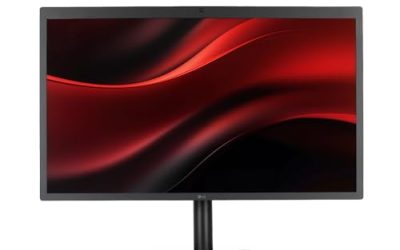
- LG 27GP850-B Ultragear Gaming Monitor 27-Inch QHD14.4"x24.2"x2"11.5 x 24.2 x 22.7 inches13.9 poundsCheck on Amazon
- ASUS TUF Gaming VG27AQ 27 Inch QHD 165Hz27” 2K WQHD IPS19.96 x 24.41 x 8.31 inches12.8 poundsCheck on Amazon
Top 3 picks at a glance
How to Choose
IPS panel quality
The IPS panel is the heart of this guide, because it decides how colours look from an angle. A good IPS panel holds colour and contrast steady when viewed from the side, which suits a desk where more than one person looks at the screen and a setup where the monitor sits off-centre. Nano IPS panels add a wider colour gamut, while standard IPS panels keep the essentials at a lower tier. Check the panel type in the listing before anything else.
QHD resolution
QHD means 2560 x 1440 pixels, which gives 77 percent more pixels than Full HD on the same 27-inch frame. Text stays crisp at small sizes, photo detail holds up under close inspection, and two windows sit comfortably side by side. A 27-inch 4K panel goes further again, but it demands a stronger graphics card and costs more, so QHD is the balanced choice for most desks.
Refresh rate
Refresh rate decides how smooth motion looks. A 144 Hz panel is the baseline for gaming in this class, while 165 Hz and 170 Hz panels add a little extra smoothness for fast titles. The 180 Hz panel in this guide suits competitive play, but it only helps when the graphics card can deliver that many frames. For office work and films, the difference between 144 Hz and 165 Hz is small.
Response time
Response time decides how clean fast motion looks, and every pick in this guide states 1 ms. A fast response time keeps moving objects sharp instead of smearing across the screen, which matters in shooters and racing games. Check whether the stated figure is grey-to-grey or MPRT, because the two measures are not the same, and note that motion-blur reduction features cannot always run together with adaptive sync.
Adaptive sync
Adaptive sync matches the monitor refresh rate to the graphics card output, which removes tearing and stutter. FreeSync Premium covers AMD cards, while G-SYNC Compatible certification covers NVIDIA cards, and most picks in this guide carry both. Confirm that the monitor supports the graphics card in the computer it will connect to, because a mismatch leaves the feature unused.
Colour coverage and ergonomics
Colour coverage matters for photo work and films, so check the stated gamut figures such as DCI-P3 or sRGB. A wide gamut gives richer colour in games and media, while a calibrated sRGB mode suits editing work. Ergonomics matter just as much: a stand that adjusts for height, tilt, pivot, and swivel lets the screen sit at eye level, and VESA mounting opens up arm options for a clean desk.
Top Picks
Dell S2721DGF
The Dell S2721DGF pairs a 27-inch QHD IPS panel with a 165 Hz refresh rate, which makes it a strong all-round screen for gaming and everyday work alike. Colours stay steady from wide viewing angles, text stays sharp at QHD on a 27-inch frame, and adaptive sync keeps frames smooth on both AMD and NVIDIA graphics cards. The stand adjusts for height, tilt, pivot, and swivel.
Key specifications:
– 27-inch QHD IPS panel, 2560 x 1440
– 165 Hz refresh rate
– 1 ms response time
– FreeSync Premium Pro and G-SYNC Compatible
Who it is for: Gamers who want one fast QHD IPS screen for play and work.
Caveat: The panel is a gaming-first screen, so colour-critical work still benefits from a calibration check.
LG UltraGear 27GP850-B
The LG 27GP850-B uses a Nano IPS panel that covers a wide colour gamut while running at 165 Hz, with an overclock option to 180 Hz for competitive titles. The combination suits players who care about both motion clarity and colour, and the stand adjusts in every direction. Two HDMI ports, one DisplayPort, and a USB hub cover the usual desktop connections.
Key specifications:
– 27-inch Nano IPS panel, 2560 x 1440
– 165 Hz refresh rate, overclockable to 180 Hz
– 1 ms response time
– 98 percent DCI-P3 colour gamut
Who it is for: Players who want wide colour and fast motion in one 27-inch QHD screen.
Caveat: The overclock to 180 Hz is an optional setting, not the default refresh rate.
ASUS TUF Gaming VG27AQ
The ASUS TUF VG27AQ is a 27-inch QHD IPS monitor with a 165 Hz refresh rate and ELMB motion-blur reduction for fast scenes. The IPS panel keeps colours consistent from an angle, which suits a desk shared with a second viewer, and the stand adjusts for height, pivot, swivel, and tilt. HDR10 support adds brighter highlights in content that carries HDR.
Key specifications:
– 27-inch QHD IPS panel, 2560 x 1440
– 165 Hz refresh rate
– 1 ms response time with ELMB
– G-SYNC Compatible and FreeSync support
Who it is for: Gamers who want a proven 27-inch QHD IPS panel with motion-blur reduction.
Caveat: ELMB and adaptive sync cannot run together at the same time on this model.
Acer Nitro XV272U
The Acer Nitro XV272U runs its 27-inch QHD IPS panel at 170 Hz, a step above the common 165 Hz class, with a 1 ms response time for fast motion. The IPS panel delivers wide viewing angles and steady colour, while adaptive sync support covers both major graphics card makers. The stand adjusts for height, tilt, pivot, and swivel, and the bezel is slim on three sides.
Key specifications:
– 27-inch QHD IPS panel, 2560 x 1440
– 170 Hz refresh rate
– 1 ms response time
– FreeSync Premium and G-SYNC Compatible
Who it is for: Players who want a slightly faster QHD IPS panel without moving to a larger screen.
Caveat: The 170 Hz mode is reached through overclocking in the on-screen menu.
LG UltraGear 27GL83A-B
The LG 27GL83A-B is the straightforward pick in this guide: a 27-inch QHD IPS panel at 144 Hz with a 1 ms response time and adaptive sync for both major graphics platforms. It skips the extras that push other models higher in the range and concentrates on the essentials, which are a sharp panel, smooth motion, and a fully adjustable stand. HDR10 support is included for compatible content.
Key specifications:
– 27-inch QHD IPS panel, 2560 x 1440
– 144 Hz refresh rate
– 1 ms response time
– G-SYNC Compatible and FreeSync support
Who it is for: Buyers who want a proven 27-inch QHD IPS gaming panel with no fuss.
Caveat: The 144 Hz refresh rate is lower than the 165 Hz and 170 Hz panels in this guide.
Comparison Table
| Product | Panel / Wireless | Key strength | Best for |
|---|---|---|---|
| Dell S2721DGF | 27-inch QHD IPS panel, 2560 x 1440 | 165 Hz refresh rate | Gamers who want one fast QHD IPS screen for play and work. |
| LG UltraGear 27GP850-B | 27-inch Nano IPS panel, 2560 x 1440 | 165 Hz refresh rate, overclockable to 180 Hz | Players who want wide colour and fast motion in one 27-inch QHD screen. |
| ASUS TUF Gaming VG27AQ | 27-inch QHD IPS panel, 2560 x 1440 | 165 Hz refresh rate | Gamers who want a proven 27-inch QHD IPS panel with motion-blur reduction. |
| Acer Nitro XV272U | 27-inch QHD IPS panel, 2560 x 1440 | 170 Hz refresh rate | Players who want a slightly faster QHD IPS panel without moving to a larger screen. |
| LG UltraGear 27GL83A-B | 27-inch QHD IPS panel, 2560 x 1440 | 144 Hz refresh rate | Buyers who want a proven 27-inch QHD IPS gaming panel with no fuss. |
Common Mistakes to Avoid
Confusing QHD with 4K
QHD and 4K are different resolutions, and mixing them up leads to disappointment in either direction. A 27-inch QHD panel has 2560 x 1440 pixels, while a 4K panel has 3840 x 2160, and the two need different graphics power. Check the resolution in the listing rather than the marketing name, because some listings use vague terms that hide the real pixel count.
Ignoring the stand
A monitor with a fixed stand forces the neck and shoulders to adapt to the screen instead of the other way around. Height, tilt, pivot, and swivel adjustments let the panel sit at eye level and turn toward a visitor, which matters through a long day. Check the stand adjustments in the listing, and confirm VESA mounting if an arm is part of the plan.
Using HDMI for the full refresh rate
Some monitors only reach their highest refresh rate over DisplayPort, while HDMI tops out lower. A buyer who connects over HDMI and wonders why the panel runs slower than stated has usually hit this limit. Check the supported refresh rate per input in the listing, and use the cable that came in the box or a certified DisplayPort cable.
Judging a panel by brightness alone
Brightness figures tell only part of the story, because a bright panel with poor colour still looks wrong. Colour coverage, contrast, and viewing angles matter as much as brightness for games and films, and an IPS panel earns its place through steady colour rather than peak brightness. Read the gamut and panel type alongside the brightness figure.
Which One Is Right for You?
For the most balanced 27-inch IPS QHD screen, start with the LG 27GP850-B, because its Nano IPS panel pairs wide colour with a 165 Hz refresh rate. For a proven all-rounder with a fully adjustable stand, the Dell S2721DGF is the safe choice. Competitive players should favour the Acer Nitro XV272U at 170 Hz, while buyers who want the essentials without extras should pick the LG 27GL83A-B. The ASUS VG27AQ suits players who value motion-blur reduction for fast scenes.
Frequently Asked Questions
Is QHD enough for a 27-inch monitor?
Yes, for most desks. QHD gives sharp text and room for two windows side by side on a 27-inch screen, and it is far easier for a graphics card to drive than 4K at high refresh rates. A 4K panel is sharper still, but the difference is smaller than the jump from 1080p to QHD.
What does IPS mean on a monitor?
IPS stands for in-plane switching, a panel type that keeps colours and contrast steady when viewed from an angle. It suits desks where more than one person looks at the screen and work that involves colour, while VA panels give deeper blacks and TN panels give faster response times in older designs.
Do I need a 165 Hz monitor for everyday work?
No, but it does not hurt. A higher refresh rate makes scrolling and window movement look smoother, and it matters most in games. For documents, spreadsheets, and films, a 60 Hz panel is adequate, while a 144 Hz or 165 Hz panel adds smoothness that many owners notice immediately.
What is the difference between FreeSync and G-SYNC Compatible?
FreeSync is AMD adaptive sync technology, while G-SYNC Compatible is NVIDIA certification for monitors that work with NVIDIA adaptive sync. Most monitors in this guide support both, so they suit either brand of graphics card. Check the listing for the exact certification before buying.
Disclosure: As an Amazon Associate, we may earn from qualifying purchases.
Related guides
More from Amazon
Programs that pair well with the guide above. Offers and eligibility are set by Amazon and may change.
Free shipping on eligible items, Prime Video and more. Eligible new members can start with a free trial.
Start a Prime free trialAd-free music streaming. Eligible new subscribers can start with a free trial.
Try Music Unlimited freeA Prime membership for ages 18-24 with a trial period. Eligibility is set by Amazon.
See Prime for Young AdultsAudiobooks and podcasts to listen to on the go. Eligible new members can start with a free trial.
Try Audible freeAs an Amazon Associate we earn from qualifying purchases.