Our Top Picks

Best High-End Sous Vide Ovens for Precision Cooking
The best high-end sous vide ovens for precision cooking are countertop water-bath ovens when you prioritize capacity and built-in controls, and premium immersion circulators when you need a flexible setup for large or varied containers. For most home cooks, the Anova Precision Cooker Pro is the versatile choice; for batch cooking and entertaining, the Breville Joule Turbo Sous Vide or a large countertop bath is worth considering, depending on how much food you cook at once.
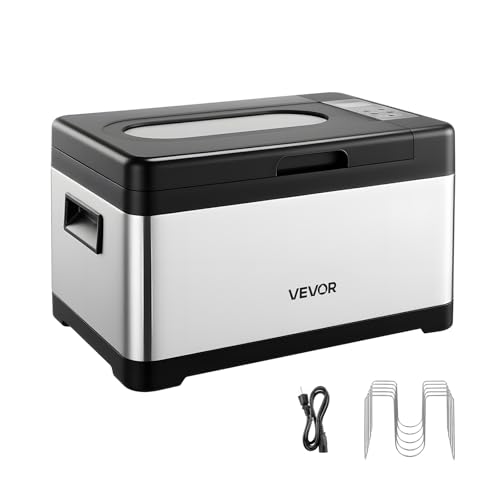
“Sous vide oven” can mean two different things: a self-contained countertop water bath, or an immersion circulator that heats and moves water in a separate pot or tub. Both can hold a target temperature, but their capacity, cleanup, and workflow differ more than small differences in stated accuracy. The right premium choice depends on whether you value a ready-to-use appliance, a large water volume, or the freedom to change containers.
As an Amazon Associate we earn from qualifying purchases at no extra cost to you.

Premium models worth comparing
| Model or class | Temperature and circulation | Capacity and controls | Best fit |
|---|---|---|---|
| Anova Precision Cooker Pro | Manufacturer specifies ±0.1°C accuracy; active circulation | Clip-on circulator; capacity depends on the vessel. On-device controls plus app connectivity | Frequent cooks who want a powerful, flexible circulator |
| Breville Joule Turbo Sous Vide | Active circulation; app-guided cooking, including Turbo mode for supported recipes | Compact circulator; requires a separate water vessel. App-led controls | Guided cooking and cooks comfortable using a phone |
| All-in-one countertop water-bath oven | Heated bath with the model’s built-in circulation design | Fixed chamber and integrated controls; capacity varies by model | Countertop convenience, repeatable batches, and fewer separate parts |
| Large-tub circulator setup | Circulator performance depends on the unit, water volume, and insulation | Use a lidded, heat-safe container sized to the batch; controls may be on-device, in an app, or both | Entertaining, meal prep, and unusually large cuts |
Specifications vary by model and revision, so check the manufacturer’s current capacity, accuracy, and connectivity details before buying. A published accuracy figure describes the device under specified conditions; it does not guarantee that every part of a crowded bath is at precisely the same temperature.
How to choose for your cooking style
| Your situation | What to prioritize | Best direction |
|---|---|---|
| Steaks or fish for two to four people | Simple controls, reliable circulation, easy storage | Premium circulator with a medium, lidded pot |
| Several portions for weekly meal prep | Water volume, rack or bag spacing, insulation | Large-tub circulator setup or high-capacity countertop bath |
| Hosting a dinner party | Room for separate portions and dependable heat recovery | Large vessel, a lid, and a circulator sized for that workload |
| Minimal setup and cleanup | Integrated controls and fewer accessories | Countertop water-bath oven |
| Guided recipes and phone scheduling | App quality and what functions remain available without it | Connected circulator, after checking the control requirements |
Capacity matters more than the number on the box
Nominal water capacity is only useful if the food can sit in the bath without blocking circulation. Bags packed tightly together create cold spots and slow heating, even when the circulator has ample power. Leave channels for water to move around each bag, keep food submerged, and use a rack for upright or separated portions.
For a practical estimate, allow roughly 1–1.5 liters of bath water per 200–250 grams of food when planning a crowded batch, then check that the container still has room for circulation. This is a planning rule, not a safety or appliance specification. A dozen individually bagged chicken portions can take up far more usable space than one compact roast of the same total weight.
Temperature accuracy, power, and real-world recovery
Accuracy and heating speed are related but not interchangeable. Accuracy tells you how closely the appliance can regulate temperature; power affects how quickly it heats the initial bath and recovers after cold food is added. Insulation, a lid, starting-water temperature, and batch size also influence the result.
For example, heating 10 liters of water from 20°C to 60°C requires about 1.67 megajoules of heat: 10 kg × 4.18 kJ/kg·°C × 40°C. At 1,000 watts, the theoretical minimum is about 28 minutes. In a real kitchen, heat loss and the appliance’s actual output make it longer. This explains why a high-capacity setup can be excellent for entertaining but less convenient when you want one quick portion after work.
When comparing premium units, look beyond a decimal-place claim. Consider whether the bath stays uniform with several bags inside, whether the device can maintain circulation at your intended volume, and whether its alarm clearly warns you about low water or a stopped cook.
Controls and connectivity: useful conveniences, not temperature magic
On-device controls are valuable when you want to set a temperature without opening an app, especially during a busy cooking session. Connectivity can add remote monitoring, timers, recipes, or guided workflows, but the exact functions vary. Check whether the unit can start and adjust a cook locally if your phone is unavailable, and whether remote control requires an account or an active internet connection.
The Joule Turbo’s app-led approach suits cooks who like guided instructions and recipe support. The Anova Precision Cooker Pro offers a more flexible circulator workflow, with physical controls as well as app features. If you cook from your own notes and do not need recipe guidance, prioritize a readable display and straightforward temperature adjustment over a larger app feature list.
Cleanup and long-term ownership
A circulator leaves you with a separate pot or tub to wash, but it stores compactly and can work with different vessels. A countertop bath keeps the water contained in one appliance, though its chamber can be awkward to drain, dry, or store. In either case, a lid reduces evaporation and helps limit mineral buildup from repeated heating.
- Choose a removable or accessible water chamber if you expect to drain and clean the unit often.
- Use filtered or demineralized water in hard-water areas if the manufacturer permits it; this can reduce scale.
- Follow the maker’s descaling instructions rather than scraping heating elements or circulation parts.
- Dry the vessel and any removable components before storage to avoid stale odors.
Frequently asked questions
What is the difference between a countertop sous vide oven and an immersion circulator?
A countertop sous vide oven is a self-contained water bath, while an immersion circulator heats and moves water in a separate pot or tub. The countertop design offers integrated controls and a fixed chamber, whereas the circulator lets you change containers and choose a setup for different batch sizes. Their capacity, cleanup, and workflow differ more than small advertised accuracy differences.
Can I use an immersion circulator with any pot or container?
An immersion circulator requires a separate water vessel, such as a suitable pot or heat-safe container. Choose a container sized to the batch, keep food submerged, and leave channels for water to circulate around each bag. A lidded container can reduce evaporation and mineral buildup. For unusually large cuts or entertaining, a large, insulated vessel may be more practical.
How much water should I plan for a crowded sous vide batch?
As a practical planning estimate, allow roughly 1–1.5 liters of bath water per 200–250 grams of food when preparing a crowded batch. This is not a safety or appliance specification. The container must still leave room for circulation, because tightly packed bags can create cold spots and slow heating even when the circulator has ample power.
Does higher wattage always make a sous vide cooker more accurate?
No. Accuracy describes how closely the appliance regulates temperature, while power affects how quickly it heats the initial bath and recovers after cold food is added. Insulation, a lid, starting-water temperature, and batch size also influence performance. A higher-capacity setup may handle larger batches well but take longer to heat, especially when starting with cooler water.
Can I use a sous vide cooker without its app?
It depends on the model and its control design. The Anova Precision Cooker Pro has physical controls as well as app features, while the Breville Joule Turbo Sous Vide uses an app-led approach. Before buying, check whether the unit can start and adjust a cook locally when your phone is unavailable, and whether remote control requires an account or internet connection.
Bottom line
Choose the Anova Precision Cooker Pro if you want a premium, flexible circulator and already own a suitable pot or tub. Choose the Breville Joule Turbo Sous Vide if app-guided cooking is central to your workflow and you are comfortable with app-led controls. For frequent large batches, prioritize a spacious, well-insulated vessel and circulation that can handle the loaded bath; for the least setup, look at a countertop water-bath oven with an easy-to-drain chamber.
Premium sous vide is most worthwhile when it solves a repeat problem: uneven batches, limited capacity, fiddly controls, or cleanup you dislike. Match the appliance to the portions you actually cook, and the bath’s usable space and circulation will matter more than a small difference in advertised accuracy.