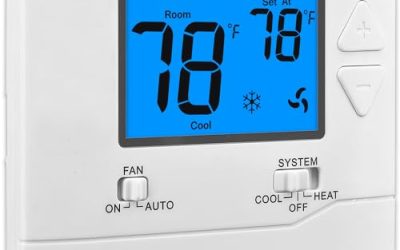
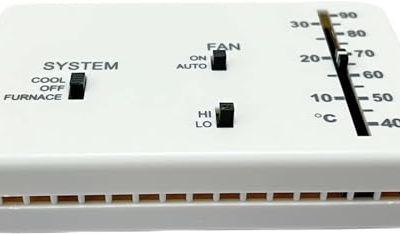
A line voltage thermostat is not interchangeable with the little 24-volt box that runs a furnace. It sits directly in the power circuit feeding electric baseboards, wall heaters or convectors, so the wires it switches carry full household current. Choosing the wrong type can mean a heater that never shuts off, a thermostat that overheats, or a failed inspection. The first decision is therefore about electrical fit: the voltage, the amperage and whether the control cuts one wire or both.
This guide is for homeowners swapping a worn dial in a spare room, landlords standardizing controls across units, and anyone converting a garage workshop or basement to electric heat. The eight models below cover simple mechanical dials, digital non-programmable units, one programmable schedule control and a Wi-Fi smart thermostat. In 2026 the interesting shift is smart line-voltage control, but the basics of load rating and wiring still decide whether any model is safe. We judge only from what each listing states.
Our Top Picks
Top 3 picks at a glance
Quick Picks
As an Amazon Associate we earn from qualifying purchases at no extra cost to you.


| Product | Best for | Key spec from the title |
|---|---|---|
| Honeywell TL7235A1003 | Digital control, 240-volt rooms | Non-programmable, electronic temperature control, 240-volt |
| Stelpro SWT1F | Simple dial, one-pole circuits | Single pole 22A, mechanical dial |
| ELV4 Programmable | Scheduled heating | 5/2-day programming, heat-only |
| Cadet Double Pole | Full-disconnect switching | Double pole, baseboard and wall heaters |
| Cadet Single Pole | Basic baseboard swap | Single pole, baseboard and wall heaters |
| Stelpro SWT2F | Double-pole mechanical control | Double pole 22A, mechanical dial |
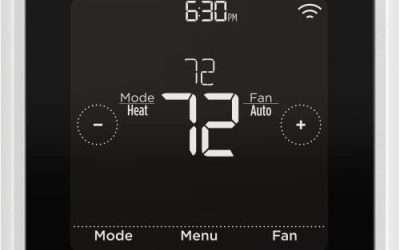
| Honeywell Home RLV3120A1005 | Digital electric heat control | Non-programmable, electric heat only |
| meross Matter Smart | Remote and voice control | WiFi, Matter, works with HomeKit and Alexa |
How to Choose
Confirm voltage and load before anything else
Check the nameplate on your heater for volts and watts, then compare against the thermostat’s rating. A 22A control, as the Stelpro models list, can in theory handle roughly 2,640 watts at 120 volts or 5,280 watts at 240 volts, but add the wattage of every heater on that circuit. If the thermostat’s rating is not stated in the listing, read the full specifications first. Never exceed the rating to save a few steps, and remember that continuous heating loads should sit comfortably below the limit instead of right at it.
Choose single pole or double pole
A single-pole thermostat interrupts one conductor, so the heater stays live on the other leg even when it is off. A double-pole unit breaks both lines in the off position, which is the safer choice for 240-volt circuits and is required in many installations. Check your local code, and if the existing wiring has four wires, that is a hint it expects a double-pole control.
Decide how smart you need it to be
Mechanical dials are cheap, quiet and unfussy, though they swing a few degrees. Digital non-programmable models hold temperature more precisely. A 5/2-day programmable unit lowers heat while you are out. Wi-Fi models add apps and voice control, but need a stable network and may require a neutral wire. Pay only for what you will actually use. A guest room visited twice a year does not need an app, while a cabin you heat remotely before arrival might justify one.
Mind compatibility and installation limits
Most line-voltage models are heat-only and will not control a furnace or air conditioner. Look for baseboard, convector or fan-heater language in the title. Budget units may use plastic parts that discolor over time, and cheaper controls rarely include wiring diagrams. If you are unsure about the box or breaker, hire an electrician rather than guess.
The 8 Best Options
Honeywell TL7235A1003
This Line Volt Pro is a non-programmable digital thermostat with electronic temperature control, rated for 240-volt use. It suits owners who want tighter temperature holding than a dial can offer but have no need for schedules, such as a spare bedroom heated only when occupied. Its label for 240-volt service means the wiring question is mostly answered before you buy.
- Strength: electronic control for more even room temperature.
- Strength: clearly labeled for 240-volt line-voltage systems.
- Trade-off: the title lists no scheduling or smart features.
Skip it if you run a 120-volt circuit or want automatic setbacks while you are away. Buyers who simply want the room to hold a steady temperature without fiddling with a dial will appreciate the digital approach, and the simple feature set keeps the wiring job easy to follow.
Stelpro SWT1F
A white wall thermostat with a mechanical dial, single-pole switching and a 22A rating, made for electric baseboards, convectors and fan heaters. It is a no-frills replacement for an older dial in a hallway, workshop or rental unit. The listing says it fits electric baseboards, convectors and fan heaters alike, so one spare covers several kinds of room heater.
- Strength: 22A rating covers many ordinary heater loads.
- Strength: dial control needs no batteries or setup.
- Trade-off: single pole leaves one line live when off.
Skip it if your circuit or local code calls for a double-pole control. It is the kind of part a landlord stocks in bulk, because one model fits several heater types and the mechanical design leaves little to go wrong.
ELV4 Programmable
The ELV4 is a programmable line-voltage thermostat with 5/2-day scheduling, so weekday and weekend patterns can differ. It is heat-only, a good fit for a home office or cottage heated mainly on set days. Heat-only operation keeps the control simple, and the schedule means the room is warm when needed instead of all day long.
- Strength: weekday and weekend programming trims wasted heat.
- Strength: dedicated to line-voltage electric heating.
- Trade-off: the title gives no load rating, so check the full specifications.
Skip it if you want a simple dial or need app control. Programmable line-voltage controls take a little more setup time than a dial, so allow an evening to enter the schedule and learn the buttons. Note that its title is brief, so confirm the maximum load before wiring it to a large heater.
Cadet Double Pole
A double-pole line voltage thermostat for baseboard and wall heaters. Breaking both lines when off makes it the right match for 240-volt circuits that need full disconnect. It offers no frills beyond that, which is exactly the point for owners who want a dependable switch with a temperature setting and little else.
- Strength: double-pole switching for safer shutdown.
- Strength: matched to baseboard and wall heater use.
- Trade-off: the title lists no digital or programmable features.
Skip it if you are replacing a single-pole control on a 120-volt heater. Matching the pole count of the old unit is the simplest way to avoid wiring surprises, so compare the connections on your existing thermostat first. Photograph the old wiring before you disconnect anything.
Cadet Single Pole
The single-pole sibling covers baseboard and wall heaters on circuits where one-line switching is acceptable. It is a straightforward swap for a failed unit in a small room. Because the title is short, confirm the amperage and voltage on the full listing and compare them with your heater nameplate before you buy.
- Strength: simple design with few parts to fail.
- Strength: purpose-made for electric baseboard heat.
- Trade-off: it does not disconnect both conductors.
Skip it if your installation requires a double-pole disconnect. For a seldom-used guest room or a small shop, the plain mechanical design keeps the job quick, and there is no menu to learn or battery to replace. It lacks a stated amperage in the title, so the full listing deserves a quick read.
Stelpro SWT2F
Mechanical, double-pole and rated at 22A, this model mirrors the SWT1F but breaks both lines. It suits a 240-volt baseboard run in a basement or addition. Its twin, the single-pole SWT1F, shares the same dial design, so the pole count is the main decision between the two.
- Strength: double-pole switching plus a high amperage rating.
- Strength: fits baseboards, convectors and fan heaters.
- Trade-off: a mechanical dial offers coarser temperature control.
Skip it if you want precise or scheduled control. A dial can swing a few degrees around its setting, which is acceptable in a basement or utility space but noticeable in a bedroom or living area. Pair it with a heater whose wattage sits well inside the 22A rating for comfortable headroom.
Honeywell Home RLV3120A1005
A digital non-programmable thermostat for electric heat only, from a major brand. It targets buyers who want clear digital readout and steady holding without complexity. Homeowners replacing an older digital unit will find the swap familiar, and the focus on electric heat tells you it is meant for baseboards rather than furnaces.
- Strength: digital precision from a familiar maker.
- Strength: designed for electric heat applications.
- Trade-off: no scheduling features are listed.
Skip it if you want setbacks or smartphone control. The listing says it is for electric heat only, so it is not a candidate for a room that also needs cooling or a central system. Compare its footprint with your existing cutout, since a mismatch can leave an unsightly gap in the wall.
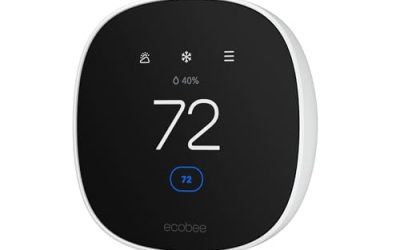
meross Matter Smart
A Wi-Fi programmable thermostat for electric baseboard heaters that works with HomeKit, Alexa, Google Home and SmartThings. It suits tech-comfortable owners who want remote adjustment and routines. Matter support means it can join several smart-home platforms at once, which helps in households where family members use different phone ecosystems.
- Strength: broad smart-home compatibility.
- Strength: schedules and remote control from a phone.
- Trade-off: needs Wi-Fi, and the title is cut off before voltage details.
Skip it if your heater circuit rating is unclear or you prefer simple knobs. Because the listing is cut off, confirm the supported voltage and wattage on the full page before ordering, and check that your wall box has the wires it needs. Matter and app setup also take a few minutes more than turning a dial.
Which One Fits Your Situation
You heat a rental unit with a worn dial
The Stelpro SWT1F or Cadet Single Pole offers a budget-friendly, familiar swap when the wiring matches. Landlords with several identical units can standardize on one dial type, which makes spare parts and tenant instructions easy.
You have a 240-volt baseboard run
The Stelpro SWT2F or Cadet Double Pole provides full disconnect, while the Honeywell TL7235A1003 adds digital control. For a converted basement or workshop, the Stelpro SWT2F pairs double-pole switching with a high amperage rating, and the Honeywell Home RLV3120A1005 adds a simple digital readout if you prefer one.
You want lower bills with schedules
The ELV4 Programmable handles weekday and weekend patterns without an app, so a home office or cabin can warm up before you arrive and relax when you leave.
You want phone and voice control
The meross Matter Smart is the only one here with HomeKit, Alexa and Google Home support, which helps if you want to adjust heat from the couch or from another city.
Common Mistakes
- Buying a 24-volt thermostat for a baseboard heater.
- Ignoring the amperage rating when several heaters share a circuit.
- Installing a single-pole unit where double-pole is required.
- Working on the wiring without turning off the breaker.
- Choosing a smart model without confirming the wiring it needs.
Frequently Asked Questions
Can I use a regular thermostat on baseboard heat?
No. Standard low-voltage thermostats are not built for line-voltage current and can fail or create a hazard.
What does double pole mean?
It means the thermostat opens both hot lines when off. That gives a full disconnect and is common on 240-volt installations.
Do these thermostats control air conditioning?
Not those listed as heat-only. Check the listing for cooling support before buying, and remember that line-voltage heat and central air are normally separate systems.
Is a smart thermostat worth it for electric heat?
Only if you use schedules and remote control. For a rarely used room, a dial or digital model is simpler, cheaper and has fewer things to configure.