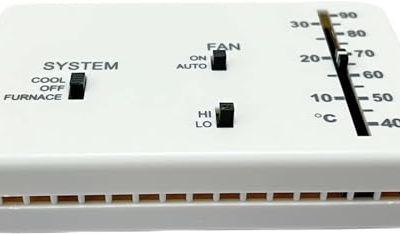
A powered attic fan is only as smart as the little switch that tells it when to spin. Set too high, the fan sits idle while the roof deck bakes the rafters and the rooms below. Set too low, or left without any control at all, it runs through a mild morning and a cold night, hauling conditioned air up through ceiling gaps. The thermostat is the single part that separates a useful ventilator from a wasteful one, and it is also the part that tends to fail first, usually after years of heat cycling in a space that swings from freezing to well over 100 degrees.
This guide is for homeowners who already have an attic fan and need a replacement control, and for anyone adding a switch to a fan that currently runs from a plain wall toggle. Attic thermostats are not interchangeable the way light bulbs are, so the real decision is matching wiring style, load rating, and brand compatibility to the fan on your roof or gable. Based on the listed specs, five distinct options are covered below for 2026 shopping, from brand-matched replacements to universal plug-in controllers. Duplicate packs and color variants of the same dial were left out, and so was a complete ventilator fan that only includes a thermostat as a feature.
Our Top Picks


Top 3 picks at a glance
Quick Picks
As an Amazon Associate we earn from qualifying purchases at no extra cost to you.


| Product | Best for | Key spec from the listing |
|---|---|---|
| Quietcool adjustable thermostat | Quietcool fan owners needing a like-for-like swap | Built-in fire safety shut off |
| Makevivi plug-and-play control | Renters and DIYers who want no wiring | 5 ft UL-certified cord, plus or minus 1.8 degrees F control, 1600W overload protection |
| 58033 thermostat switch | Lomanco Lomancool 2000/1800 fan motors | 50 to 120 degrees F range, 13A 120V, 1200W max |
| Quietcool thermostat and humidistat | Humid attics prone to moisture and mold | Combined temperature and humidity control with fire safety shut off |
| Silver adjustable-dial thermostat | A basic, mountable control for a standard fan | Adjustable temperature dial, can control multiple fans |
How to Choose
Match the wiring style first
There are two families. Hardwired thermostats mount in a box and splice into the fan circuit, while plug-in controllers have a receptacle and a cord, so you simply plug the fan into them. If you are not comfortable working with line voltage, the plug-in style removes the biggest hurdle. If your fan is hardwired into a junction box, a mount-style unit is the cleaner fit, and local code may require a licensed electrician for the swap. Either way, kill the breaker first and confirm the circuit is dead with a tester.
Check the load rating against the motor
Every thermostat lists a maximum current and wattage. Look for a rating that clears your fan motor with margin, since motors draw a surge on startup. A switch rated for 13A at 120V and 1200W suits a typical single gable or roof fan, while a 1600W rating gives extra headroom. If you plan to control two fans from one dial, add their amp draws together before deciding. The motor nameplate, not the box art, is where the real number lives.
Look at range, accuracy, and safety features
A dial spanning roughly 50 to 120 degrees Fahrenheit covers every realistic setting, and most owners land between 90 and 110 degrees so the fan only runs when the attic is genuinely hot. Accuracy within a couple of degrees is plenty, because attic temperature swings are wide. A fire safety shut off is worth attention, because it cuts the fan if temperatures spike abnormally, and UL certification on the cord or body is a basic safety signal. Skip any unit with no stated load rating.
Decide whether you need humidity control
Temperature alone does not protect an attic from moisture. In damp climates, or in homes where bathroom vents terminate in the attic, a combined thermostat and humidistat lets the fan run to clear damp air even when it is cool. In dry regions the added control is unnecessary. Ignore marketing words like “smart” or “precision” unless they come with a stated tolerance, and note that budget switches usually cut corners on fire protection and documented compatibility.
The 5 Best Options
Quietcool Attic Fan Adjustable Thermostat
This is a replacement control built for Quietcool powered attic ventilators, and the listing highlights a built-in fire safety shut off. It suits owners whose original thermostat has drifted or died and who want a brand-matched part rather than a universal workaround. Because it is sold specifically for Quietcool units, there is less room for a wiring or rating surprise during installation, which matters when the switch sits inside a hot, cramped attic.
- Strength: Purpose-made for Quietcool ventilators, so fit and wiring expectations are clear.
- Strength: The fire safety shut off adds protection that cheap generic dials often omit.
- Trade-off: Its value depends on owning a compatible fan, and the listing does not describe use with other brands.
Skip it if your fan is another brand or you want a no-wiring plug-in solution.
Makevivi Attic Fan Thermostat Control
The listing describes a plug-and-play socket design with a 5 ft UL-certified cord, temperature control of plus or minus 1.8 degrees F, and 1600W overload protection. It is the easiest path for someone who wants to plug the fan in and set a dial without opening a junction box. The tight stated tolerance and the generous wattage figure make it look like the most fully specified universal option in this group.
- Strength: The socket design means no splicing, a clear win for renters and first-time DIYers.
- Strength: The 1600W overload protection and UL-certified cord are concrete safety details.
- Trade-off: A plug-in unit needs a nearby outlet, which many hardwired fans do not have.
Skip it if your fan is permanently wired with no receptacle within reach, since forcing a plug-in design onto a hardwired fan invites shortcuts nobody wants in an attic.
58033 Adjustable Thermostat Switch
This switch lists a 50 to 120 degrees F adjustment range, a 13A 120V rating with a 1200W maximum, and compatibility with Lomanco Lomancool 2000 and 1800 attic fan motors. It is the targeted choice for owners of those specific Lomanco units who want automatic ventilation without hunting for an original part. The numbers are easy to check against a motor nameplate, which is exactly what a cautious buyer should do.
- Strength: The wide adjustment range covers any realistic attic setpoint.
- Strength: Stated compatibility with named Lomanco motors reduces guesswork.
- Trade-off: The 1200W ceiling leaves less headroom than higher-rated alternatives.
Skip it if your fan is not a Lomancool 2000 or 1800 and you cannot confirm the motor draws within the limit.
Quietcool Attic Fan Adjustable Thermostat and Humidistat
This variant adds humidity sensing to the temperature control, again with a fire safety shut off, and is sold as a replacement for Quietcool powered ventilators. It makes sense where attic moisture, not just heat, is the problem, such as a coastal house with poorly sealed bathroom ducting. Running the fan on humidity can protect insulation and sheathing during seasons when the attic never gets hot enough to trigger a temperature-only switch.
- Strength: Dual control lets the fan clear damp air during cooler weather.
- Strength: It carries the same fire safety shut off as the thermostat-only model.
- Trade-off: More function means more setup decisions, and the humidity side is wasted in dry climates.
Skip it if your attic stays dry or your fan is not a Quietcool, because the extra humidity function would simply go unused while adding cost and setup steps.
Silver Adjustable-Dial Attic Fan Thermostat Control
The listing describes an adjustable temperature dial, a programmable temperature, easy mounting, and the ability to control multiple fans. It is a generic option for owners who just want a straightforward dial rather than a brand-specific part, and it appeals to anyone with a larger roof carrying two ventilators that should switch on together instead of separately.
- Strength: Controlling multiple fans from one dial suits larger attics with two ventilators.
- Strength: Simple dial operation with a mountable design is easy to understand.
- Trade-off: The listing text gives little detail on load rating or certification, so verify those before buying.
Skip it if you need documented fan-brand compatibility or a stated fire shut off.
Which One Fits Your Situation
You own a Quietcool fan in a humid region
Choose the Quietcool thermostat and humidistat. Moisture control is the reason to pick it, and brand matching keeps installation predictable. In a dry climate, the thermostat-only Quietcool model is the leaner choice.
You rent or dislike electrical work
The Makevivi plug-and-play control is the sensible pick. You plug the fan in, set the dial, and remove it later without leaving wiring changes behind.
You have a Lomanco Lomancool fan
Go with the 58033 switch, since the listing names those motors directly and gives a clear amp and watt limit that you can compare with the nameplate.
You have two fans on one roof
The silver adjustable-dial control is the one that advertises multi-fan control, but confirm the combined amp draw sits inside its rating first, and ask the seller for the load figure if the listing leaves it out.
Common Mistakes
- Buying on brand name alone and never comparing the thermostat’s amp and wattage rating with the fan motor.
- Setting the dial too low, so the fan runs through cool mornings and pulls heated air out of the house.
- Choosing a plug-in controller for a hardwired fan with no outlet nearby, then improvising a risky extension cord.
- Ignoring humidity in a damp climate and relying on temperature control alone.
- Skipping the power shutoff at the breaker before touching any wiring during a swap.
Related guides
- Windows Macos Linux Gaming Performance Comparison Strengths Weaknesses
- Desktop Operating Systems Gaming Performance Strengths Weaknesses
- 5G Home Internet Wifi Modem Settings Low Latency Gaming
Frequently Asked Questions
What temperature should I set an attic fan thermostat to?
Most homeowners settle between 90 and 110 degrees Fahrenheit. A lower setting makes the fan run more often and can draw conditioned air from the living space. Adjust in small steps over a week or two and watch how long the fan runs. Keep the sensor away from direct sun or a hot duct, since a skewed reading makes the fan cycle on and off at the wrong moments.
Can I use any thermostat with any attic fan?
Not safely. The thermostat must handle the motor’s amp and wattage, and some are built around specific brands. Check the load rating and any compatibility note in the listing before you buy. When the fan’s make and model are unreadable, photograph the motor nameplate and compare its amps with the thermostat’s rating before ordering anything.
Do I need a humidistat as well?
Only if your attic collects moisture, such as in humid climates or where bath fans vent upward. In a dry attic, a temperature-only control is simpler and does the job.
Is a fire safety shut off necessary?
It is not required for every fan, but it adds protection if temperatures climb abnormally. Where the listing mentions it, treat it as a meaningful advantage over an unrated generic dial.