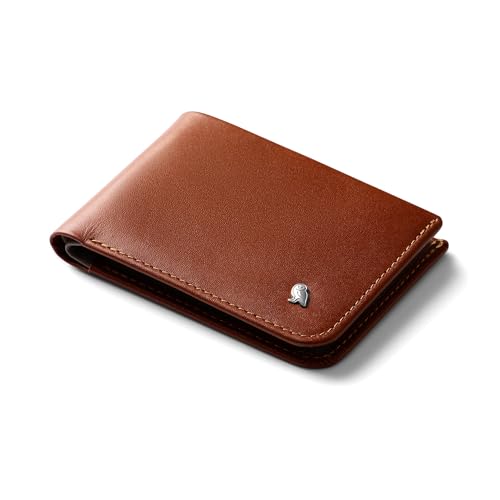
The best Bellroy wallets are the Bellroy Slim Sleeve for a minimalist carry, the Bellroy Note Sleeve for everyday cash and cards, the Bellroy Hide & Seek for a traditional bifold, and the Bellroy Zip Wallet when security and organization matter more than pocket space.
As an Amazon Associate we earn from qualifying purchases at no extra cost to you.


Our Top Picks


Top 3 picks at a glance
Best Bellroy wallets at a glance
| Wallet | Practical capacity | Access speed | RFID | Construction | Best pocket fit |
|---|---|---|---|---|---|
| Slim Sleeve | 4–8 cards plus folded notes | Very fast for cards | Only on versions specifically marked RFID | Leather or fabric, depending on edition | Front or tight trouser pocket |
| Card Sleeve | 2–8 cards | Fastest for a few cards | Not universal | Leather | Front pocket, jacket pocket |
| Note Sleeve | 4–11 cards plus bills | Fast once opened | RFID versions available | Leather | Back or coat pocket |
| Hide & Seek | 5–12 cards plus bills | Medium | RFID versions available | Leather | Back pocket or jacket pocket |
| Zip Wallet | 8–14 cards, notes, coins | Slower, but secure | Depends on version | Leather or fabric accents | Jacket, bag, roomy trouser pocket |
| Travel Wallet | Cards, passport, tickets, currency | Slowest for daily purchases | RFID protection on applicable editions | Leather | Bag or inner jacket pocket |
Capacity varies with card thickness, folded cash and whether you use coins. The figures above describe a comfortable load rather than the maximum number that can physically be forced inside.
Best Bellroy wallet for a minimalist carry: Slim Sleeve
The Slim Sleeve is the strongest choice for people who normally carry four to eight cards and a small amount of cash. Its main advantage is not simply thinness: the pull-tab mechanism presents your cards together, so you can remove the wallet, expose the stack and select a card without opening a bifold.
It is quicker than a traditional wallet for card payments but less convenient for frequent cash users. Banknotes need to be folded, and the wallet becomes noticeably less comfortable when overloaded. A front trouser pocket is usually the best location because the compact footprint minimizes pressure while sitting.
Choose it if
- You carry one or two payment cards, identification and a transit or access card.
- You rarely use cash or can accept folding notes.
- You want rapid card access without a metal cardholder.
For durability, avoid treating the pull tab as a handle. Pull it only far enough to expose the cards; repeatedly yanking it against a full stack places more stress on the stitching and internal panel.
Best Bellroy wallet for two to four cards: Card Sleeve
The Bellroy Card Sleeve is the simplest option in the range. It suits a small set of frequently used cards and delivers extremely fast access through its open slot design. It is a better fit than the Slim Sleeve for someone who does not carry cash and does not want a mechanism or internal divider.
Its limitation is expansion. Once you add several embossed cards, folded notes or receipts, the compact sleeve loses its clean shape. It also provides less separation between cards, so it is not ideal if you regularly carry work credentials, loyalty cards and multiple payment cards.
Select the Card Sleeve when pocket bulk matters more than organization. If you need even one reliable cash compartment, move up to the Slim Sleeve or Note Sleeve.
Best Bellroy wallet for everyday cash: Note Sleeve
The Note Sleeve is the best Bellroy wallet for a balanced everyday load: several cards, full-size banknotes and a few coins. Its bill compartment avoids folding cash, while the quick-access slot keeps a commonly used card separate from the main stack.
Compared with the Slim Sleeve, it is slower to open but much easier to live with if you pay in cash. Compared with the Hide & Seek, it generally has a more compact, modern organization scheme rather than a conventional bifold layout.
Capacity calculation: when the Note Sleeve becomes too full
A typical plastic card is about 0.76 mm thick, although embossed cards and rigid access cards can be thicker. Eight ordinary cards therefore occupy roughly 6 mm before the wallet material and clearance are counted. Add two embossed cards at approximately 1 mm each and the stack can approach 8 mm. That is why a wallet rated for roughly 4–11 cards may feel comfortable at eight cards but strained at ten, especially when cash is also folded inside.
For a comfortable daily setup, place your two most-used cards in the quick-access slots, keep the main compartment to six or seven cards, and remove receipts at the end of each day. This preserves faster access and reduces stretching at the fold.
Best traditional bifold: Hide & Seek
The Bellroy Hide & Seek is the better choice for people who still want a familiar bifold. It provides a concealed cash compartment, card slots and a hidden section for less frequently used cards or receipts. That makes it more organized than a basic slim wallet without becoming a full travel organizer.
It is especially useful when you carry different currencies, a spare card or a small paper receipt. The trade-off is pocket bulk: a bifold has two layers across its entire width, so it usually feels thicker than the Slim Sleeve or Note Sleeve when loaded.
Choose the Hide & Seek over the Note Sleeve if you prefer a conventional left-to-right card layout and want a discreet compartment for backup items. Choose the Note Sleeve if rapid access and a smaller profile are more important.
Best Bellroy wallet for coins and security: Zip Wallet
The Zip Wallet is the most practical Bellroy option for users who carry coins, keys or small loose items alongside cards and cash. Its zipper keeps the contents contained and reduces the chance of cards or folded notes slipping out when the wallet is placed in a bag.
The zipper also makes it slower for quick contactless payments. It is a good compromise for commuters and travelers, but it is unnecessarily bulky for someone who only carries three cards. Keep coins to a small number; a heavy coin load can pull on the zipper and make the wallet uncomfortable in a trouser pocket.
For daily carry, the Zip Wallet fits best in a jacket pocket, backpack organizer or handbag. It can fit in some larger trouser pockets, but sitting on a full zip wallet is less comfortable than sitting on a slim card wallet.
Best Bellroy wallet for travel: Travel Wallet
The Bellroy Travel Wallet is designed for passports, boarding documents, several cards and multiple currencies rather than ordinary pocket carry. It is the most capable option for international trips, but its larger format is excessive as a permanent everyday wallet unless you routinely carry travel documents.
Its organization is valuable at an airport because the passport and key cards have dedicated places. However, the extra compartments create more opportunities to accumulate receipts and unused cards. Empty it after each trip to prevent the wallet from becoming a bulky document pouch.
Leather versus fabric Bellroy wallets
Leather models generally develop a patina: surface color changes, edge darkening and small marks become part of the appearance. This can make a well-used wallet look better over time, but leather also shows moisture, abrasion and deep creasing more visibly. Keep it away from prolonged soaking and do not apply conditioner unless the product care guidance permits it.
Fabric versions are often the better choice for wet commutes, outdoor use and lower weight. Woven materials can resist everyday scuffing, but they may show lint or fraying at high-contact edges. Fabric also tends to look consistent for longer, while leather changes character as it ages.
Long-term durability depends more on load than on material alone. A wallet carrying eight cards and no receipts is likely to age better than one carrying five cards, coins, folded paper and several unused access cards.
RFID protection: useful, but not a reason to choose the wrong size
RFID protection is not universal across every Bellroy wallet or colorway. Check the exact product listing for an RFID designation rather than assuming that all Bellroy leather wallets block contactless signals. RFID protection can reduce unwanted wireless reads, but it also means you may need to remove a card from the wallet before using it at some readers.
For most buyers, capacity and access matter more. A wallet that is too full is uncomfortable even if it has RFID protection. If you work in a setting where cards are frequently scanned, a non-blocking quick-access wallet may be more convenient; if you carry access badges or payment cards in crowded public spaces, an RFID-marked model may be preferable.
Decision matrix: match the wallet to your carry style
| Your situation | Recommended model | Why |
|---|---|---|
| Three to five cards, no cash | Card Sleeve | Smallest and quickest access |
| Four to eight cards and folded emergency cash | Slim Sleeve | Compact with faster card presentation |
| Cards plus full-size banknotes | Note Sleeve | Better cash handling without a large bifold |
| Cards, backup items and discreet storage | Hide & Seek | Traditional layout with hidden capacity |
| Coins, loose keys or maximum containment | Zip Wallet | Zippered organization and secure closure |
| Passport, currencies and travel papers | Travel Wallet | Document-focused capacity |
How to choose the best Bellroy wallet
- Count active cards. Exclude loyalty cards and expired access cards. If the count is three or fewer, start with the Card Sleeve; at four to eight, compare it with the Slim Sleeve.
- Decide how you handle cash. Folded notes point to the Slim Sleeve, while unfolded notes favor the Note Sleeve or Hide & Seek.
- Measure your pocket, not just the wallet. A wallet that fits an empty pocket may become uncomfortable beside a phone, keys or a cardholder.
- Choose RFID deliberately. Select an RFID-marked version when blocking matters, but do not sacrifice access speed for a feature you do not need.
- Leave expansion room. Aim to use about 70–80% of the advertised capacity. That keeps cards easier to remove and reduces stress on seams, folds and closures.
For most people, the Note Sleeve is the safest all-round recommendation, while the Slim Sleeve is the better minimalist choice. Choose the Hide & Seek for classic bifold organization, the Zip Wallet for contained everyday carry, and the Travel Wallet only when passport-sized capacity is part of the job.
Frequently asked questions
Can I carry cash in the Bellroy Slim Sleeve?
Yes, but the Slim Sleeve is better suited to a small amount of folded cash than to frequent cash use. Banknotes need to be folded, and the wallet becomes less comfortable when overloaded. Choose it if you rarely use cash or can accept folding notes; otherwise, the Note Sleeve is more convenient because its bill compartment holds full-size banknotes.
Which Bellroy wallet is easiest to access quickly?
The Card Sleeve offers the fastest access when you carry only a few cards because of its open slot design. The Slim Sleeve is also quick for cards: its pull-tab mechanism presents the card stack without opening a bifold. The Note Sleeve provides a quick-access slot for a commonly used card, while the Zip Wallet and Travel Wallet prioritize containment and organization.
Where should I carry a Bellroy wallet?
The best location depends on the model and how much you carry. The Slim Sleeve and Card Sleeve suit a front pocket, while the Note Sleeve and Hide & Seek fit a back or coat pocket. The Zip Wallet is better in a jacket pocket, bag or roomy trouser pocket, and the Travel Wallet belongs in a bag or inner jacket pocket.
How can I keep a Bellroy wallet from becoming too bulky?
Carry only the cards and cash you use, remove receipts regularly and keep coins to a small number. The article recommends keeping the Note Sleeve’s main compartment to six or seven cards for a comfortable daily setup. Long-term durability also depends on load: unused access cards, folded paper and coins add bulk and stress even when the wallet is not full of cards.
Which Bellroy wallet is best if I carry work credentials and loyalty cards?
The Hide & Seek is a better fit than the Card Sleeve when you need to separate work credentials, loyalty cards and backup items. It provides card slots, a concealed cash compartment and a hidden section for less frequently used cards or receipts. The Card Sleeve offers less separation, while the Slim Sleeve presents cards together as one stack.