Our Top Picks
 Audio-Technica AT-LP120XUSB-BK Direct-Drive Turntable10.0013.86 x 17.8 x 5.57 Inches20.2 PoundsCheck on Amazon

Best DJ Turntables for Every Skill Level
The best DJ turntables are direct-drive models that hold speed under cueing, offer a pitch range suited to your mixing style, and match your cartridge, mixer inputs, and transport needs. For a first setup, the Audio-Technica AT-LP120XUSB is a practical all-rounder; for regular club work, the Technics SL-1210MK7 is a stronger long-term choice; and for a portable, traditional scratch setup, the Reloop RP-7000 MK2 is worth considering.
Choose by setup, not just by torque
Direct drive is the usual choice for DJing because the motor sits beneath the platter and can bring it up to speed quickly after you release or manipulate the record. Torque matters most for scratching and fast cue recovery. For beatmatching, stable rotation and a pitch fader you can control precisely are at least as important. A higher torque figure alone does not guarantee better mixes.
As an Amazon Associate we earn from qualifying purchases at no extra cost to you.
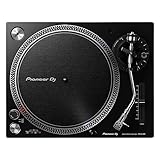

Before buying, decide what you will connect. A turntable with a built-in phono preamp can feed a line input; a model without one needs a phono input on your mixer or a separate preamp. Check cartridge mounting too: a standard removable headshell gives you broad cartridge options and makes swapping a spare easier. Finally, consider weight and lid design if you will carry the deck to gigs.
Quick decision matrix
| Your situation | Good starting point | Why it fits |
|---|---|---|
| Learning at home, with a limited budget | Audio-Technica AT-LP120XUSB | Direct drive, adjustable pitch, removable headshell, and switchable phono/line output. |
| Building a serious home or mobile setup | Reloop RP-7000 MK2 | DJ-focused direct drive, multiple pitch ranges, and a robust layout suited to cueing and scratching. |
| Regular club use or a familiar club-style workflow | Technics SL-1210MK7 | Established operating layout, adjustable pitch ranges, and a design aimed at demanding DJ use. |
| Portable practice or occasional gigs | Choose a lighter deck with a protective cover and verify its transport weight | Portability depends on the complete package, not just the turntable’s footprint. |
These are starting points, not substitutes for checking the exact version and its connections. Bundles may include a cartridge; other listings may not. Confirm what is in the box before comparing prices.
How the main options differ
Audio-Technica AT-LP120XUSB: approachable and flexible
The AT-LP120XUSB suits beginners who want one deck for learning, listening, and digitizing records. Its direct-drive motor and adjustable pitch let you practice manual beatmatching, while the switchable phono/line output makes it easier to connect to different equipment. The removable headshell supports cartridge changes without replacing the whole arm assembly.
Its broad feature set is useful, but it is still important to treat setup as part of the purchase: level the deck, balance the tonearm, and set tracking force and anti-skate for the cartridge. The USB connection is for computer recording, not a replacement for the stereo output needed by a DJ mixer. It is commonly positioned in the roughly $300–$400 market range, with prices varying by bundle and region.
Reloop RP-7000 MK2: a DJ-first workhorse
The RP-7000 MK2 is aimed more squarely at DJ use than general-purpose record playback. Its high-torque direct-drive design supports quick starts and platter manipulation, and its selectable pitch ranges accommodate both fine beatmatching and larger tempo changes. It has a standard removable headshell, so cartridge choice is not restricted to one proprietary format.
Check the rear-panel connections and the included accessories for the specific unit you are considering; do not assume a built-in phono preamp or cartridge is included. This deck makes more sense when you already have a mixer with phono inputs, or are prepared to add a preamp. It generally falls in a higher price class than entry-level direct-drive decks, often around $500–$700.
Technics SL-1210MK7: club-oriented familiarity
The SL-1210MK7 is a modern black version of Technics’ familiar DJ turntable format. It offers direct drive, selectable pitch ranges, and controls arranged for conventional two-deck mixing. That familiarity can be valuable if you practice at home and expect to use similar layouts in clubs. Its detachable headshell allows cartridge changes, while the lack of a built-in phono preamp means you need a phono input or external preamp.
It is not automatically the right choice for every beginner: its price is usually in the roughly $900–$1,200 range, and a budget-conscious learner may get more immediate value from a less expensive deck plus a suitable mixer and cartridges. Its appeal is strongest for DJs who expect frequent use and value the established workflow.
Compare the specifications that affect your mixing
| Model | Drive and DJ controls | Cartridge approach | Connection point to check | Typical price class |
|---|---|---|---|---|
| Audio-Technica AT-LP120XUSB | Direct drive; adjustable pitch | Removable standard headshell | Switchable phono/line output; USB for recording | About $300–$400 |
| Reloop RP-7000 MK2 | High-torque direct drive; selectable pitch ranges | Removable standard headshell | Plan on a phono input or separate preamp unless the exact setup provides otherwise | About $500–$700 |
| Technics SL-1210MK7 | Direct drive; selectable pitch ranges | Removable standard headshell | Phono input or external preamp required | About $900–$1,200 |
Pitch range changes how far the fader can alter tempo, not how accurately the deck holds its speed. A wider range is useful for large tempo differences, but the same physical fader movement covers more tempo, which can make tiny adjustments harder. Start with a moderate range if available, then widen it only when your track selection demands it.
Match the turntable to your cartridge and mixer
Most standard DJ cartridges mount to a removable headshell, but check that the cartridge, stylus, and tonearm are compatible and that a suitable headshell is included. For scratching, choose a cartridge and stylus intended to track securely during back-cueing; for mostly listening or gentle mixing, other priorities may matter more. Set tracking force to the cartridge maker’s recommended range rather than guessing, since too little force can cause mistracking and too much can increase record and stylus wear.
For connections, trace the signal path before ordering:
- Turntable to mixer phono input: use the turntable’s phono output and connect the ground wire if the deck has one.
- Turntable to mixer line input: use a built-in phono/line switch set to line, or add an external phono preamp. A phono-level signal into a line input will usually sound very quiet and thin.
- Turntable to computer: USB can simplify recording on models that provide it, but you still need the right software and should confirm whether the deck’s USB path includes the required phono equalization.
Check portability as a complete-system calculation
A turntable that fits in a carry case may still be impractical once you add its platter, dust cover, headshell, records, and mixer. For a simple two-deck mobile rig, estimate the load before choosing: two decks at about 11 kg each, a 6 kg mixer, and 8 kg of records add up to roughly 36 kg, before cases and cables. That means transport weight—not just deck dimensions—can be the deciding factor for public transit or stairs.
If you travel often, look for secure arm clips, a removable dust cover or lid that can be packed safely, and a case sized for the exact deck. Keep cartridges protected separately when possible. For a permanent home setup, heavier construction and less convenient carrying may be a fair trade for stability and durability.
A practical buying sequence
- Confirm the mixer input: phono, line, or both. This prevents a costly connection mismatch.
- Pick your use: prioritize torque and tracking for scratching; prioritize pitch control and stable speed for beatmatching.
- Verify cartridge and bundle: check whether a cartridge, stylus, and headshell are included and compatible with your intended use.
- Set a total-system budget: include mixer, cartridges, needles, speakers or headphones, cables, and any phono preamp—not just the decks.
- Plan for transport: add up the weight of both decks, mixer, records, and cases if you expect to travel.
For a low-friction first setup, start with an AT-LP120XUSB and verify that its output mode matches your mixer. Choose the RP-7000 MK2 if you want a more DJ-focused deck and already have a phono-capable setup. Choose the SL-1210MK7 when club-style familiarity and regular-duty use justify the higher investment.
Frequently asked questions
Can I connect the AT-LP120XUSB directly to any mixer?
You can connect it directly only if its output mode matches the mixer input. Set the turntable to line when using a line input, or use phono output with a mixer’s phono input. The AT-LP120XUSB also includes USB for computer recording, but USB does not replace the stereo output needed for a DJ mixer.
Do I need a phono preamp for the Reloop RP-7000 MK2?
You may need a separate phono preamp for the RP-7000 MK2. The article says not to assume that this deck includes a built-in phono preamp, so it makes the most sense with a mixer that has phono inputs or with an external preamp. Check the exact unit’s rear-panel connections before ordering.
Is a higher-torque turntable better for beatmatching?
A higher-torque turntable is not automatically better for beatmatching. Torque matters most for scratching and fast cue recovery, while beatmatching also depends on stable rotation and a pitch fader that you can control precisely. A wider pitch range permits larger tempo changes, but it can make tiny adjustments harder because the same fader movement covers more tempo.
Do these turntables include a cartridge and stylus?
Not every listing necessarily includes a cartridge or stylus. The article says bundles may include a cartridge while other listings may not, so you should confirm what is in the box. Also check that the cartridge, stylus, and removable headshell are compatible with the tonearm and your intended use, particularly for scratching.
How much equipment should I count when planning portable DJ setup?
You should count the complete system rather than only the turntable footprint. A simple two-deck mobile rig can include two decks at about eleven kilograms each, a six-kilogram mixer, and eight kilograms of records, totaling roughly thirty-six kilograms before cases and cables. Add the platter, dust covers, headshells, records, mixer, and cases when estimating transport.