The best chain link fence kits for DIY installation are usually 4-foot galvanized kits for general yard boundaries, 5- to 6-foot privacy-oriented kits for larger dogs, and compact 3- to 4-foot kits with smaller mesh for pet enclosures.
The right choice depends less on the advertised length than on five specifications: fence height, mesh opening, wire gauge, coating, and whether the kit includes posts, fittings, gates, and concrete-ready hardware. A cheap kit can become expensive if it covers only the fabric and leaves you to source every structural component separately.
As an Amazon Associate we earn from qualifying purchases at no extra cost to you.


Our Top Picks
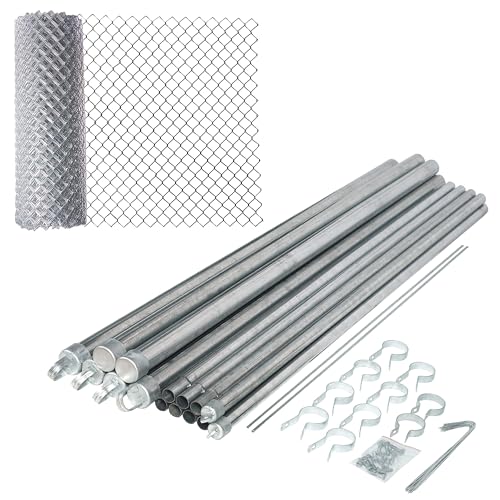


Top 3 picks at a glance
Best chain link fence kits by project
| Project | Recommended height | Mesh and wire | Typical kit length | Best coating | Important extras |
|---|---|---|---|---|---|
| Front or side-yard boundary | 4 feet | 2-inch mesh, 11.5- or 12.5-gauge | 50-100 feet | Galvanized or black vinyl-coated | Line posts, top rail, tension wire, tension bands |
| Medium or large dog enclosure | 5-6 feet | 2-inch mesh, 11.5-gauge | 50-100 feet | Galvanized or vinyl-coated | Heavy terminal posts, gate frame, brace bands, dig barrier |
| Small dog or puppy run | 4-5 feet | 1- or 1.5-inch mesh, 12.5- or 14-gauge | 25-50 feet | Vinyl-coated | Small-mesh gate, bottom tension wire, ground anchors |
| Chicken or garden enclosure | 4-6 feet | 1-inch mesh, 14-16 gauge | 25-100 feet | Galvanized | Top netting or inward overhang, predator-resistant latch |
| Temporary play or sports area | 4-6 feet | 2-inch mesh, 11.5- or 12.5-gauge | 50 feet | Galvanized | Removable footings or driven posts where permitted |
Head-to-head: the main kit types
Galvanized chain link kits
Galvanized steel is the practical default for most DIY projects. A zinc coating protects the steel from moisture, and the uncolored finish is easy to inspect for damage. These kits are commonly the least expensive, often falling in the general range of $250-$700 for a 50-foot project depending on height, gauge, and included hardware.
Choose galvanized fencing when cost, availability, and easy repair matter more than appearance. It is especially sensible for a backyard dog run, utility enclosure, or side boundary where the fence does not need to blend into landscaping.
Black or green vinyl-coated kits
Vinyl-coated chain link has a colored polymer layer over the steel. Black is the most common residential appearance because it visually recedes against shrubs and trees. It usually costs more than plain galvanized fencing, but the coating can make the fence look less industrial and adds another layer between the steel and weather.
Check the stated wire gauge carefully. A kit may list “11.5-gauge” while describing the core wire, the finished coated diameter, or both. Compare core-gauge specifications whenever possible. A thicker coating does not automatically mean a stronger fence.
Light-duty utility kits
Light-duty kits may use 14- or 16-gauge wire, lighter line posts, and fewer bracing parts. They can work for a temporary garden boundary or a low-pressure enclosure, but they are a poor match for dogs that jump, lean, dig, or repeatedly push the mesh.
For a permanent pet enclosure, 11.5- or 12.5-gauge mesh is a safer target. The lower the gauge number, the thicker the wire. A 9-gauge fence is substantially heavier than a 14-gauge fence, although it also requires more effort to transport, cut, stretch, and support.
How kit length changes the installation
A “50-foot kit” normally means approximately 50 linear feet of fabric, not 50 feet of usable finished fence after corners, gates, and waste. Measure the perimeter, then subtract the width of each gate only if the kit instructions explicitly treat the gate as a separate section. Otherwise, allow extra material.
Use this calculation before ordering:
Required fabric length = perimeter − gate openings + 5% to 10% allowance.
For example, a 20-by-30-foot rectangular dog run has a 100-foot perimeter. If it includes a 4-foot gate, the fabric requirement is 96 feet. Adding 8% for trimming, overlaps, and measurement errors produces 103.7 feet, so a 100-foot kit is marginal; a 110- or 120-foot option is more practical.
Every corner also consumes hardware and creates a tension point. A rectangular enclosure needs four terminal or corner posts, while a straight run needs terminal posts at each end and line posts between them. Do not treat line posts as interchangeable with corner or gate posts: terminal posts carry much more tension.
What should be included in a complete kit?
Before comparing prices, separate complete systems from fabric-only packages. A useful residential kit may include:
- Chain link fabric in the advertised height and length.
- Terminal posts for corners and gate openings.
- Line posts, post caps, and top rail.
- Tension bars and tension bands for attaching fabric to terminal posts.
- Brace bands and rail ends at corners and gate posts.
- Line-post loop caps to support the top rail.
- Bottom tension wire or specified clips.
- A gate frame, hinges, latch, and gate fabric if a gate is listed.
- Bolts and fittings matched to the post diameter.
Concrete, gravel, tools, and sometimes the gate itself are commonly excluded. The kit should state post diameter and wall thickness, not just “heavy duty.” Fittings designed for a 2-3/8-inch terminal post will not properly fit a smaller line post.
Decision matrix: match the kit to your situation
| Your situation | Choose | Avoid | Why |
|---|---|---|---|
| Flat yard, ordinary boundary | 4-foot, 2-inch, 11.5- or 12.5-gauge galvanized kit | Very light 16-gauge kits | Good balance of cost, rigidity, and easy sourcing |
| Large dog that jumps or leans | 6-foot, 2-inch, 11.5-gauge kit with braced terminal posts | 4-foot fence and unbraced gate posts | Height prevents jumping; bracing resists pulling forces |
| Small dog or puppy | 4-5-foot, 1- or 1.5-inch mesh, bottom tension wire | Large 2-inch openings | Smaller mesh reduces head and paw escape risks |
| Digging dog | Standard kit plus buried apron or ground-level dig barrier | Relying on fence height alone | Most escapes occur below the fence, not over it |
| Coastal or persistently wet climate | Quality galvanized or vinyl-coated wire with protected fittings | Uncoated cut edges and ordinary indoor-grade hardware | Salt and standing moisture accelerate corrosion |
| Sloped ground | Smaller fabric sections or a stepped layout | Assuming a single roll will follow every slope cleanly | Stepping prevents large gaps beneath the mesh |
Installation requirements that affect the buying decision
DIY chain link installation is manageable, but it is not simply a matter of unrolling mesh and attaching it. Plan for post-hole digging, accurate alignment, concrete setting, fabric stretching, and gate adjustment.
- Mark the perimeter and utilities. Confirm property lines and have underground utilities identified before digging.
- Set terminal and gate posts first. These determine the fence line and carry the greatest load. Use concrete where required by local conditions and allow it to cure according to the concrete instructions.
- Install line posts and top rail. Keep posts aligned and at a consistent height. The spacing specified by the kit is usually around 6-10 feet; follow the manufacturer’s structural guidance rather than maximizing spacing.
- Attach one end of the fabric. Use a tension bar at the first terminal post. Do not substitute ordinary wire for the proper tension fittings at a loaded corner.
- Stretch, then fasten. Pull the mesh tight enough that it does not sag, but do not over-tension it until posts lean. Attach it to the top rail and line posts after the main tension is established.
- Add bottom control. Install tension wire, clips, or a buried apron according to the pet and terrain requirements. This is particularly important for small dogs and diggers.
- Hang and adjust the gate last. Gates need clearance for hinges, latches, soil movement, and frost heave. A gate post that is slightly out of plumb can cause persistent binding.
Common buying mistakes
Choosing by length alone: A long roll of light wire is not necessarily a better value than a shorter, heavier kit. Compare the fabric gauge, post thickness, and included terminal hardware.
Ignoring the gate: Gates create concentrated loads. For a 6-foot pet fence, a lightweight garden gate may sag or flex even when the fabric is strong. Look for a rigid frame, adjustable hinges, and a latch that cannot be opened by the animal.
Using the wrong mesh opening: A large dog may be fine with 2-inch mesh, but puppies, toy breeds, and poultry need smaller openings. Measure the animal’s head and consider paw placement, not only escape height.
Skipping local requirements: Property setbacks, maximum fence heights, permits, and rules for front-yard fences vary by municipality and homeowners association. Confirm those requirements before buying a nonreturnable kit.
Frequently asked questions
What does chain link wire gauge mean?
Chain link wire gauge indicates the thickness of the wire, with lower gauge numbers representing thicker wire. For example, a 9-gauge fence is substantially heavier than a 14-gauge fence. Thicker wire generally provides more rigidity, but it also requires more effort to transport, cut, stretch, and support during installation.
How many posts does a rectangular dog run need?
A rectangular dog run needs terminal or corner posts at each corner, plus line posts between them. A rectangular enclosure therefore has four terminal or corner posts before accounting for any gate openings. Terminal posts carry more tension than line posts, so they should not be replaced with lighter line posts.
Does a chain link kit usually include concrete?
Concrete is commonly excluded from chain link fence kits, along with gravel and sometimes the gate itself. Before ordering, confirm whether the package includes the fabric, posts, top rail, fittings, gate components, and other hardware. Plan separately for concrete if the installation requires it, and follow the concrete instructions for curing.
How should chain link fencing be installed on sloped ground?
On sloped ground, use smaller fabric sections or a stepped layout rather than assuming a single roll will follow every slope cleanly. Stepping the fence helps prevent large gaps beneath the mesh. The installation may require additional measurement and planning so the posts remain aligned and the lower edge follows the terrain appropriately.
Why is a 50-foot fence kit not always enough for a 50-foot boundary?
A 50-foot kit normally refers to approximately 50 linear feet of fabric, not exactly 50 feet of usable finished fence after corners, gates, and waste. Measure the perimeter and account for gate openings, trimming, overlaps, and measurement errors. Every corner also consumes hardware and creates a tension point, so the advertised length may be marginal.
Bottom line
For most residential buyers, the best chain link fence kits are complete 50- to 100-foot systems with 11.5- or 12.5-gauge galvanized or vinyl-coated fabric, correctly sized posts, top rail, tension hardware, and a gate matched to the fence height. Pick 4 feet for a normal boundary, 5-6 feet for larger dogs, and smaller mesh when the enclosure must contain puppies, small pets, or poultry. Spend extra on terminal-post strength, gate hardware, and a dig barrier before paying for decorative upgrades; those parts determine whether the finished fence stays secure.