The best integrated amplifiers for music and home audio are the WiiM Amp for compact streaming systems, Yamaha R-N600A for a flexible all-in-one setup, Marantz PM6007 for affordable two-channel listening with vinyl, and NAD C 379 for rooms and speakers that need more upgrade headroom.
An integrated amplifier combines a preamplifier, power amplifier, input switching, and usually a digital-to-analog converter in one chassis. The right choice depends less on the biggest wattage number and more on four practical questions: how much power your speakers and room require, which sources you need to connect, whether streaming is built in, and whether you use a turntable.
As an Amazon Associate we earn from qualifying purchases at no extra cost to you.


Our Top Picks
 Yamaha Audio A-S301BL Natural Sound Integrated Stereo Amplifier17.1 x 15.25 x 6 inches19.8 poundsCheck on Amazon
 Marantz Slimline Integrated Stereo Amplifier with 45W14.57 x 17.32 x 4.13 Inches23.1 poundsCheck on Amazon
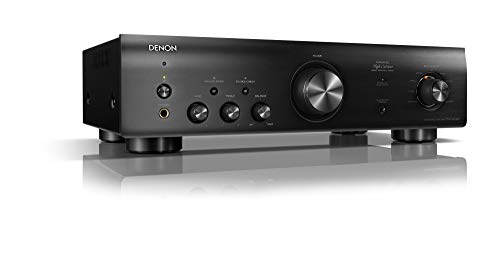
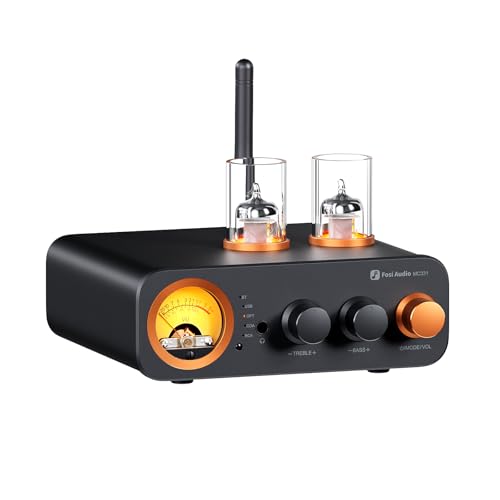
Top 3 picks at a glance
Best integrated amplifiers by listening situation
| Amplifier | Typical power class | Useful features | Best fit | Typical market range |
|---|---|---|---|---|
| WiiM Amp | 60 W per channel at 8 ohms; up to 120 W at 4 ohms | Network streaming, HDMI ARC, room correction, compact design | Small rooms, TV systems, efficient bookshelf speakers | Usually $300–$400 |
| Marantz PM6007 | 45 W per channel at 8 ohms | Built-in MM phono stage, optical and coaxial digital inputs | Vinyl and CD-focused systems without built-in streaming | Usually $500–$700 |
| Yamaha R-N600A | 80 W per channel at 8 ohms | MusicCast streaming, HDMI ARC, phono input, digital inputs, subwoofer output | Medium rooms and mixed TV, streaming, and vinyl use | Usually $700–$900 |
| NAD C 379 | 80 W per channel at 8 ohms | Bluetooth, digital inputs, MM phono input, modular expansion options | Listeners who may add streaming or other modules later | Usually $900–$1,200 |
| Rotel A11 MKII | 50 W per channel at 8 ohms | Bluetooth, MM phono input, analog inputs, subwoofer output | Simple analog-first systems with a turntable | Usually $700–$900 |
Power figures are stated under different measurement conditions by different manufacturers, so they should be used as a guide rather than a laboratory head-to-head ranking. Speaker sensitivity, impedance behavior, listening distance, and room acoustics can matter just as much.
WiiM Amp: best compact integrated amplifier for streaming
The WiiM Amp is the easiest recommendation when a small system needs modern network features without a separate streamer. It supports network playback, Bluetooth, HDMI ARC for a television, optical input, USB audio, and analog line input. Its built-in room-correction tools can also be useful in apartments or offices where speaker placement is limited.
Its 60-watt-per-channel rating into 8-ohm speakers is enough for many bookshelf speakers in a small or medium room. A sensible pairing is a speaker rated around 6–8 ohms with sensitivity near 88 dB or higher. Very large floorstanding speakers, difficult low-impedance designs, or loud listening across a large room may need a more powerful amplifier.
Why choose it
- Strong streaming and multiroom functionality for its size.
- HDMI ARC makes TV volume control convenient.
- Room correction can reduce bass problems caused by placement.
- Compact enough for a desk, bedroom, or small living room.
The main compromise is connectivity. It is designed around digital and network sources, so it is not the best choice for a system requiring many traditional analog components or a dedicated moving-magnet phono input.
Yamaha R-N600A: best all-rounder for a living-room system
The Yamaha R-N600A is a strong choice when one amplifier must handle streaming, television, vinyl, digital audio, and conventional analog sources. It includes MusicCast network features, HDMI ARC, a phono input, optical and coaxial digital inputs, and a subwoofer output.
Its 80 watts per channel is a useful middle ground for medium-sized rooms. The amplifier is a better fit than the WiiM Amp when you need more physical inputs, a full-width hi-fi chassis, and greater flexibility for a traditional stereo system.
MusicCast is particularly helpful if you already use compatible Yamaha equipment. If your home contains devices from several streaming ecosystems, check app support and network requirements before buying. A feature-rich amplifier is only convenient if your preferred services and control method work with it.
Marantz PM6007: best affordable choice for vinyl and simple digital audio
The Marantz PM6007 suits listeners who want a conventional integrated amplifier with a built-in moving-magnet phono stage and no requirement for built-in network streaming. Its 45 watts per channel is modest on paper but adequate for efficient bookshelf speakers in a small or medium room.
It provides optical and coaxial digital inputs for a television, CD transport, or other digital source, along with analog line inputs. Streaming can be added through a separate network streamer connected to one of those inputs.
Choose the PM6007 when sound sources will remain fairly simple: turntable, television, CD player, and perhaps one external streamer. Avoid it for inefficient speakers in a large room or for systems where you expect to connect numerous HDMI devices directly.
NAD C 379: best upgrade-friendly integrated amplifier
The NAD C 379 is aimed at buyers who want a capable stereo foundation rather than a sealed all-in-one product. It offers 80 watts per channel, digital inputs, Bluetooth, a moving-magnet phono input, and modular expansion options through NAD’s MDC design.
That upgrade path matters if streaming standards or connection requirements may change. Instead of replacing the whole amplifier, a compatible module can add functionality later. Confirm the exact module compatibility and current availability before purchasing, since expansion products can change over time.
The C 379 makes the most sense with medium-sized speakers, a turntable, and a plan to add network streaming or additional digital functionality. It is less attractive if a compact footprint and fully integrated streaming are your highest priorities.
Rotel A11 MKII: best analog-first integrated amplifier
The Rotel A11 MKII concentrates on core stereo duties: amplification, Bluetooth, analog inputs, digital conversion, and a built-in moving-magnet phono stage. Its 50 watts per channel works well with reasonably sensitive bookshelf or compact floorstanding speakers.
This is a practical option for listeners who prefer a physical source-based system and do not need extensive network software. A separate streamer can be added later, but that increases both cost and equipment count.
How much amplifier power do you need?
Room size alone does not determine the answer. Speaker sensitivity and listening distance are more useful starting points. Every 3 dB increase in speaker sensitivity approximately halves the amplifier power needed for the same volume, while doubling listening distance reduces direct sound by roughly 6 dB in an open space.
For a worked example, assume an 88 dB-sensitive speaker, a listening distance of 3 meters, and a desired peak level of 95 dB. A rough free-field estimate loses about 9.5 dB from 1 meter to 3 meters. That leaves approximately 78.5 dB from 1 watt at the listening seat. Reaching 95 dB therefore requires about 16.5 dB of additional level, or roughly 45 watts. Allowing 3–6 dB of headroom for musical peaks suggests an amplifier capable of approximately 90–180 watts per channel under comparable conditions.
This is an estimate, not a guarantee. Room gain, speaker impedance dips, bass content, and distortion limits can change the result. In practice, an 80-watt amplifier may work well with those speakers at moderate levels, while a 45-watt model may clip during loud bass-heavy listening. If the amplifier clips, reduce the volume or choose more efficient speakers and greater power; do not assume a larger number alone solves every problem.
Speaker and room matching decision matrix
| Your situation | Prioritize | Suitable direction |
|---|---|---|
| Desk or small room, streaming and TV | Compact size, HDMI ARC, app control, room correction | WiiM Amp with 6–8 ohm bookshelf speakers |
| Medium living room, several source types | At least 70–80 W per channel, phono, digital inputs, subwoofer output | Yamaha R-N600A |
| Turntable-centered system | MM phono stage, low noise, several analog inputs | Marantz PM6007 or Rotel A11 MKII |
| Future upgrades likely | Modular expansion and reserve power | NAD C 379 |
| Large room or inefficient speakers below about 86 dB sensitivity | More current capability and higher continuous power | Consider a more powerful amplifier class rather than a compact model |
Check the inputs before buying
- Television: HDMI ARC is usually the most convenient option because the TV remote can control volume. Optical works well but normally requires separate volume control.
- Turntable: Verify that the amplifier has an MM phono input. A moving-coil cartridge usually needs a separate compatible phono preamplifier unless the amplifier specifically supports MC.
- Streaming: Built-in Wi-Fi streaming is more capable than Bluetooth, especially for multiroom playback and lossless services. Bluetooth is convenient but depends on the phone or computer for control.
- Subwoofer: Check for a dedicated subwoofer output and confirm whether its crossover behavior suits your speakers. A line-level output is not always the same as bass management.
- Multiple digital sources: Count optical, coaxial, USB, and HDMI inputs separately. A television, game console, CD transport, and computer can quickly use every digital connection.
Final buying advice
Choose the WiiM Amp for the smallest, smartest streaming system; the Yamaha R-N600A for the broadest all-in-one living-room feature set; the Marantz PM6007 for straightforward vinyl and digital listening; the NAD C 379 for a system that may grow; and the Rotel A11 MKII for a clean analog-first setup.
Before ordering, compare the amplifier’s continuous power with the speaker’s impedance and sensitivity, measure the listening distance, and list every source you plan to connect. The best integrated amplifier is the one that has enough clean headroom, the right inputs, and a speaker pairing that remains comfortable at your normal listening level.