The best lawn aerators for compact soil are hollow-tine core aerators for serious compaction, spike aerators for light maintenance, and rolling drum aerators when you need faster coverage with less lifting.
Heavy clay lawns usually benefit most from removing plugs of soil rather than simply poking holes. Core aeration creates open channels for air, water, and roots, while spike and rolling aerators are easier to use but can compress the soil around each penetration if used aggressively.
As an Amazon Associate we earn from qualifying purchases at no extra cost to you.




Our Top Picks
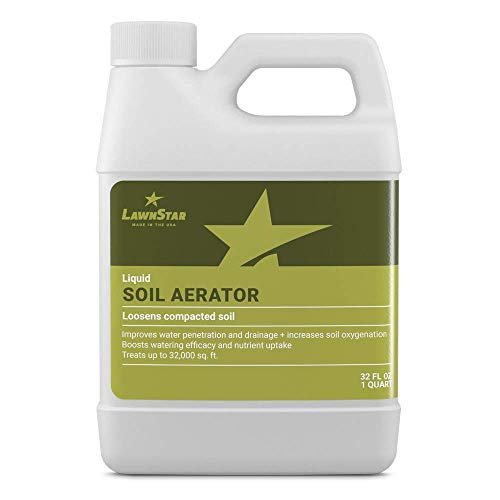
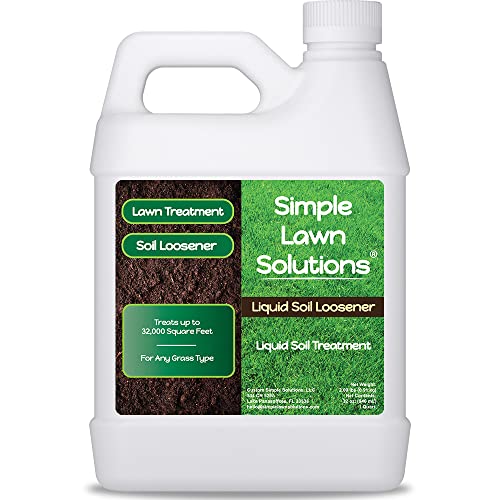 Liquid Soil Loosener- Soil Conditioner-Use alone or when32 Ounce5 x 2.25 x 8 Inches2 PoundsCheck on Amazon
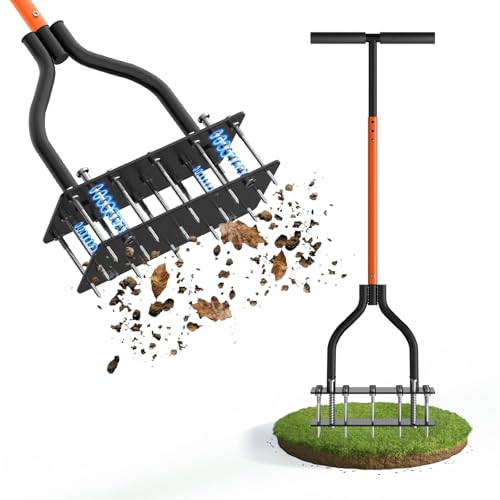
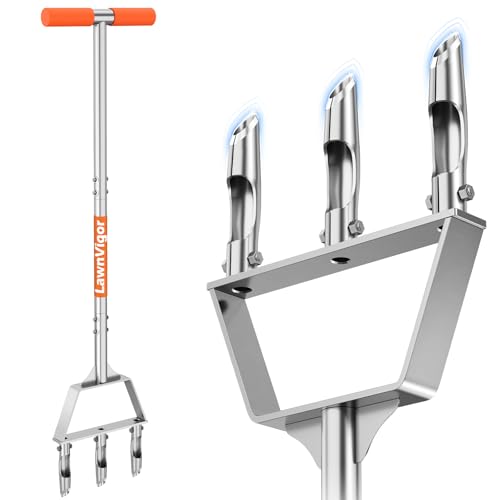
Top 3 picks at a glance
Quick comparison: spike vs. core vs. rolling aerators
| Aerator type | Typical tine depth | Best use | Heavy-clay performance | Typical market range |
|---|---|---|---|---|
| Manual core aerator | 2–4 inches | Small lawns and isolated compact areas | Excellent, if soil moisture is correct | Usually $25–$70 |
| Tow-behind core aerator | 2–3 inches | Large lawns with a riding mower or lawn tractor | Very good | Usually $250–$700 |
| Spike aerator | 1–3 inches | Light compaction and frequent maintenance | Fair to poor when soil is severely hard | Usually $30–$150 |
| Rolling drum aerator | About 1–2 inches | Quick coverage on small or medium lawns | Fair, with added weight and moist soil | Usually $60–$250 |
| Aerator shoes | About 1–2 inches | Small patches and casual maintenance | Poor for deep compaction | Usually $15–$40 |
Best choices by lawn condition
| Your situation | Best choice | Why |
|---|---|---|
| Dense clay, puddling, thin grass, or hard traffic lanes | Core aerator | Removes soil instead of displacing it sideways |
| Small lawn with a few visibly hard patches | Manual hollow-tine core aerator | Low cost and precise placement |
| More than about 5,000 square feet and access to a tractor | Tow-behind plug aerator | Efficient coverage and adjustable weight |
| Moderate compaction with frequent seasonal maintenance | Spike or rolling aerator | Fast, simple, and less disruptive |
| Very dry, brick-hard ground | None until watered correctly | Dry soil resists penetration and can damage tines |
Best lawn aerators for compact soil
Best overall for severe compaction: a hollow-tine core aerator
A hollow-tine core aerator is the strongest choice when compacted clay is preventing drainage and root growth. Its tubular tines remove plugs commonly measuring about 2–4 inches deep. The important difference is that the soil leaves the lawn rather than being pushed into the surrounding soil.
For a small lawn, a manual two-tine or four-tine core aerator is usually sufficient. Yard Butler’s Core Aerator is a recognizable example of this category, with a long handle and hollow digging tines designed for individual plugs. It is slow, but it gives you control around trees, edging, irrigation heads, and shallow roots.
Choose a manual core tool when you have less than roughly 2,000–3,000 square feet to treat or when compaction is concentrated in walkways and play areas. Expect physical work: each step must drive the tines into the ground, and hard clay may require two passes after watering.
Best for large lawns: tow-behind plug aerator
A tow-behind core aerator is the practical choice for broad lawns. Models such as the Agri-Fab 48-inch Plug Aerator use multiple plug-removing spoons across a wide frame and can be pulled by a compatible riding mower or lawn tractor. Brinly also sells tow-behind plug aerators in this general category.
Look for a working width of at least 40 inches, a transport mode that lifts the tines off the ground, replaceable or serviceable tine components, and a tray that accepts additional weight. Empty units may not penetrate hard clay deeply enough. Water-filled weights, concrete blocks secured to the tray, or the manufacturer’s recommended ballast can improve penetration.
Do not assume more weight is always better. Excess ballast can overload the hitch, stress the frame, or cause the tines to dig too deeply. The target is roughly 2–3 inches of penetration with consistent plugs, not a machine that gouges the surface.
Best for regular light maintenance: spike aerator
Spike aerators use solid spikes to make holes without removing soil. They include handheld forks, rolling spike drums, tow-behind spike units, and aerator sandals. They are useful when the lawn is only moderately compacted or when you want to improve surface infiltration between deeper core-aeration sessions.
The limitation is soil displacement. A solid tine pushes clay sideways and downward, so repeated passes over the same area can create dense walls around the hole. Spike tools are therefore a poor substitute for core aeration on lawns with standing water, severe foot traffic, or roots growing in the top inch of soil.
Use a spike aerator when the ground is already reasonably workable, and vary the direction of travel rather than repeatedly following the same tracks. A single pass in spring or early summer can help mild compaction, but it will not correct a chronically sealed clay profile.
Best compromise for speed: rolling drum aerator
A rolling aerator is easier to maneuver than a tow-behind unit and covers ground faster than a handheld fork. Some drums use solid spikes; others use short coring tines. Models with a fillable drum can gain penetration from added water or sand, provided the manufacturer permits it.
Rolling designs work best on small and medium lawns with moderate compaction. Their weakness is inconsistent depth: the drum may bounce on hard ground, and the operator may need to add weight or slow down. Choose a model with a wide, stable frame, a comfortable handle, and a cleaning method for clay that sticks inside the tines.
How deep should an aerator penetrate?
For most established turf, aim for 2–3 inches of effective penetration. Shallow one-inch holes may improve the surface temporarily, but they do little for a compact layer beneath the root zone. Going much deeper can disturb roots, cables, irrigation lines, or shallow tree roots.
Spacing also matters. A useful target is about 15–20 holes per square foot for severe compaction, or approximately 2–3 inches between holes. A single pass from a machine may not reach that density, so a second pass at a right angle can be worthwhile.
Here is a practical coverage calculation. A 48-inch tow-behind aerator covers 4 feet per pass. At a walking or mowing speed of 3 miles per hour, its theoretical coverage is:
4 feet × 3 miles per hour × 5,280 feet per mile ÷ 43,560 square feet per acre = about 1.45 acres per hour.
Allowing for turning, overlap, loading, and uneven ground, real coverage may be closer to 0.7–1 acre per hour. A 5,000-square-foot lawn is only about 0.115 acre, so one careful session should take well under an hour once setup and cleanup are included.
How to aerate compact clay without making the problem worse
- Check moisture first. Dig a small test hole 3–4 inches deep. The soil should crumble when squeezed, not form a muddy ribbon and not resist the shovel like concrete.
- Water one day before aerating. Apply about 0.5–1 inch of water, depending on existing moisture and drainage. The goal is pliable soil, not saturated soil.
- Mark hazards. Identify irrigation heads, invisible pet fences, shallow cables, and exposed tree roots before using deep tines.
- Make one test pass. Measure the actual hole depth and inspect whether plugs are being removed. Adjust ballast or moisture before treating the whole lawn.
- Use two directions only when needed. Cross-hatching a compacted area improves hole density, but it also increases surface disturbance.
- Leave the plugs on the lawn. They usually break down within several days and return minerals and microorganisms to the surface.
- Top-dress after aerating. Spread a thin layer—about one-quarter inch—of suitable compost or screened soil. This helps fill channels without smothering turf.
- Overseed promptly if needed. Open holes improve seed-to-soil contact, but keep the area evenly moist until germination.
What to look for before buying
- Hollow versus solid tines: hollow tines are the priority for serious compaction.
- Depth control: adjustable tine height or a stable frame is more valuable than an advertised maximum depth.
- Weight capacity: particularly important on tow-behind equipment, but stay within the rated limit.
- Replaceable parts: clay is abrasive, and tines eventually bend, clog, or wear.
- Transport capability: a lift lever or transport wheels prevent unnecessary digging across paths and driveways.
- Storage footprint: manual and rolling tools suit small sheds; wide tow-behind models need substantially more room.
Frequently asked questions
When should I aerate a compact lawn?
Aerate when the soil is moist enough to crumble, not muddy or hard like concrete. The article recommends watering one day beforehand if needed, then checking a small test hole before treating the whole lawn. It says a single pass in spring or early summer can help mild compaction; for severe compaction, use a core aerator when the soil is workable.
Should I remove the soil plugs after core aeration?
No, leave the plugs on the lawn. They usually break down within several days and return minerals and microorganisms to the surface. After aerating, you can spread a thin layer of suitable compost or screened soil—about one-quarter inch—to help fill the channels without smothering the turf.
How can I tell whether my aerator is working properly?
Make one test pass, then measure the hole depth and check whether the tool is removing plugs. For most established turf, the target is 2–3 inches of effective penetration. If the holes are too shallow or plugs are not coming out, adjust the soil moisture or ballast before covering the whole lawn.
Do I need to aerate the same spot more than once?
Not always, but a second pass at a right angle can help when a compacted area needs more holes. The article gives a target of about 15–20 holes per square foot for severe compaction, or approximately 2–3 inches between holes. Avoid repeated passes with a spike aerator over the same tracks, since solid tines displace clay.
What should I do if my lawn is dry and very hard?
Water it before aerating rather than forcing tines into brick-hard soil. The article recommends checking a small hole and applying about 0.5–1 inch of water one day beforehand, depending on existing moisture and drainage. Aim for pliable soil, not saturated ground, and make a test pass before treating the entire lawn.
Final verdict
For heavy clay and genuinely compacted lawns, choose a hollow-tine core aerator and target 2–3 inches of penetration after watering. A manual core tool is the best value for small areas, while an adjustable tow-behind plug aerator is the efficient choice for large lawns. Select a spike or rolling aerator when compaction is mild and convenience matters more than maximum soil penetration.