The best refrigerator lazy susan for most standard refrigerators is a 12-inch to 15-inch turntable with a low 1 to 1.5-inch rim, non-skid base, and steel ball-bearing rotation, because it fits shelf depths of 14-16 inches while keeping tall condiments and jars visible without tipping.
As an Amazon Associate we earn from qualifying purchases at no extra cost to you.


Our Top Picks
 FIRJOY Lazy Susan Turntable for Refrigerator15.3" x 11.1" Clear - 1 Pack12 x 12 x 3.5 inches1.65 poundsCheck on Amazon
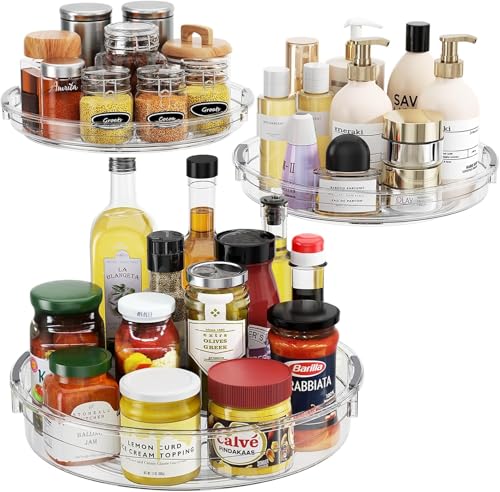


Top 3 picks at a glance
How to Choose the Right Size for Your Fridge Shelf
Diameter is the single most limiting factor. A turntable that is too large will hit the back wall or door bins, and one too small wastes shelf space and wobbles under tall bottles.
Measure the usable depth of your shelf first, not the stated fridge depth. Subtract 1 inch for air circulation at the back wall and 0.5 inch for the front lip. That remaining number is your maximum turntable diameter.
- Compact or dorm fridges (shelf depth 11-13 inches): Choose 9-inch to 10-inch turntable. Best for mustard, yogurt cups, and small dressings.
- Standard top-freezer and French-door fridges (shelf depth 14-17 inches): Choose 12-inch to 15-inch turntable. This is the most versatile range and covers most condiments, pickles, and jam jars.
- Deep side-by-side and garage fridges (shelf depth 18+ inches): Choose 15-inch to 18-inch, or use two 10-inch turntables side-by-side instead of one large one for better weight distribution.
If you have adjustable glass shelves, test rotation with the shelf above lowered to its normal position. Tall items like hot sauce bottles (8-10 inches tall) need at least 2 inches of clearance above to spin without hitting the shelf above.
Worked Space Calculation: How Many Jars Actually Fit?
Usable capacity is not just diameter, it is usable area minus the center hub. Use this quick estimate before buying:
Usable Area = 3.14 x (Radius – Rim Thickness)^2
Example for a 12-inch turntable with a 0.5-inch outer rim: Radius = 6 inches, effective radius = 5.5 inches, Usable Area = 3.14 x 30.25 = ~95 square inches. A standard 3-inch diameter jam jar occupies ~7 square inches. 95 / 7 = ~13 jars if packed perfectly, but in practice subtract 30% for finger space to grab and rotate, so expect 8 to 9 jars comfortably. A 15-inch turntable with the same rim gives ~154 square inches of usable area, or 13 to 15 jars in real use. If you store mostly 2-inch diameter condiment bottles, you gain 40-50% more capacity on the same turntable.
Rim Height: Low vs. High and When Each Wins
Rim height determines what stays put and what you can see at a glance.
- Low rim (0.75 to 1.5 inches): Best for visibility and grabbing items quickly. You can see labels without lifting, and tall items like olive oil, ketchup and salad dressing do not get hidden. The trade-off is that small, round items like cherry tomatoes or loose snack cups can slide off if you spin fast. Look for a low rim with a raised non-skid lip rather than a flat edge.
- Medium rim (1.5 to 2.5 inches): Best all-rounder for mixed fridge contents. Contains 12 oz soda cans on their side, keeps yogurt cups from sliding, and still allows you to see labels. This height works well for families who store leftovers in small ramekins on the turntable.
- High rim / bin style (3 to 4 inches): Acts like a turntable basket. Best for deep shelves where items get lost, or for organizing packets, cheese sticks, and small produce that would fall over on an open platform. The downside is you cannot stack or see tall bottles as easily, and the high wall adds weight and can catch on the shelf above.
For best refrigerator lazy susan use, most buyers should default to a low to medium rim for the main fridge shelf and reserve a high-rim bin turntable for the lower shelf or for the pantry, not for condiment-heavy top shelves.
Material Compared: Plastic, Glass, Stainless Steel and Wood
Material affects weight, cleaning, cold performance, and how well the turntable grips the shelf.
| Material Type | Typical Diameter Range | Weight (empty) | Rim Height Options | Pros in Fridge | Cons in Fridge |
|---|---|---|---|---|---|
| ABS / Polypropylene Plastic | 9 in – 15 in | 0.8 – 1.4 lbs | 0.75 in – 3.5 in | Lightweight, non-skid feet standard, dishwasher safe, resists cracking at 35-38°F | Can stain with tomato sauce or turmeric, may flex under 30+ lbs load |
| Tempered Glass with Plastic Base | 10 in – 12 in | 1.8 – 2.6 lbs | 0.5 in – 1.25 in | Heavy and stable, very easy to clean, does not absorb odors, looks premium | Heavier to lift out, glass can chip if dropped on hard floor, usually lower rim only |
| Stainless Steel with Turntable Bearing | 10 in – 15 in | 1.5 – 2.2 lbs | 1 in – 2 in | Strongest load capacity, resists rust, modern look, smooth rotation | Cold to touch, fingerprints show, needs non-skid liner to prevent jars from sliding on metal |
| Bamboo / Wood with Lazy Susan Bearing | 10 in – 12 in | 1.2 – 1.9 lbs | 1 in – 2 in | Good grip for jars, attractive for table use | Not ideal for fridge moisture, requires hand washing, can warp over time in high humidity |
For refrigerator use in 2026, ABS or polypropylene plastic and stainless steel models dominate because they handle constant cold and moisture without maintenance. Glass bases like those used in the Copco Non-Skid Turntable and OXO Good Grips Lazy Susan lines are popular for easy wipe-downs, while stainless options are better if you regularly load heavy items like large salsa jars or 32 oz drinks.
Rotation Smoothness: Why the Bearing Matters More Than You Think
Two mechanisms are sold as “smooth spinning” and they behave very differently when loaded and cold.
- Steel ball-bearing race: A circular metal track with steel balls. Spins with one finger even under 20-30 lbs, stays smooth when cold, and does not flatten. This is what you want for a condiment turntable that holds glass jars. Listen for a faint metallic click when empty, that indicates a real bearing.
- Low-profile plastic glide / friction ring: Plastic-on-plastic with small nubs. Lighter and cheaper, silent, but requires more force when loaded over 10 lbs and can stutter if the shelf has condensation. Over time the plastic wears and develops a flat spot.
- Non-skid surface: Independent of the bearing, this is the top texture. A soft TPR or silicone surface keeps jars from sliding outward with centrifugal force. Without it, a smooth plastic top will send bottles to the rim when you spin quickly, especially if the turntable is not level.
Test smoothness correctly: load the turntable with at least 8 lbs (four full 16 oz jars) and spin from the edge with one finger at fridge temperature. A good bearing should complete 1 to 1.5 full rotations from a light push and stop without jerking. If it stops in less than a quarter turn or needs a palm push, it will feel stuck when your hands are full.
Decision Matrix: Match Your Fridge Situation to the Right Turntable
Use this to avoid buying the wrong diameter or mechanism for your actual use case.
| Your Situation | Best Diameter | Best Rim Height | Best Material / Mechanism | Why |
|---|---|---|---|---|
| Main shelf full of tall condiments and dressings | 12 in or 15 in | Low, 0.75-1.5 in | Plastic or stainless with ball bearings + non-skid top | See labels, spin heavy glass without tipping |
| Deep shelf where things get lost in back | Two 10 in side-by-side, or one 15 in | Medium 1.5-2.5 in | Plastic with ball bearings | Two small turntables let you access left and right zones without unloading |
| Storing small snacks, cheese, yogurt cups | 10 in – 12 in | High 3-4 in bin style | Plastic glide is acceptable under 10 lbs | Walls keep small items corralled, weight is low so bearing matters less |
| Heavy loads: large pickles, gallon-adjacent jars, cans | 12 in – 15 in | Medium 1.5-2 in | Stainless steel with ball bearings | Metal plate does not flex under 25-30 lbs |
| Glass fridge shelves that are slick when wet | Any, but prioritize base grip | Any | Model with rubberized feet or full silicone base | Prevents the whole unit from sliding instead of spinning |
Maximizing Visibility and Keeping Items Accessible
Placement technique matters as much as the product. Put the most-used items at the outer 2 inches of the turntable, not the center, so they are visible from the front without spinning. Reserve the center for a single tall item like a hot sauce bottle that acts as a handle to spin.
Do not overload the diameter. Leave at least 0.75 inch between jars so you can pinch and lift without knocking neighbors. For maintenance, most plastic and stainless models are dishwasher safe on the top rack, but ball bearings should be rinsed and dried by hand to prevent water spots inside the race. Wipe the fridge shelf under the turntable weekly, condensation trapped under the base will make any turntable stick, even a premium bearing.
Price-wise in 2026, basic plastic glide turntables usually sit in the lower market range, while ball-bearing plastic, glass, and stainless steel models sit in the mid to upper general market ranges depending on diameter and finish. You do not need a specialty refrigerator-branded model, standard kitchen turntables rated for refrigerator use perform identically if the diameter and bearing type match your shelf.
FAQ
Will a 15-inch lazy susan fit in a standard fridge?
In many French-door and side-by-side fridges yes, but measure first. Most standard shelves provide 14.5 to 16.5 inches of usable depth after accounting for the back air gap and front lip. If your shelf is under 15.5 inches deep, choose a 12-inch turntable to ensure a full 360-degree spin.
Why does my turntable stop spinning when it is cold?
Condensation or a thin ice film under the base creates suction on glass shelves, and cheaper plastic glides stiffen in the cold. Lift the turntable, dry the shelf and base, and ensure the feet are clean. If it still sticks under load, the mechanism is likely a friction glide rather than steel ball bearings and will struggle with more than 10 lbs.
Are turntables safe for glass fridge shelves?
Yes, if the base has soft rubber or silicone feet and you do not drag it. Avoid turntables with bare metal bases or hard plastic nubs directly on glass, as grit trapped underneath can scratch. A non-skid base also prevents the turntable from sliding when you pull the shelf out.