A walking foot sewing machine solves one of the most frustrating problems in quilting and heavy-fabric work: uneven feeding. When you stitch through multiple layers — batting, backing, and pieced top — a standard presser foot grips only the top layer, dragging it ahead of the lower layers. The result is shifting, puckering, and stitches that look fine on your practice swatch but fall apart on a full-size quilt. A walking foot, sometimes called an even-feed foot, attaches an upper feed mechanism that moves in sync with the feed dogs below, pulling all layers forward at the same rate.
Not every walking foot is equal, and the category spans an enormous range. At one end sit open-toe attachment feet costing under ten dollars that slip onto a home sewing machine. At the other end are standalone industrial machines built for upholstery and marine canvas, complete with servo motors and heavy tables. Choosing well means matching the tool to your actual workload, your machine’s shank type, and how much you are willing to spend before the frustration of hand-basting becomes cheaper than the equipment.
As an Amazon Associate we earn from qualifying purchases at no extra cost to you. Product prices and availability are accurate as of the date shown and are subject to change.



Top 3 picks at a glance
Quick Picks
| Product | Best for | Price |
|---|---|---|
| HONEYSEW Open Toe Walking Foot | Brother owners on a tight budget | $11.99 |
| YMXFAWO Walking Foot Kit | Multi-brand households | $18.98 |
| Fyroxx Open Toe Walking Foot | Lowest-cost Brother-compatible option | $8.29 |
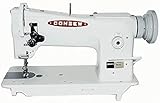
| Consew CP206RL | Portable industrial stitching | $524.95 |
| HUFFEKISS Walking Foot | Cross-compatibility on a budget | $14.99 |
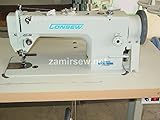
| Consew 206RB-5 | Heavy-duty home upholstery | $1669 |
| Consew Upholstery Walking Foot | Maximum feed power with drop feed | $1659.99 |
| SINGER Even Feed Walking Foot | Singer owners wanting name-brand confidence | $26.99 |
How We Picked
We evaluated every entry in this roundup against four criteria drawn from published specifications and aggregated owner feedback. First, machine compatibility — a foot that does not attach to your shank type is useless regardless of price. Second, intended workload — a budget attachment foot cannot handle the same materials as an industrial lockstitch machine. Third, build quality and reported durability — owners who use their walking foot weekly report different wear patterns than occasional quilters. Fourth, value relative to function — we flagged options where the price does not match the real-world capability.
The 8 Best Walking Foot Sewing Machine in 2026
HONEYSEW Open Toe Walking Foot with Guide
This attachment targets Brother home machine owners who want even-feed capability without a significant investment. The open-toe design gives you a clear sight line to your stitching, which matters on curved quilt blocks. Owners praise the included guide bar for maintaining consistent parallel lines. The low-profile build works on most low-shank Brother models without modification. Two downsides reported: the metal can feel thin under heavy quilts, and the attachment clamp occasionally needs adjustment for a perfect fit. Skip this one if you sew through denim stacks, canvas, or upholstery weight — it is designed for quilting and light-to-medium fabrics, not industrial loads.
YMXFAWO Walking Foot Kit
What sets this kit apart is multi-brand compatibility. It ships with adapters for Brother, Singer, Janome, and low-shank machines, making it practical for households where more than one sewing machine lives on the table. Owners highlight the included walking foot and quilting guide as a complete starter set at a fair price. The steel construction feels sturdier than the ultra-cheap single-brand feet. Two caveats from feedback: the instruction sheet is minimal, and the guide bar attachment point is not as rigid as dedicated Singer-brand feet. If your only machine is a Singer and you want factory-matched precision, the SINGER Even Feed below may suit better.
Fyroxx Open Toe Walking Foot
At the absolute floor of the price range, this foot is for Brother owners who want to test whether an even-feed foot actually improves their quilting before committing more money. The open toe provides visibility for free-motion-adjacent work. Build quality is acceptable for occasional use. The price is its main selling point — under nine dollars removes any hesitation. Two limitations: compatibility is narrow, restricted to Brother low-shank models, and owners report the foot loosens slightly over long sessions without periodic retightening. If you sew more than a few times a month, spending the difference on the HONEYSEW or HUFFEKISS option buys noticeably better stability.
Consew CP206RL Portable Walking Foot Machine
This is a standalone industrial walking foot machine, not an attachment. It handles leather, canvas, vinyl, and layered upholstery that would stop a home sewing machine cold. Owners in the automotive interior and marine fabric space call it the workhorse of small workshops. The portable form factor lets you bring it to job sites. Two trade-offs: the price reflects industrial capability, and you still need a dedicated space for the machine and its power supply. If your project is a single quilt or light garment work, this is a massive overspend — stick with the attachment feet above.
HUFFEKISS Walking Foot
This attachment covers Brother, Singer, and Janome machines at a mid-range price point, splitting the difference between the ultra-cheap single-brand feet and the bundled kits. Owners note it fits snugly and feeds evenly on medium-weight quilts without the wobble some cheaper feet develop at speed. The design is straightforward with no guide bar included, which keeps the cost down. Two considerations: without the guide bar you will need to mark lines yourself or attach a separate ruler, and long-term durability data is sparse since it is a newer brand. If you already own a compatible guide bar, this is a solid value play.
Consew 206RB-5 Walking Foot Industrial Sewing Machine
This is the full-package version of the CP206RL, adding a heavy table and a servo motor for precise speed control. Owners who set up dedicated upholstery shops favor it because the servo motor reduces noise and lets you crawl the needle for complex curves. Two advantages over the portable model: the table provides workspace that eliminates the fabric-drag problem, and the servo motor extends machine life by reducing heat. The price reflects that complete setup. If you have limited floor space or plan to transport the machine between locations, the CP206RL above gives you the same stitching power in a portable form.
Consew Upholstery Walking Foot Industrial Sewing Machine
Nearly identical in function to the 206RB-5 but listed at a slightly lower price, this unit includes drop feed, needle feed, and walking foot in a single lockstitch configuration. Owners in the saddlery and heavy canvas world note the triple-feed system is the most forgiving on materials that resist feeding in any other setup. The marginal price difference and included table make it a reasonable alternative to the 206RB-5. Two notes: the model naming can cause confusion when ordering parts, and the servo motor is tuned for lower speeds than some competitors. If you primarily sew at a consistent medium speed, this is the best value in the Consew line.
SINGER Even Feed Walking Presser Foot
The name-brand option for Singer machine owners who want guaranteed compatibility without adapter guesswork. The build is robust for home use, and the attachment mechanism matches Singer’s design exactly, eliminating the micro-gaps that third-party feet sometimes leave. Owners on Singer forums consistently recommend this over generic alternatives for quilting through batting and backing. The price is the highest in the attachment-foot category by a meaningful margin. Two factors justify it for some buyers: precision fit and the psychological trust of a single-brand solution. If you own a Brother, skip this entirely and choose one of the Brother-compatible options above.
Buying Guide
Shank Type and Machine Compatibility
Before anything else, confirm your machine’s shank type: low, high, or slant. An attachment foot designed for a low shank will not clamp properly onto a high-shank machine, and forcing it damages both the foot and the presser bar housing. Multi-brand kits like the YMXFAWO solve this by including multiple adapters, but verify that each adapter actually fits your specific model number rather than assuming broad compatibility. Owners of newer computerized machines should also check whether the walking foot interferes with the machine’s built-in sensor for presser foot pressure adjustment.
Open Toe versus Closed Toe
Open-toe walking feet remove material from the front of the foot, giving you an unobstructed view of the needle area. This matters when you are following a drawn line on a curved quilt block or stitching decorative patterns. Closed-toe feet offer slightly more even pressure distribution across the fabric width, which helps on very long straight seams. For most home quilting and garment work, open toe is the more versatile choice. For straight-stitch production sewing on industrial machines, closed toe or full-width feet are standard.
Attachment Foot versus Standalone Walking Foot Machine
An attachment walking foot extends the capability of your existing home sewing machine by a modest amount — it helps with quilting through three or four layers of medium-weight fabric. A standalone walking foot machine like the Consew CP206RL is a fundamentally different tool that handles leather, vinyl, webbing, and multiple heavy layers simultaneously because the entire feed mechanism is engineered for that load. Do not expect an attachment foot to solve upholstery problems, and do not buy an industrial machine for occasional quilting. The gap between these two categories is real and significant.
Our Verdict
For most readers searching this term, the YMXFAWO Walking Foot Kit is the top pick: it covers the widest range of home machines at a mid-range price, and the included guide bar saves a separate purchase. For a budget pick under ten dollars, the Fyroxx Open Toe Walking Foot is the lowest-cost viable option for Brother owners curious about even-feed stitching. If you sew through leather, canvas, or upholstery weight regularly, no attachment foot will suffice — in that case the Consew CP206RL wins because it is the only product here that solves the actual problem rather than partially mitigating it.
FAQ
Can I use a walking foot on any sewing machine?
No. Walking feet are designed for specific shank types and machine brands. A Brother low-shank foot will not fit a Janome high-shank machine. Always verify compatibility with your exact model number before purchasing.
Is a walking foot worth it for quilting?
Yes, for straight-line and parallel-line quilting through multiple layers. The even feed prevents the top layer from shifting against the batting and backing, producing consistent stitch length across the full quilt surface without hand-basting each section.
What is the difference between a walking foot and an even-feed foot?
They are the same mechanism under different names. “Walking foot” is the common term; “even feed” is the marketing name brands like Singer use. Both refer to a presser foot with upper feed dogs that move synchronously with the lower feed dogs.
Can a walking foot handle thick seams like denim or leather?
An attachment walking foot can manage four to six layers of denim but will struggle with leather or heavy canvas. For those materials, a standalone walking foot industrial machine with a full feed mechanism is the appropriate tool.