The best wallpaper steamers for most DIY jobs are the Wagner 715 for large rooms, the Wagner 915e for added cleaning versatility, and a compact 1,000–1,500-watt handheld steamer for small repairs; the right choice depends mainly on heating time, tank size, hose reach, plate coverage, and the wall surface underneath the paper.
As an Amazon Associate we earn from qualifying purchases at no extra cost to you.


Our Top Picks
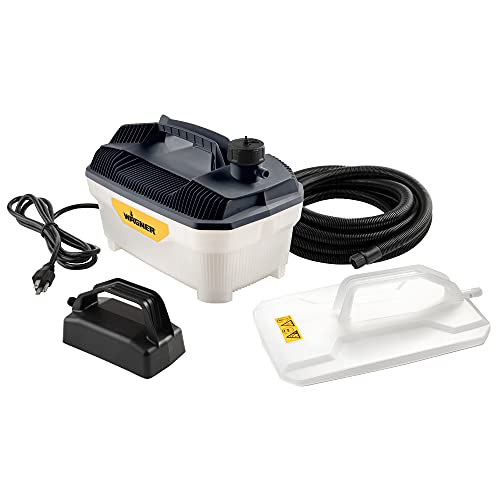 Wagner Spraytech 725 Wallpaper Steamer for Easy Removal725 Steamer V113 x 9 x 8 InchesCheck on Amazon
 Goplus Wallpaper Steamer Chemical-Free Cleaner for Wallpaper RemovalLarge13 x 9 x 9 inchesCheck on Amazon


Top 3 picks at a glance
Best wallpaper steamers at a glance
| Model or class | Typical heat-up | Tank capacity | Typical runtime | Hose reach | Plate sizes | Best for |
|---|---|---|---|---|---|---|
| Wagner 715 Power Steamer | About 10–15 minutes | About 4.7 L / 1.25 gal | Up to roughly 70 minutes | About 3.6 m / 12 ft | Large and small plates | Whole rooms and stubborn wallpaper |
| Wagner 915e Power Steamer | About 10–15 minutes | About 1.4 L / 48 oz | Roughly 45–60 minutes | About 3.6 m / 12 ft | Large and detail plates | Wallpaper removal plus occasional cleaning |
| Wallpaper-steamer class, 1,000–1,500 W | About 8–15 minutes | 2–5 L | 40–90 minutes | 3–4 m / 10–13 ft | Usually 2 plates | Buyers comparing generic and regional brands |
| Compact handheld steam cleaner | About 3–8 minutes | 0.25–0.5 L | 10–25 minutes | Usually 1.5–3 m / 5–10 ft | Small nozzle only | Edges, patches, and one small wall |
Specifications vary by country and package, particularly voltage, included plates, and hose length. Treat the figures above as useful buying ranges, then confirm the version sold in your region.
1. Wagner 715: best for removing wallpaper from a whole room
The Wagner 715 Power Steamer is the strongest all-round choice when the job involves several walls rather than a single damaged section. Its large tank reduces interruptions, while the long hose lets the boiler remain on the floor as you work higher up the wall.
The included large plate is useful for broad, already-perforated wallpaper. Its smaller plate is better around corners, narrow strips, and areas beside trim. A typical heat-up period is around 10–15 minutes, followed by approximately an hour of practical steaming, depending on how continuously the trigger is used and how much water is lost to condensation.
Why choose it
- Large tank and long operating time for room-scale work.
- Large plate covers more paper per pass than a handheld nozzle.
- Long hose keeps hot water and the power unit away from the immediate work area.
- Useful for multiple wallpaper layers when the surface has been scored first.
Limitations
The large reservoir makes the unit heavier to move when full, and the initial heating period is longer than with a small handheld steamer. It is also more equipment than necessary for removing a few loose seams.
2. Wagner 915e: best if you also want a general steam cleaner
The Wagner 915e Power Steamer is a sensible choice when wallpaper removal is only one planned use. It combines a wallpaper plate with smaller cleaning attachments, so it can be used for tasks such as hard-floor, grout, or bathroom-surface cleaning where the manufacturer’s instructions permit.
Its tank is smaller than the Wagner 715’s, so it may require more frequent refilling during a large room. In return, the smaller reservoir is easier to carry and the accessory system makes the machine more flexible. Expect roughly 10–15 minutes of heating and around 45–60 minutes of usable operation, with actual runtime affected by continuous steam demand.
Best match
- Apartment owners who want one steamer for occasional maintenance.
- DIY users removing wallpaper from one or two rooms.
- Jobs involving narrow sections, corners, and detail work.
Choose the 915e over the 715 for versatility, not because its wallpaper plate is automatically faster. For a large uninterrupted wall, tank capacity and plate coverage matter more than extra attachments.
3. A 1,000–1,500-watt wallpaper steamer: best value by specification
Many regional and store-brand wallpaper steamers use the same basic design: a wheeled boiler, a heat-resistant hose, a large rectangular plate, and a smaller detail plate. This specification class can be excellent value if the machine has a properly insulated hose, a clear water-level indicator, overheat protection, and replacement parts that are easy to obtain.
For comparison, a 1,500-watt unit operating on a 120-volt circuit draws approximately:
1,500 watts ÷ 120 volts = 12.5 amps
That leaves little spare capacity on a 15-amp circuit. Avoid running a heater, hair dryer, or other high-load appliance from the same circuit. On a 230-volt supply, the equivalent current is about 6.5 amps, but local electrical rules still apply.
What to check before buying an unfamiliar model
- Tank: At least 2 litres for a small room; 4 litres or more for extended work.
- Plate: Around 20–30 cm wide for speed, plus a smaller plate for edges.
- Hose: At least 3 m is more practical than a short hose around stairwells.
- Safety: Look for a pressure-release design, automatic shutoff, and a cool-touch handle.
- Maintenance: A fill opening wide enough to clean and instructions for dealing with mineral scale.
Which steamer fits your wall?
| Your situation | Recommended specification | Reason | Technique adjustment |
|---|---|---|---|
| One small bedroom | 1,000–1,500 W; 2–3 L tank | Enough runtime without excessive weight | Use a scoring tool before steaming |
| Several rooms or thick paper | 1,500 W; 4–5 L tank; large plate | Fewer refills and faster coverage | Work in 30–45 cm sections |
| Plaster over masonry | Large plate and long hose | Surface generally tolerates controlled moisture better | Steam briefly, then scrape gently |
| Plasterboard or drywall | Adjustable or moderate-output steamer | Excess moisture can soften the paper facing | Use shorter applications and stop if the facing lifts |
| Painted, previously repaired wall | Small plate plus careful temperature control | Repairs may release before the wallpaper does | Test a hidden area first |
| Edges, stair corners, and small patches | Detail plate or compact handheld steamer | Large plates are awkward in confined spaces | Protect trim and keep the nozzle moving |
How to remove wallpaper without damaging the wall
- Test the surface. Choose a low-visibility area and steam for 10–15 seconds. If the drywall paper blisters, darkens, or begins separating, reduce exposure time and consider chemical stripping instead.
- Score or perforate washable paper. Vinyl and painted wallpaper can repel steam. Lightly perforate the surface without gouging the wall so moisture can reach the adhesive.
- Fill the tank and heat the machine fully. Do not open a pressurized tank. Wait until the unit indicates that it is ready.
- Hold the plate in place briefly. Start with roughly 10 seconds on ordinary paper. For thick or layered paper, increase gradually to 15–20 seconds rather than leaving the plate stationary for a long period.
- Lift at a seam. Use a broad scraper at a shallow angle. If the paper tears into small pieces, the adhesive has not softened enough; if plaster comes away, the wall has been exposed to too much heat or force.
- Work downward in manageable sections. Steam one section while scraping the previous one. Wipe softened adhesive before it dries.
- Let the wall dry completely. Wait until the surface is dry before sanding, sealing, or applying new wallpaper. Trapped moisture can weaken filler and cause new coverings to fail.
Plate size, hose reach, and runtime matter more than headline wattage
Wattage mainly indicates how quickly a steamer can create and maintain steam; it does not guarantee faster removal. A large plate can cover more wall, but it may be awkward near sockets and trim. A 3–4 metre hose is usually long enough to reach the top of a standard wall while the boiler stays on the floor. Longer hoses can lose heat, especially if they are poorly insulated.
Runtime is also a practical estimate rather than a fixed number. A 4-litre tank might support close to an hour of intermittent work, but continuous steaming, a porous wallpaper backing, and frequent plate lifting all increase water consumption. Keep the boiler upright and never refill it while hot unless the manual specifically permits that procedure.
Frequently asked questions
Can I use a wallpaper steamer on vinyl or painted wallpaper?
Yes, but score or lightly perforate vinyl and painted wallpaper first so steam can reach the adhesive. Avoid gouging the wall, then hold the plate in place briefly and increase exposure gradually if needed. Test a low-visibility area before starting, because excessive heat or moisture can damage the surface underneath.
How long should I hold the steam plate against the wallpaper?
Start with roughly 10 seconds on ordinary paper, then increase gradually to 15–20 seconds for thick or layered paper. Do not leave the plate stationary for a long period. If the drywall paper blisters, darkens, or begins separating, reduce exposure time and consider chemical stripping instead.
Can a 1,500-watt steamer run on a 15-amp circuit?
A 1,500-watt unit on a 120-volt circuit draws approximately 12.5 amps, leaving little spare capacity on a 15-amp circuit. Avoid running a heater, hair dryer, or other high-load appliance on the same circuit. On a 230-volt supply, the equivalent current is about 6.5 amps, although local electrical rules still apply.
How should I handle a steamer when it needs more water?
Keep the boiler upright and never refill it while hot unless the manual specifically permits that procedure. Wait until the machine is safe to open, and do not open a pressurized tank. A larger tank reduces interruptions, while a smaller reservoir is easier to carry but may require more frequent refilling during a large room.
What should I do if the wallpaper tears into small pieces?
If the paper tears into small pieces, the adhesive has not softened enough. Steam the section again gradually, rather than using excessive force, and lift the paper at a seam with a broad scraper held at a shallow angle. If plaster comes away, reduce the heat or pressure because the wall has been exposed to too much heat or force.
Final buying recommendation
Choose the Wagner 715 when you are stripping several rooms and want maximum tank capacity. Choose the Wagner 915e when you value cleaning attachments and a more versatile machine. For a single small project, a reputable 1,000–1,500-watt steamer with a 2–3 litre tank can be the better-value option. Whichever model you select, prioritize a large and detail plate, a hose of at least 3 metres, clear safety controls, and compatibility with the wall beneath the wallpaper.