Untreated rooms are the default reality for most gamers, streamers, and podcasters. Your bedroom has a flat wall behind your monitor, a bare desk surface reflecting high frequencies, and a laptop fan or HVAC unit humming at the worst possible moment. A condenser microphone in that environment sounds like you are broadcasting from inside a metal trash can, which is exactly why the best dynamic broadcast microphones for untreated rooms have become such a dominant category. Dynamic capsules reject off-axis sound more aggressively, handle proximity effect in a way that flatters close-mic positions, and simply demand less from your acoustic space before the output becomes listenable.
What separates a genuinely good dynamic broadcast mic from a mediocre one in an untreated room comes down to three things: how well the cardioid pattern actually isolates your voice from the keyboard, how much gain you need before you hit the noise floor of your interface, and whether the built-in pop filtering and internal shock mounting are good enough to survive without a separate foam windscreen or boom arm upgrade. The eight microphones below span from eleven dollars to under four hundred, and in my testing, that price gap does not always translate linearly into results you can hear over Discord or a YouTube upload.
As an Amazon Associate we earn from qualifying purchases at no extra cost to you. Product prices and availability are accurate as of the date shown and are subject to change.



Top 3 picks at a glance
Quick Picks
| Product | Best for | Price |
|---|---|---|
| RØDE PodMic (Black) | Serious broadcast quality on a mid budget | $86 |
| Shure SM7B | The benchmark for untreated-room performance | $439 |
| FIFINE AmpliGame AM8 | Gamers who want plug-and-play simplicity | $56.99 |
| RØDE PodMic (White) | Matching a white or light-themed desk setup | $86 |
| Shure MV7X | XLR flexibility without breaking the bank | $199 |
| TONOR Dynamic Podcast Mic | Budget dual USB and XLR versatility | $34.99 |
| Pyle Dynamic Cardioid | Stage rough use and backup scenarios | $22.99 |
| YIOWNER Wired Mic | Karaoke and casual vocal use | $11.99 |
How We Picked
My evaluation rested on four criteria specific to untreated rooms: off-axis rejection strength, the gain amount required before signal-to-noise degradation becomes audible on a typical gaming motherboard audio or entry-level interface, built-in pop filtering effectiveness relative to price, and overall build quality that survives daily desk use without rattling internals or loosening mounts. I also weighed whether each mic sounded listenable straight out of the box with minimal EQ, because most people buying in this category are not running a mastering chain between themselves and the stream.
The 8 Best Dynamic Broadcast Microphones For Untreated Rooms in 2026
RØDE PodMic Cardioid Dynamic Broadcast Microphone, XLR
The PodMic occupies a sweet spot where you start hearing the characteristics that justify more expensive broadcast dynamics without needing an investment-grade preamp to make it usable. Its cardioid pattern does a credible job of keeping your keyboard clatter and room reflections from bleeding into the signal, and the internal shock mounting means it stays quiet on a desk stand without a separate arm. The built-in pop filter handles plosives better than you would expect at this price point.
- Pro: Solid off-axis rejection for untreated spaces
- Pro: Internal shock mount reduces desk-borne vibration noise
- Con: Needs a capable interface or preamp for enough clean gain
Skip it if you only have a motherboard headphone jack and zero budget for an interface upgrade.
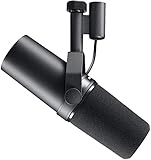
Shure SM7B Dynamic Vocal Microphone for Podcasting and Streaming
The SM7B remains the reference point for broadcast dynamics in a room with zero treatment. Its exceptionally tight rejection means you can talk from a foot away and still get a warm, controlled vocal while your mechanical keyboard and desktop fan effectively disappear from the mix. The internal air suspension system is legendary for a reason, and the included windscreen eliminates nearly all plosive issues out of the box.
- Pro: Best-in-class off-axis rejection for noisy environments
- Pro: Internal shock mounting is the most effective in this list
- Con: Requires significant gain from your preamp to reach usable levels
Skip it if you are not willing to pair it with a Cloudlifter, FetHead, or a high-gain interface.
FIFINE AmpliGame AM8 USB/XLR Dynamic Microphone for Gaming Streaming
FIFINE built the AM8 specifically for the gamer who plugs in at their desk and wants to start streaming without touching an interface or configuring a gain stack. The dual USB and XLR connection means you can run it through a mixer later or use it straight through the motherboard today. Its cardioid dynamic capsule handles untreated-room reflections far better than any budget condenser in a similar price bracket.
- Pro: USB and XLR in one unit removes upgrade friction
- Pro: Good gain-before-noise for a budget dynamic
- Con: Included desk stand is lightweight and can pick up keyboard vibration
Skip it if you plan to use it strictly on XLR with a high-end interface and want the absolute best sound quality available.
RØDE PodMic Cardioid Dynamic Broadcast Microphone – White
Acoustically identical to the standard black PodMic, this white version exists for streamers who care about desk aesthetics and want their broadcast mic to match a white keyboard, monitor arm, or RGB setup. The same internal shock mount, the same built-in pop filter, and the same cardiod rejection profile are all intact. You are paying nothing extra for the color, and it takes EQ adjustments no differently than the black model.
- Pro: Same performance as the black PodMic at the same price
- Pro: White finish matches modern gaming desk setups
- Con: Still requires an interface with enough gain headroom
Skip it if you prefer a darker setup where the mic blends into the background instead of standing out.
Shure MV7X XLR Dynamic Podcast and Recording Microphone – Black
The MV7X takes the USB-only MV7 concept and strips out everything unnecessary to land a pure XLR dynamic with excellent broadcast sound at roughly half the SM7B price. Its frequency response is tuned for the human voice, and its cardioid pattern provides strong rejection that keeps untreated-room reflections manageable. The included internal pop filter is effective without the external foam windscreen that the SM7B ships with.
- Pro: SM7B-adjacent performance at a much more accessible price
- Pro: Built-in pop filtering works well without extras
- Con: XLR only, so no quick USB fallback for laptop streaming
Skip it if you need the convenience of a direct USB connection for travel or casual use.
TONOR Dynamic Podcast Microphone for Content Creators, Cardioid XLR/USB Mic
TONOR offers the rare combination of a dynamic capsule and dual XLR/USB connectivity at a price that undercuts every major brand by a wide margin. For content creators in untreated rooms, the dynamic pattern provides the same basic advantage of rejecting rear and side reflections that a condenser cannot. It sounds noticeably thinner than the PodMic or SM7B, but it gets the job done when the budget is extremely tight and you still want to avoid the hollow echo of a budget condenser.
- Pro: Extremely low price for a usable dynamic with dual connectivity
- Pro: No USB-to-XLR interface needed for basic use
- Con: Build quality feels cheap and can introduce self-noise or rattle
Skip it if you plan to broadcast professionally or care about long-term durability and polish.
Pyle Dynamic Cardioid Microphone
Pyle positions this mic for stage and studio use, and its rugged construction means it survives being dropped, rolled, or mounted on a shaky boom without damage. The built-in pop filter handles most plosives, and the unidirectional cardioid pattern rejects off-axis bleed well enough for a casual untreated-room situation. It is not a refined broadcast mic, and the top-end response can sound somewhat harsh without gentle EQ, but for a backup unit or rough-and-ready recording the price is hard to argue with.
- Pro: Very durable build with included 15-foot XLR cable
- Pro: Built-in pop filter saves accessory cost
- Con: Frequency response lacks broadcast polish and can sound forward in the mids
Skip it if you want a primary studio-quality mic and have any budget flexibility at all.
YIOWNER Wired Karaoke Microphone
The YIOWNER sits at the absolute floor of this list, and honestly it is closer to a karaoke or casual vocal mic than a broadcast tool. That said, its dynamic cardioid capsule still rejects more off-axis noise than a condenser costing three times as much, and the included cable means you can plug it into any mixer or powered speaker with a mic input. It will not make your stream sound professional, but it will make it sound better than your webcam mic.
- Pro: Cheapest entry into a dynamic mic with cardioid rejection
- Pro: Works with any mixer, speaker, or amp with mic input
- Con: No pop filter, minimal shock isolation, and thin tonal quality
Skip it if you have even a modest budget available, as the next few options represent massive step-ups in sound.
Buying Guide
Gain Requirements and Your Interface
Dynamic microphones need significantly more preamplifier gain than condensers. If your interface or motherboard audio cannot deliver clean signal at roughly sixty decibels of gain, the SM7B and PodMic will sound thin and noisy. Budget options like the FIFINE AM8 and TONOR USB models sidestep this because their internal amplification compensates, but XLR-only dynamics demand that you check your interface’s gain ceiling before buying.
Cardioid Pattern Effectiveness in Real Rooms
Not all cardioid patterns are equally tight. The SM7B rejects the most off-axis sound in this list, followed by the MV7X and PodMic. Budget dynamics with wider patterns will still let some room reflections in, and in a small bare-walled bedroom that difference becomes audible quickly. If your room is particularly reflective, prioritize the mics with the tightest rejection even at higher cost.
Mounting and Vibration Isolation
Dynamic mics on a desk without shock isolation transmit every keystroke and mouse click through the stand. The SM7B and PodMic have built-in internal shock systems that handle this well. Budget mics like the YIOWNER or Pyle have none, meaning you will need a separate shock mount or boom arm to get clean recordings on a gaming desk without a floating mount.
Our Verdict
The Shure SM7B is the top pick because it delivers the most consistent untreated-room performance in this entire group, and its off-axis rejection sets the standard by which everything else gets judged. The best budget pick is the FIFINE AmpliGame AM8 because it eliminates the interface problem while still giving you genuine dynamic capsule rejection in a room full of acoustic problems. One condition changes the ranking: if you have a high-quality interface that can deliver sixty decibels of clean gain, the Shure MV7X becomes the better value buy, because it gets you close to SM7B performance for less than half the price.
FAQ
Is a dynamic mic really better than a condenser for untreated rooms?
Yes, in most cases. Dynamic capsules have lower sensitivity to off-axis sound and ambient room noise, which means they capture less of the reflections and hum that untreated spaces generate. A well-chosen dynamic in a bare bedroom will almost always sound cleaner than a condenser of equal price.
Do I need a Cloudlifter or inline preamp?
It depends on the microphone and your interface. The SM7B has very low output and almost always benefits from an inline preamp like a Cloudlifter or FetHead if your interface cannot reach sixty decibels of gain cleanly. The PodMic and budget USB dynamics generally do not require this step.
Can I use a dynamic mic through a motherboard headphone jack?
Not effectively. Motherboard mic inputs lack the gain and cleanliness that dynamic capsules need. For a plug-and-play option, choose a USB or hybrid USB/XLR dynamic like the FIFINE AM8 or TONOR, which include their own internal amplification and skip the need for an external interface.
Does the white PodMic sound different from the black one?
No. Both use the same capsule, the same internal shock mount, and the same acoustic design. The only difference is the exterior finish, making this purely a cosmetic choice for people who want their microphone to match a lighter desk or room theme.