Picking an 850W power supply for a modern RTX build used to be a simple matter of checking wattage and efficiency badges. Not anymore. Since NVIDIA’s RTX 40 and 50 series cards moved to the 12V-2×6 connector, the PSU has become one of the most consequential — and most confusing — components in a build. The wrong unit can leave you with transient power spikes tripping your system, a cable that doesn’t seat properly, or a PSU that sounds like a hair dryer every time your GPU boosts. The right one disappears into the background for a decade.
We’ve rounded up eight of the strongest options on the market right now, from a around $86 budget surprise to feature-packed units at around $140. Every pick here is ATX 3.1 compliant with PCIe 5.1 support, meaning they’re built specifically to handle the power transients that RTX cards are famous for. Whether you’re pairing an RTX 5070 Ti with a mid-range CPU or building a flagship RTX 5090 rig, there’s a unit here that fits your budget and your case.
As an Amazon Associate we earn from qualifying purchases at no extra cost to you.




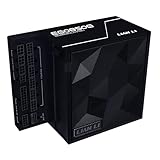
Our Top Picks
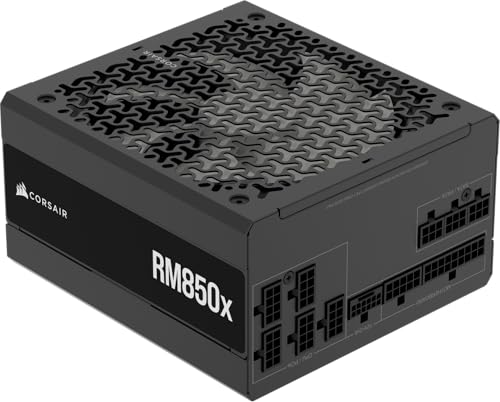


Top 3 picks at a glance
Quick Picks
| Product | Best for | Price |
|---|---|---|
| CORSAIR RM850x ATX 3.1 | Best overall | Check on Amazon |
| be quiet! Pure Power 13 M 850W | Best for silent builds | Check on Amazon |
| NZXT C850 Gold Core | Best for clean builds | Check on Amazon |
| Thermaltake Toughpower GF A3 850W | Best warranty | Check on Amazon |
| MOAIPLAY ORA PRO G1 850W | Best budget option | Check on Amazon |
| RAIDMAX H200 Case + 850W Bundle | Best value bundle | Check on Amazon |
| MSI MAG A750GL PCIE5 | Best for smaller builds | Check on Amazon |
| LIAN LI Edge Gold 850W | Best for compact cases | Check on Amazon |
How We Compared
We focused on units that meet the current ATX 3.1 and PCIe 5.1 standards, since those specifications exist specifically to handle the transient power spikes that modern RTX cards generate. A native 12V-2×6 connector was high on our priority list — it’s the safer, updated version of the 12VHPWR connector and eliminates the need for adapters. We also prioritized fully modular designs where possible, since cable management matters whether you’re building in a mesh showcase or a compact ITX case.
Efficiency certification was our next filter: every unit here carries at least an 80+ Gold rating, and the Corsair adds Cybenetics Gold certification, which tests under more demanding real-world conditions than the standard 80 Plus methodology. Price-to-warranty ratio factored in as well — a 10-year warranty on a around $110 unit tells you the manufacturer expects it to last. Finally, we looked at noise levels, connector counts, and physical dimensions, because a great PSU that doesn’t fit your case or sounds like a wind tunnel isn’t a great PSU at all.
The 8 Best Picks
1. CORSAIR RM850x ATX 3.1 — Best Overall
The RM850x has long been our benchmark for what a mainstream PSU should be, and the ATX 3.1 update keeps that streak alive. It’s fully modular, carries both 80+ Gold and Cybenetics Gold certification, and includes a native 12V-2×6 connector rated for modern RTX cards without adapters. Corsair’s low-noise fan profile means it stays near-silent during typical gaming loads. At around $140, it’s the most expensive standard ATX unit here, but you’re paying for proven reliability and one of the best warranty and support packages in the business.
- Pro: Dual certification (80+ Gold and Cybenetics Gold) under real-world load conditions
- Pro: Native 12V-2×6 connector with no adapter needed for RTX 50 series cards
- Con: Priciest standalone PSU in this roundup at around $140
Skip it if: You’re building a budget rig and every dollar needs to go toward the GPU instead.
2. be quiet! Pure Power 13 M 850W — Best for Silent Builds
If your build priority list starts and ends with “quiet,” the Pure Power 13 M is the unit for you. be quiet! built its reputation on acoustics, and this 850W offering pairs an 80+ Gold rating with a fully modular cable layout and ATX 3.1 compliance. It’s a straightforward, no-frills design — you won’t find RGB or digital monitoring readouts here — but the fundamentals are excellent. At around $110, it undercuts the Corsair by $30 while delivering the kind of near-silent operation that case fans and AIO coolers struggle to match.
- Pro: Outstanding acoustic performance under both idle and load conditions
- Pro: Fully modular with ATX 3.1 compliance at a reasonable around $110
- Con: No digital monitoring or premium extras beyond the essentials
Skip it if: You want software monitoring, RGB, or a display on the PSU itself.
3. NZXT C850 Gold Core — Best for Clean Builds
NZXT’s C850 Gold Core strips the PSU experience down to what matters: reliable 850W delivery, 80+ Gold efficiency, ATX 3.1 compliance, and a fully modular cable set that plays nicely with NZXT’s own case ecosystem. It’s aimed squarely at builders who want a no-drama power supply that just works. At around $110 it sits right in the middle of the pack on price, and its matte black finish and clean cable design make it a natural fit for showcase builds. The Core branding means fewer bundled extras, but the core electricals are solid.
- Pro: Clean, fully modular design that matches modern NZXT cases perfectly
- Pro: ATX 3.1 compliance with 80+ Gold efficiency at around $110
- Con: “Core” trim means fewer accessories and cables than premium rivals
Skip it if: You need a native 12V-2×6 connector — check cable inclusion before buying.
4. Thermaltake Toughpower GF A3 850W — Best Warranty
The Toughpower GF A3 makes a bold claim right in its name: a true 450W on the 12V-2×6 rail, which is more than enough headroom for even an RTX 5090 at full tilt. It’s fully modular, ATX 3.1 and PCIe 5.1 compliant, 80+ Gold rated, and SLI/Crossfire ready for anyone still running multi-GPU setups. The 10-year warranty is the standout — that’s a decade of coverage at a around $110 price point, which is hard to argue with. This is the unit we’d recommend to anyone who wants maximum connector headroom and long-term peace of mind.
- Pro: True 450W 12V-2×6 capacity handles flagship RTX 50 series cards with ease
- Pro: 10-year warranty at a around $110 price point
- Con: Less refined fan acoustics than the be quiet! or Corsair alternatives
Skip it if: Whisper-quiet operation is your top priority and you can stretch the budget.
5. MOAIPLAY ORA PRO G1 850W — Best Budget Option
At around $86, the ORA PRO G1 is the cheapest fully modular ATX 3.1 unit in this roundup, and it manages to hit the essentials: 80+ Gold efficiency, a fully modular cable layout, and a quiet fan profile in an all-black housing. It’s a newer brand in the Western market, which means the long-term reliability track record isn’t as established as Corsair or be quiet!. But if you’re building an RTX 5070 or 5070 Ti system and every saved dollar goes toward better components elsewhere, this is a legitimate way to hit ATX 3.1 compliance for under $90.
- Pro: Fully modular ATX 3.1 compliance at just around $86
- Pro: Quiet operation for a budget-tier unit
- Con: Newer brand with a shorter track record than established rivals
Skip it if: Brand reputation and a long support history matter more to you than saving $23.
6. RAIDMAX H200 Case + 850W Bundle — Best Value Bundle
This one’s a different beast: it’s a full ATX gaming case with five ARGB fans, RAIDMAX’s patented Air Tunnel airflow design, and an included RX-850AESD 850W ATX 3.1 PCIe Gen 5, 80+ Gold power supply — all for around $140. If you’re building from scratch and need both a case and a PSU, the math is compelling: you’re getting an 850W ATX 3.1 unit effectively bundled with a five-fan ARGB chassis for less than the Corsair PSU alone. It supports GPUs up to 400mm long, so even oversized RTX 50 series cards fit. As a standalone PSU purchase, look elsewhere; as a bundle, it’s unbeatable value.
- Pro: Case plus 850W ATX 3.1 80+ Gold PSU for around $140 total
- Pro: Five ARGB fans and support for GPUs up to 400mm
- Con: PSU quality is entry-level compared to the standalone picks here
Skip it if: You already own a case and only need the power supply.
7. MSI MAG A750GL PCIE5 — Best for Smaller Builds
Yes, it’s a 750W unit in an 850W roundup — but it earns its place. At around $89, the MAG A750GL is fully modular, 80+ Gold rated, ATX 3.1 and PCIe 5.1 ready, and includes a native dual-color 12V-2×6 cable, all backed by a 10-year warranty. Its compact footprint makes it ideal for smaller mid-tower cases where full-length ATX PSUs get cramped. If you’re running an RTX 5070 or 5070 Ti with a mainstream CPU, 750W is genuinely enough headroom, and the $50 savings versus the Corsair is real money toward other components.
- Pro: Native 12V-2×6 cable and 10-year warranty at just around $89
- Pro: Compact, fully modular design fits tight cases
- Con: 750W leaves less transient headroom than 850W options
Skip it if: You’re pairing an RTX 5080 or 5090 with a high-core-count CPU — stick to 850W.
8. LIAN LI Edge Gold 850W — Best for Compact Cases
Lian Li’s Edge series takes a different approach to PSU design, prioritizing a low-profile form factor that works beautifully in the company’s own compact chassis and other space-constrained builds. It’s 80 Plus Gold certified, ATX 3.1 compliant, and rated for 850W in an all-black housing (model EG0850G.B). At around $110, it’s priced in line with the mainstream competition, but you’re paying for a design that solves a specific problem: fitting serious wattage into builds where traditional PSU dimensions simply don’t work.
- Pro: Compact form factor ideal for small-form-factor and slim mid-tower builds
- Pro: 850W output with ATX 3.1 compliance in a space-efficient design
- Con: Fewer connectors and less cable flexibility than full-size ATX units
Skip it if: You have a full-size ATX case with room for a standard-depth PSU.
Buying Guide
Wattage and Headroom
850W is the sweet spot for RTX 5080 and 5090 builds, and it’s generous headroom for a 5070 Ti paired with a high-end CPU. NVIDIA’s own guidance for flagship cards assumes transient spikes well above rated board power — an RTX 5090 can briefly pull far more than its listed TDP — which is exactly why ATX 3.0 and 3.1 standards were introduced. If you’re running a 5070 or 5070 Ti with a mid-range CPU, you can comfortably drop to 750W (see the MSI pick above) and save money. But if there’s any chance you’ll upgrade to a higher-tier GPU within the life of this PSU, buying 850W now is the safer call.
Connectors: The 12V-2×6 Story
This is the single most important specification for an RTX build. The 12V-2×6 connector is the revised, safer successor to the original 12VHPWR — it has shorter sensor pins and longer conductor pins, which dramatically reduces the risk of the poor seating that caused melting incidents on early RTX 40 series cards. Look for a PSU with a native 12V-2×6 connector on the unit itself (Corsair, Thermaltake, and MSI all offer this) rather than relying on an adapter from two or four 8-pin PCIe cables. Adapters work, but native connectors mean fewer connection points and better reliability.
Efficiency, Noise, and Warranty
80+ Gold is the practical baseline here — it means roughly 90% efficiency at typical loads, which translates to less heat and lower fan speeds. Cybenetics certification, which Corsair carries on the RM850x, is a more rigorous real-world test that also grades noise. Speaking of noise: if your PC lives on your desk, prioritize units from be quiet! or Corsair, whose fan curves stay nearly inaudible under gaming loads. Finally, check the warranty. A 10-year coverage term (Thermaltake, MSI) versus a standard 5-7 year term is meaningful insurance on a component that every other part in your system depends on.
Our Verdict
For most builders pairing an RTX 5080-class card with a modern CPU, the CORSAIR RM850x ATX 3.1 is the one to buy: dual Gold certifications, a native 12V-2×6 connector, near-silent operation, and Corsair’s support network justify the around $140 price. If budget is tight, the MOAIPLAY ORA PRO G1 at around $86 delivers ATX 3.1 compliance for under $90, and the Thermaltake Toughpower GF A3 at around $110 is our value champion for anyone who wants a true 450W 12V-2×6 rail and a 10-year warranty without paying flagship prices. Building from scratch on a strict budget? The RAIDMAX bundle is the only pick here that solves two problems at once. Whichever you choose, every unit in this roundup is ATX 3.1 compliant and ready for the RTX cards of 2026 and beyond.
FAQ
Is 850W enough for an RTX 5090?
Yes, provided the PSU is ATX 3.1 compliant with a native 12V-2×6 connector rated for at least 450W on that rail — which the Thermaltake Toughpower GF A3 and Corsair RM850x both are. NVIDIA lists a 575W TDP for the 5090, and ATX 3.1 units are specifically engineered to tolerate the transient spikes these cards produce. If you’re also running a heavily overclocked high-core-count CPU, 1000W adds margin, but 850W is sufficient for a standard 5090 build.
Do I need a native 12V-2×6 connector, or is an adapter fine?
An adapter (usually 3x or 4x 8-pin to 12VHPWR/12V-2×6) works reliably when fully seated, but native connectors are simpler and safer: one cable, one connection point, and the 12V-2×6 revision’s shorter sense pins reduce the risk of partial insertion — the root cause of most melting incidents. All of our top picks except the RAIDMAX bundle include native 12V-2×6 connectors or cables.
What’s the difference between ATX 3.0 and ATX 3.1?
ATX 3.1 replaces the 12VHPWR connector with the safer 12V-2×6 design, updates the PCIe 5.1 specification, and refines power excursion requirements. Functionally, both standards handle GPU transients far better than older ATX 2.x units, but ATX 3.1 is the current standard, and every PSU in this roundup complies with it. There’s no reason to buy ATX 3.0-only units in 2026 when ATX 3.1 options start around $86.
Is 80+ Gold enough, or should I pay for Platinum/Titanium?
For most builds, Gold is the sweet spot. The efficiency difference between Gold and Platinum is roughly 2% at typical loads — on a 600W gaming draw, that’s around 12 watts, or a few dollars per year on your electricity bill depending on rates. Spend the difference on a better fan curve, longer warranty, or native 12V-2×6 support instead. Platinum and Titanium make sense primarily for always-on servers or systems running at high loads 24/7.
Related guides
- Best Gaming PC for Overwatch 2: Ten Prebuilts Matched to Your Monitor (2026)
- Best Gaming PC for Baldur’s Gate 3: Matching CPU, VRAM and Storage to the Game (2026)
- Best Gaming PC for Apex Legends: Which Listings Fit a High-Refresh Setup (2026)
- Best RTX 3060 Gaming PCs: Eight Prebuilt Listings Compared by CPU, RAM and Cooling (2026)