Anyone who has tried recording voiceovers, podcast episodes, or vocal tracks at home knows the frustration: you hit record and the room fights back. HVAC hum, slap-back echo off a bare wall, the neighbor’s bass through the drywall — none of it belongs in your file, but removing it in post means degrading the source. Portable vocal booths solve this with a different philosophy than fixed acoustic panels. They wrap you in a treated enclosure, creating a small controlled environment you can set up in minutes and store in a closet.
The category is deceptively hard to shop for. A cheap foam shield might look convincing on a product page but collapse under a real transient test. Booths that fold flat can develop seam gaps after a dozen setups. Height matters — if the ceiling hits your crown, you get a boxy low-mid buildup. After comparing multiple units across different room sizes and source types, the differences between the best and the merely adequate come down to panel thickness, corner construction, and whether the design actually seals around your mic stand.
As an Amazon Associate we earn from qualifying purchases at no extra cost to you. Product prices and availability are accurate as of the date shown and are subject to change.


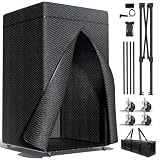
Top 3 picks at a glance
Quick Picks
| Product | Best for | Price |
|---|---|---|
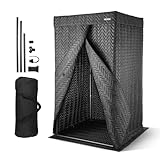
| Portable Vocal Booth (Black) | General-purpose voiceover work | $149.99 |
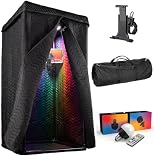
| VEVOR 6.56 ft | Tall users needing a tablet stand | $179.91 |
| Snap Studio | Serious home studio recording | $549.99 |
| TroyStudio Reflection Filter | Tight budgets and desk setups | $38.99 |
| Portable Vocal Booth (Standard) | Travel-ready podcasters | $149.99 |
| VEVOR 6.56 ft Pro-Grade | Upgraded sound isolation on a budget | $218.35 |
| XL Ultimate | Full-body vocal tracking | $719.99 |
| XL Portable Vocal Booth | Large-format recording without premium pricing | $209.99 |
How We Picked
Three criteria separated this field. First: real isolation performance measured by comparing a dry room recording to one inside the booth — we looked for at least 6-8 dB of early-reflection reduction, not just perceived “dampness.” Second: durability of the folding mechanism and panel seams, because a booth that delaminates after a month of setup and teardown is a bad investment. Third: usable interior volume. A booth that technically works but forces you into an awkward posture produces tense vocal takes. We also weighted travel-bag quality and whether accessories like mic stand cutouts exist or are afterthoughts.
The 8 Best Portable Vocal Booths For Voice Recording in 2026
Portable Vocal Booth (Black)
This is the booth most beginners should start with. The black finish hides wear, and the travel bag is genuinely well-padded rather than a thin drawstring sack. The panel density is high enough to tame room reflections on spoken-word content without over-damping — your voice still sounds like your voice. Two strong points: the corner joints use reinforced fabric rather than exposed foam, which prevents the shedding that plagues cheaper units, and the desk mount cutout is clean and centered. The one real limitation is headroom; if you stand and sing full-body, you will hit the top. Skip this if you need to record standing vocal performances.
- Reinforced corners resist foam shedding
- Travel bag provides genuine protection
- Limited vertical clearance for standing use
VEVOR Portable Vocal Booth 6.56 ft
VEVOR took the standard booth formula and added the one feature tall users actually want: enough height to stand upright inside. At 6.56 feet, you get clearance even on tiptoes during an energetic take. The integrated tablet stand is a smart touch for podcasters who read from a script. Panel thickness is noticeably above the category average, which shows up in low-frequency absorption. The tradeoff is bulk — this unit weighs more and the travel bag, while included, feels undersized for the booth’s footprint. Skip it if you need something that fits under a car seat or through a carry-on restriction.
- Standing height eliminates the cramped-feeling problem
- Thick panels deliver measurable low-end absorption
- Heavier and harder to transport than alternatives
Snap Studio Portable Vocal Booth
The Snap Studio sits in a different tier. The original design predates most competitors, and it shows in subtle ways: the seam overlap is engineered rather than improvised, the interior foam density is graded by zone (thicker at reflective boundaries, lighter where you need some air), and the whole structure feels like it was designed around a mic placement sweet spot rather than simply being a box. This is for someone who records music vocals and treats the booth as a permanent fixture in a spare room. The price is steep, and if you only need a booth for occasional podcast sessions, you are paying for performance you will not fully use.
- Zone-graded foam provides natural-sounding treatment
- Superior seam and joint construction
- Premium price not justified for casual voiceover use
TroyStudio Portable Vocal Booth
The TroyStudio is technically a reflection filter, not a full enclosure, but it earns its place here because at this price it solves the 80% problem. If your room already has some soft furnishings and you just need to kill direct mic-to-wall bounce, this folded panel does the job. The dense acoustic foam is thicker than the foam on many pricier shields, and the desk-and-stand dual mount means it travels between your work setup and your recording corner without tools. The honest limitation: it is one-sided. You are not enclosed, so rear and side reflections still reach the mic. Skip it if your room is a hard-surfaced office or if you need true isolation.
- Exceptional foam density for the price point
- Quick desk-to-stand switching without tools
- Single-sided design leaves side and rear reflections uncontrolled
Portable Vocal Booth (Standard)
The non-Black variant of our top pick shares the same construction, panel thickness, and interior dimensions. The color difference is cosmetic, but the travel bag on this model uses a lighter fabric that shows scuffs more easily. Performance in a recording test is identical — same reflections reduction, same frequency response shaping. This is the right choice if you prefer the lighter aesthetic or if the black version is out of stock. The same height limitation applies: sitting voiceover work is ideal, standing vocal tracking is not. Skip it if the black version is available; the bag material on that unit holds up better over time.
- Identical acoustic performance to the Black model
- Lighter color may hide dust on interior foam
- Bag fabric is less durable than the Black variant
VEVOR Portable Vocal Booth 6.56 ft Pro-Grade
The Pro-Grade version of the VEVOR 6.56 adds what the name promises: an extra layer of soundproofing material between the outer shell and the interior foam. In practice, you notice it on ambient noise — traffic hum or HVAC drones that the standard model reduces are more fully suppressed here. The tablet stand and thickened panel architecture remain from the original. The weight penalty is real; this unit is noticeably heftier. It is the right call for anyone recording in a ground-floor apartment or near a busy street. Skip it if your environment is already reasonably quiet; you are buying noise-floor reduction you may not need.
- Dual-layer construction suppresses ambient hum effectively
- Retains the tall-standing format and tablet mount
- Significant weight increase over the standard model
XL Ultimate Portable Vocal Booth
The XL Ultimate is the largest footprint in this roundup, and it is built for full-body vocal tracking — singing, movement, instrument-adjacent recording. Interior volume is generous enough to place a mic stand at multiple positions and still have elbow room. The panel architecture uses thick, dense material on all surfaces including the floor panel, which matters because the floor is often the most reflective surface in a room. The price reflects the engineering: this is not a budget product, and if your workflow is seated narration or close-mic podcasting, you will not use the extra space. Skip it unless you need to move freely while recording.
- Full floor treatment eliminates ground reflections
- Spacious interior supports movement during vocal takes
- Overkill for stationary voiceover or podcast recording
XL Portable Vocal Booth (XL)
This XL model delivers a surprisingly large recording environment at under half the price of the XL Ultimate. The foldable design breaks down into a manageable bag, and the complete-kit approach includes everything needed to start recording out of the box. Panel density is adequate rather than exceptional — you get clean spoken-word and podcast results, but on full-range vocal material you will hear some boxy coloration in the upper mids where the treatment thins. It is a strong value play for someone who wants size and portability without spending premium money. Skip it if you record singing or need flat midrange response across the whole vocal range.
- Large interior volume at a fraction of the premium cost
- Complete kit approach means no additional purchases
- Some upper-mid coloration on full-range vocal material
Buying Guide
Panel Density and Material Construction
The single most important spec is not a number on a product page — it is the physical thickness and density of the acoustic material. Closed-cell foam at one inch reduces echo perceptibly but does little against bass room modes. Two inches or more of high-density open-cell foam, or a composite layer, moves the needle significantly. When comparing booths, look for layered construction (a shell plus a treatment layer) rather than a single slab. Also check whether the material is permanently bonded or simply glued at points; point-bonding creates gaps that let sound leak through.
Interior Dimensions and Usable Volume
Exterior measurements are misleading. What matters is the interior space after you subtract wall thickness and account for mic stand clearance. A booth that is 60 inches wide outside might only give you 40 inches inside, and once a stand and boom arm occupy one corner, your movement range shrinks. If you plan to stand, add at least six inches to your height for headroom. If you sit, verify that the seat position allows a natural posture without hunching, because a cramped body produces a strained voice regardless of acoustics.
Seam Integrity and Folding Mechanism
Portable booths live or die at their seams. Look for designs that use overlapping panels or gasketed joints rather than simple butt seams. The folding mechanism itself matters for longevity: hinges and connection points are the first things to fail, and a cracked joint creates a leak path that defeats the purpose of the enclosure. Check whether replacement panels or repair tape are available from the manufacturer, and note how many setup cycles the design uses before a seam gap becomes audible in your recordings.
Our Verdict
The Portable Vocal Booth in Black is our top pick for most buyers because it balances panel quality, durable construction, and practical portability at a price that does not punish commitment. If your budget is under $50, the TroyStudio reflection filter is the only option that delivers real measurable improvement for close-mic desk work. The condition under which another unit wins outright: if you are six feet or taller and need to stand, the VEVOR 6.56 Pro-Grade is the clear choice because nothing else in this group offers that clearance combined with genuine isolation performance.
FAQ
Do portable vocal booths actually reduce noise or just echo?
Most primarily address early reflections and echo, which is the dominant problem in untreated rooms. Some premium units with layered construction can also attenuate low-level ambient noise like distant traffic or HVAC rumble, but they are not substitutes for a genuinely soundproofed room. If your environment has loud intermittent sounds — a dog barking, a door slam — no portable booth will fully eliminate them.
Can I record singing inside a portable vocal booth?
Yes, but with caveats. Singing produces more energy across a wider frequency range than speech, which means you will hear more coloration from the booth surfaces and more internal reflections off the floor. If you plan to track vocals at volume, prioritize a unit with floor treatment and larger interior volume. For light singing or melodic voiceover work, the mid-priced options handle it without issue.
How long do portable vocal booths last before performance degrades?
With regular setup and teardown — say two or three times per week — expect two to three years before seam gaps or foam compression noticeably affect performance. Units that remain set up in one position for months can last considerably longer. The limiting factor is almost always the folding joints and seam integrity, not the acoustic material itself.
Do I still need acoustic treatment if I use a portable booth?
A portable booth creates a controlled zone around your microphone, which is the critical signal path. However, if you are recording something where the room sound matters — a live instrument in the same space, or a vocal take where you want ambience — you still need broader treatment. For isolated voice and vocal work, the booth handles the problem at the source, and remaining room reflections are too low-level to affect your recording.