RV Wi-Fi is a different problem from home Wi-Fi. A rig parked at a campground sits a hundred feet or more from the nearest access point, wrapped in an aluminum or fiberglass shell that blocks signal, and the connection you extend is often a weak campground network shared by dozens of campers. A plug-in extender built for a living room helps only once a good signal reaches it. The more important decision is whether you need an indoor repeater, an outdoor antenna kit that pulls the campground signal into the rig, or a device that rebroadcasts a Starlink or cellular link around a site.
This guide is for full-time travelers, weekend campers, and remote workers who rely on Wi-Fi at parks and want to know which devices match their situation. Seven products are covered using only what their listings state, ranging from compact indoor boosters to IP67 outdoor repeaters and RV-specific kits. For 2026 trips, the practical rule is to match the device to the job: outdoor antennas for grabbing distant signals, indoor extenders only for spreading a signal inside the coach.
Our Top Picks
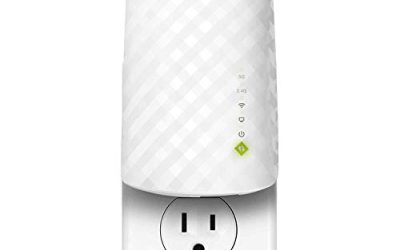
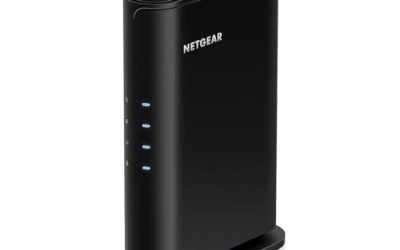
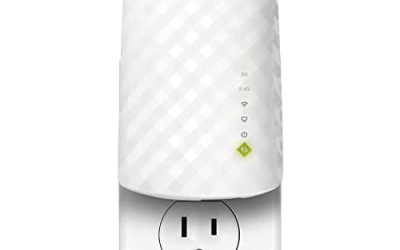
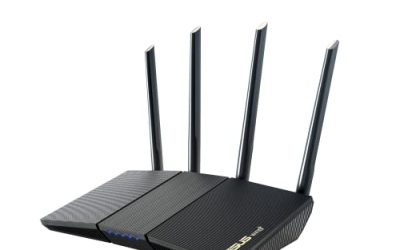
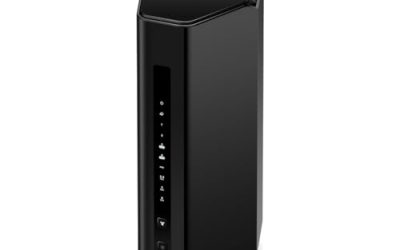
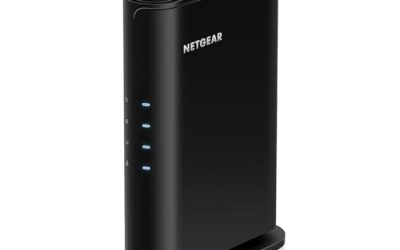
 NETGEAR WiFi Extender EX50001.2 Gbps, 1000 sq.ft.2.55 x 2.85 x 2.85 inches0.34 poundsCheck on Amazon


Top 3 picks at a glance
Quick Picks
As an Amazon Associate we earn from qualifying purchases at no extra cost to you.


| Product | Best for | Key spec from the title |
|---|---|---|
| Generic Fastest Extender | Indoor boosting with wired ports | Up to 10000 sq ft, 80 devices, Ethernet port |
| Winegard Connect 2.0 WF2-335 | Pulling a campground signal into the rig | Outdoor RV router, about 1.5 mi range, 2.4GHz, Wi-Fi only |
| Generic 1200Mbps Dual Band | Budget indoor extension | 5.8GHz and 2.4GHz, Ethernet port |
| WAVLINK AX3000 Outdoor | High-capacity outdoor Wi-Fi 6 | IP67, up to 256 devices, Wi-Fi 6 |
| NETGEAR EX5000 | Small rigs and simple setup | Up to 1,500 sq ft, 1.2 Gbps, 25 devices |
| ALFA WiFi CampPro 2v2 | Dedicated caravan and RV kit | Universal range extender kit for caravan, boat, RV |
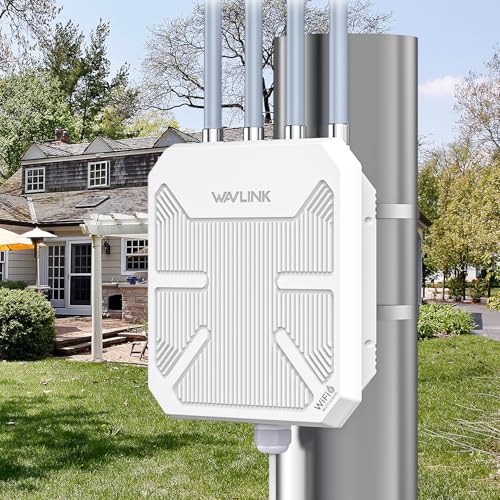
| WAVLINK AX1800 Outdoor | Weatherproof repeater with PoE | IP67, 4x8dBi antennas, PoE |
How to Choose
Decide between indoor and outdoor hardware
An indoor plug-in extender needs a decent signal already reaching the spot where it is plugged in, so it cannot rescue a weak campground connection by itself. Outdoor units with external antennas and weatherproofing, such as IP67-rated devices, can be mounted on a pole or the rig’s exterior to reach farther. If your complaint is a weak signal inside the coach, an indoor repeater may be enough; if the campground network barely registers, you need an outdoor receiver. Some travelers end up with both: an outdoor unit that catches the park network and an indoor extender that fills the back bedroom.
Look at antenna design and the frequency band
The 2.4GHz band travels farther and penetrates walls better, while 5GHz is faster over shorter distances. Many RV-focused devices rely on 2.4GHz for reach. Antenna gain, such as 8dBi external antennas, helps pull in distant signals, though a higher number also narrows the beam and requires aiming. For a metal-skinned rig, an exterior antenna is almost always better than one inside the shell.
Check power and connectivity options
Power over Ethernet lets a single cable carry data and power to an outdoor unit on a pole, which simplifies installation. Check whether the device runs on 12V or needs 120V shore power, since boondocking limits your options. An Ethernet port allows a hardwired connection to a router or computer, which is more stable than wireless for remote work. Confirm compatibility with Starlink if you use it, as some outdoor repeaters list this directly.
Treat coverage claims and device counts with caution
Square footage claims on generic listings, such as 10000 or 18999 square feet, apply to open space and not an RV’s cramped metal interior. Device counts like 80 or 256 describe connection capacity, not performance for each device. Ignore ranges that ignore terrain, and favor listings with stated weatherproof ratings, port types, and band support. Also think about vibration and road travel: a device that is mounted outside should be easy to unclip and stow before you drive, and a loose bracket is a common way for gear to disappear on the highway.
The 7 Best Options
Generic Fastest WiFi Extender
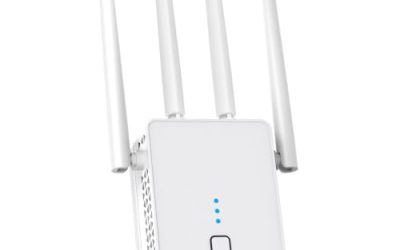
This unbranded indoor extender claims coverage up to 10000 square feet and 80 devices, with an Ethernet port and quick setup. In a typical RV, those numbers far exceed what the space needs, but the Ethernet port is useful for a laptop or streaming stick at a workstation. Think of it as a way to spread a signal that already reaches the coach, for example from a hotspot sitting near the door, to a bedroom or desk at the back, not as a tool for reaching a faraway campground tower.
- Strength: Ethernet port supports a wired connection for work.
- Strength: Quick setup suits a rig you move often.
- Trade-off: Indoor-only, with no weatherproofing or external antenna.
Skip it if the campground signal does not reach your coach.
Winegard Connect 2.0 WF2-335
The Winegard is an outdoor RV Wi-Fi router listed at roughly 1.5 miles of Wi-Fi range on 2.4GHz, doubling as an extender, with a secure design and no 4G modem. It is meant to grab a distant campground signal and bring it into the rig, so it targets exactly the weak-signal problem. Because it creates its own secure network inside the rig, travelers avoid connecting every phone and laptop to an open campground login, which is a quiet security benefit for remote workers handling client files.
- Strength: Purpose-built for RV internet with a long stated range.
- Strength: Works as a Wi-Fi extender with a secure network of your own.
- Trade-off: Wi-Fi only, with no cellular modem for places without a hotspot.
Skip it if you need cellular connectivity in places with no Wi-Fi.
Generic 1200Mbps Dual Band Extender
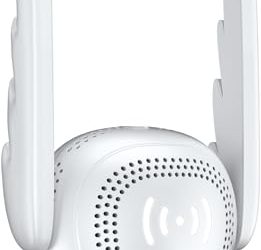
This budget indoor extender lists 1200Mbps, 5.8GHz and 2.4GHz, and an Ethernet port, with a large square-footage claim. It serves a small coach where the main router sits at one end and the bedroom at the other. Weekend campers with a modest rig and a decent hotspot will find the dual-band design useful, since 5GHz can carry video calls near the unit while 2.4GHz covers the back rooms with less speed.
- Strength: Dual band and Ethernet port for flexibility.
- Strength: Small and easy to pack.
- Trade-off: Indoor use only and limited to the signal it can already receive.
Skip it if you need to reach a distant outside network.
WAVLINK AX3000 Outdoor WiFi 6 Extender
This IP67 outdoor Wi-Fi 6 repeater lists long range, up to 256 devices, and use cases like farms, yards, and RVs, with compatibility for Starlink and cameras. The weatherproofing and Wi-Fi 6 radio give it the strongest spec set among the outdoor options. It fits a long-stay site where a pole or wall bracket is practical, and the capacity figure matters for families or work crews with phones, tablets, cameras, and streaming boxes all connected at once.
- Strength: IP67 weatherproofing suits permanent exterior mounting.
- Strength: Wi-Fi 6 and high device capacity fit a busy campsite.
- Trade-off: Outdoor hardware needs power planning and a mounting spot.
Skip it if you want a plug-and-forget indoor device.
NETGEAR EX5000
Listed at up to 1,500 square feet, 1.2 Gbps, and 25 devices, with easy setup and compatibility with any router. For a small travel trailer, those figures are realistic, and the compact design is easy to carry. It is a good fit for someone who parks near a strong router or hotspot and simply wants better coverage in the bedroom, with none of the mounting or cabling work that outdoor hardware demands.
- Strength: Honest coverage claim and simple setup.
- Strength: Works with any router.
- Trade-off: Designed for homes, so it lacks weatherproofing and outdoor reach.
Skip it if you need to capture a distant campground signal.
ALFA WiFi CampPro 2v2 (Version 2)
This universal range extender kit is marketed for caravans, motorhomes, boats, and RVs. It is the most RV-specific option on the list, built for pulling in a faraway hotspot and sharing it inside the vehicle. Owners of caravans and boats will recognize the pitch, since marinas and campgrounds share the same weak, distant signal problem, and a kit that bundles the needed parts can shorten a first installation.
- Strength: Designed explicitly for RV, caravan, and boat use.
- Strength: Kit format aims at a complete installation.
- Trade-off: The listing text is brief, so verify power and antenna details.
Skip it if you only need to boost signal inside a small coach.
WAVLINK AX1800 Outdoor WiFi 6 Extender
The listing shows an IP67 weatherproof outdoor access point and repeater with PoE, 4x8dBi antennas, and Starlink compatibility. PoE support makes pole-mounted installs cleaner. It is a sensible step for someone who wants a tidy exterior setup with one cable running to the rig, and who is prepared to aim four antennas toward the nearest access point at the campground.
- Strength: Four 8dBi antennas and IP67 weatherproofing.
- Strength: PoE lets one cable carry power and data.
- Trade-off: Installation is more involved than an indoor plug-in unit.
Skip it if you are not comfortable mounting hardware outdoors.
Which One Fits Your Situation
You camp at parks with weak shared Wi-Fi
The Winegard Connect 2.0 or the ALFA CampPro pulls in a distant signal, the problem an indoor extender cannot solve. Pick the Winegard if you want a ready-made RV device with a stated range, and the ALFA kit if you prefer a bundled caravan-style setup.
You park long term and use Starlink
The WAVLINK AX3000 outdoor repeater lists Starlink compatibility and weatherproofing, suited to a semi-permanent setup.
You have a small trailer and a strong signal
The NETGEAR EX5000 handles a compact space with simple setup.
You want PoE for a pole mount
The WAVLINK AX1800 gives a weatherproof design with PoE and external antennas, and it keeps the electronics outside where the signal is strongest while only a cable enters the rig.
Common Mistakes
- Buying an indoor extender to fix a campground signal that never reaches the rig.
- Mounting an antenna inside a metal shell and expecting range.
- Ignoring power needs when boondocking without shore power.
- Trusting square footage claims that assume open space.
- Overlooking weatherproofing on devices meant to sit outside.
Related guides
- Windows Macos Linux Gaming Performance Comparison Strengths Weaknesses
- Desktop Operating Systems Gaming Performance Strengths Weaknesses
- 5G Home Internet Wifi Modem Settings Low Latency Gaming
Frequently Asked Questions
Will a Wi-Fi extender fix weak campground Wi-Fi?
Only if the extender can receive the signal. An indoor unit cannot create signal, so an outdoor antenna or RV-specific device is usually the better tool.
What does IP67 mean?
It indicates dust-tight construction and protection against temporary immersion, which suits outdoor mounting. It does not mean the device can handle any abuse, so mount it carefully.
Is 2.4GHz or 5GHz better for an RV?
2.4GHz reaches farther and penetrates obstacles, which helps distant campground signals. 5GHz is faster at close range, so many setups use both. If you stream or work on video calls, try the 5GHz connection at your usual seat before settling on a placement.
Do I need a modem?
Wi-Fi extenders do not provide internet themselves. If no campground or hotspot signal exists, you need a cellular or satellite connection in addition.