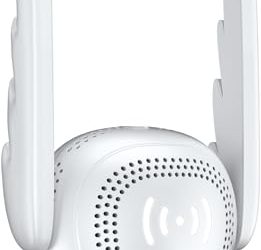
“Long range” is the most abused phrase in the extender aisle. Some boxes promise 18,000 square feet, which is larger than most properties people actually live on, while a respected brand quotes 1,600 to 2,400 square feet for a unit that genuinely works. The keyword therefore asks you to separate marketing from physics. An extender does not create signal; it receives what your router can still deliver and rebroadcasts it, so range depends on where you place it, how many walls sit in the way, and how strong the incoming link is.
This guide is for owners of large houses, split-level homes, detached garages, workshops, and yards where the router signal fades before it arrives. It covers eight extenders, from three TP-Link units with moderate, believable coverage claims to unbranded models advertising huge numbers and a weatherproof outdoor unit with external antennas. In 2026, dead-zone fixes come in three types: simple plug-in repeaters, Ethernet-capable boosters, and outdoor access points, and the right choice depends on your property rather than the biggest number on the label.
Our Top Picks
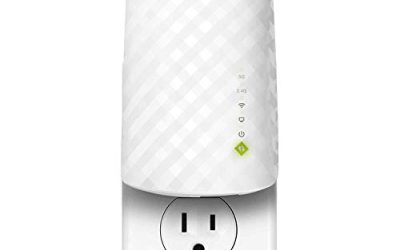
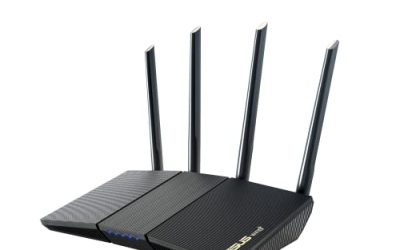
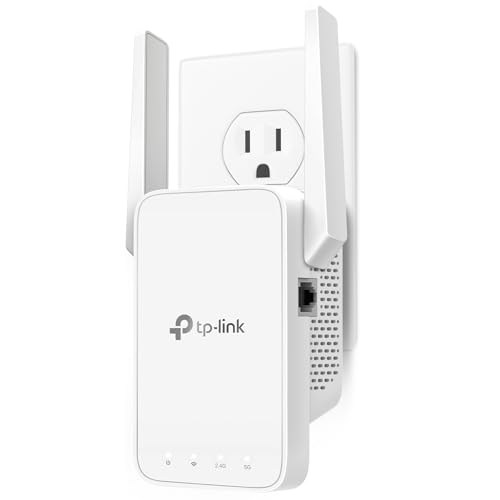 TP-Link AC1200 WiFi Extender Dual Band 5GHz/2.4GHz1 Count (Pack of 1)3.5 x 2.05 x 4.89 inches0.4 PoundsCheck on Amazon
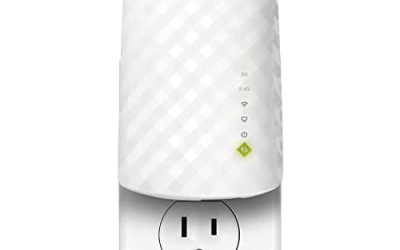
 TP-Link AC1900 WiFi Range Extender RE550WiFi 5, AC19006.4 x 3 x 2.6 inches0.51 poundsCheck on Amazon
 TP-Link AX3000 WiFi 6 Dual-Band Range Extender PCMag4.21 x 1.58 x 6.3 Inches0.84 PoundsCheck on Amazon
 2026 WAVLINK AX1800 Outdoor WiFi 6 Extender LongOutdoor WiFi Extender3.5 x 13 x 17.64 inches5 PoundsCheck on Amazon

Top 3 picks at a glance
Quick Picks
As an Amazon Associate we earn from qualifying purchases at no extra cost to you.




| Product | Best for | Key spec from the title |
|---|---|---|
| TP-Link RE315 | Mid-size homes on a modest plan | AC1200, up to 1600 sq ft, 32 devices, EasyMesh |
| TP-Link RE550 | Wired gear and larger floors | AC1900, gigabit Ethernet port, up to 2200 sq ft |
| TP-Link AX3000 WiFi 6 Extender | Modern homes with many devices | AX3000, Ethernet port, up to 2400 sq ft, 64 devices |
| 18,000 Sq Ft Extender with Ethernet | Large properties, claimed coverage | Up to 18,000 sq ft, Ethernet port |
| 15,715 Sq Ft Extender and Access Point | Flexible placement | 15715 sq ft, access point mode, mesh claim |
| WAVLINK AX1800 Outdoor Extender | Yards, barns, and outbuildings | WiFi 6, IP67, PoE, 4x 8dBi antennas |
| 12,880 Sq Ft, 108-Device Extender | Crowded households | Up to 12880 sq ft, 108 devices |
| Upgraded 18,000 Sq Ft Extender | Maximum claimed range | Up to 18000 sq ft, Ethernet port |
How to Choose
Read coverage claims as ceilings
A claim of 1,600 or 2,400 square feet from a known brand is a realistic open-space figure, and a typical house will see less. Claims of 12,000 to 18,000 square feet cannot be taken at face value, because they assume ideal conditions and often count the combined reach of the router and the extender. Treat those listings with caution, look for the maker’s support information, and expect real-world range to be a small fraction of the headline.
Placement and the backhaul link
The extender must sit where the router signal is still strong, roughly halfway to the dead zone, usually with at least two or three Wi-Fi bars on a phone. Placing it in the dead zone itself is the most common cause of disappointing results. An extender with an Ethernet port can use a wired link instead, which removes the weak-signal link entirely and is the best way to get true long range.
Wi-Fi standard, speed class, and device limits
AC1200 and AC1900 are WiFi 5 classes, while AX1800 and AX3000 are WiFi 6. The higher numbers add band speeds together and are not what you will see on a single device. Device limits, such as 32, 64, or 108, describe connection capacity, not performance. If your household has dozens of smart plugs and cameras, a higher limit is helpful; a real mesh or a wired access point will serve you better than a cheap repeater.
Indoor or outdoor construction
Indoor extenders plug into a wall outlet and are not weatherproof. For a patio, barn, or garage detached from the house, an outdoor unit with an IP67 rating, external antennas, and power over Ethernet is built for the job. Ignore bold speed multipliers such as 15X faster, and where cheaper models cut corners is in antennas, heat management, and documentation, so check the support details before you commit.
The 8 Best Options
TP-Link RE315 AC1200 WiFi Extender
A dual-band AC1200 extender that lists up to 1600 square feet, support for 32 devices, EasyMesh compatibility, and an Ethernet port. The claims are modest, which is exactly why they are credible. A homeowner with a router in the front hall and a back bedroom that drops video calls would see the pairing as a measured fix rather than a miracle, and the EasyMesh line suggests it can slot into a compatible TP-Link setup.
- EasyMesh compatibility allows integration with compatible routers.
- Coverage and device claims are realistic for an apartment or mid-size home.
- Trade-off: it uses WiFi 5, and the claimed range is smaller than the others.
Skip it if you have a large house or need to cover a distant outbuilding.
TP-Link RE550 AC1900 Range Extender
A dual-band AC1900 wireless repeater with a gigabit Ethernet port, coverage of up to 2200 square feet, and room for 32 devices. It suits a two-story home where a desktop or console needs a wired connection at the far end. Because the Ethernet port is gigabit, a home office desk on the second floor can run a cable to the extender and skip wireless congestion, which is often the biggest practical gain from a mid-range repeater.
- Gigabit Ethernet port for wired devices.
- Larger stated coverage than the RE315.
- Trade-off: it is WiFi 5 hardware, so newer router features go unused.
Skip it if your router is WiFi 6 and you want to use the newer standard across the house.
TP-Link AX3000 WiFi 6 Range Extender
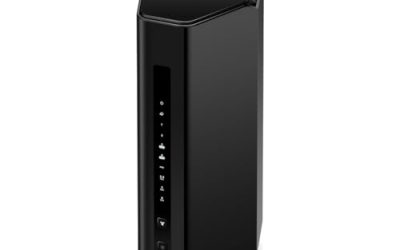
The most capable branded model here: AX3000 WiFi 6, dual-band, an Ethernet port, up to 2400 square feet, and 64 devices. It is for larger homes and busy households where phones, laptops, and smart devices all compete. A household that streams in several rooms at once, runs a video doorbell, and has a dozen smart bulbs is the type of buyer for whom the device capacity and the newer standard translate into steadier everyday connections.
- WiFi 6 and AX3000 class in a branded unit.
- 64-device capacity suits connected homes.
- Trade-off: its stated coverage is still far below the unbranded 18,000 square foot claims, and it sits at a higher tier.
Skip it if your router and devices are older and cannot use WiFi 6.
18,000 Sq Ft WiFi Extender with Ethernet Port
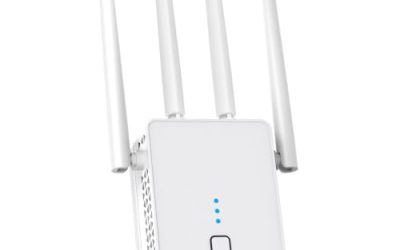
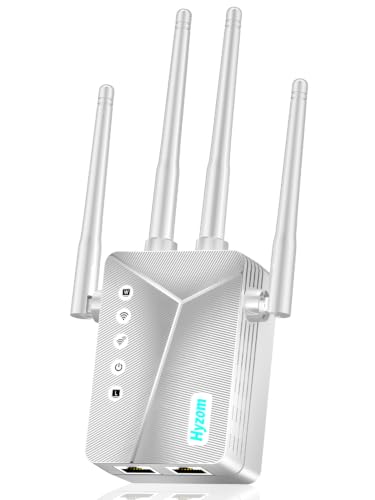
An unbranded extender that advertises coverage up to 18,000 square feet, a long-range wireless repeater design, an Ethernet port, and elimination of dead zones. The claim is extraordinary and should be treated as marketing. Buyers drawn to it for the price should still expect to place it carefully and use the Ethernet port where possible, because the physics of walls and distance do not change with the size of the number on the box.
- Ethernet port allows a wired connection.
- Low-tier option for someone who just wants a basic booster.
- Trade-off: the coverage number is not credible as a real-world figure, and support information is limited.
Skip it if you need dependable range and long-term support from an established maker.
15,715 Sq Ft Extender and Access Point
This listing pitches a long-range repeater that doubles as an access point, with a claimed 15715 square foot coverage and a mesh-style 15X speed message. The access-point role is the useful part, since it lets you wire the unit back to the router. Run that way, a basement or an upstairs room can get a clean signal from a cable instead of a weak wireless hop, which is how long-range setups actually succeed in practice.
- Access-point capability supports a wired backhaul.
- Flexible placement options.
- Trade-off: the speed multiplier is a marketing line, not a measured gain.
Skip it if you want a branded unit with clear specifications and support.
WAVLINK AX1800 Outdoor WiFi 6 Extender
A WiFi 6 outdoor access point and repeater with IP67 weatherproofing, power over Ethernet, and four 8dBi antennas. Unlike the indoor boxes, this one is designed for a pole, a wall, or a barn. A rural property owner with a workshop across the yard, or a campground host who wants coverage over an open lawn, is the audience, and the external antenna count points to directional coverage rather than a plug-in blob.
- IP67 rating and PoE suit outdoor installation.
- External antennas aim the signal where it is needed.
- Trade-off: it needs a PoE source or injector, which adds setup steps.
Skip it if all you need is to boost signal in a bedroom.
12,880 Sq Ft, 108-Device WiFi Extender
An unbranded extender claiming up to 12880 square feet and 108 devices. The device number suggests it is aimed at crowded households, though the title offers little detail about the radio or standard. Because the visible text omits the Wi-Fi generation and speed class, a careful buyer would confirm those details on the full page before assuming it will keep up with a fast internet plan.
- High stated device limit.
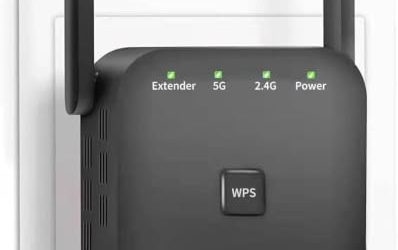
- Signal booster format is simple to plug in.
- Trade-off: claims are large and specific support is unclear.
Skip it if you want verified performance numbers.
Upgraded 18,000 Sq Ft WiFi Extender
Another unbranded booster with an 18000 square foot claim, an Ethernet port, and a 15X speed message. It is close to the other 18,000 square foot listing, so compare the full pages for differences. The word upgraded in the title is a marketing label and does not tell you which radio or standard sits inside, so treat it as a prompt to read the specification block rather than a guarantee of improvement.
- Ethernet port for a wired device.
- Simple plug-in design.
- Trade-off: extreme coverage and speed claims need caution.
Skip it if you want a recognized warranty and clear specifications.
Which One Fits Your Situation
A large two-story house with many devices
The TP-Link AX3000 is the strongest branded choice, with WiFi 6, 64 devices, and an Ethernet port for a wired link.
A detached garage, barn, or yard
Take the WAVLINK outdoor extender. IP67 weatherproofing, PoE, and external antennas are the right features for outdoor coverage.
A mid-size home with a modest internet plan
The TP-Link RE315 or RE550 gives realistic coverage claims. The RE550 adds a gigabit port for wired gear.
You want maximum claimed range from the lowest tier
The unbranded 18,000 or 15,715 square foot units are the options, but accept that the numbers are optimistic and that support will be limited.
Common Mistakes
- Believing a headline coverage number over what walls and distance allow.
- Placing the extender inside the dead zone instead of halfway.
- Using an indoor extender in a humid garage or outdoors.
- Buying for device limits while ignoring the router’s own capacity.
- Skipping a wired backhaul when an Ethernet port is available.
Related guides
- Windows Macos Linux Gaming Performance Comparison Strengths Weaknesses
- Desktop Operating Systems Gaming Performance Strengths Weaknesses
- 5G Home Internet Wifi Modem Settings Low Latency Gaming
Frequently Asked Questions
Can an extender really cover 18,000 square feet?
Such claims are best treated as marketing. Real coverage depends on the router, walls, and placement, and is usually far smaller than the headline.
Is wired backhaul better than wireless?
Yes. Connecting the extender to the router by Ethernet removes the weak-signal link and gives the best result.
Do I need an outdoor extender for the yard?
If the area is outdoors, an IP67-rated unit with PoE, like the WAVLINK, is safer than an indoor plug-in.
Does EasyMesh matter?
It lets compatible routers and extenders work as one network. The RE315 lists it.