Buying a candy land board game for a young child is one of the most consequential small purchases a parent or grandparent makes. It is usually a kid’s first real board game, and if the experience lands poorly, you may be fighting that battle again for years. The right game matches a child’s ability to follow simple color-matching rules, sustains attention long enough to reach the finish line, and makes the child feel like a genuine player rather than a passenger watching adults move a piece.
What separates the best options from the mediocre ones comes down to rule simplicity, whether the theme hooks the specific child you are buying for, and how well the game handles a mismatched player count. A candy land board game with a beloved character license can make a four-year-old sit still for twenty minutes when the generic version could not hold them for five. That single variable — whether the child wants to play again tomorrow — matters more than anything else on the shelf.
As an Amazon Associate we earn from qualifying purchases at no extra cost to you. Product prices and availability are accurate as of the date shown and are subject to change.




Top 3 picks at a glance
Quick Picks
| Product | Best for | Price |
|---|---|---|
| Candy Land Kingdom of Sweet Adventures | First-ever board game | $14.07 |
| Candy Land Bluey Edition | Bluey fans ages 3+ | $19.99 |
| Candy Land Disney Princess Edition | Princess-themed play | $19.99 |
| Candy Land 65th Anniversary | Nostalgia and classic art | $17.99 |
| Sorry! Board Game | Slightly older kids, 6+ | $8.98 |
| Chutes and Ladders | Preschool classroom use | $12.99 |
| Candy Land: The Grinch | Holiday-season gift | $29.99 |
| Chutes and Ladders Spider-Man Edition | Marvel fans ages 3+ | $14.99 |
How We Picked
We compared these products on published age ratings, player-count ranges, theme licensing, component quality as reported by owners, and current street prices. For a category built around very young children, the decisive factors are whether rules require only basic color recognition, whether the game can accommodate an impatient two-year-old sibling without derailing play, and whether the theme will generate genuine repeat-play motivation. We weighted owner feedback heavily because spec sheets rarely reveal whether a board warps after three sessions or whether the cards survive sticky fingers.
The 8 Best Candy Land Board Game in 2026
Candy Land Kingdom of Sweet Adventures
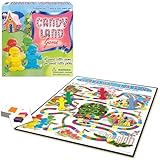
This is the baseline recommendation for any child encountering their first candy land board game. The color-matching mechanic requires no reading, the path is forgiving, and a three-year-old can genuinely win without adult intervention. Hasbro’s Amazon Exclusive edition keeps the price low while maintaining the same artwork families grew up with.
- Pro: Simplest rules in the lineup; no strategy needed beyond matching a card color to a space.
- Pro: Most affordable entry into the Candy Land brand at this price.
- Con: The generic theme may not grab a child who is obsessed with a specific show or movie.
Skip it if your child already has a strong character attachment — a licensed edition will outperform this one for motivation. Buy it for the child who has never seen a board before.
Candy Land Bluey Edition
Bluey has become the defining preschool property of the current generation, and this candy land board game lets kids play as Dad, Mum, Bluey, Bingo, Muffin, or Socks across two to six players. The wider player count means grandparents and siblings can all join without waiting.
- Pro: Six player seats make it the most social option for multi-child households.
- Pro: Bluey license drives repeat-play motivation far beyond the base game.
- Con: At $19.99, the premium over the standard edition is notable if your child does not watch the show.
Skip this if your household is not already fluent in Bluey. Without that emotional hook, you are paying more for a themed reskin.
Candy Land Disney Princess Edition
Designed for two to three players, this edition swaps candy characters for Disney Princesses. The narrower player count suits a parent and child or two siblings. For a child in the “I want to be Elsa” phase, no generic candy land board game competes with this license.
- Pro: Disney Princess branding creates immediate emotional investment for the target age group.
- Pro: Two-to-three player design keeps rounds short and attention manageable.
- Con: Limited player count means a third sibling or a grandparent must sit out.
Skip it for households with more than two children who want to play simultaneously. For a single child plus one adult, it is excellent.
Candy Land 65th Anniversary
Winning Moves took the license and produced a retro-styled edition celebrating 65 years of the franchise. It supports two to four players and uses multicolor board art that nods to the original 1949 design. For a gift buyer who played this game as a child, the nostalgia factor is the selling point.
- Pro: Distinctive anniversary artwork stands out on a game shelf and makes a meaningful gift.
- Pro: Four-player support is generous for a Candy Land variant.
- Con: Winning Moves production is less consistent than Hasbro’s; some owners report thinner board stock.
Skip it if you want the lowest-friction preschool experience and do not care about retro packaging. The Hasbro editions are more polished for little hands.
Sorry! Board Game
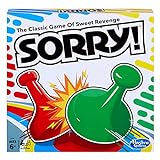
Not a candy land board game, but it appears in most “best first board games” shortlists because of its low price and similar age bracket overlap. Sorry! introduces bumping and sliding, which adds a small strategic layer absent from Candy Land. It is rated for ages six and up, so it suits families ready to graduate past pure color matching.
- Pro: At $8.98, it is the cheapest game on this list and teaches basic turn-taking strategy.
- Pro: Four pawns per player creates more engagement than moving a single piece.
- Con: The bumping mechanic can trigger meltdowns in children who cannot yet handle losing a pawn.
Skip it for children under five. Save it as the natural next step after Candy Land mastery.
Chutes and Ladders
Hasbro’s Amazon Exclusive edition of Chutes and Ladders occupies the same preschool slot as Candy Land but adds a luck-based ladder-and-chute mechanic that creates dramatic swings. Two to four players, ages three and up. Classroom teachers favor it because the numbered squares introduce early counting practice without the child noticing.
- Pro: Number recognition and counting practice embedded in simple gameplay.
- Pro: Chute-and-ladder swings create excitement that keeps toddlers re-engaged after a setback.
- Con: Zero agency can frustrate a child who wants to “win by being smart.”
Skip it if your child is sensitive to random punishment. The chutes undo progress, which some three-year-olds find genuinely distressing.
Candy Land: The Grinch
The most expensive candy land board game on this list at $29.99, this Dr. Seuss-licensed edition lets players race as Who-ville characters to Mt. Crumpit. Rated ages five and up with two to four players, it leans into seasonal gift positioning. The official Dr. Seuss branding and character variety give it a collectible feel that standard editions lack.
- Pro: Dr. Seuss license provides strong thematic identity and gift appeal during the holidays.
- Pro: Character variety (multiple Who-ville roles) adds flavor beyond a single color-matching path.
- Con: The $29.99 price is nearly double the standard edition for what is mechanically similar gameplay.
Skip it outside of the holiday season unless you are a dedicated Dr. Seuss collector. It shines as a December gift but feels less special in July.
Chutes and Ladders Marvel Spider-Man Edition
This Amazon Exclusive merges the Chutes and Ladders mechanic with Spider-Man art and is rated for ages three and up with two to four players. For a child who already idolizes Spider-Man, the skin transforms a counting game into something they actively request. The number-square counting benefit of the standard edition carries over fully.
- Pro: Marvel Spider-Man branding generates excitement comparable to a premium licensed Candy Land variant.
- Pro: Retains the educational number-counting benefit while feeling like a toy purchase to the child.
- Con: The underlying game is identical to the standard Chutes and Ladders; you pay the premium purely for art.
Skip it if you already own the standard edition and your child is not a Marvel fan. The mechanical experience is unchanged.
Buying Guide
Age Rating vs. Actual Readiness
Preschool board games are almost all rated “ages 3 and up,” but that number means little without context. A three-year-old who cannot yet focus for ten minutes will bounce off any game in this category. A four-year-old who can match two colors will thrive. Match the rating to your child’s attention span, not their birth month. The candy land board game format is the most forgiving for younger players because there is zero reading required.
Player Count and Household Dynamics
A two-to-three player game works in a one-child household. A two-to-six player edition is better when siblings or grandparents want to join without creating a queue. Count how many people realistically sit down at game time in your home. Buying a two-player game for a house of four leads to rotation arguments that undermine the whole point of introducing board games.
Licensing: When a Theme Actually Changes Behavior
Theme licensing is not cosmetic for a child. A three-year-old who adores Bluey will ask for the Bluey edition repeatedly and resist the generic version entirely. That motivation is the single strongest predictor of whether the game gathers dust or becomes a nightly ritual. Choose the license your specific child already recognizes and loves — a generic candy land board game cannot compete with that pull.
Our Verdict
Top pick: Hasbro Candy Land Kingdom of Sweet Adventures at $14.07 is the right default for any first-time buyer. It delivers the essential experience at the lowest cost with the most reliable component quality.
Budget pick: Sorry! at $8.98 wins on price alone, but only for families ready to move past pure color matching toward ages five or six.
Theme override: If your child is a confirmed Bluey fan, the Bluey Edition at $19.99 will outperform the standard game in repeat-play frequency by a wide margin, making the extra $5.92 the most valuable spending choice on this list.
FAQ
Can a two-year-old play Candy Land?
A two-year-old can physically move a piece but will not reliably match colors or understand turns. Most parents report success starting around three and a half, when color recognition is solid. The game is rated three and up for good reason.
Is Candy Land a good first board game?
Yes. The color-matching rule set requires no reading, no strategy, and no math, which removes every barrier a preschooler faces. The finish line is reachable within twenty minutes, which matches a young child’s attention window.
What is the difference between Candy Land and Chutes and Ladders?
Candy Land uses color matching while Chutes and Ladders uses number rolling. Chutes and Ladders includes setbacks that undo progress, which adds drama but can frustrate sensitive players. Candy Land is a purely linear race with no punishment for landing on a bad square.
Should I buy the standard edition or a licensed version?
Buy the licensed version that matches your child’s current obsession. A candy land board game is mechanically identical across editions; the license only changes motivation. If your child does not care about any theme, save the difference and buy the standard edition.